
Reviewed · MUNICH THIRD REICH & WWII TOURS
Munich: Nazi History 2-Hour Small Group Walking Tour
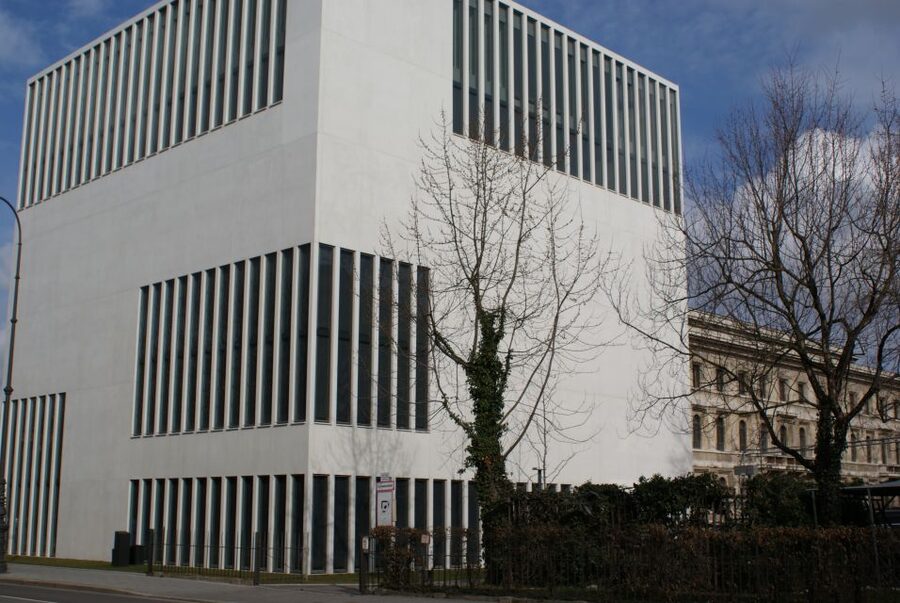
Munich’s postcard center hides a grim political past. On this two-hour walk, you follow the places where Hitler’s movement began, gathered support, staged violence, and turned public space into a tool of propaganda. The route links ordinary city streets with the Beer Hall Putsch site, the Hofbräuhaus, Odeonsplatz, and Königsplatz.
I like the small group format, which makes it easier to ask questions instead of simply trailing behind a guide. I also like the way guide Alun Evans handles the subject: his approach is thoughtful, clear, and human, with enough detail for serious history fans without turning the walk into a lecture.
The main drawback is the short running time. Two hours gives you a strong outline, but not a full study of Munich under the Nazis. You’ll be outdoors in all weather, and the subject is heavy, so come prepared for both the walking and the mood.
Key points to know before booking
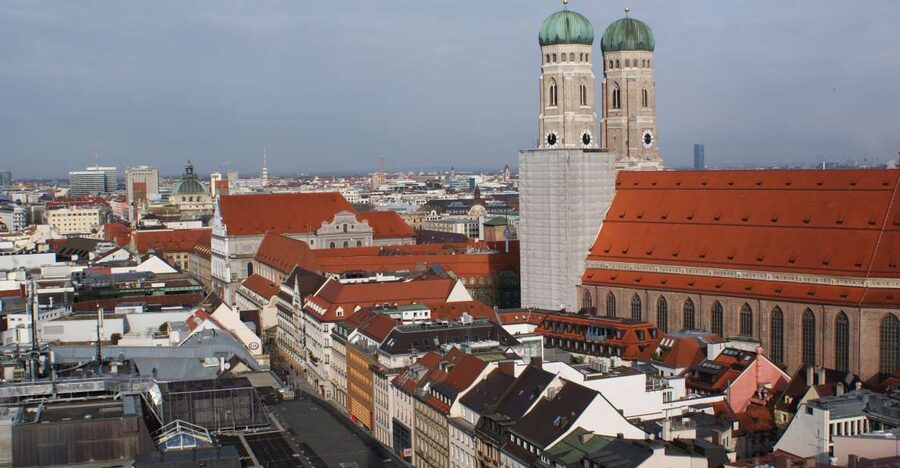
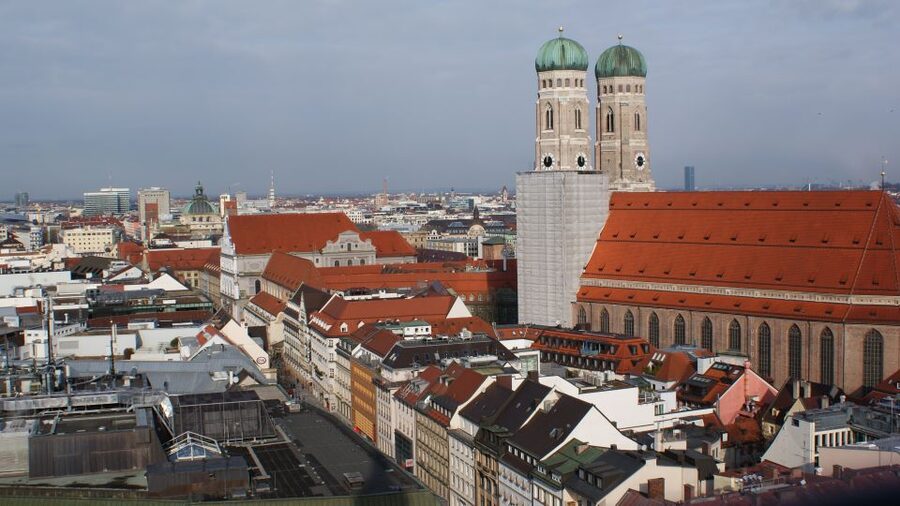
- Hitler’s Munich begins at Marienplatz: The tour sets the city’s central square against the story of Hitler’s arrival in 1913 as a 24-year-old man with no clear prospects.
- The Hofbräuhaus is part of the political story: This famous beer hall was used for Nazi meetings, and Hitler gave speeches there.
- The Beer Hall Putsch gets a real location: You visit the area connected with the failed 1923 attempt to seize power.
- Odeonsplatz connects politics and architecture: Bavarian State Opera and the Residenz provide the setting for stories about the Nazi period.
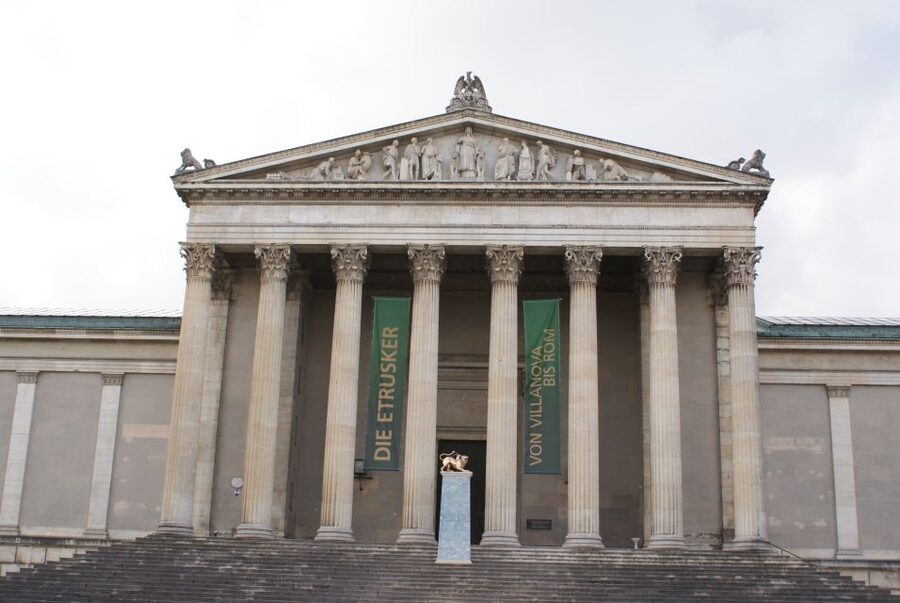
- Königsplatz shows propaganda on a grand scale: The former rally ground makes clear how the regime used buildings and open space to project power.
- Alun Evans leads in English: The tour is designed for a maximum of 10 participants, making conversation practical.
Why this two-hour walk matters in Munich
Munich is often sold through beer halls, grand palaces, and cheerful squares. Those sights are real, but they tell only half the city’s story. Munich was also the place where the Nazi movement grew from a fringe political force into a national threat.
That makes this tour useful early in a Munich visit. It gives you a sharper view of places you might otherwise see only as attractive city scenery. Marienplatz is not just a meeting point. The Hofbräuhaus is not just a place for beer. Königsplatz is not just an impressive collection of classical buildings.
The guide’s job here is to connect the physical city to the political events that happened in it. You walk, listen, stop, and look closely. That approach works well because the history is tied to streets and buildings rather than presented as a list of names and dates.
Alun Evans is the named guide associated with this experience. His style is a good fit if you want a serious subject explained with care but without stiff academic language. The strongest praise for his guiding points to his patience, warmth, clear delivery, and ability to make difficult material understandable.
Other Third Reich and wartime history tours in Munich:
- Munich: Third Reich & WWII Walking Tour
★ 4.6 · 6,181 reviews - Third Reich Walking Tour Munich
★ 4.5 · 4,291 reviews - Munich: Birthplace of the Third Reich Guided Walking Tour
★ 4.6 · 771 reviews
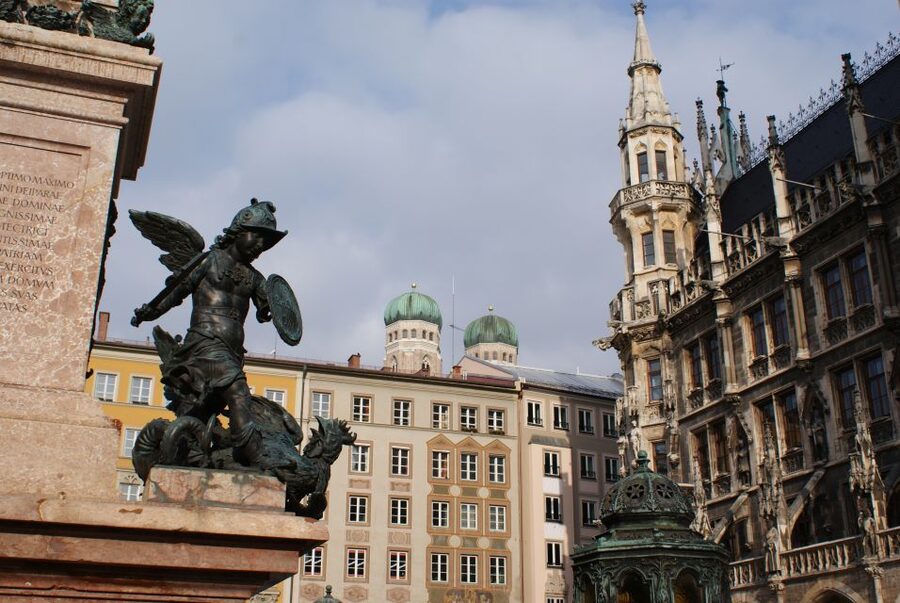
Marienplatz: Hitler’s early Munich story
The walk begins in front of the Tourist Information Center on Marienplatz, right in central Munich. Look for a guide holding a sign with the local operator’s name. This fixed meeting place is simple to find, though the square can be crowded, so give yourself a little time to locate the group.
The opening section lasts about 30 minutes and establishes the political background. Hitler arrived in Munich in 1913, aged 24, with no successful career ahead of him. The point is not to turn his early life into a dramatic legend. It is to show how a major city became the setting in which his ambitions found an audience and a political home.
You’ll hear how the Nazi Party developed in Munich and how its supporters used the city’s institutions, public squares, meeting halls, and social networks. That context helps explain why the movement was not simply imported into Bavaria from elsewhere. Munich became a key base for its organization and public image.
This is also where the guide can set limits on the myth-making that often surrounds Hitler. A good history walk should explain the conditions that helped a destructive movement grow without treating its leader as a fascinating hero. The tone here is serious and respectful.
Because Marienplatz is a functioning city center, you should not expect a preserved Nazi-era site at every step. Much of the value comes from hearing what happened in a place that has changed, and from understanding how ordinary urban spaces can acquire a darker meaning.
The Hofbräuhaus and the politics of public meetings
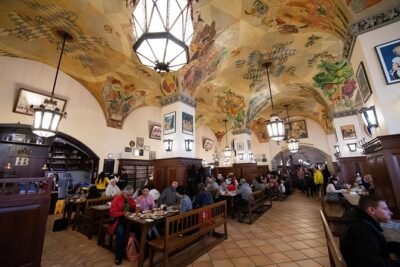
The next important stop is the Hofbräuhaus München. The guided portion here lasts about 10 minutes. This is a brief stop, but it carries unusual weight because the beer hall was used for Nazi Party meetings and Hitler delivered speeches there.
You may already know the Hofbräuhaus as one of Munich’s most famous traditional beer halls. The tour asks you to look past that familiar image. Large halls, cheap food, beer, and a ready-made audience could create useful conditions for political gatherings. The setting helped turn speeches into social events, and social events into organized support.
This stop is especially helpful for understanding how political movements reach people outside formal government buildings. Politics did not happen only in parliament offices. It also happened in places where people gathered, ate, drank, argued, and listened.
Do not expect a long indoor presentation or a private room reserved for the tour. The Hofbräuhaus remains a busy public venue, and the stop is part of a walking route rather than a full venue visit. The guide’s explanation is the main attraction.
That limitation is worth knowing. If you want a tour centered on Munich beer culture, this is not the right experience. The Hofbräuhaus appears here as a historical setting, and the focus remains firmly on the rise of the Nazi movement.
Odeonsplatz, the Residenz, and Bavarian power
From the Hofbräuhaus, the tour continues toward Odeonsplatz. The guided explanation at this section lasts about 15 minutes and brings together politics, architecture, and the power of the Bavarian state.
Odeonsplatz is one of Munich’s grand public spaces. Nearby are the Bavarian State Opera and the Residenz, the former royal palace. Their presence gives the area a formal, powerful character, and that is important to the story. Political movements use impressive public settings to give themselves an air of authority.
The stop also helps place the failed Beer Hall Putsch of 1923 within the city. You’ll visit the site connected with that attempt to seize power. The putsch failed, but it became a major event in the Nazi movement’s development and public image.
A brief stop cannot cover every detail of the putsch, its participants, and its aftermath. Still, seeing the location adds something a book or museum panel cannot. You get a sense of the route through the city and the physical setting in which the confrontation unfolded.
The architecture around Odeonsplatz may tempt you to focus on the beauty of the buildings. That is part of the point. The tour shows how grand civic spaces could be used by competing forces, and how the same buildings can carry different meanings depending on what happened nearby.
More history tours in Munich:
- Munich 3-Hour Segway Tour: Nazi Munich & Royal Architecture
★ 4.9 · 194 reviews - Munich: Guided Tour of the historic Town Hall on Marienplatz
★ 4.8 · 63 reviews - Munich’s Hidden Architecture Guided Tour
★ 4.9 · 47 reviews - Death and Chocolate: Walking Tour of Munich’s Old South Cemetery
★ 5.0 · 35 reviews
Königsplatz and the scale of Nazi spectacle
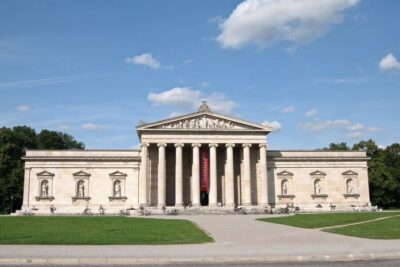
The route continues to Königsplatz, a major location in the Nazi story and a former rally ground. Here the tour reaches its clearest lesson in political spectacle.
Königsplatz gave the regime a broad stage for public displays. Marches, rallies, banners, uniforms, and carefully controlled crowds could turn political authority into a visual performance. The space was designed to make individuals feel small and the movement feel enormous.
That is why this stop is more than a final photo opportunity. It helps you understand the practical side of propaganda. Buildings and open plazas were selected, arranged, and used to create a message of order and power.
Königsplatz can also feel like a quiet public square today, which makes the contrast sharper. You are looking at a place that has changed in appearance and use, while the guide explains how it once functioned as a stage for mass politics.
The supplied route information describes the tour as ending at Königsplatz, while the meeting details say the walk starts and ends at Marienplatz, with a return to Marienplatz available on request. Ask the guide at the beginning how the return will work on your date. That small check avoids confusion, especially if you have a train, restaurant booking, or another timed activity afterward.
What Alun Evans adds to the experience
The guide can make or break a history walk, and this subject needs someone who can manage both facts and feeling. Alun Evans is described as caring, humble, engaging, patient, and respectful. Those qualities matter when the tour deals with persecution, dictatorship, war, and mass violence.
His approach appears to suit different levels of interest. If you are an amateur World War II historian, you’ll likely appreciate the dates, locations, and connections. If you know less about the period, the route gives you a clear starting point without assuming that you have already read several books.
The best quality to look for is proportion. Too little detail makes the tour vague. Too much detail buries the city under names and dates. Feedback about the tour points to a useful middle ground, with enough information to satisfy history fans while keeping the walk accessible.
A small group helps here. The booking information gives a limit of 10 participants, while the general description also refers to groups of up to 15. The more specific activity details list 10, so I would plan on a group of no more than 10, but confirm the exact limit when booking if that matters to you.
With a small group, you can ask about a particular event, building, or point of view. You are also less likely to lose the guide’s explanation in street noise. One particularly cold and snowy tour had only four people, and the guide still kept the discussion active and engaging. That suggests the format works even when conditions are less than ideal.
Is $58 fair for two hours?
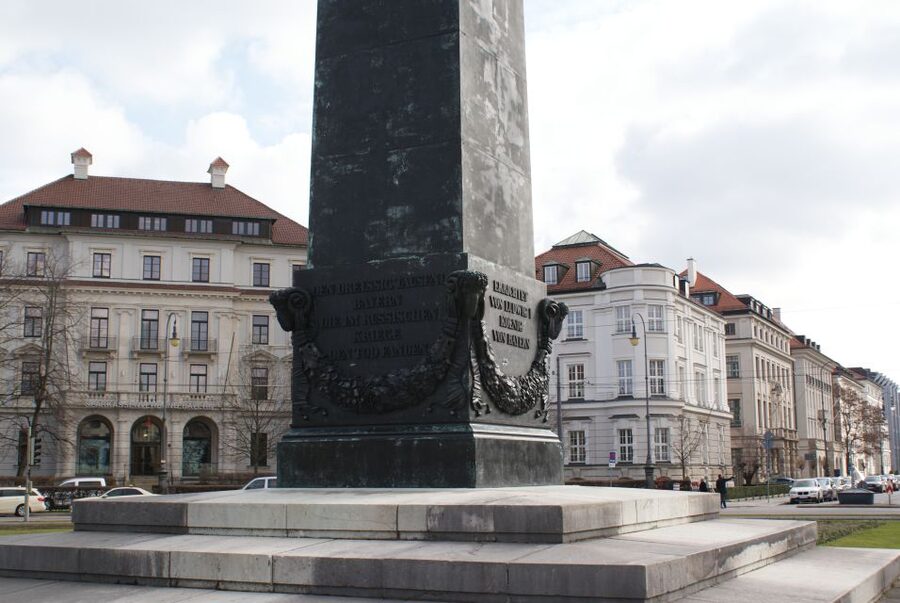
At $58 per person, this is not the cheapest way to walk around Munich. You are paying for a focused historical route, an English-speaking local guide, and a small group rather than a large crowd.
The value depends on how much structure you want. You could walk between many of these locations on your own, but you would miss the connections between them unless you did substantial preparation. The guide’s value lies in selecting the sites, arranging them into a story, and explaining what you are seeing.
For a serious history-minded visitor, the price is reasonable if the group remains small and the guide delivers the promised level of detail. For a casual visitor who wants only a general introduction to Munich, a standard city walk may offer broader coverage for similar money.
The two-hour length keeps the cost and physical demand manageable. You can fit it into a morning or afternoon and still have time for museums, food, or another part of the city. The tradeoff is depth. You should not book this expecting a full-day study of the Third Reich or a visit to every major Nazi-era location in Munich.
Who should take this tour?
I would recommend this walk to:
- First-time Munich visitors who want historical context for the central sights.
- World War II and modern European history fans who prefer to connect dates and events with real places.
- Families with older teenagers who can handle a serious subject and a two-hour outdoor walk.
- Visitors with limited time who want a focused introduction rather than a full museum day.
- Anyone who prefers conversation over a large guide-led crowd.
I would think twice if you want a cheerful sightseeing experience, extensive indoor time, or a broad tour covering Munich’s art, food, churches, and royal history. The route has attractive buildings, but its purpose is to examine a dark period.
The tone is also worth considering. This is not entertainment built around Nazi symbols or shock value. The subject is treated as history and warning. That makes it a better choice for readers who want a respectful explanation rather than sensational stories.
Weather, walking, and practical planning
The tour runs in all weather conditions. Wear shoes suitable for city walking and bring clothing that works for rain, cold, or snow. The snowy tour described in the feedback shows that poor weather can make the experience physically tougher, even when the guide remains engaging.
There are no refreshments included, and hotel pickup is not provided. Meet at the Tourist Information Center on Marienplatz instead. Since the route uses central Munich streets and public squares, you should plan for a fully outdoor experience apart from any brief access connected with the Hofbräuhaus.
The tour is offered in English with a live guide. Cancellation is free up to 24 hours before the start, and you can reserve now and pay later, useful if your Munich plans are still shifting. Starting times vary, so check availability for your date.
Should you book the Munich Nazi History walk?
Book it if you want to understand how Munich became the birthplace and political home of the Nazi movement, and if you prefer a direct connection between history and place. The route is compact, the group is small, and Alun Evans brings a careful, approachable manner to difficult material.
Skip it if you want a general introduction to Munich or a longer, more detailed treatment of the Nazi period. Two hours gives you a strong framework, not the final word.
For most history-minded visitors, I would book this early in a Munich stay. Afterward, Marienplatz, the Hofbräuhaus, Odeonsplatz, and Königsplatz will no longer look like disconnected sights. You’ll understand more of what the city remembers, and what it must never forget.
FAQ
Where does the Munich Nazi History walking tour begin?
The tour begins in front of the Tourist Information Center on Marienplatz in central Munich. The guide will hold a sign with the local tour operator’s name.
How long does the tour last?
The walking tour lasts two hours.
What language is the tour conducted in?
The tour is conducted in English with a live English-speaking guide.
Who guides the tour?
The experience provider is Alun Evans Personal Tour Guiding Munich, and Alun Evans is the named guide associated with the tour.
How many people are in the group?
The activity information lists a small group limited to 10 participants. The general description also mentions a maximum of 15, so confirm the exact group limit when booking if this is important to you.
What places does the tour visit?
The route includes Marienplatz, the Hofbräuhaus, Odeonsplatz, and Königsplatz. It also covers the site connected with the failed Beer Hall Putsch of 1923 and buildings linked to the Nazi Party and SS.
Does the tour run in bad weather?
Yes. The tour operates in all weather conditions, so you should dress for the forecast and expect to walk outdoors.
Can I cancel or pay later?
You can cancel up to 24 hours in advance for a full refund. The booking option also allows you to reserve your place and pay later.
More 2-Hour Experiences in Munich
- Discover Munich 2-Hour Small Group Walking Tour
★ 4.6 · 491 reviews - Small-Group 2-Hour Munich and The Third Reich Walking Tour
★ 5.0 · 32 reviews - 2-Hour Segway Discovery Tour Munich
★ 5.0 · 20 reviews - Munich 2-Hour Segway Tour
★ 5.0 · 15 reviews
More Walks Through the Old Town
- Munich: Old Town & Viktualienmarkt City Walk in German
★ 4.7 · 2,304 reviews - Munich: Night Watchman Walking Tour
★ 4.7 · 2,092 reviews - Munich Ghosts and Spirits Evening Walking Tour
★ 5.0 · 1,900 reviews - Munich Old Town Walking Tour
★ 4.5 · 1,287 reviews
Recently reviewed in Munich
- München: Vegetarische Viktualienmarkt-Probiertour Deutsch★ 4.8 · 6 reviews
- Wright Europe Vacations – Private Escorted Auto Tours★ 5.0 · 35 reviews
- Best of Munich Electric Bike Tour★ 5.0 · 38 reviews
- Munich Walking Quiz: Explore and Discover the City’s Highlights★ 5.0 · 7 reviews
- Walking Tour on Resistance to Nazism in Munich★ 5.0 · 8 reviews
- Private Transfer from Munich to Salzburg with 2 hours for sightseeing★ 4.5 · 13 reviews
- Private Transfer from Munich to Vienna with 2 hours for sightseeing★ 4.5 · 6 reviews
- 2 hour Sights Guided E-Scooter Tour in Munich★ 4.0 · 6 reviews
Munich Third Reich & WWII Tours, compared.
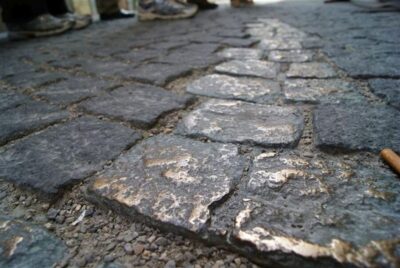
Birthplace of the Third Reich Guided Walking Tour
Read our review →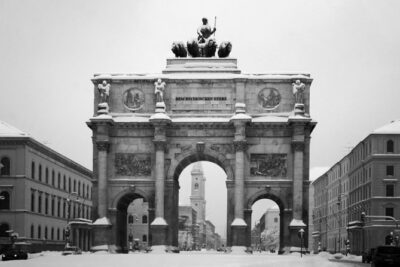
Munich World War II Sites Including Dachau Concentration Camp
Read our review →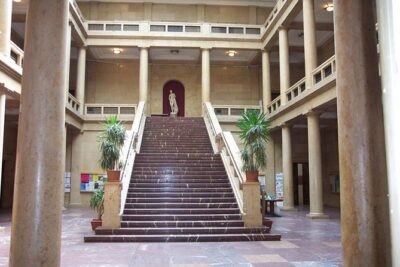
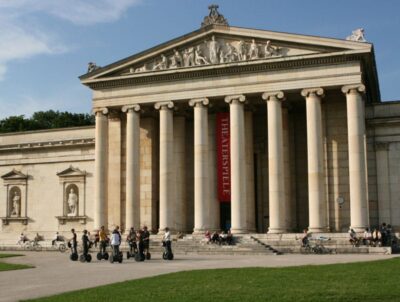
Munich 3-Hour Segway Tour: Nazi Munich & Royal Architecture
Read our review →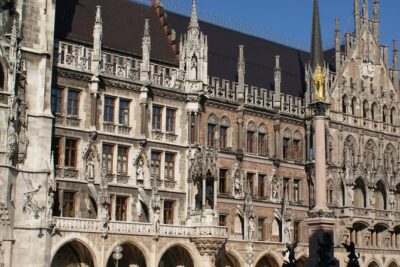
Dachau Concentration Camp Memorial Site And Third Reich Day Tour From Munich
Read our review →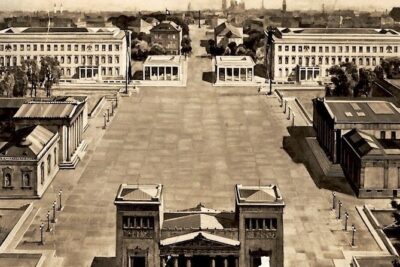
Browse the lists this tour appears in