
Reviewed · MUNICH THIRD REICH & WWII TOURS
Small-Group 2-Hour Munich and The Third Reich Walking Tour
Munich’s Nazi past is not tucked away in a distant museum. It is written into the city center, from Marienplatz to the broad ceremonial spaces at Königsplatz. This two-hour walk connects those places and explains how ordinary streets became part of the Nazi movement’s rise.
I like the small group of no more than 15 and the clear route through four major sites. I also like the guides’ personal approach, especially the repeated praise for Alun Evans, who is described as warm, animated, and able to answer questions. The drawback is simple: this is a serious history walk with plenty of standing, and one two-hour outing cannot cover every part of Munich’s wartime story.
Key points at a glance
- Four central sites: Marienplatz, Hofbräuhaus, Odeonsplatz, and Königsplatz form a compact route through Munich’s Nazi-era history.
- Alun Evans leads the experience: His clear explanations and willingness to follow questions are major strengths.
- Small-group format: The maximum of 15 people makes it easier to hear the guide and take part.
- A sober subject: The tour deals with antisemitic persecution, political violence, and the Nazi rise to power.
- Walking and standing matter: You need moderate physical fitness and suitable clothing for all weather.
- Useful museum connection: The walk ends centrally, near the Documentation Centre of National Socialism.
Why Munich is the right place for this difficult history
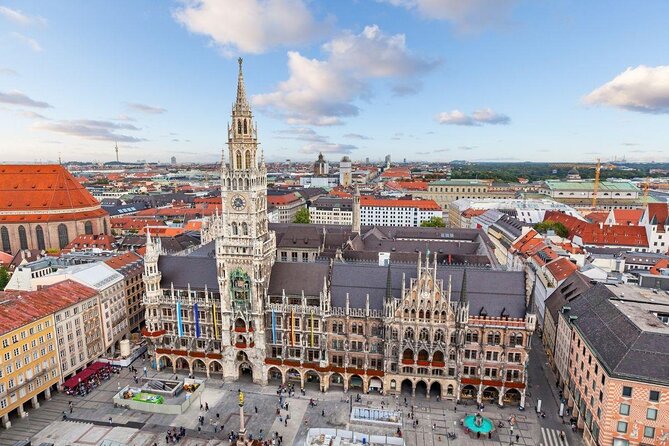
Munich was central to the early Nazi movement. This tour helps you see that history as a sequence of real places rather than a string of dates in a textbook. You move through the old town, pass buildings that still serve everyday city life, and learn how speeches, ceremonies, violence, and political decisions shaped the movement.
That setting gives the tour its force. At Marienplatz, for example, you are not simply told that the Nazis gained support in Bavaria. You are shown a square connected with the decision to carry out the 1938 pogrom against Germany’s Jewish population. At Odeonsplatz, you stand where a gun battle took place during the failed Beer Hall Putsch of 1923.
The subject requires a careful tone, and the guide’s job matters greatly. Alun Evans is the guide named most often in the supplied material, while Alan is also named in one account, possibly a variation of the same name. The descriptions point to a guide who knows the subject well, keeps the walk approachable, and treats the material with appropriate seriousness.
You should not expect a light sightseeing stroll with a few Nazi references added on. The Third Reich is the focus. Munich’s architecture and central squares provide the setting, but the tour’s purpose is to explain how the Nazi party developed and how the city was used by the movement.
Other Third Reich and wartime history tours in Munich:
- Munich: Third Reich & WWII Walking Tour
★ 4.6 · 6,181 reviews - Third Reich Walking Tour Munich
★ 4.5 · 4,291 reviews - Munich: Birthplace of the Third Reich Guided Walking Tour
★ 4.6 · 771 reviews
Marienplatz: where the story begins
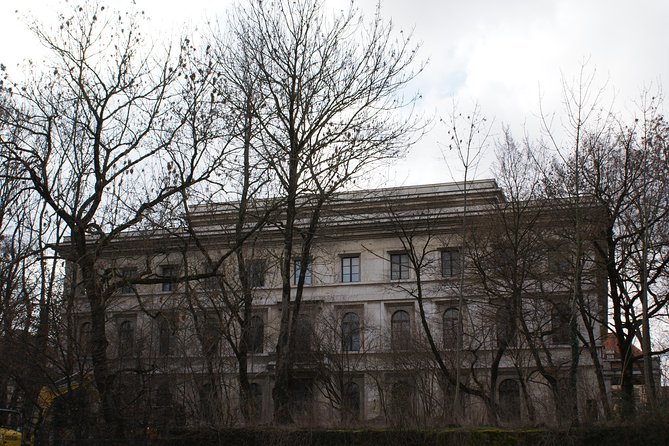
The meeting point is at Marienplatz 8, beside the Landeshauptstadt München Stadtkämmerei, with the tour scheduled to begin at 3:00 pm. Marienplatz is easy to find in central Munich, and beginning here gives you an immediate sense of how the tour combines familiar city sights with darker political history.
The old town hall receives special attention. The building is not treated merely as a pretty Gothic backdrop. You learn about its connection to the 1938 decision to launch a pogrom against Jewish people in Germany, an important reminder that persecution was organized through institutions and public authority, not only through street-level violence.
The first stop lasts about 30 minutes, making it the longest section of the walk. That is useful because the opening needs to establish the political setting, the city’s role, and the early growth of the Nazi party. It also means you should be ready to listen in one place for a while before moving on.
I appreciate this beginning because it gives the rest of the route a frame. Instead of treating each location as an isolated fact, the guide can explain how Munich became tied to the movement and how public spaces were used to shape political power.
Hofbräuhaus: speeches and the party’s early setting
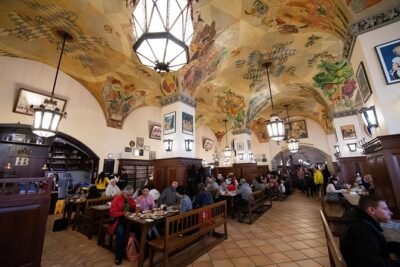
The walk continues to the Staatliches Hofbräuhaus, one of Munich’s best-known beer halls. The visit here is primarily a stop outside, not a meal or drinking break, so do not book this tour expecting food, beer, or an interior visit as part of the package.
The guide explains that Hitler regularly gave speeches at the Hofbräuhaus. The stop also connects with the founding location of the Nazi party and the SS. In only about 10 minutes, you receive a compact explanation of how beer halls served as political meeting places during the movement’s early years.
This is one of the more effective parts of the route because it changes the way you see a familiar Munich institution. A building associated with beer and tourism also has a place in the political story. The point is not to make the location sensational, but to show how speeches and organized gatherings helped the movement attract attention.
The short timing keeps the tour moving, though it leaves little room for a long discussion. If you have a strong interest in political organization or the early Nazi party, save your questions for the guide and make use of the small-group format.
Odeonsplatz: the violence of the Beer Hall Putsch
At Odeonsplatz, the story turns from speeches and organization to open conflict. You see where a gun battle took place between Nazi supporters and Bavarian police during the Beer Hall Putsch of 1923.
This stop lasts about 15 minutes. The guide’s role here is to place the confrontation within the wider rise of the Nazi party and explain why the failed coup remained important to Nazi propaganda and later ceremonies.
Odeonsplatz is also a good example of why a walking tour can add something a book cannot. You are standing in the actual urban space where political conflict unfolded. The location helps you picture the relationship between streets, public buildings, police authority, and mass movements without needing a long drive across the city.
The material is grim, but the tour does not appear to rely on shock tactics. The strongest descriptions of Alun Evans emphasize clear facts, context, and the chance to ask questions. That approach suits a subject where accuracy and restraint matter more than theatrical storytelling.
More walks through the old town:
- Munich: Old Town & Viktualienmarkt City Walk in German
★ 4.7 · 2,304 reviews - Munich: Night Watchman Walking Tour
★ 4.7 · 2,092 reviews - Munich Ghosts and Spirits Evening Walking Tour
★ 5.0 · 1,900 reviews - Munich Old Town Walking Tour
★ 4.5 · 1,287 reviews
Königsplatz: ceremony, memory, and the final stop
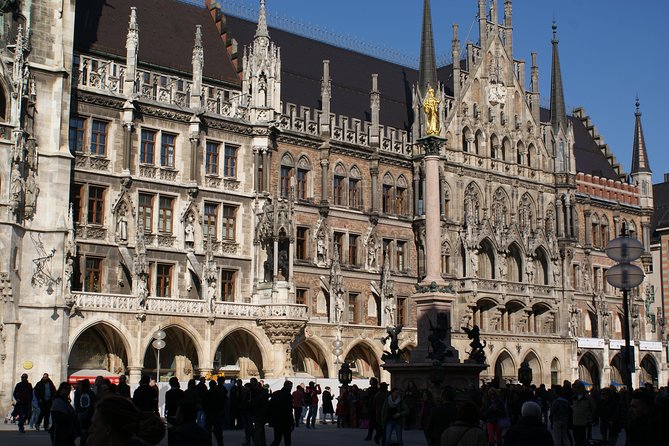
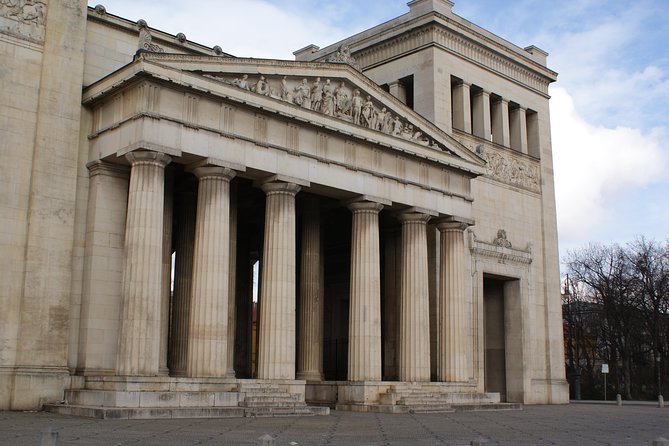
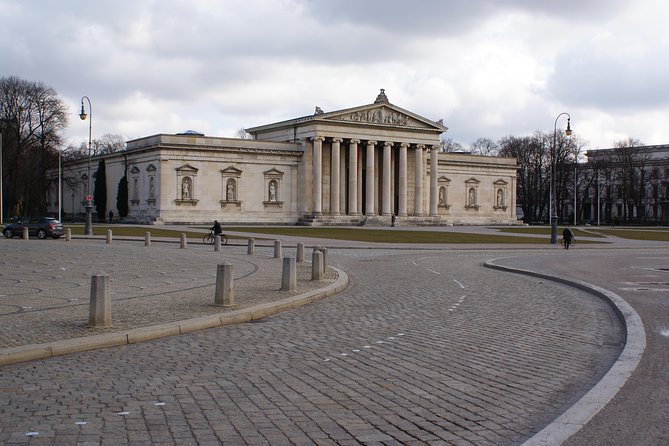
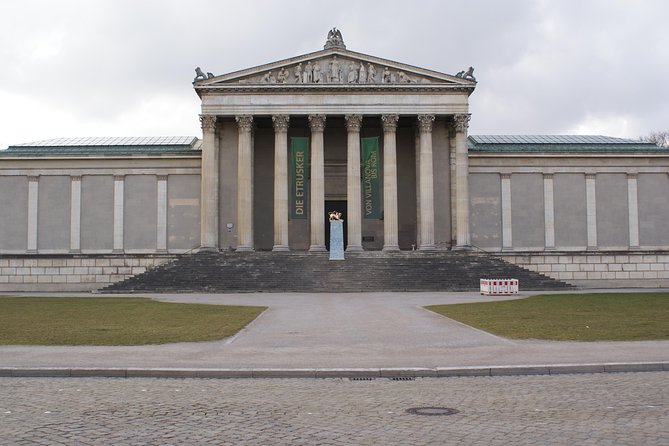
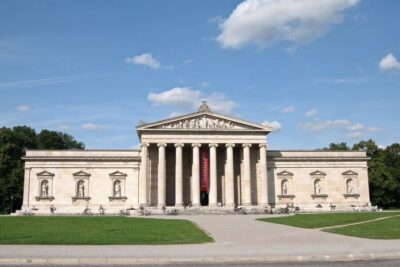
The last main stop is Königsplatz, a grand setting used by the Nazis for ceremonies honoring those killed during the failed 1923 putsch. You also learn about the 1938 Munich Agreement and see the building associated with that event.
This section lasts about 20 minutes and brings together several themes from the walk: political ritual, Nazi commemoration, international diplomacy, and the use of architecture for public messaging. It is a fitting place to end because the tour has moved from local party meetings to the wider power the regime claimed.
The space also gives you a practical next step. You can continue afterward to the Documentation Centre of National Socialism, which is not included in the tour itself. If you want a fuller museum treatment, this is the natural follow-up, and the central finish makes it easier to plan.
The tour ends back at the meeting point rather than at a hotel or transport hub. You will need to arrange your own journey to and from the starting area, but the route remains within central Munich and does not require a vehicle between stops.
How the small group changes the experience
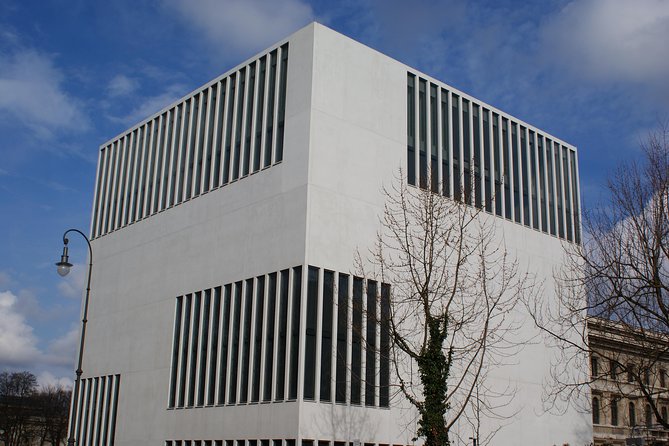
The group limit is 15 people. That is not a private tour, but it is small enough for the guide to keep an eye on the group and respond to questions without turning the walk into a crowd exercise.
That matters on a history tour. You may want to ask about a building, a political figure, or how a particular event fits into the wider story. The information provided about Alun Evans repeatedly highlights his willingness to answer questions and adapt explanations to people’s interests.
The format can also work for families, with care. One account describes bringing children aged five and three and being able to take short bathroom breaks. Still, the subject is serious and the walk includes sustained explanations, so you should judge your children’s interest and patience before booking.
You should expect to walk and stand for much of the two hours. A moderate level of physical fitness is advised. There is no promise of regular seating, and one assessment specifically found the lack of sitting breaks difficult. Wear comfortable shoes and bring clothing for rain or cold, since the tour operates in all weather.
Price, timing, and what you receive
The price is about $60.07 per person for roughly two hours. That is not a bargain street walk, but it can be fair value if you want a focused guide-led explanation rather than a general introduction to Munich.
Your fee covers the professional guide, pickup at the designated central meeting point, and the walk back to that central area. It does not cover food, drinks, hotel pickup, hotel drop-off, admission to other attractions, or transport to and from the route.
The value rests almost entirely on the guide. You are paying for a structured explanation of places you could otherwise pass without understanding. A self-guided visit costs less, but you would need to research the chronology, identify the locations, and connect them yourself.
The start time is 3:00 pm, which can fit neatly after morning sightseeing. Since the walk lasts about two hours, you can still have an evening meal afterward. I would avoid scheduling a timed museum entry immediately after the walk, though. Explanations, questions, and the pace of the group can affect the finish.
The activity is often reserved well in advance, with an average booking time of 42 days. That is a useful warning if your Munich dates are fixed. The group is capped at 15, and the tour is offered in English with a mobile ticket.
Who should book this walk?
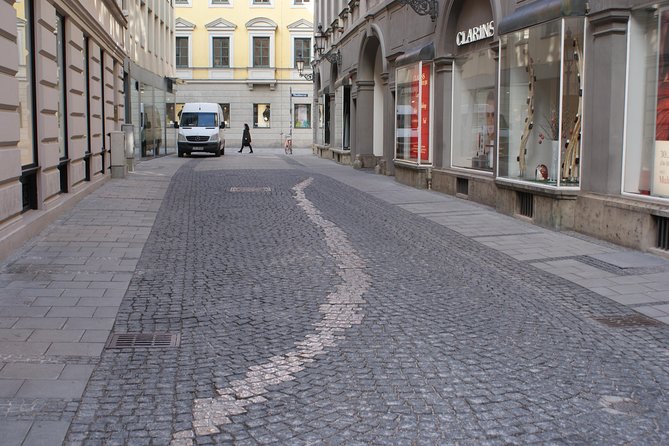
I would choose this tour if you want the Nazi period explained through locations in Munich’s old town. It suits people with an interest in modern European history, political movements, wartime Munich, or the way public spaces are used for propaganda and ceremony.
It is also a good fit if you prefer asking questions rather than reading plaques. The guide can adjust explanations, point out details you might miss, and connect the stops into one story.
You may want a different activity if you are looking for a broad Munich introduction covering palaces, churches, food, art, and local customs. This walk is not designed as a general city tour. The Third Reich and the Nazi rise are the central themes.
It may also feel heavy for young children or anyone wanting a relaxed afternoon. The tone is respectful and sometimes animated, but the subject includes persecution, political violence, and antisemitism. Go in ready for serious material.
Should you book the Munich and Third Reich walk?
Book it if you want a short, central, English-language tour with a strong historical focus and a guide who can make the sites speak. The route is compact, the maximum group size is sensible, and the final location near the Documentation Centre gives you an easy way to continue learning.
Skip it if you dislike walking in all weather, need frequent sitting breaks, or want a wider survey of Munich. For most history-minded visitors, though, this is a useful two hours. It turns Marienplatz, Hofbräuhaus, Odeonsplatz, and Königsplatz from attractive city stops into places with a difficult and necessary story.
Free cancellation is available up to 24 hours before the 3:00 pm start time. Changes or cancellations inside that window are not accepted for a refund.
FAQ
How long is the Munich and Third Reich Walking Tour?
The tour lasts approximately two hours.
Where does the tour begin?
It begins at Landeshauptstadt München Stadtkämmerei, Marienplatz 8, 80331 Munich, Germany.
What time does the tour start?
The scheduled start time is 3:00 pm.
Where does the tour finish?
The activity ends back at the central meeting point.
Which sites are included?
The route includes Marienplatz, the Staatliches Hofbräuhaus, Odeonsplatz, and Königsplatz.
Is the tour offered in English?
Yes. The tour is offered in English.
How large is the group?
The group has a maximum of 15 people.
Is hotel pickup included?
No. Hotel pickup and hotel drop-off are not included. You must make your own way to and from the central meeting point.
Can I cancel for a full refund?
Yes, if you cancel at least 24 hours before the experience start time. Cancellations made less than 24 hours before the start are not refunded.
More 2-Hour Experiences in Munich
- Discover Munich 2-Hour Small Group Walking Tour
★ 4.6 · 491 reviews - Munich: Nazi History 2-Hour Small Group Walking Tour
★ 5.0 · 30 reviews - 2-Hour Segway Discovery Tour Munich
★ 5.0 · 20 reviews - Munich 2-Hour Segway Tour
★ 5.0 · 15 reviews
Recently reviewed in Munich
- München: Vegetarische Viktualienmarkt-Probiertour Deutsch★ 4.8 · 6 reviews
- Wright Europe Vacations – Private Escorted Auto Tours★ 5.0 · 35 reviews
- Best of Munich Electric Bike Tour★ 5.0 · 38 reviews
- Munich Walking Quiz: Explore and Discover the City’s Highlights★ 5.0 · 7 reviews
- Walking Tour on Resistance to Nazism in Munich★ 5.0 · 8 reviews
- Private Transfer from Munich to Salzburg with 2 hours for sightseeing★ 4.5 · 13 reviews
- Private Transfer from Munich to Vienna with 2 hours for sightseeing★ 4.5 · 6 reviews
- 2 hour Sights Guided E-Scooter Tour in Munich★ 4.0 · 6 reviews
Munich Third Reich & WWII Tours, compared.
Birthplace of the Third Reich Guided Walking Tour
Read our review →
Munich World War II Sites Including Dachau Concentration Camp
Read our review →
Munich 3-Hour Segway Tour: Nazi Munich & Royal Architecture
Read our review →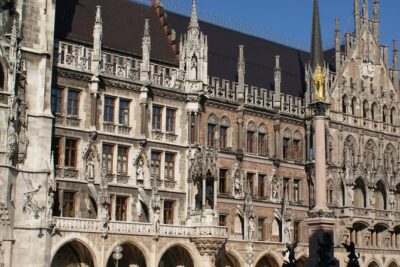
Dachau Concentration Camp Memorial Site And Third Reich Day Tour From Munich
Read our review →
Browse the lists this tour appears in