
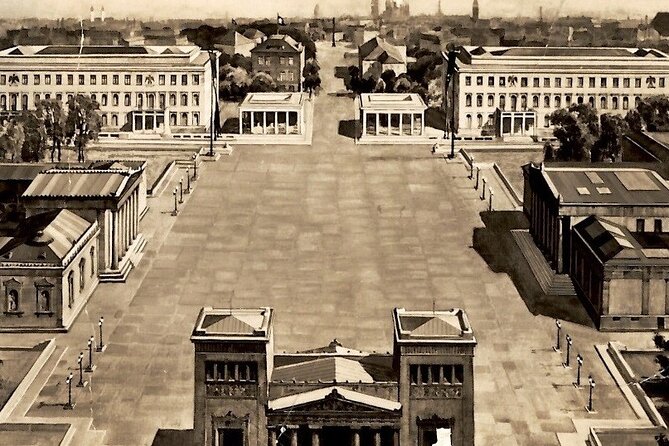
Reviewed · MUNICH THIRD REICH & WWII TOURS
Munich in the 3rd Reich and WW2 private walking tour
Munich’s polished old center hides a grim political story. This private walk follows the city’s role as the Nazi movement’s spiritual home, from postwar unrest and Hitler’s rise to the war’s destruction and the American takeover in 1945. The visual aids help connect today’s streets with vanished scenes.
I like the private format, since you can ask direct questions and adjust the focus for adults, teenagers, or serious history fans. I also like the beer-hall pause, which gives the subject a local setting rather than turning the afternoon into a nonstop lecture.
The main drawback is the walking. You cover the route on foot in all weather, and the subject is grim. Cold, rain, or icy pavement can affect the pace, so wear good shoes and dress for Munich’s forecast.
Key points to know before you book
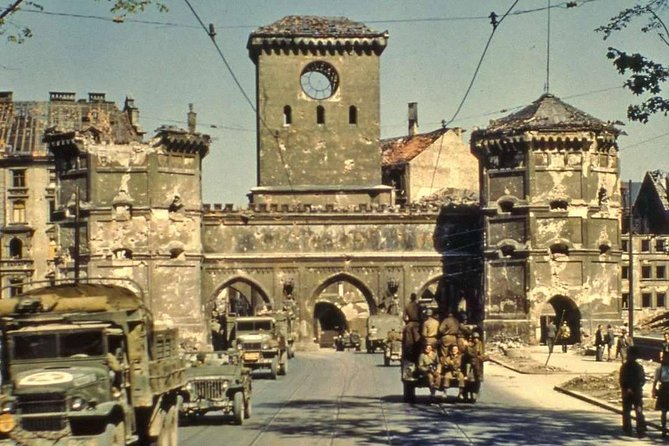
- Isartor to Odeonsplatz: The route links two central Munich landmarks and finishes near the Residenz and Marienplatz.
- A private group of up to six: You get the guide’s full attention and can ask for extra detail or a shorter route.
- A serious look at Munich’s Nazi past: Topics include the Treaty of Versailles, the Nazi Party’s origins, the Beer Hall Putsch, Kristallnacht, the Holocaust’s beginnings, the Munich Pact, bombing, and 1945.
- Guides use photos and historical objects: Taff Simon is often praised for visual material and dramatic storytelling, while Kevin and Joanne also lead tours.
- A possible beer-hall break: A stop connected with this history is generally included, though refreshments cost extra.
- Allow up to four and a half hours: The advertised length ranges from three and a half to four and a half hours, with a moderate amount of walking.
Why Munich is the right place for this history
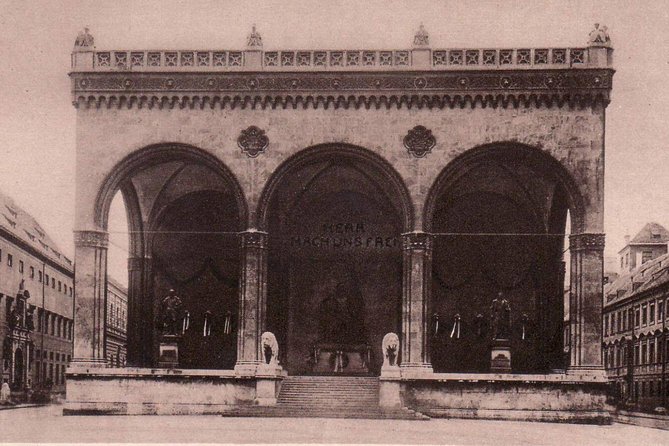
Munich is an easy city to misread. You see church towers, elegant squares, beer halls, shopping streets, and people in traditional dress. Yet after the First World War, the city became a center of political violence and radical movements.
The tour begins with that unsettled period. Germany was dealing with defeat, the Treaty of Versailles, economic pain, and social anger. Munich briefly became a Soviet Republic, and political groups fought openly for influence. This setting matters because it explains why the Nazi Party did not appear from nowhere.
I find this opening especially useful for visitors who know Hitler’s later crimes but want to understand how he gained a platform. The guide connects broad national events with Munich streets and meeting places. That local scale makes the subject easier to follow than a general lecture about Germany between the wars.
The tour also treats Munich as the place the Nazis called the Capital of the Movement. That title was propaganda, but it reveals how important the city was to the party’s self-image. Munich was not simply a backdrop. It was where the movement built its identity, tested its methods, and turned political theater into power.
Other Third Reich and wartime history tours in Munich:
- Munich: Third Reich & WWII Walking Tour
★ 4.6 · 6,181 reviews - Third Reich Walking Tour Munich
★ 4.5 · 4,291 reviews - Munich: Birthplace of the Third Reich Guided Walking Tour
★ 4.6 · 771 reviews
From Isartor into the story of the Nazi rise
The listed starting point is Isar Gate, at Tal 50. This is a practical place to begin because it sits in the central city and is close to public transportation. Pick-up can also be arranged at Hauptbahnhof or Marienplatz, so confirm the exact meeting point when you book.
From Isartor, your guide sets the historical frame before moving toward the central sites. Do not expect a bus or private vehicle. This is a genuine walking tour, and the route uses Munich’s streets to explain how events unfolded.
The first section covers the origins of the Nazi Party and Hitler’s early role in Munich politics. You will hear how the city’s postwar unrest offered opportunities to ambitious extremists. The subject is not presented as a simple story of one man suddenly taking control. It is about propaganda, grievance, fear, organization, and the failure of democratic institutions.
This is where a private guide can be more useful than a large group. If you already know the basic chronology, you can ask about lesser-known people and events. If the subject is new to you, the guide can slow down and explain terms without making you feel lost.
The Beer Hall Putsch and Munich’s political theater
One of the central episodes is the Beer Hall Putsch, Hitler’s failed attempt to seize power in 1923. The tour explains what led to it, how the plan unfolded, and why its failure still helped Hitler gain wider attention.
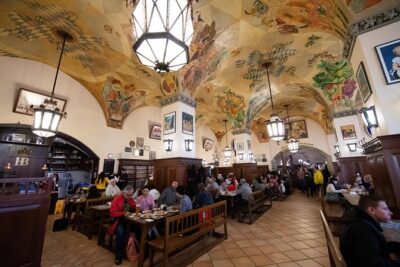
A beer hall is not an incidental setting in this story. In Munich, such places were used for speeches, political meetings, social organizing, and public displays of loyalty. The tour generally includes a break in a beer hall linked with this period. Hofbräuhaus is associated with this part of the experience, though the exact stop should be confirmed with your guide.
That pause can be valuable, but keep your expectations sensible. The refreshments are not included, and this is not a food tour. You are stopping for atmosphere and context, perhaps with a beer or coffee, while the guide continues the story.
I would tell you not to treat the beer-hall stop as light entertainment. The subject remains serious. It helps you understand how ordinary social spaces could become political stages, and why public speaking and crowd management mattered so much to the Nazi movement.
Kristallnacht and the road toward mass murder
The section on Kristallnacht, the November 1938 pogrom against Jewish people and Jewish property, marks a major shift in the tour. The discussion moves from the Nazi rise to organized persecution and the early stages of the Holocaust.
This is one of the most important parts of the walk because it shows how discrimination became open violence. The guide links local places and national policy, helping you see that persecution was not confined to distant camps or wartime battlefields. It took place in cities, neighborhoods, businesses, and public spaces.
The tour is designed for adults and older children who can handle difficult material. One guide, Kevin, has been praised for keeping an 11-year-old engaged, while another guide held the attention of a 13-year-old during a tailored tour. That does not make the subject easy, but it suggests the presentation can work for families with teenagers.
Expect a direct, thoughtful account rather than a cheerful sightseeing script. Taff Simon is known for using photographs and props to show how places looked in the period. Such material can make the information clearer, though anyone sensitive to wartime history should be prepared for painful content.
More walks through the old town:
- Munich: Old Town & Viktualienmarkt City Walk in German
★ 4.7 · 2,304 reviews - Munich: Night Watchman Walking Tour
★ 4.7 · 2,092 reviews - Munich Ghosts and Spirits Evening Walking Tour
★ 5.0 · 1,900 reviews - Munich Old Town Walking Tour
★ 4.5 · 1,287 reviews
Nazi headquarters, the Munich Pact, and the machinery of power
The route also covers Nazi Party headquarters and the signing of the Munich Pact. These subjects show a different side of the regime: administration, diplomacy, public image, and the use of grand buildings to project authority.
The Munich Pact is especially useful as a link between local history and the wider European crisis. The tour places Munich inside the chain of decisions that preceded the Second World War. You get a better sense of how diplomacy, concessions, and political calculation shaped the months before war began.
At this point, the guide may use old photographs to compare the modern city with the earlier one. Munich has changed, and many sites no longer look as they did. That can be frustrating if you want preserved Nazi architecture, but it is also an honest lesson in how cities rebuild, remove symbols, and decide what should remain visible.
Taff is frequently praised for bringing pictures and historical objects along. Guides may also act out parts of the story or use a dramatic style. If you prefer a quiet academic lecture, that approach may feel theatrical. If you learn best through stories and visual comparisons, it can make a difficult chronology easier to remember.
Bombing, defeat, and the American arrival in 1945
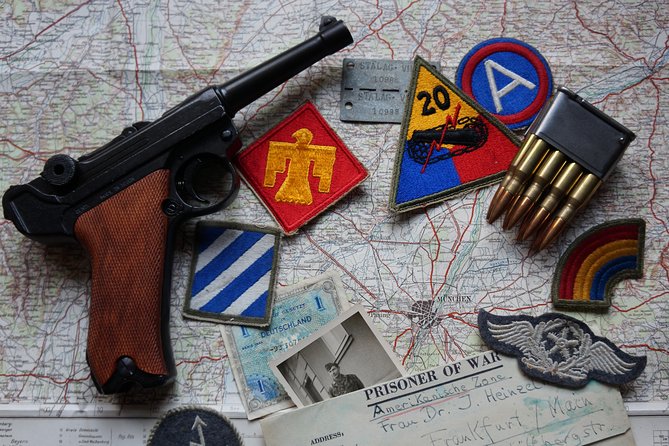
The final section turns to the war itself. You learn about the Allied bombing campaign, the damage to Munich, and how the city fell to US forces in 1945.
This closing chapter prevents the tour from ending with the Nazi Party’s rise. It follows the consequences through defeat and destruction. Munich’s beauty today can make wartime damage hard to picture, so the guide’s photographs are particularly useful here.
The story also brings the political history back to ordinary city life. Bombing, shortages, fear, and military defeat affected the streets you walk through now. By the time the tour reaches Odeonsplatz, the narrative has moved from extremist meetings to a city occupied and forced to face what had happened.
The end point is Odeonsplatz, a large square beside the Residenz palace and only a few minutes from Marienplatz. That makes it a convenient place to continue sightseeing, find food, or use public transportation after the tour. The walk does not strand you on the edge of town.
What the private format adds
The price is $423.44 per group of up to six. That is a substantial amount for a walking tour, but the calculation changes if you fill most of the six places. For six people, it works out to about $71 per person. For two people, it is about $212 per person, so the value depends heavily on group size.
You are paying for time, privacy, and flexibility rather than entry tickets or transport. The professional guide is included, but refreshments are not. There is no car or bus, and the experience focuses on conversation, streets, photographs, and historical explanation.
The private format suits families and small groups with mixed interests. You can ask for more detail about the White Rose, a subject one guide has included beyond the standard material. You can also request local tips, medieval history, or other Munich points of interest when time allows, though the tour’s main subject remains the Third Reich and the Second World War.
The guide can adjust the pace. On a very cold December day, a group asked to shorten the tour, and the route was adapted without dropping the main substance. That flexibility is useful, but do not assume every shortened version will cover every location.
Guide style and who will enjoy it
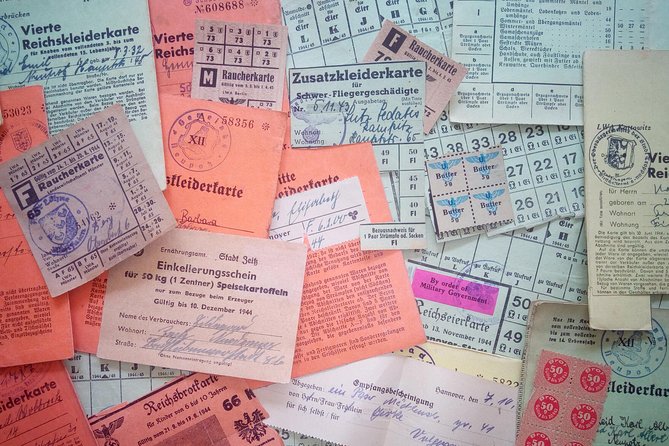
Taff Simon is the name most closely associated with this experience. He brings visual aids, photographs, props, and a strong sense of narrative. He also has archaeological experience and leads tours on other periods of German history.
Kevin is another possible guide. He has been praised for his humor, broad knowledge of Munich, and ability to keep a child engaged. Joanne has also led the walk, including as a substitute guide, and uses photographs and stories to explain the city’s wartime past.
Because guide availability can change, you may not receive a specific person unless that is confirmed in advance. The common thread is a personalized English-language tour, not a fixed performance delivered by one guide every day.
I would choose this experience if you want conversation. You can stop to ask why a particular event mattered, request more detail about a person, or connect the story to something you have already studied. A large public tour may cost less, but it will rarely give you the same room for questions.
Walking comfort, weather, and timing
The advertised duration is about three and a half to four and a half hours. That range gives the guide room to adapt the pace, add questions, include a break, or shorten the route when conditions are poor.
You should wear supportive shoes. The tour involves a moderate amount of walking, and there is no vehicle between sites. Munich’s weather can change quickly, so bring a waterproof layer and warm clothing when needed. The walk operates in all weather conditions.
A beer-hall break is generally part of the outing, but you can ask for a cafe instead. Tell the guide before or during the tour if that suits your group better. Service animals are allowed, and the tour is near public transportation.
Confirmation is sent within 48 hours of booking, subject to availability. Free cancellation is available until 24 hours before the start time. After that point, the price is not refunded, and late changes are not accepted.
Should you book this Munich history walk?
Book it if Munich’s role in the Nazi rise interests you, especially if you want more than a list of dates and buildings. The route covers the full arc from postwar unrest to the Nazi Party, the Beer Hall Putsch, Kristallnacht, the Munich Pact, bombing, and defeat.
It is also a good choice for families with older children, couples who want a private guide, and history fans who enjoy photos, props, and lively storytelling. The strongest value comes when four to six people share the price and use the private format fully.
Think twice if you dislike long walks, want a light introduction to Munich, or prefer museum exhibits to outdoor explanation. The subject is severe, the weather may be unkind, and entry tickets or drinks are not part of the price.
For the right group, this is one of the clearest ways to understand why Munich mattered so much to the Nazi movement, and how an attractive modern city became tied to one of Europe’s darkest chapters.
FAQ
Where does the Munich Third Reich and WW2 tour start?
The listed starting point is Isar Gate at Tal 50, 80331 Munich. Pick-up can also be arranged at Munich Hauptbahnhof or Marienplatz.
Where does the tour finish?
The tour ends at Odeonsplatz, beside the Residenz palace and a few minutes from Marienplatz.
How long does the walking tour last?
The experience lasts approximately three and a half to four and a half hours.
Is the tour private?
Yes. Only your group participates, with a maximum group size of six people.
Is the tour offered in English?
Yes. English is the listed tour language.
Is food or drink included?
No. The tour generally stops at a beer hall connected with the history, but refreshments are not included. You can ask to stop at a cafe instead.
What happens if the weather is bad?
The tour operates in all weather conditions, so dress appropriately and wear suitable footwear. It involves a moderate amount of walking and does not use a car or bus.
Recently reviewed in Munich
- München: Vegetarische Viktualienmarkt-Probiertour Deutsch★ 4.8 · 6 reviews
- Wright Europe Vacations – Private Escorted Auto Tours★ 5.0 · 35 reviews
- Best of Munich Electric Bike Tour★ 5.0 · 38 reviews
- Munich Walking Quiz: Explore and Discover the City’s Highlights★ 5.0 · 7 reviews
- Walking Tour on Resistance to Nazism in Munich★ 5.0 · 8 reviews
- Private Transfer from Munich to Salzburg with 2 hours for sightseeing★ 4.5 · 13 reviews
- Private Transfer from Munich to Vienna with 2 hours for sightseeing★ 4.5 · 6 reviews
- 2 hour Sights Guided E-Scooter Tour in Munich★ 4.0 · 6 reviews
Munich Third Reich & WWII Tours, compared.
Birthplace of the Third Reich Guided Walking Tour
Read our review →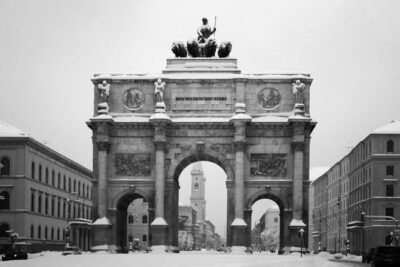
Munich World War II Sites Including Dachau Concentration Camp
Read our review →
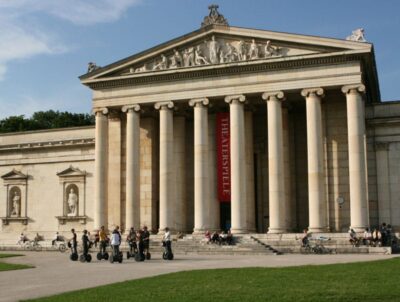
Munich 3-Hour Segway Tour: Nazi Munich & Royal Architecture
Read our review →
Dachau Concentration Camp Memorial Site And Third Reich Day Tour From Munich
Read our review →
Third Reich and World War II Segway Tour of the City
Read our review →Browse the lists this tour appears in