
Reviewed · MUNICH HISTORY TOURS
Munich: Historical Walking Tour Maxvorstadt with GEO Epoche
Munich’s Maxvorstadt is not just a district of museums and students. It is where Ludwig I imagined a grand, Mediterranean-style capital, where artists and café society shaped city life, and where Munich’s darker 20th-century story also unfolded. This two-hour walk from Odeonsplatz links those themes in one compact route.
I like the focus on Brienner Street, Munich’s first boulevard, and the partnership with GEO Epoche, a respected German history magazine. I also like that the tour does not stop at pretty façades. One drawback is clear: the tour is conducted only in German, and its rain-or-shine format calls for good shoes and sensible clothing.
Key points about the Maxvorstadt walk
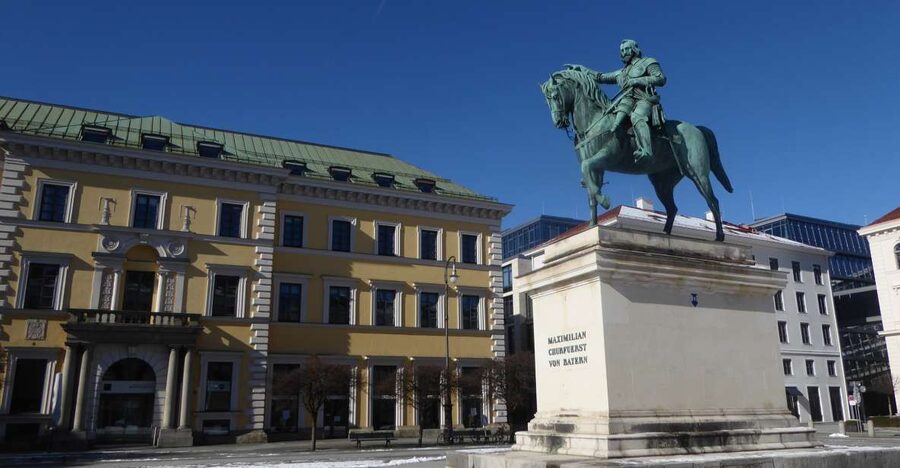
- Brienner Street reveals Ludwig I’s grand plan: Follow Munich’s first boulevard and hear how the king pictured an Athens on the Isar.
- The route covers both glamour and war: Palaces, concert halls, cafés, and the city’s World War II past all form part of the story.
- Theatinerkirche is the meeting point: Find your guide in front of the church at Odeonsplatz.
- A two-hour format keeps the tour focused: You get a strong introduction to Maxvorstadt without giving up an entire day.
- German is the only tour language: This is best for German speakers who can follow a live historical explanation on the move.
- Guide Axel has drawn warm praise: His friendly, clear approach has made a strong impression on recent participants.
Starting at Theatinerkirche and Odeonsplatz
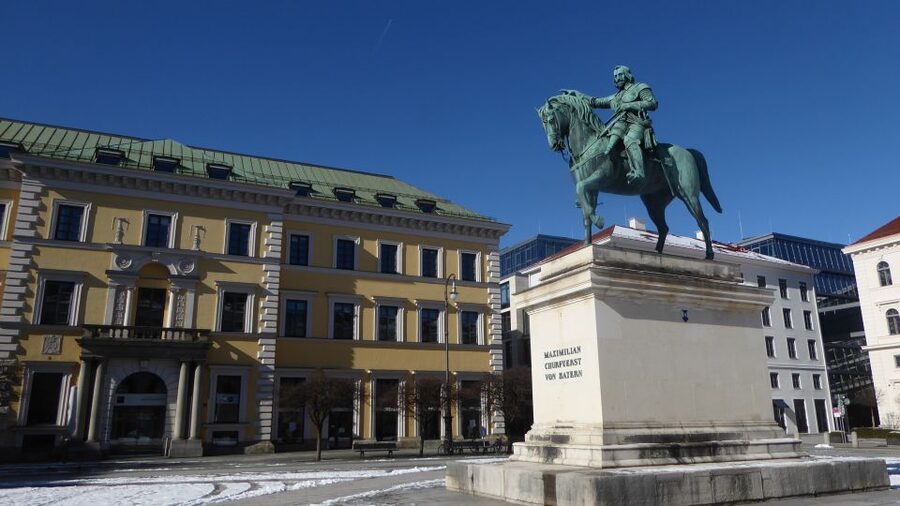
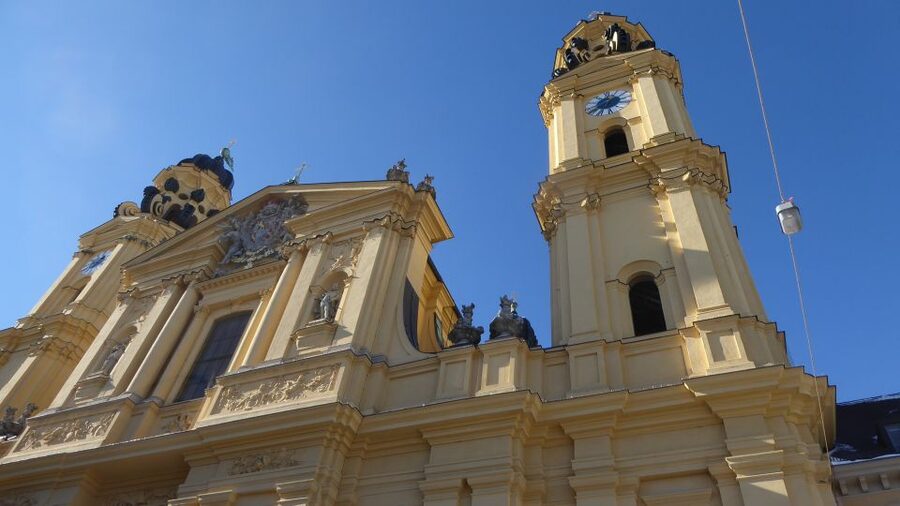
Your tour begins in front of the Theatinerkirche, one of the most recognizable points at Odeonsplatz. This makes the meeting place easy to identify, though you should still arrive with enough time to find the church entrance area and locate the guide.
Odeonsplatz is a fitting starting point because the tour quickly places you in Munich’s grandest political and architectural setting. From here, you move toward Maxvorstadt, a district known today for its student population and young residents. The walk uses the streets themselves as the classroom, so you are not simply collecting dates. You are connecting buildings, boulevards, and public spaces with the choices that shaped Munich.
The guide leads on foot, so wear shoes that can handle two hours on city streets. Bring water, and dress for the forecast. The tour runs in rain or shine, which is useful for planning but less appealing if Munich produces one of its damp days. An umbrella or rain jacket can make a real difference.
More history tours in Munich:
- Munich 3-Hour Segway Tour: Nazi Munich & Royal Architecture
★ 4.9 · 194 reviews - Munich: Guided Tour of the historic Town Hall on Marienplatz
★ 4.8 · 63 reviews - Munich’s Hidden Architecture Guided Tour
★ 4.9 · 47 reviews
Ludwig I’s Athens on the Isar
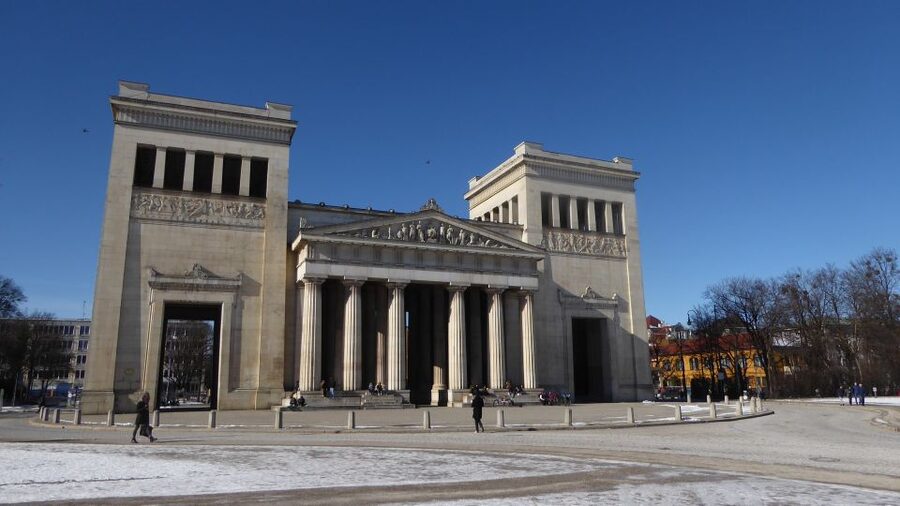
One of the tour’s central ideas is Ludwig I’s dream of turning Munich into an Athens on the Isar. That phrase captures the king’s desire for a city with classical grandeur, broad avenues, Mediterranean flavor, and cultural prestige.
You will hear how this vision affected Maxvorstadt. The point is not only that Munich acquired impressive buildings. It is that the district became part of a deliberate effort to give Bavaria a capital that could compete in cultural and political stature with Europe’s leading cities.
This section should appeal to you if you enjoy learning why a city looks the way it does. A building can be attractive on its own, but the story becomes more useful when you understand the ambition behind it. The guide’s task is to connect the city’s appearance with royal planning, cultural life, and the changing role of Munich.
The Italian influence is another appealing thread. The experience promises Italian flair alongside stories of artists and bohemian life. That mix helps explain why Maxvorstadt feels different from a purely administrative district. Its identity grew from art, education, public culture, and grand royal planning.
Walking Brienner Street, Munich’s first boulevard
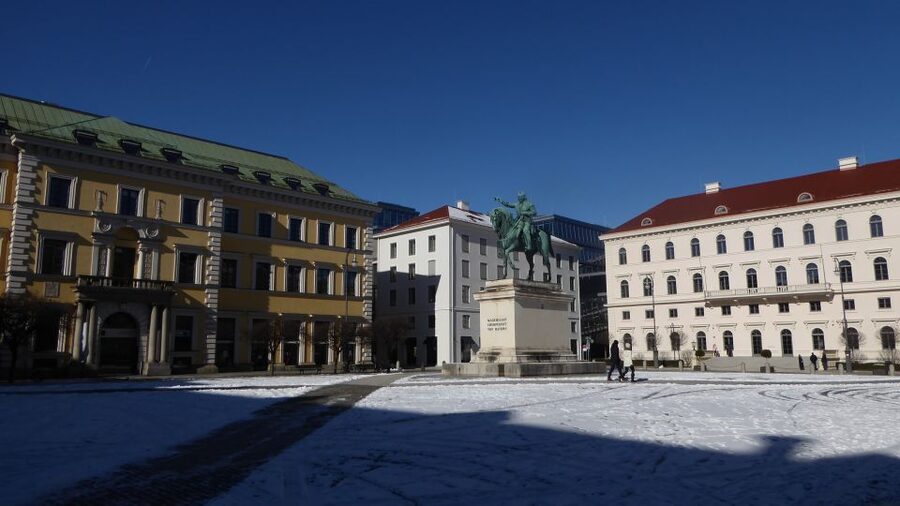
Brienner Street is the tour’s clearest physical highlight. It is presented as Munich’s first boulevard, and the walk uses it to explain the city’s royal and cultural ambitions.
Here you learn about the palaces, concert halls, and glamorous cafés connected with the period shaped by Ludwig I. The route gives these places a social setting. They were not isolated monuments. They belonged to a city center designed for court life, public events, music, conversation, and display.
I like this part because a boulevard is easy to read while walking. Its scale, connections, and buildings give you something concrete to look at as the guide explains the past. You can also return later with a better sense of what you are seeing. A self-guided stroll along Brienner Street may show you grand architecture, but a guide helps turn it into a story about Munich’s ambitions.
The limitation is that the available information does not promise interior visits to palaces, concert halls, or cafés. Treat this as an outdoor walking tour, not an entry ticket to major attractions. If you want museum interiors or formal palace tours, plan those separately.
Artists, students, and the changing face of Maxvorstadt
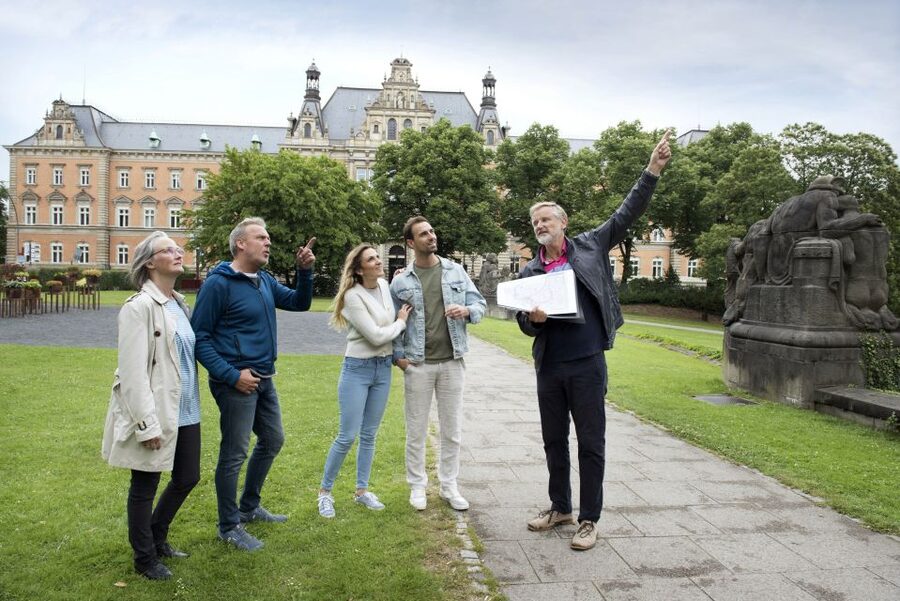
Maxvorstadt is also presented as a district shaped by artists and bohemian life. Today, it is student-oriented and has Munich’s youngest residents. That contrast gives the walk a useful time span: you see how an area built around royal grandeur later became associated with education, art, and youthful city life.
The tour does not treat Maxvorstadt as frozen in one period. Instead, it follows the district through different versions of itself. The grand boulevard belongs to one chapter. The artistic and café culture belongs to another. The student character you notice today is yet another layer.
This is where the live guide matters most. Streets rarely explain their own changes. A guide can point out how the same area served different social groups and carried different meanings over time. The experience promises impressive facts and anecdotes, so expect a spoken narrative rather than a quiet architecture walk.
Feedback on the guiding has been especially warm. Axel is named as a sympathetic and effective guide, and his presentation has been praised as both informative and easy to follow. Guide assignments can vary, so Axel may not lead every departure, but his style gives you a useful idea of the tone to hope for: serious history delivered without turning the walk into a lecture.
Same city, a very different afternoon:
- From Munich: Neuschwanstein & Linderhof Castle Full-Day Trip
★ 4.5 · 12,494 reviews - Neuschwanstein & Linderhof Castle-Fairytale Day Tour from Munich
★ 4.5 · 7,275 reviews - Munich: Third Reich & WWII Walking Tour
★ 4.6 · 6,181 reviews - Dachau Concentration Camp Memorial Site Tour from Munich by Train
★ 4.5 · 5,637 reviews
Munich’s darker 20th-century story
The tour’s title might suggest a light stroll through elegant streets, but the route also addresses war and Munich’s role in World War II. This is an important part of the experience. A fair reading of the city cannot stop with royal dreams, classical style, and glamorous cafés.
The walk promises places that show both the beautiful and troubling sides of the past. That balance is one of its strongest features. You get the setting of the grand boulevard, then learn how the same city became tied to some of the darkest events of the 20th century.
Expect this part to change the tone. The tour is not only about architecture or amusing local anecdotes. It asks you to look at how public spaces carry political meaning and how Munich’s past includes responsibility as well as beauty.
The supplied details do not name every wartime stop or explain whether memorials are visited in detail. You should therefore think of this as a historically focused introduction, not a specialist World War II tour. If that period is your main interest, you may want a separate experience devoted fully to it. For a first visit to Maxvorstadt, though, the inclusion of the war years makes the story more honest and useful.
A GEO Epoche approach to local history
The tour was developed with GEO Epoche, a prominent history magazine. That matters because the experience is designed around researched stories rather than a loose collection of sightseeing comments.
You should still expect a walking tour, not an academic seminar. The value comes from hearing selected facts and anecdotes in the places where they matter. A good city walk gives you enough context to understand what you see, while keeping you moving through the neighborhood. This tour appears built around that balance.
The strongest aspect is its local scale. Instead of trying to explain all of Munich in two hours, it concentrates on the path from Odeonsplatz into Maxvorstadt. That focus should help you remember the material. You leave with a clearer idea of how one district reflects royal planning, art, café culture, student life, and war.
The five-star feedback also points to the tour’s accessible presentation. Participants have described it as very informative, competent, friendly, and entertaining. Those comments line up with the experience’s stated aim: serious history told through streets and anecdotes rather than a dry list of dates.
Is $29 a fair price for two hours?
At $29 per person, this is a reasonable price if you want a guided introduction to Munich’s history and can follow German comfortably. You are paying for a live guide, a tour brochure, and two hours of focused interpretation in one of the city’s most historically loaded districts.
The value depends heavily on language. For a German speaker, the tour offers more than a basic orientation walk because it connects cultural, political, artistic, and wartime themes. For someone who understands only simple German, the price may be harder to justify. The quality of the sights will not compensate for missing the guide’s explanations.
The tour also makes sense early in a Munich visit. It can help you understand Maxvorstadt before you return on your own. Afterward, Brienner Street and the area around Odeonsplatz should mean more than they would after a quick photograph.
There are no stated meals, transport services, attraction admissions, or hotel transfers. This is a straightforward walking experience. That keeps the cost clear, but it also means you should not expect extras beyond the guide and brochure.
Who will enjoy this walk most?
I would recommend it to you if you like city history delivered outdoors, prefer a compact tour, and want more than a list of famous buildings. It should suit visitors who enjoy hearing why a neighborhood developed as it did, especially those interested in royal planning, architecture, art, and Munich’s 20th-century story.
It is also a good fit for repeat visitors who have already seen central Munich’s main sights and want a more focused look at Maxvorstadt. The route introduces the district as a living area, not simply as a collection of attractions.
You should think twice if you need an English-language tour. The guide language is German, with no English option stated. The walk is also not suitable for people with mobility impairments, and the rain-or-shine policy means you need to be ready for outdoor conditions.
Pets are not allowed. Comfortable shoes, weather-appropriate clothing, and water are recommended. These are small planning points, but they matter on a two-hour city walk.
Booking decision: choose it for context, not just landmarks
Book this tour if you want Munich explained through one district, with Brienner Street as the main thread and World War II included in the story. The partnership with GEO Epoche, the high praise for friendly guiding, and the balance between royal splendor and darker history give it more substance than a simple photo walk.
Skip it if you need English, want to enter major buildings, or prefer a tour devoted only to World War II. For German speakers seeking a thoughtful, well-priced introduction to Maxvorstadt, this is a strong choice. It gives you a sharper sense of place, and that is often what a good walking tour should do.
FAQ
Where does the tour meet?
The guide waits in front of the Theatinerkirche at Odeonsplatz.
How long does the tour last?
The walking tour lasts two hours.
What language is the tour conducted in?
The live tour is conducted in German.
What area does the tour cover?
The route begins at Odeonsplatz and continues through Munich’s Maxvorstadt district.
Does the tour include Brienner Street?
Yes. The tour explores Brienner Street, described as Munich’s first boulevard, and explains its history.
What historical periods and themes are covered?
The tour covers Ludwig I’s vision of Munich as Athens on the Isar, Italian influence, artists and cafés, the development of Maxvorstadt, and Munich’s role during World War II.
Is the tour suitable in bad weather?
Yes. The tour takes place rain or shine, so bring weather-appropriate clothing.
Can I bring a pet?
No. Pets are not allowed on the tour.
Is the tour suitable for people with mobility impairments?
No. The activity is not suitable for people with mobility impairments.
More Walks Through the Old Town
- Third Reich Walking Tour Munich
★ 4.5 · 4,291 reviews - Munich: Old Town & Viktualienmarkt City Walk in German
★ 4.7 · 2,304 reviews - Munich: Night Watchman Walking Tour
★ 4.7 · 2,092 reviews - Munich Ghosts and Spirits Evening Walking Tour
★ 5.0 · 1,900 reviews
Recently reviewed in Munich
- München: Vegetarische Viktualienmarkt-Probiertour Deutsch★ 4.8 · 6 reviews
- Wright Europe Vacations – Private Escorted Auto Tours★ 5.0 · 35 reviews
- Best of Munich Electric Bike Tour★ 5.0 · 38 reviews
- Munich Walking Quiz: Explore and Discover the City’s Highlights★ 5.0 · 7 reviews
- Walking Tour on Resistance to Nazism in Munich★ 5.0 · 8 reviews
- Private Transfer from Munich to Salzburg with 2 hours for sightseeing★ 4.5 · 13 reviews
- Private Transfer from Munich to Vienna with 2 hours for sightseeing★ 4.5 · 6 reviews
- 2 hour Sights Guided E-Scooter Tour in Munich★ 4.0 · 6 reviews
Munich History Tours, compared.
Munich 3-Hour Segway Tour: Nazi Munich & Royal Architecture
Read our review →
Guided Tour of the historic Town Hall on Marienplatz
Read our review →
Death and Chocolate: Walking Tour of Munich’s Old South Cemetery
Read our review →
Munich History Tour: Private & Personalized with a Local Guide
Read our review →
Munich and Nazi History Combination Day Tour Small Group
Read our review →
Private Sound-of-Music and Historic Salzburg Tour from Munich
Read our review →Browse the lists this tour appears in