
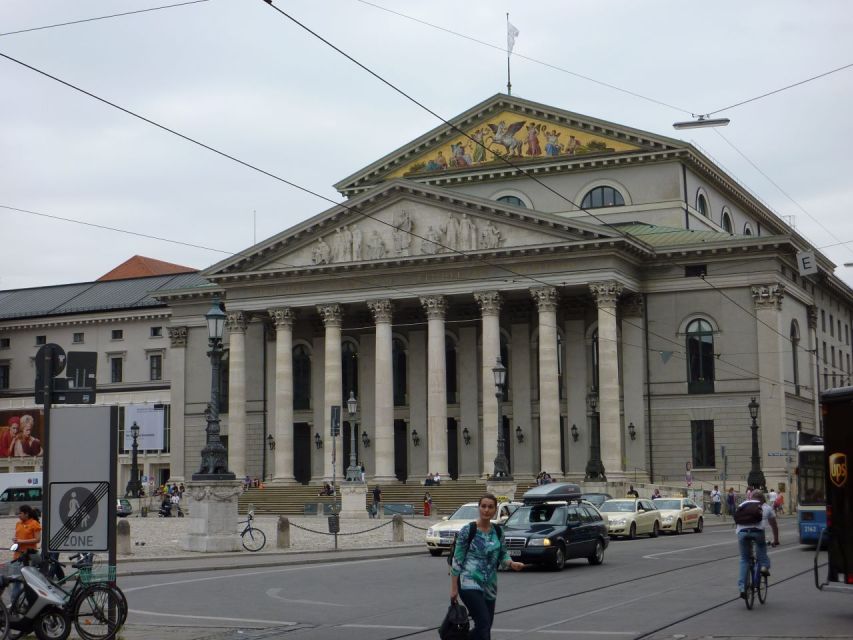
Reviewed · MUNICH HISTORY TOURS
Munich: Private Walking Tour of the Historical City Center
Munich’s old center packs monks, kings, beer halls, Nazi history, legends, and food stalls into a walk of about three hours. You follow streets where Hitler’s Beer Hall Putsch unfolded, hear about Georg Elser’s attempt to stop the war, and learn why Marienplatz and the Rathaus-Glockenspiel matter.
I like the private format, especially if you want to ask questions or set a faster or slower pace. I also like the chance to add the Residenz Museum, since the palace gives useful context for Bavaria’s royal past. The main caution is that the experience depends heavily on your guide. One guest found the guide difficult to hear and not very engaging, while Tom was praised as a natural storyteller.
Key points to know before booking
- Three hours on foot: The route links Marienplatz, St. Peter’s, Frauenkirche, Odeonsplatz, Hofbräuhaus, and Viktualienmarkt.
- A serious side of Munich: You hear about the Beer Hall Putsch, Eva Braun, and Georg Elser’s failed attempt to assassinate Hitler.
- Residenz option available: Choose the version that includes a guided visit to Munich’s former royal palace.
- Private group pricing: The $288 rate covers up to 15 people, making the cost more reasonable for a larger party.
- English or German guide: The tour is offered in both languages, with guide quality shaping the experience.
- Not fully accessible: The walking tour is not suitable for wheelchair users.
Starting at the Fish Fountain in Marienplatz
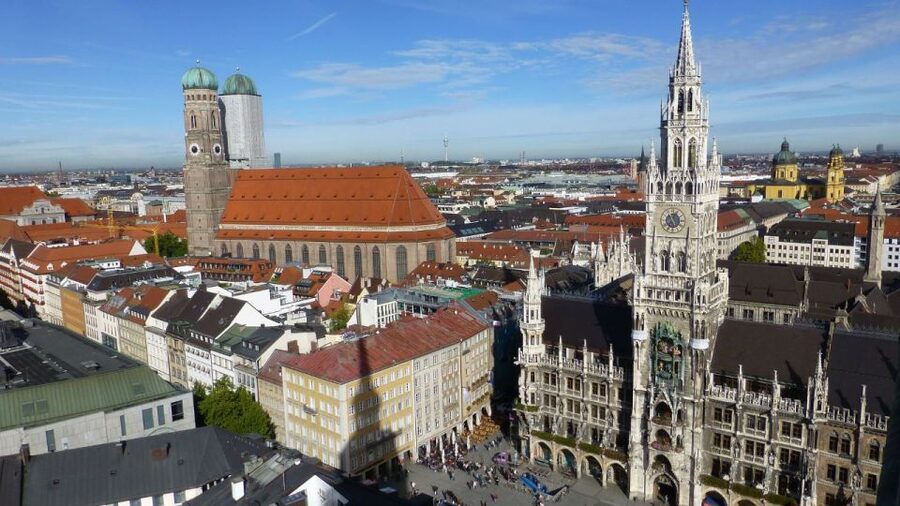
Your meeting point is the fish fountain in front of the Town Hall at Marienplatz 8. This is a practical place to begin because Munich’s central square brings several major sights together, including the Old Town Hall, the New Town Hall, and the famous clock tower.
Marienplatz takes its name from Mary’s Column, the tall column in the middle of the square. Your guide explains why it was erected and how the square became the heart of Munich. That background helps you read the city instead of simply passing through a handsome open space.
The fountain is also a useful landmark for a private meeting. Still, Marienplatz can be crowded, and you should allow enough time to find the fish fountain near the Town Hall. A private guide may be able to adjust the starting time, as one guide agreed to meet a small group earlier than scheduled.
More history tours in Munich:
- Munich 3-Hour Segway Tour: Nazi Munich & Royal Architecture
★ 4.9 · 194 reviews - Munich: Guided Tour of the historic Town Hall on Marienplatz
★ 4.8 · 63 reviews - Munich’s Hidden Architecture Guided Tour
★ 4.9 · 47 reviews
Reading the New Town Hall’s Glockenspiel
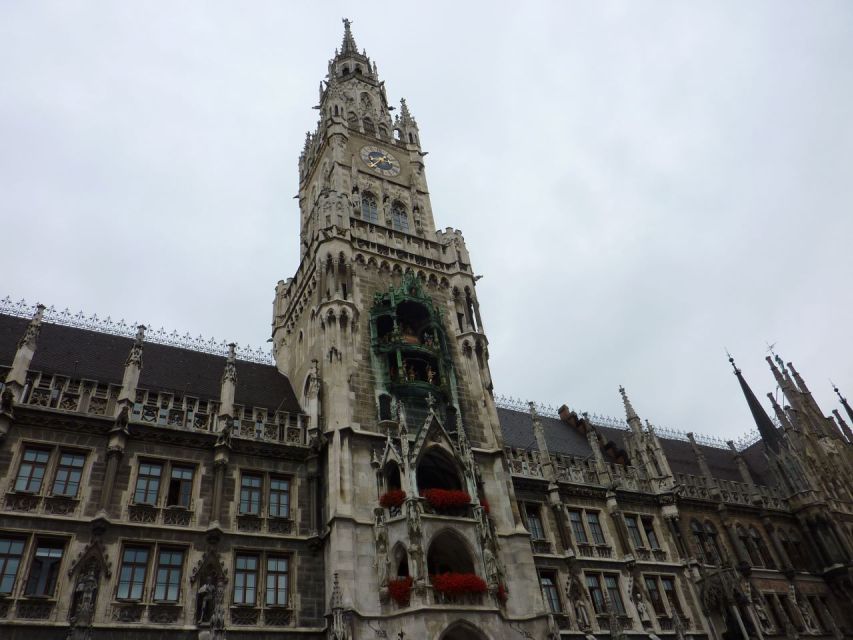
Munich’s New Town Hall dominates Marienplatz with its Gothic-looking facade and tall clock tower. The Rathaus-Glockenspiel is the building’s best-known feature, but the moving figures are easier to appreciate once you know what they represent.
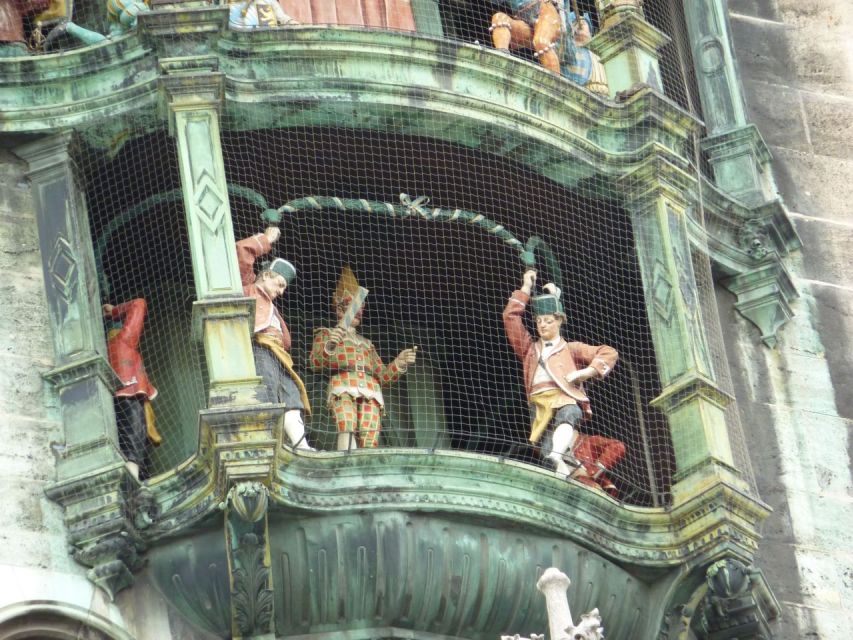
Your guide explains the stories shown by the clock, rather than leaving you to watch the figures without context. The display connects Munich’s civic identity with ceremony, marriage, and public celebration. Ask your guide to point out the parts that are easiest to miss from the square.
The Old Town Hall provides a useful contrast. It is more restrained than the New Town Hall and helps show how Munich’s civic center changed over time. You will not get a long museum visit here, but the outside views and explanation make the two buildings more than photo stops.
St. Peter’s and the city’s monastic beginnings
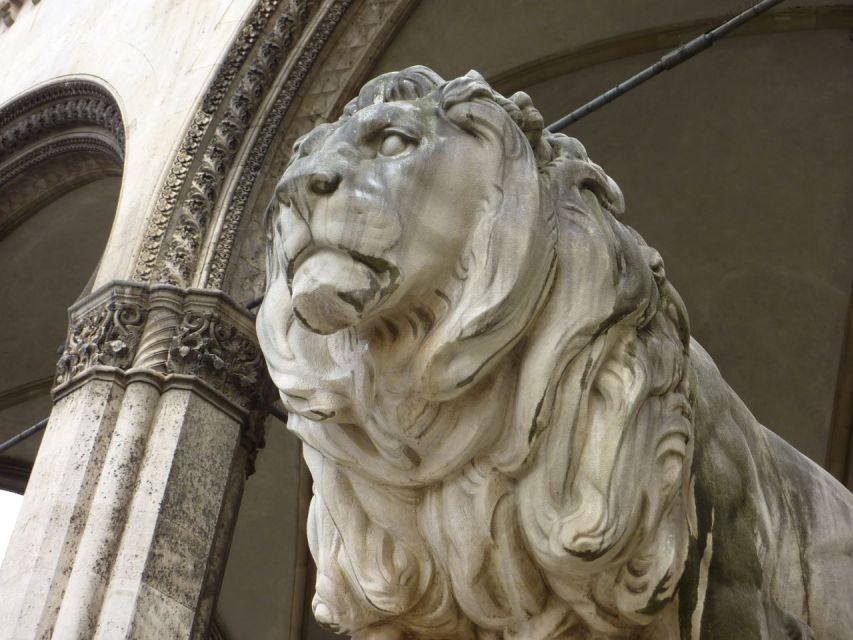
The next part of the walk turns to St. Peter, Munich’s oldest Catholic church. The story here begins with monks, whose settlement helped give rise to the city. That detail shifts the focus away from palaces and grand political events and toward Munich’s early religious roots.
The church is also tied to the city’s oldest hill and central position. Your guide explains the role St. Peter played in Munich’s growth and points out the features that matter from the outside. Entrance details are not included, so do not assume the tour price covers admission to every interior along the route.
You then get a view of the Frauenkirche, Munich’s largest church. Its twin towers are among the city’s clearest landmarks, and they help you keep your bearings as you walk through the center. The guide also tells the story of the devil’s footprint inside the cathedral, a local legend that adds a little drama to an otherwise formal church.
That mix is one of the walk’s strengths. You get factual background about the city’s churches, but also the legends that give familiar buildings a human scale. If you prefer only dates and architecture, some of the folklore may feel less important. If you enjoy local stories, it makes the route more memorable.
Munich’s Nazi past at Odeonsplatz
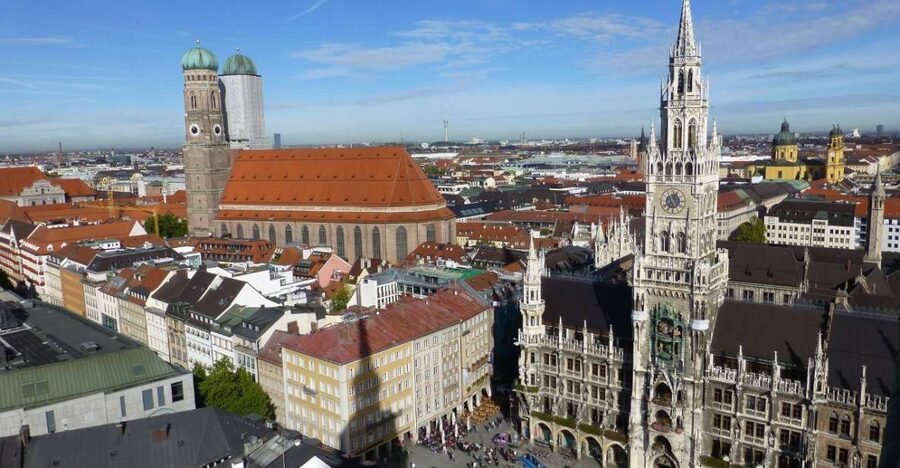
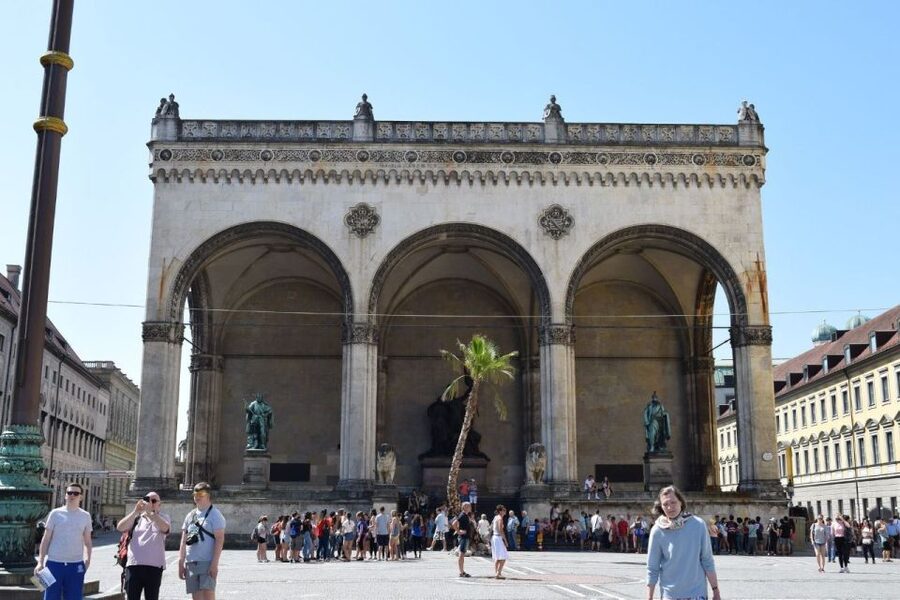
The tour’s most serious section comes at Odeonsplatz. Here, the guide discusses the Beer Hall Putsch, the Nazi Party’s first attempt to seize power. In 1923, about two thousand men led by Adolf Hitler marched toward central Munich before the effort failed.
This stop matters because Munich is not only a city of palaces, churches, and beer gardens. It also played a major role in the rise of the Nazi movement. A good guide should explain the event plainly and connect it to the streets around you without turning the subject into spectacle.
You also hear about Georg Elser, a Munich carpenter who planned an assassination attempt intended to stop Hitler and prevent the outbreak of the Second World War. His story is less familiar than the major Nazi milestones, which makes it a valuable part of the route.
The itinerary also includes information about Eva Braun, who grew up in Munich and later became Hitler’s wife. These stories add personal details to a difficult period, but the guide’s tone matters. Since the walk covers sensitive subjects in a short time, the quality of the explanation will affect how much you take away.
Same city, a very different afternoon:
- From Munich: Neuschwanstein & Linderhof Castle Full-Day Trip
★ 4.5 · 12,494 reviews - Neuschwanstein & Linderhof Castle-Fairytale Day Tour from Munich
★ 4.5 · 7,275 reviews - Munich: Third Reich & WWII Walking Tour
★ 4.6 · 6,181 reviews - Dachau Concentration Camp Memorial Site Tour from Munich by Train
★ 4.5 · 5,637 reviews
Beer halls, royal breweries, and Munich’s public life
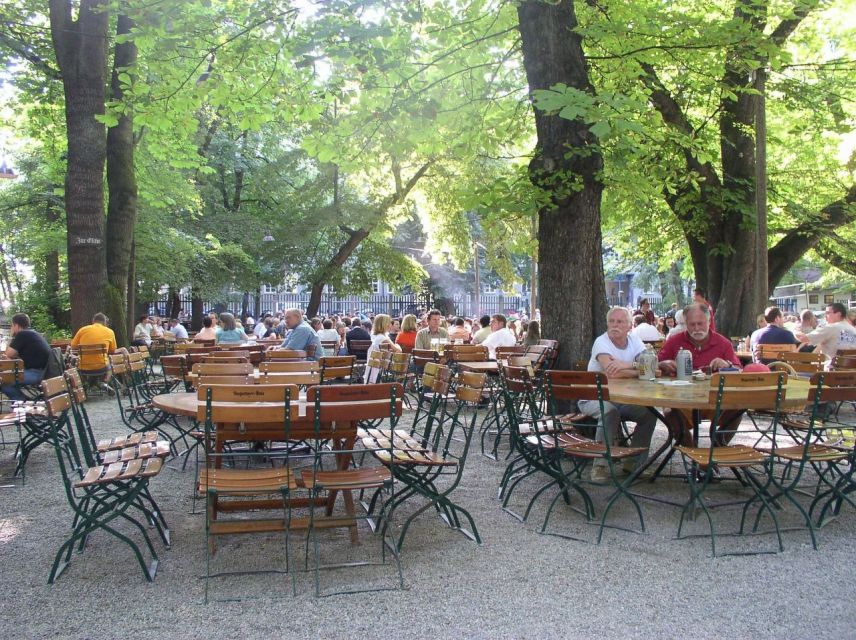
Munich’s beer culture gets its own share of attention. You pass famous beer gardens and hear how some were established nearly 450 years ago. These are not just places to drink. They are part of the city’s public life and a reminder that food, beer, and outdoor social spaces have long shaped Munich’s identity.
The route includes Hofbräuhaus, the royal brewery established in 1589. The building is one of Munich’s best-known stops, and its fame can make it feel touristy. Even so, knowing that it began as a royal brewery gives the place a stronger connection to Bavarian court life.
You should not expect a meal or beer tasting as part of the tour. Food and drinks are not included. That is useful to know because Hofbräuhaus and the market are tempting places to stop, but any purchase comes separately and may shorten the walking time.
The private format helps here. If your group wants to spend more time looking at a beer hall or asking about Bavarian drinking customs, you can raise the subject with the guide. The route is fixed enough to cover the key sights, but a private walk is more flexible than a large group excursion.
A final stop at Viktualienmarkt
The walk finishes by passing Viktualienmarkt, Munich’s central public food market. Stalls offer fresh produce and local delicacies, making this a good final stop for understanding the city through everyday food rather than grand monuments.
The market also contains one of the most central beer gardens in Munich. You can use the area after the tour to browse, eat, or order a drink, though those costs are on you. Since the tour ends here, it is convenient to continue exploring without having to return to Marienplatz.
Viktualienmarkt works well as the closing scene because it brings together several themes from the walk: local habits, Bavarian food, beer culture, and central Munich life. It is less formal than the churches and royal buildings, and that change of mood gives the tour a pleasant finish.
Adding the Residenz Museum
You can choose an option that includes the Residenz Museum. Munich’s Residenz was the home of Bavaria’s rulers, so it gives you a closer look at the royal side of the city that you only hear about on the street.
The museum adds an indoor component to a route otherwise spent walking through the center. That can be useful on a hot or wet day, though the exact balance between outdoor walking and museum time depends on the option you book and the guide’s pacing.
Entrance fees are not included in the standard tour information, so check carefully that you select the Residenz option if you want the museum visit. Do not assume the basic walking tour includes admission. The museum is best for you if palace rooms, royal collections, and court life interest you. If your priority is Munich’s Nazi history and food culture, you may prefer to keep the tour focused on the streets.
How the private price works for your group
The listed price is $288 per group of up to 15 people. That is a high total for one or two people, especially since the standard package includes a guide but not food, drinks, or entrance fees.
The calculation changes for a family or larger party. Split among 10 people, the guide cost is about $29 per person. At the full group size, it drops to about $19 per person. For a small group of two, you are paying for privacy and direct access to the guide rather than a low per-person rate.
That privacy has real value if you want to ask about Munich’s difficult past, adjust the pace, or keep the tour centered on your interests. It also means you should choose carefully. One small group found its guide quiet, hard to understand, and not very engaging. With only two people, that problem was especially noticeable.
Another experience with Tom was described as especially strong because he shared so much about Munich and told stories naturally. The overall score is 4.8 from seven ratings, but the small number of ratings means you should treat the guide experience as a variable rather than a guarantee.
Timing, pace, and practical limits
The activity lasts three hours. That is enough time to connect the major central sights, but not enough for long interior visits at every church, palace, and town hall. Think of it as a city orientation with substantial history, not a full museum program.
You will be walking through the historic center, so comfortable shoes matter. The tour is not suitable for wheelchair users. The information provided does not specify the exact distance, number of stairs, or interior access at each stop, so ask before booking if those details affect your plans.
English and German are available. If you need English, confirm that your chosen guide is comfortable speaking clearly at a pace your group can follow. This is especially important because one small group struggled to hear its guide. A quiet guide can make a private tour feel surprisingly impersonal.
Cancellation is flexible up to 24 hours before the start for a full refund. You can also reserve now and pay later, which helps if your Munich plans are still shifting. Starting times vary, so check availability for your chosen date.
Who will get the most from this walk
I would choose this tour for a first visit to Munich when I want the major central sights tied together by a single story. It suits families, couples, and friend groups who value privacy and want to ask questions without keeping up with a large crowd.
It is also a good fit if Munich’s political past matters to you. The stops at Odeonsplatz, the discussion of the Beer Hall Putsch, Georg Elser’s assassination plan, and Eva Braun’s connection to the city give the walk more weight than a simple sightseeing circuit.
The tour is less suitable if you want extensive time inside museums or churches. It is also not the best value for one or two people who mainly want a quick introduction and are comfortable joining a shared group walk. The Residenz option helps, but you should confirm what admission costs are included before paying.
Should you book this Munich walking tour?
Book it if you are a private group of several people and want Munich’s landmarks explained through stories about monks, royalty, beer culture, and the Nazi period. The $288 group rate becomes much more reasonable as your party grows, and the route covers a useful slice of the city center in three hours.
Choose the Residenz version if royal interiors are a priority. If you mainly want markets, churches, and political history, the basic route may be enough. Pay close attention to the guide language and communication style, since the experience can vary sharply between a quiet guide and a storyteller such as Tom.
For a small group of two, book only if privacy and personal questions are worth the premium. For a larger party looking for an efficient first look at Munich, this is a solid choice, with the usual private-tour warning: the guide makes the walk.
FAQ
How long does the Munich private walking tour last?
The tour lasts three hours.
Where does the tour meet?
The meeting point is the fish fountain in front of the Town Hall at Marienplatz 8, 80331 München.
What sights are included on the walking route?
The route includes Marienplatz, the Old and New Town Halls, the Rathaus-Glockenspiel, St. Peter’s Church, the Frauenkirche, Odeonsplatz, Hofbräuhaus, and Viktualienmarkt.
Can I visit the Residenz Museum during the tour?
Yes. You can choose an option that includes a guided visit to the Residenz Museum.
Is admission to attractions included?
Entrance fees are not included in the listed tour inclusions. Food and drinks are also not included.
What languages are available?
The live guide is available in English or German.
Is this a private tour?
Yes. The tour is for a private group of up to 15 people.
Can I cancel for a refund?
You can cancel up to 24 hours in advance for a full refund. Reserve now and pay later is also available.
More Walks Through the Old Town
- Third Reich Walking Tour Munich
★ 4.5 · 4,291 reviews - Munich: Old Town & Viktualienmarkt City Walk in German
★ 4.7 · 2,304 reviews - Munich: Night Watchman Walking Tour
★ 4.7 · 2,092 reviews - Munich Ghosts and Spirits Evening Walking Tour
★ 5.0 · 1,900 reviews
Recently reviewed in Munich
- München: Vegetarische Viktualienmarkt-Probiertour Deutsch★ 4.8 · 6 reviews
- Wright Europe Vacations – Private Escorted Auto Tours★ 5.0 · 35 reviews
- Best of Munich Electric Bike Tour★ 5.0 · 38 reviews
- Munich Walking Quiz: Explore and Discover the City’s Highlights★ 5.0 · 7 reviews
- Walking Tour on Resistance to Nazism in Munich★ 5.0 · 8 reviews
- Private Transfer from Munich to Salzburg with 2 hours for sightseeing★ 4.5 · 13 reviews
- Private Transfer from Munich to Vienna with 2 hours for sightseeing★ 4.5 · 6 reviews
- 2 hour Sights Guided E-Scooter Tour in Munich★ 4.0 · 6 reviews
Munich History Tours, compared.
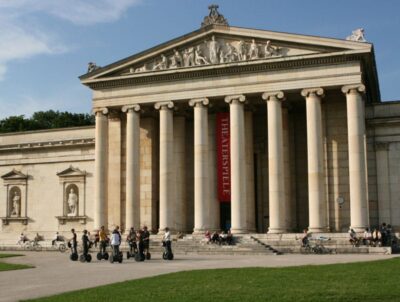
Munich 3-Hour Segway Tour: Nazi Munich & Royal Architecture
Read our review →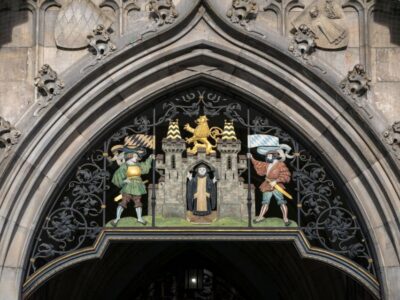
Guided Tour of the historic Town Hall on Marienplatz
Read our review →
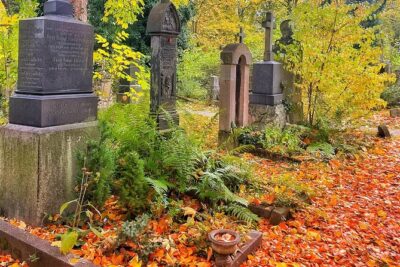
Death and Chocolate: Walking Tour of Munich’s Old South Cemetery
Read our review →
Munich History Tour: Private & Personalized with a Local Guide
Read our review →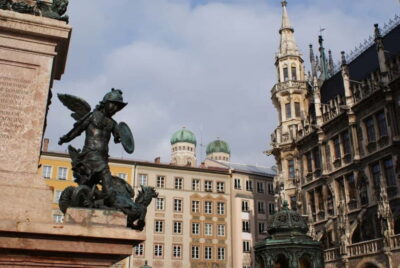
Munich and Nazi History Combination Day Tour Small Group
Read our review →
Private Sound-of-Music and Historic Salzburg Tour from Munich
Read our review →Browse the lists this tour appears in