
Reviewed · MUNICH THIRD REICH & WWII TOURS
Munich: National Socialism Historical Tour in GERMAN
Munich’s Nazi past is not tucked away in a distant museum. It is written into the streets around Königsplatz, Briennerstrasse, and Odeonsplatz. This two-hour walking tour follows that story through the places where power was built, celebrated, and violently defended.
I like the way the guide uses original black-and-white photographs to connect today’s streets with the Munich of the 1920s and 1930s. I also like the compact route, which gives you a serious introduction without taking up half your day. The main consideration is language: the tour is conducted in German, and the subject matter is difficult by nature.
Key points at a glance
- The route begins at Königsplatz, a major ceremonial site in Munich’s Nazi-era history.
- The former Führerbau is linked to the 1938 Munich Agreement and now sits near the Munich Documentation Centre for the History of National Socialism.
- Historic photographs help you match present-day streets with scenes from the 1920s and 1930s.
- Feldherrnhalle at Odeonsplatz is the place connected with Hitler’s Beer Hall Putsch and the events of November 9, 1923.
- German is the only tour language, so you should be comfortable following a history discussion in German.
- Private and group formats are available, with a listed price of $34 per person.
Why Munich is the right place for this history
Munich was known as the City of the Movement because it played a central role in the early growth of National Socialism. The Nazi movement did not begin as a distant force that suddenly took over Germany. It developed through meetings, speeches, street politics, propaganda, intimidation, and political deals, many of them tied to places you can still visit in the city center.
That makes this tour useful for putting names and dates into a physical setting. I find that political history can feel abstract when it is reduced to timelines. On this walk, you move from one address to another and see how a modern city became a stage for a dangerous political movement.
The tour is not designed as a general introduction to Munich. It focuses tightly on the Nazi period, especially the 1920s and 1930s, the rise of the NSDAP, and Germany under National Socialism. You should book it because you want historical explanation, not because you are looking for a casual city stroll.
Other Third Reich and wartime history tours in Munich:
- Munich: Third Reich & WWII Walking Tour
★ 4.6 · 6,181 reviews - Third Reich Walking Tour Munich
★ 4.5 · 4,291 reviews - Munich: Birthplace of the Third Reich Guided Walking Tour
★ 4.6 · 771 reviews
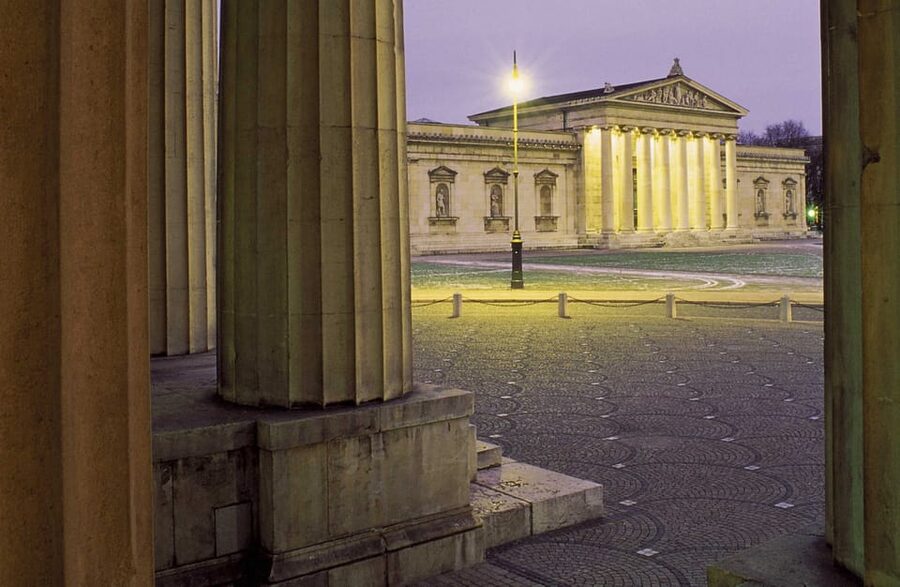
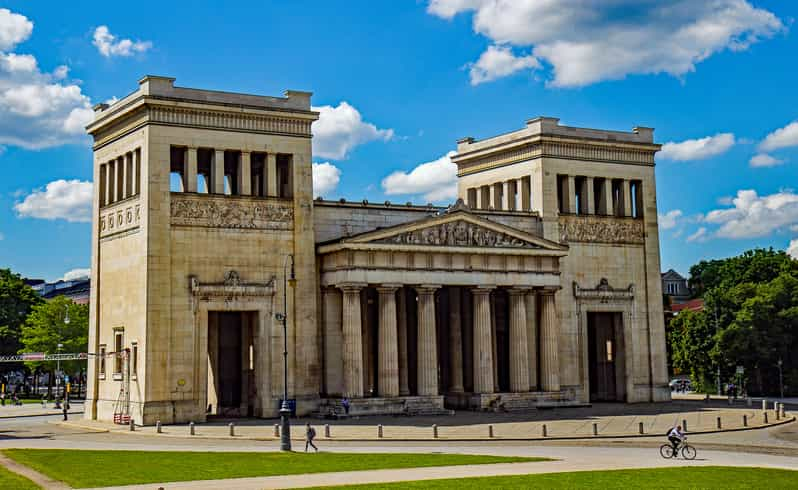
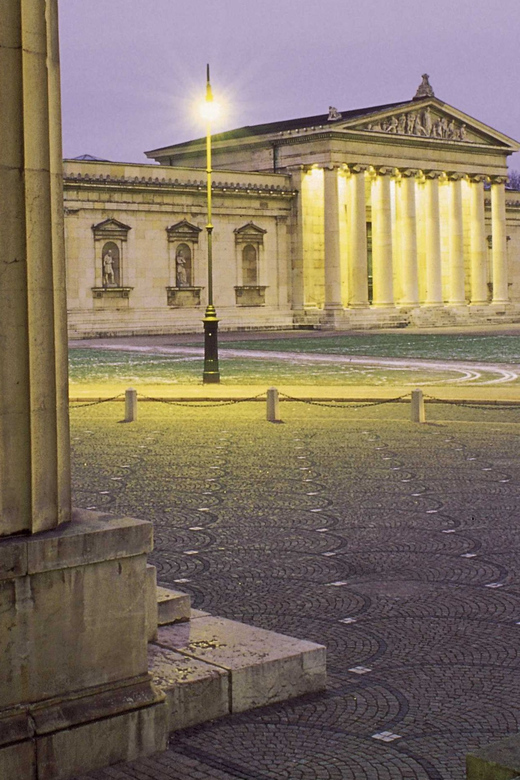
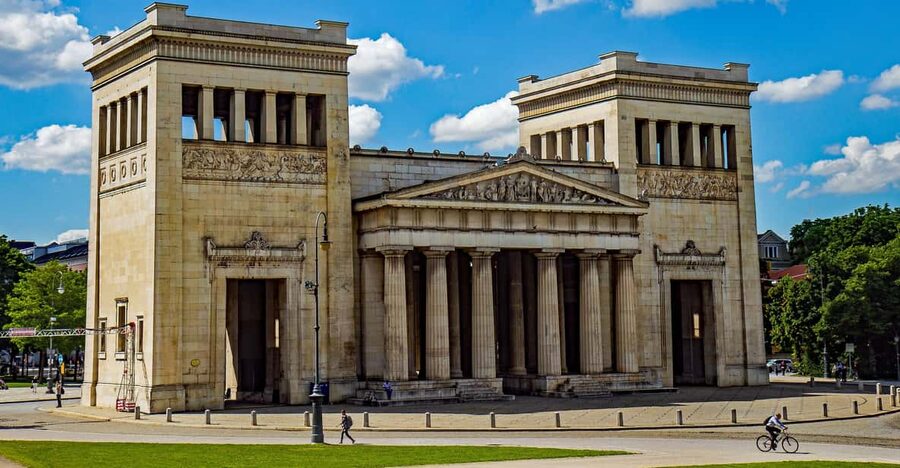
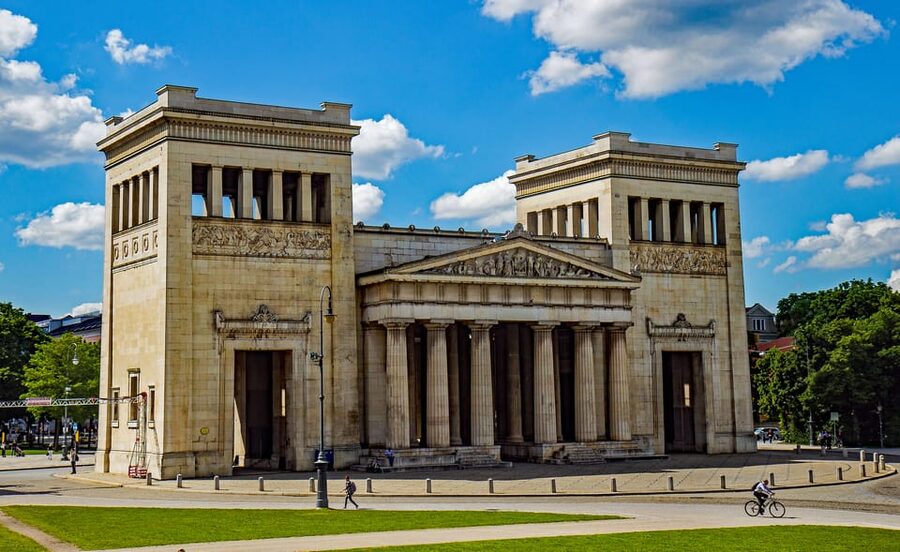
Starting at Königsplatz
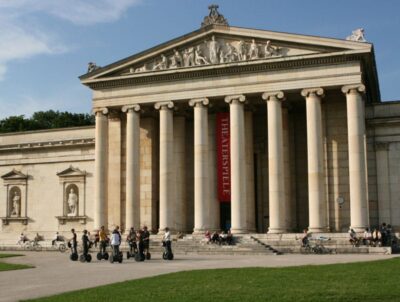
The meeting point is in front of the main entrance to the Staatliche Antikensammlungen at Königsplatz. Look for the guide carrying a big blue bag marked with the white words Weis(s)er Stadtvogel. That detail matters in a busy public square, especially if several groups are gathering nearby.
Königsplatz is a fitting place to begin. The broad square and monumental buildings give the guide room to explain how architecture and public space were used for political display. You are not simply hearing that the city was important to the movement. You are seeing the kind of setting that helped turn politics into ceremony and spectacle.
Bring comfortable shoes. The route is walked outdoors and takes about two hours, with stops for explanation and discussion. The activity takes place rain or shine, so a weather check before leaving your hotel is sensible. There is no hotel pickup or drop-off, so plan to reach the meeting point on your own.
The former Führerbau and the Munich Agreement
From Königsplatz, the walk continues toward the former Führerbau, or Führer’s building. This site is tied to the Munich Agreement of 1938, a major event in the political story of prewar Europe.
Today, the area is also associated with the Munich Documentation Centre for the History of National Socialism. The tour does not include entrance fees, and the activity is presented as a walking route rather than a museum visit. That distinction is important. You may pass places connected with the Documentation Centre, but you should not assume that an indoor museum visit is part of the two-hour program.
This stop gives the guide a chance to explain how Nazi power had moved far beyond its early Munich roots. The movement’s growth involved public speeches and party organization, but it also reached formal government, international diplomacy, and state decision-making. The former Führerbau helps mark that change from local political agitation to national and international power.
I appreciate this kind of stop because it makes the timeline easier to follow. You begin with the movement’s Munich base, then see how its influence reached the level of international agreements. The building is not presented as an isolated sight. It is part of a chain of events.
Walking along Briennerstrasse
The route continues along Briennerstrasse. This stretch works as a transition between the political center around Königsplatz and the sites connected with repression and opposition.
As you walk, the guide uses photographs to show what Munich looked like in the period under discussion. These images are especially helpful because streets can change in appearance while their locations remain important. A photograph can point out a building, gathering, uniform, or public event that would otherwise be hard to picture.
The photographs also keep the tour grounded. Instead of receiving a long lecture while standing in a modern street, you get a visual comparison between then and now. I would pay close attention when the guide brings out each image, since the value is in matching the historic view with the present location.
This part of the walk is not a sightseeing break from the serious material. It helps explain how political activity occupied ordinary urban space. The movement required offices, meeting places, routes, public squares, and institutions. Briennerstrasse connects those elements in a way a classroom map cannot.
More history tours in Munich:
- Munich 3-Hour Segway Tour: Nazi Munich & Royal Architecture
★ 4.9 · 194 reviews - Munich: Guided Tour of the historic Town Hall on Marienplatz
★ 4.8 · 63 reviews - Munich’s Hidden Architecture Guided Tour
★ 4.9 · 47 reviews - Death and Chocolate: Walking Tour of Munich’s Old South Cemetery
★ 5.0 · 35 reviews
Passing the former Gestapo headquarters
The tour then passes the former Gestapo headquarters. This is one of the most sobering moments because it shifts the focus from party growth and public politics to organized state terror.
A stop here can help you understand that National Socialism was not only about rallies, speeches, or government policy. It also depended on surveillance, arrest, interrogation, and fear. The guide’s explanation gives the route a necessary balance. You hear not only how the NSDAP gained power, but also what that power did once it was established.
The site is especially meaningful in combination with the earlier stops. Königsplatz and the former Führerbau show public and official power. The former Gestapo headquarters points to coercion. Together, they show how political authority and repression worked alongside one another.
This is difficult material, and I would not choose the tour if you want light sightseeing. The subject is serious throughout. Still, the walk’s direct approach is useful. You are given a clear historical framework rather than being left to guess why a particular location matters.
Feldherrnhalle and the Beer Hall Putsch
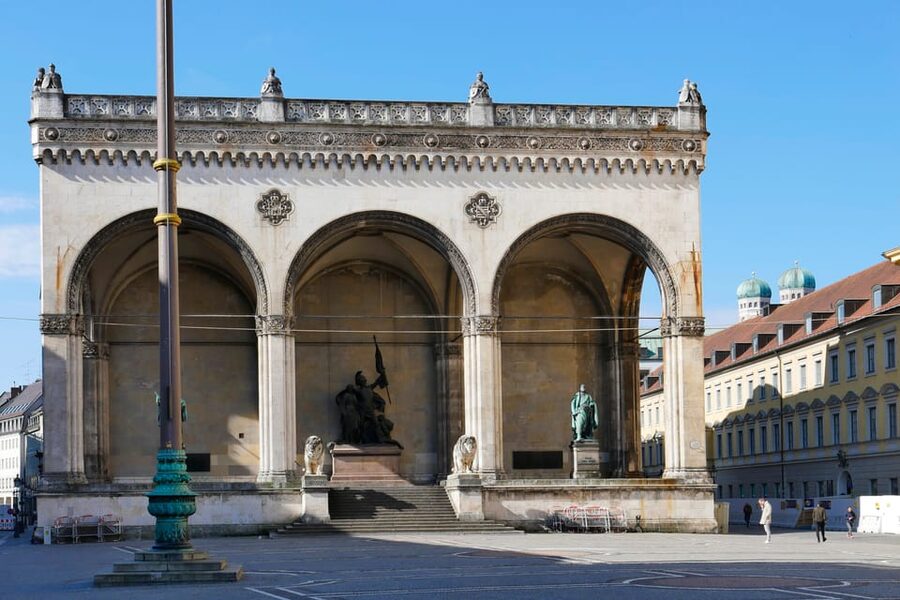
The final major stop is Feldherrnhalle at Odeonsplatz. This is linked to Hitler’s Beer Hall Putsch and the events of November 9, 1923, when the attempted coup reached this area.
The guide explains what happened and why the event mattered to the later growth of the Nazi movement. A failed putsch might seem like a political dead end, but the aftermath became part of the movement’s propaganda and self-image. This is a good example of why the tour needs context. The importance of a site is not always found in the immediate result. It can also lie in how political leaders later used the event.
Feldherrnhalle is a powerful ending because it brings the story back to the street. You have followed the movement through ceremonial space, political buildings, a former Gestapo site, and finally the location of a direct confrontation. The route ends with a clearer sense of how Munich functioned as an early center of National Socialism.
The supplied tour information refers specifically to November 9, 1923, while the route description connects Feldherrnhalle with the Beer Hall Putsch. If dates matter greatly to your planning, listen closely to the guide’s explanation of the event and its place in the wider timeline.
How the photographs improve the walk
The historic photographs are more than decoration. They give the guide a way to explain changes in the city and to show people, buildings, and events that cannot be recreated by simply standing on a corner.
I like this feature for two reasons. First, it helps you see the difference between the present-day streets and their political use during the Nazi period. Second, it keeps the discussion specific. A photograph can focus attention on one building or moment instead of allowing the history to become a string of broad claims.
Because the tour lasts only two hours, the photos also help the guide cover a lot without requiring a long stop at every location. You can expect selected examples rather than a full visual archive. That is a strength for a short tour, but anyone wanting extensive museum displays or a full day of historical study will need more time elsewhere.
Group or private tour: which works better?
You can choose between a private tour and a group tour. The private option may suit you if you want the guide’s attention focused on your questions or if your party prefers a slower, more personal discussion. The group format may offer better value if you want a structured introduction at the listed price of $34 per person.
The information provided does not specify the maximum group size, so you should check the available option when booking. Group size can affect how easily you hear the guide and how much time there is for questions, especially at busy public sites.
A private tour does not change the route’s basic subject or its German-language format. It mainly gives you a more flexible setting for the discussion. I would choose private if your group has a strong interest in one part of the period. I would choose group if you want a focused overview and do not need extended conversation at every stop.
Is $34 a fair price?
At $34 per person, the tour is priced as a short specialist walking experience rather than a full museum program. The fee covers a professional city guide, a two-hour route, and the interpretation of several important locations. It does not cover food, drinks, transportation, hotel pickup, or entrance fees.
The value depends on how much background you already have. If you know little about Munich’s role in National Socialism, the tour can give you a useful framework early in your stay. You will leave knowing which places matter and why. If you already have detailed knowledge of the period, you may prefer an indoor museum visit or a longer specialist program.
One point in the tour’s favor is that the route uses the city itself as the setting. You are not paying only for access to a building. You are paying for the guide’s explanation of several sites and for the connections between them. That is worthwhile when you want the historical meaning behind what you see.
Practical details before you book
The tour is conducted in German, with a live German-speaking guide. You should be able to follow a sustained explanation of political history, dates, and cause and effect. If you are not comfortable in German, the experience may be frustrating even if you recognize the locations.
The walk is listed as wheelchair accessible, yet the activity is also marked as not suitable for people with mobility impairments. Those two details do not fully agree, so you should confirm the route’s practical suitability with the provider before booking if mobility is a concern.
Wear comfortable shoes and prepare for changing weather. The tour runs rain or shine. Since there is no hotel pickup, allow enough time to reach the Staatliche Antikensammlungen before the start.
You can cancel up to 24 hours in advance for a full refund, and the reserve-now, pay-later option lets you keep your plans flexible. Check the available starting time because the tour schedule is not fixed in the information provided.
Who should book this Munich history walk?
I would recommend this tour to you if you want a serious, place-based introduction to Munich’s role in the rise of National Socialism. It suits visitors who prefer a guide’s explanation to wandering between sites with only a map. It is also a good choice early in a Munich visit, since the route can give later museum visits more meaning.
The tour is a particularly good fit if you can follow German well and want to discuss the subject in that language. The photographs add useful visual context, while the route gives you a clear sequence from political beginnings to state power and repression.
I would hesitate if you want a broad tour of Munich, an indoor museum experience, or a relaxed walk with only a few historical comments. I would also check accessibility carefully before booking. The material is serious, the weather policy is firm, and the German-only format is central to the experience.
Should you book it?
Book this tour if you want to understand why Munich became known as the City of the Movement and you value specific locations over a general lecture. The route from Königsplatz to Feldherrnhalle is compact, focused, and supported by historic photographs.
Skip it if you are looking for entertainment, a general city overview, or a fully translated experience. At $34, it offers solid value for a concentrated two-hour history walk, especially for visitors who want to see how political power and repression were tied to Munich’s streets.
FAQ
Is the tour conducted in English?
No. The listed tour language is German, with a live German-speaking guide.
How long does the tour last?
The walking tour lasts two hours.
Where does the tour meet?
Meet in front of the main entrance of the Staatliche Antikensammlungen at Königsplatz.
How will I recognize the guide?
The guide will carry a big blue bag with the white words Weis(s)er Stadtvogel on it.
Are museum entrance fees included?
No. Entrance fees, food, and drinks are not included.
Does the tour operate in bad weather?
Yes. The activity takes place rain or shine, so bring suitable clothing and comfortable shoes.
Recently reviewed in Munich
- München: Vegetarische Viktualienmarkt-Probiertour Deutsch★ 4.8 · 6 reviews
- Wright Europe Vacations – Private Escorted Auto Tours★ 5.0 · 35 reviews
- Best of Munich Electric Bike Tour★ 5.0 · 38 reviews
- Munich Walking Quiz: Explore and Discover the City’s Highlights★ 5.0 · 7 reviews
- Walking Tour on Resistance to Nazism in Munich★ 5.0 · 8 reviews
- Private Transfer from Munich to Salzburg with 2 hours for sightseeing★ 4.5 · 13 reviews
- Private Transfer from Munich to Vienna with 2 hours for sightseeing★ 4.5 · 6 reviews
- 2 hour Sights Guided E-Scooter Tour in Munich★ 4.0 · 6 reviews
Munich Third Reich & WWII Tours, compared.
Birthplace of the Third Reich Guided Walking Tour
Read our review →
Munich World War II Sites Including Dachau Concentration Camp
Read our review →
Munich 3-Hour Segway Tour: Nazi Munich & Royal Architecture
Read our review →
Dachau Concentration Camp Memorial Site And Third Reich Day Tour From Munich
Read our review →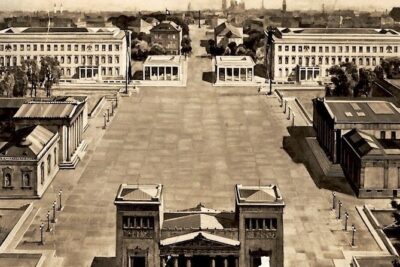
Browse the lists this tour appears in