
Reviewed · MUNICH THIRD REICH & WWII TOURS
Third Reich Tour Munich
Munich’s Nazi past comes into sharp focus on this 2.5-hour walking tour, which links early beer-hall meetings with the sites where Hitler’s movement tried to seize power and later staged its public theater. You’ll walk from Isartor to Königsplatz, following a clear route through the city rather than viewing these places as isolated monuments.
I like the route’s two big strengths: it includes famous places such as Hofbräuhaus and Feldherrnhalle, but also less obvious stops such as Sterneckerbräu; and the small group, capped at 20 people, gives guides such as Jamie Buckley and Kaevan room to answer questions. The main drawback is the subject itself. This is a serious, mostly outdoor history lesson, so cold weather, walking, and emotionally difficult material are part of the deal.
Key points at a glance
- Sterneckerbräu adds important early context: You visit the former beer hall linked to the founding of the prototype Nazi Party.
- Hofbräuhaus is treated as a political site: The tour explains how early speeches and meetings helped the movement reach larger crowds.
- Feldherrnhalle shows the failed 1923 power grab: You learn how the Beer Hall Putsch later became part of Nazi martyr propaganda.
- The memorial changes the tone: At the Square for the Victims of National Socialism, the focus shifts from Nazi ambition to those persecuted by the regime.
- Königsplatz provides a strong finish: The Führerbau and the square reveal how architecture and ceremony served propaganda.
- The route is easy to continue from: The tour ends near Königsplatz U-Bahn station, one stop from Munich Central Station.
Why this Munich tour is worth your time
Munich is often sold through beer halls, elegant squares, and royal buildings. Those are real parts of the city, but they can hide the fact that Munich was one of the key early centers of the Nazi movement. This tour helps you read the streets with more care.
The value comes from the links between the stops. At one beer hall, you hear about early party meetings. At another, you see how Adolf Hitler addressed growing crowds. Later, you reach the site of a failed coup, a memorial to victims, and the grand square used for rallies and ceremonies.
That sequence matters. It shows a movement moving from small political gatherings to public spectacle and state power. You are not simply checking off buildings. You are following a story of organization, propaganda, violence, and memory.
The guides are central to the experience. Jamie Buckley is described as giving the route a strong narrative flow, joining the locations into one story instead of treating each stop as a separate fact. Kaevan is praised for answering questions and making good use of a small group.
I would choose this tour for you if you want more than dates and names. It suits anyone curious about how ordinary meeting places and public squares became part of a political machine. It is also a useful choice early in a Munich visit, since it gives later sightseeing more context.
Other Third Reich and wartime history tours in Munich:
- Munich: Third Reich & WWII Walking Tour
★ 4.6 · 6,181 reviews - Third Reich Walking Tour Munich
★ 4.5 · 4,291 reviews - Munich: Birthplace of the Third Reich Guided Walking Tour
★ 4.6 · 771 reviews
Isartor: starting at Munich’s old city gate
The meeting point is Isartor Gate at Tal 50. This is a practical place to begin, close to central Munich and easy to reach by public transport. The opening stop lasts about five minutes, mainly giving you a starting point and getting the group together.
Do not expect a long visit here. Isartor is the launch point rather than the main lesson. Its usefulness is that the tour begins in the regular city, among streets you might otherwise cross without thinking about the political events that once unfolded nearby.
You will want comfortable shoes. The route continues through central Munich and ends at Königsplatz, so this is a walking experience rather than a bus tour with short hops between sites.
Sterneckerbräu and the movement’s early meeting place
The next stop is Sterneckerbräu, where you spend about 15 minutes. The former beer hall is linked to the founding of the prototype Nazi Party, making it one of the most important early stops on the route.
This is where the tour begins to explain the movement before it had the power and spectacle associated with the Third Reich. Beer halls were important meeting places in Munich’s political life, and this site helps you understand how a small organization could gather supporters, shape a message, and build momentum.
The practical limitation is that the stop is primarily about the location and the guide’s explanation. The tour information does not promise a special interior visit or a museum display. You should think of Sterneckerbräu as a storytelling stop, not a formal attraction with exhibits.
That is not a weakness if you enjoy place-based history. The building and its setting matter because the guide can connect them to the early formation of the movement. This is one of the less obvious locations that gives the route its value.
Hofbräuhaus: from beer hall to political stage
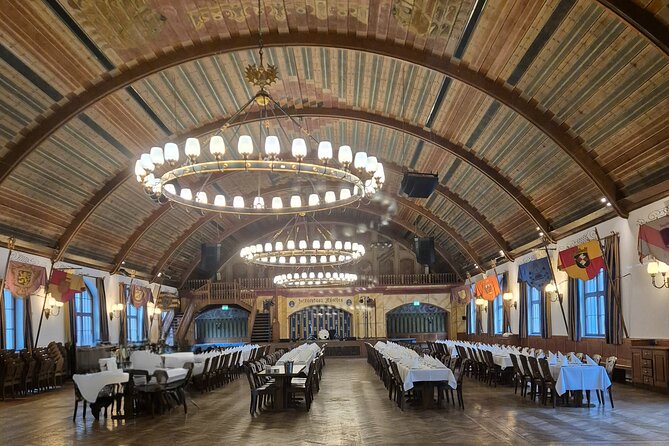
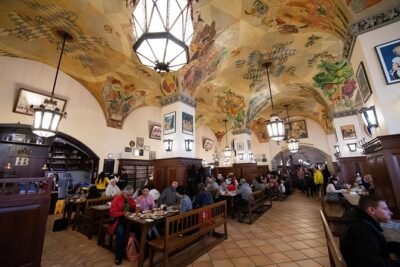
The tour allows about 25 minutes at Hofbräuhaus, one of Munich’s best-known beer halls. Many visitors come here for beer, food, and atmosphere. This walk asks you to look at the room through a different lens.
Adolf Hitler held early Nazi Party meetings here, and the venue became important as his speeches drew larger crowds. Your guide explains how the beer hall helped the movement reach people and present itself in a public setting.
I like this stop because it complicates the usual tourist picture. Hofbräuhaus is not only a cheerful symbol of Munich. It also formed part of the setting in which political ideas were presented, repeated, and turned into organized support.
The tour does not list a meal or drink as part of the price, so do not plan on a built-in beer break. You are there for the historical explanation, and the time is limited. If you want to return for food or a drink, save that for later.
Same city, a very different afternoon:
- From Munich: Neuschwanstein & Linderhof Castle Full-Day Trip
★ 4.5 · 12,494 reviews - Neuschwanstein & Linderhof Castle-Fairytale Day Tour from Munich
★ 4.5 · 7,275 reviews - Dachau Concentration Camp Memorial Site Tour from Munich by Train
★ 4.5 · 5,637 reviews - Neuschwanstein Castle Tour from Munich
★ 4.5 · 5,117 reviews
Feldherrnhalle and the failed Beer Hall Putsch
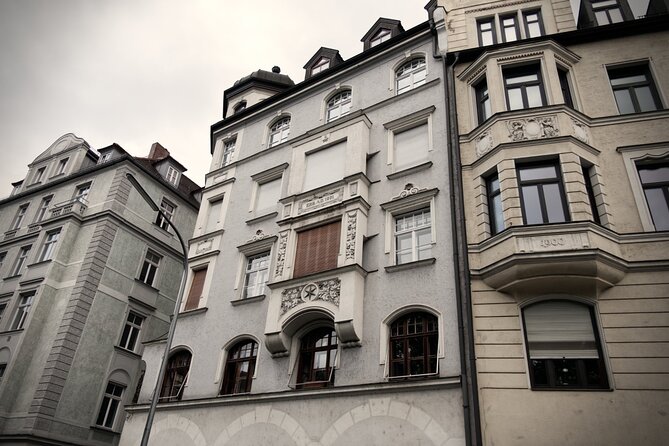
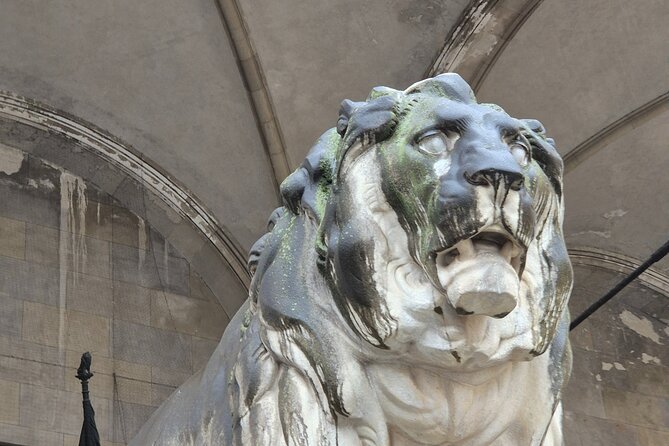
At Feldherrnhalle, the tour spends around 25 minutes examining the Beer Hall Putsch of 1923. Hitler and his followers tried to seize power, but the attempt failed after a clash with Bavarian police.
This is a key point in the story because the failed coup did not end Hitler’s political career. Instead, the Nazi movement later used those who died in the clash as symbols of sacrifice and loyalty. Your guide can show how a failed action was reshaped into a powerful political myth.
The stop is especially useful if you know the broad outline of Nazi history but not how Hitler moved from failed revolt to a later legal route into government. The guide’s job here is to explain the political meaning attached to the site, not just repeat the event.
Feldherrnhalle is also a public monument in a busy central part of Munich. You may need to listen carefully as city life continues around you. That is part of the experience: the site is not sealed away in a museum, and its past sits beside the modern city.
The victims’ memorial changes the mood
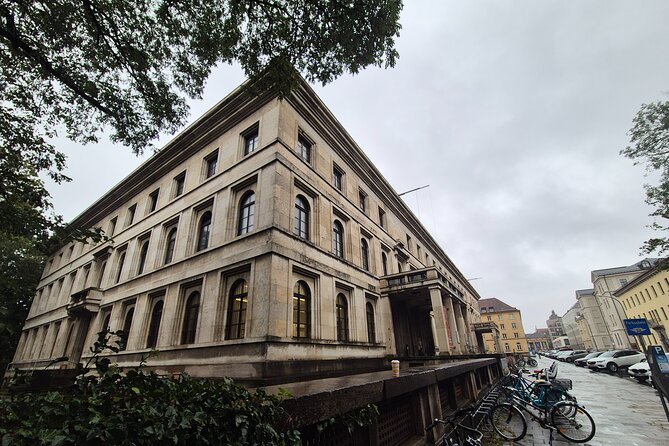
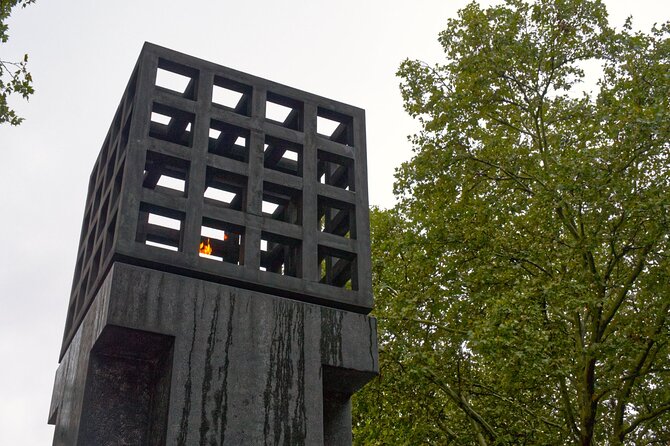
The Square for the Victims of National Socialism gives the tour a necessary change of focus. You spend about 20 minutes at this memorial, which honors people persecuted by the Nazi regime and includes an eternal flame.
Earlier stops deal with organization, speeches, attempted power, and propaganda. Here, the human cost moves to the front. The memorial helps prevent the tour from becoming a study of Nazi leaders alone. It directs attention to the people and groups who suffered under the regime.
I consider this one of the most important stops because it gives the route moral balance. Understanding how the Nazis gained support is important, but so is remembering what that power did.
The memorial is also a reminder that Munich continues to confront its past in public spaces. You may find this part quieter and more reflective than the beer halls and grand squares. Give yourself time to listen and take in the meaning of the place.
Führerbau and the machinery of power
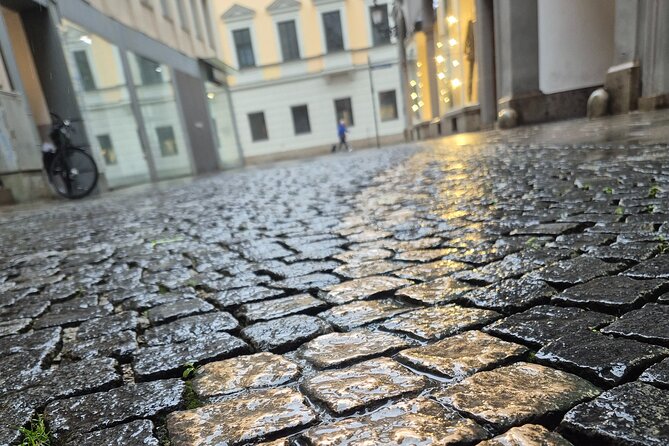
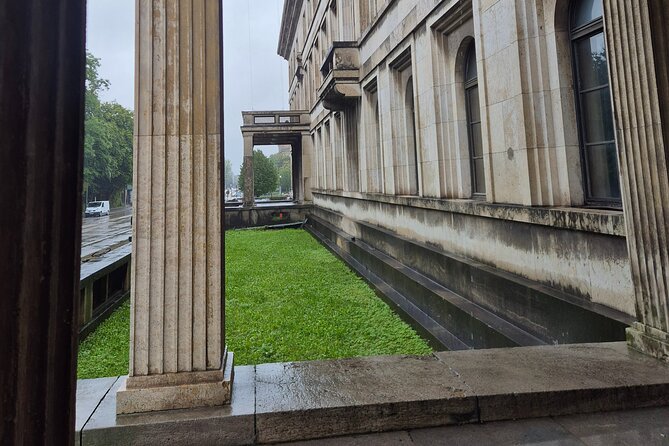
The Führerbau, on Königsplatz, was Hitler’s official Munich office. The tour spends about 20 minutes discussing how the building was used for meetings with senior officials and for important decisions.
The site is closely linked to the Munich Agreement of 1938, which was signed there. That detail gives the building international importance. What may look like an administrative building becomes a place tied to major decisions made by the Nazi leadership.
This stop helps explain the shift from party meetings to government power. At Sterneckerbräu and Hofbräuhaus, the movement was gathering followers. At the Führerbau, it was operating at the level of state policy and international diplomacy.
The tour description does not indicate that you enter the building, so expect an exterior explanation rather than a guided indoor visit. That is worth knowing if you prefer museums or interior access. The strength here is the guide’s context and the building’s place in the route.
Königsplatz and Nazi public spectacle
The final main stop is Königsplatz, where the tour spends about 20 minutes. The Nazis transformed this grand square into a setting for mass rallies, military parades, book-burnings, and other ceremonies.
This is a strong ending because the square gathers several themes from the tour: architecture, public control, ritual, and propaganda. The open space made political power visible. Buildings and ceremonies were arranged to create a sense of order, scale, and authority.
You may already know Königsplatz as a grand Munich square. The tour encourages you to notice how its appearance and use changed under the Nazi regime. The point is not that stone and space create political power on their own, but that governments can use public places to shape what people see and feel.
The tour ends at Königsplatz 1. From there, the U2 U-Bahn takes you to Central Station in one stop, listed as roughly one minute. You can also use nearby buses and trams or walk to Munich’s old city in less than 15 minutes.
Price, pace, and group size
The listed price is $34.73 per person. For about two and a half hours with a specialist guide, I consider that fair value, especially if you are interested in modern European history and want an organized route through several important locations.
There are no admission fees listed for the stops. That means you are paying mainly for the guide’s interpretation, route planning, and ability to connect events that would otherwise remain scattered across Munich.
The group size is limited to 20 people. That is large enough to have a social feel but small enough for questions to be realistic. The comments about Jamie Buckley and Kaevan suggest that the guides make room for discussion rather than delivering only a fixed speech.
The pace appears steady, with roughly 15 to 25 minutes at each main location. You will cover several central sites, so this is not a slow photography walk. If you like stopping for long independent exploration, you may find the schedule tight. If you want a clear, guided account in a short window, the pace should suit you.
The tour is booked, on average, seven days ahead. That is not a guarantee that every date sells out, but it is a useful reason to reserve before your Munich visit if the timing matters.
What to bring and what to expect
Wear shoes you can walk in for two and a half hours. The experience is outdoors and spread across central Munich, with no promise of indoor seating at each stop.
Cold weather can affect the experience. One review specifically refers to cold conditions, so bring suitable layers and be ready to listen outside. The subject is also difficult at points. This is not a light sightseeing tour, and you should allow some quiet time afterward if the memorial and the material weigh on you.
A mobile ticket is provided. Confirmation arrives at booking, and the meeting point is clearly given at Isartor Gate. Service animals are allowed, and the route is near public transport. The tour states that most people can participate, but it does not provide detailed information about step-free access or the exact walking distance.
The cancellation policy is generous if your plans are uncertain: you can cancel for a full refund up to 24 hours before the start time. Changes or cancellations made less than 24 hours before the start are not accepted for a refund.
Who should book the Third Reich Tour Munich?
I would recommend it most strongly to history buffs, students, first-time Munich visitors who want context, and anyone interested in how political movements use meeting places, public squares, and ceremony.
It is also a good fit if you prefer a small-group walk led by a person who can answer questions. The positive feedback about Jamie Buckley’s pacing and Kaevan’s command of the subject points to a guide-led experience rather than a basic audio-style route.
You may want a different activity if you dislike serious historical subjects, need frequent indoor breaks, or want a tour centered on food, architecture, or general sightseeing. You should also avoid expecting entry into every building. Much of the value comes from listening at the site itself.
Should you book it?
Book this tour if you want to understand Munich’s role in the rise of the Nazi movement, not just see famous buildings. The route is well chosen: Sterneckerbräu and Hofbräuhaus explain the early political network, Feldherrnhalle covers the failed coup, the victims’ memorial brings the human cost into view, and the Führerbau and Königsplatz show power at full scale.
At $34.73, the price is reasonable for two and a half hours of focused guiding. Bring good shoes, dress for the weather, and arrive ready for a serious subject. If that sounds like the kind of history you want to confront while walking through the real places, this is a worthwhile Munich experience.
FAQ
Where does the Third Reich Tour Munich start?
The tour starts at Isartor Gate, Tal 50, 80331 München, Germany.
Where does the tour end?
It ends at Königsplatz 1, 80333 München, Germany.
How long does the tour last?
The experience lasts approximately 2 hours and 30 minutes.
What places are visited?
The route includes Isartor, Sterneckerbräu, Hofbräuhaus, Feldherrnhalle, the Square for the Victims of National Socialism, the Führerbau, and Königsplatz.
Is admission included at the stops?
The listed stops have no admission ticket fee. The experience includes guided commentary from an experienced guide.
How large is the group?
The tour has a maximum of 20 participants.
Is the tour accessible by public transport?
Yes. The meeting point is near public transportation, and the tour ends near Königsplatz U-Bahn station. The U2 goes from Königsplatz to Central Station in one stop.
Can I cancel for a full refund?
Yes. You can cancel at least 24 hours before the experience start time for a full refund. Cancellations or changes made less than 24 hours before the start are not accepted for a refund.
Recently reviewed in Munich
- München: Vegetarische Viktualienmarkt-Probiertour Deutsch★ 4.8 · 6 reviews
- Wright Europe Vacations – Private Escorted Auto Tours★ 5.0 · 35 reviews
- Best of Munich Electric Bike Tour★ 5.0 · 38 reviews
- Munich Walking Quiz: Explore and Discover the City’s Highlights★ 5.0 · 7 reviews
- Walking Tour on Resistance to Nazism in Munich★ 5.0 · 8 reviews
- Private Transfer from Munich to Salzburg with 2 hours for sightseeing★ 4.5 · 13 reviews
- Private Transfer from Munich to Vienna with 2 hours for sightseeing★ 4.5 · 6 reviews
- 2 hour Sights Guided E-Scooter Tour in Munich★ 4.0 · 6 reviews
Munich Third Reich & WWII Tours, compared.
Birthplace of the Third Reich Guided Walking Tour
Read our review →
Munich World War II Sites Including Dachau Concentration Camp
Read our review →
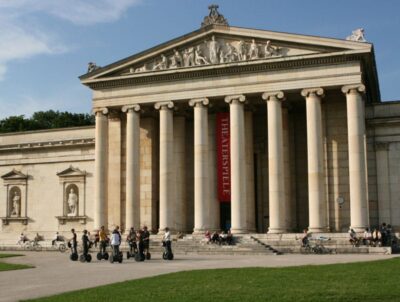
Munich 3-Hour Segway Tour: Nazi Munich & Royal Architecture
Read our review →
Dachau Concentration Camp Memorial Site And Third Reich Day Tour From Munich
Read our review →
Browse the lists this tour appears in