
Reviewed · MUNICH THIRD REICH & WWII TOURS
Third Reich – Facts about WWII : Small Group Walking tour
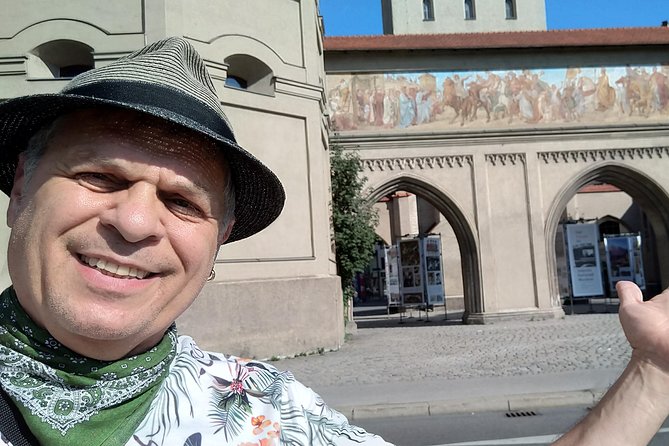
Munich’s Nazi past is written into ordinary streets, grand squares, universities, and government buildings. This walking tour connects those places in one serious, well-planned route, from the book burning at Königsplatz to the White Rose resistance and the trial of the Scholl siblings. Paul Riedel leads the experience with energy and a clear interest in Munich’s people, not just its monuments.
I like the small group limit of 15, since that gives you a better chance to hear the guide and ask questions. I also like the way the route includes less obvious subjects, such as the role of doctors in Nazi crimes and the Bruckmann couple’s help in introducing Hitler to Munich society. The main consideration is pace: two to three hours on foot covers a lot, but several stops are brief and most buildings are viewed from outside.
Key points at a glance
- Königsplatz opens the story: See the square connected with book burning, Nazi architecture, and Leni Riefenstahl’s filming positions.
- Paul Riedel brings personal energy: The guide can adjust the pace to your needs and interests, according to the information provided about the experience.
- The route includes the White Rose: At Ludwig Maximilian University, learn about the Scholl siblings and their resistance group.
- The Justice Palace adds human detail: The tour covers the trial of the Scholl siblings and later Nazi trials.
- You walk through central Munich: The route avoids traffic and links major sites without requiring your own planning.
- The price reflects a focused private-style group experience: At $109.86 per person, value depends on how much context and discussion you want from a guide.
Why this Munich walk matters
This is not a general city sightseeing walk with a few Nazi references added on top. The route is built around Munich’s part in the rise of the Nazi movement, its institutions, its propaganda, its crimes, and its opposition.
That focus gives the walk a useful shape. You begin near Karlstor and finish at Haus der Kunst, passing through central Munich on foot. Along the way, the guide connects people, buildings, and decisions. You are not simply checking off monuments. You are following how political power took root in the city and how some people resisted it.
The subject is difficult, but the walking format helps. Munich’s history is not confined to one museum. It appears in royal buildings, university halls, courthouses, public squares, and art institutions. Seeing these places in sequence makes the story easier to follow.
Paul Riedel is the named experience provider, and the available information identifies him as the guide associated with the tour. One useful detail is his reported flexibility with pacing and interests. That matters on a subject-heavy walk, since you may want more time for the White Rose, the Putsch, Nazi art, or the legal system.
Other Third Reich and wartime history tours in Munich:
- Munich: Third Reich & WWII Walking Tour
★ 4.6 · 6,181 reviews - Third Reich Walking Tour Munich
★ 4.5 · 4,291 reviews - Munich: Birthplace of the Third Reich Guided Walking Tour
★ 4.6 · 771 reviews
Königsplatz and the visual language of power
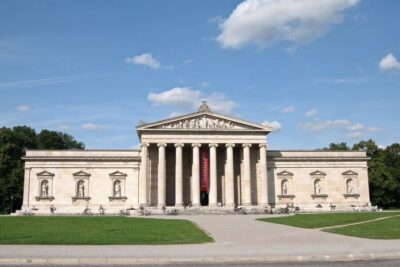
The first major stop is Königsplatz, where the tour begins its explanation of Nazi Munich. You hear about the burning of books, the camera positions used by Leni Riefenstahl, and the granite plates placed over the square.
This is a strong opening because Königsplatz shows how public space can be used for political theater. The square was not just a backdrop. Its design, ceremonies, and images helped present the Nazi movement as powerful and permanent.
The stop lasts about 10 minutes and costs nothing to enter. Do not expect a long museum visit here. The value comes from the guide’s explanation of what you are seeing and how the square was used.
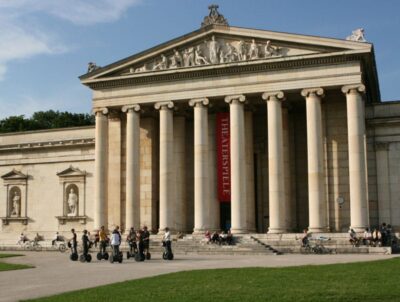
Nearby, the Museum für Abgüsse Klassischer Bildwerke provides a look at the twin buildings designed by Paul Ludwig Troost for the Nazis. The stop is short, around five minutes, and admission is not included. The buildings matter because Nazi architecture often used monumental classical forms to suggest order, strength, and historical destiny.
The Brown House and Nazi organization
At the NS-Dokumentationszentrum München, the guide explains the former Brown House and how Hitler organized the NSDAP. The stop also addresses the church’s involvement during the war.
The documentation center itself is listed as a stop, but entry is not included in the tour price. That distinction is important. You should treat this walk as an outdoor route with selected building visits or exterior explanations, not as a museum admission package.
A short five-minute stop cannot cover every aspect of the Brown House or church history. Still, it gives you a framework for understanding Munich as an early center of Nazi organization. If you want a longer museum visit, you would need to plan that separately.
Karolinenplatz and the people behind Hitler’s rise
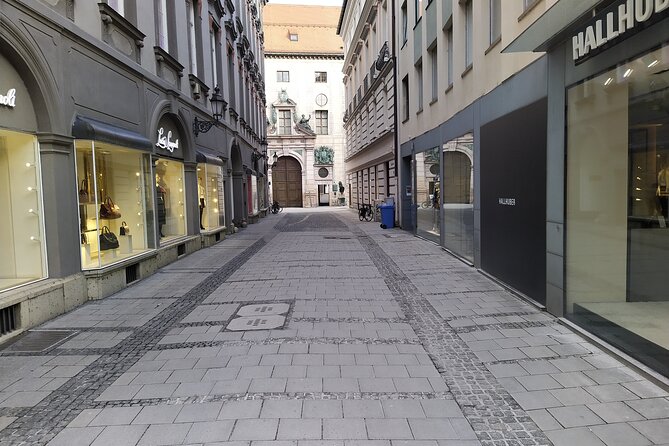
At Karolinenplatz, the focus shifts from buildings to social connections. The guide discusses the Bruckmann couple, who played an important role in Hitler’s rise as a charismatic public figure and introduced him to wider society.
This is one of the more useful parts of the route because political movements do not grow through speeches alone. Personal networks, introductions, social access, and wealthy supporters can help shape a public image. Karolinenplatz gives the guide a place to explain that side of the story.
The stop is free and lasts about five minutes. You will not get a long biography of every person involved, but you should come away with a clearer sense of how Hitler gained access to Munich’s upper social circles.
More walks through the old town:
- Munich: Old Town & Viktualienmarkt City Walk in German
★ 4.7 · 2,304 reviews - Munich: Night Watchman Walking Tour
★ 4.7 · 2,092 reviews - Munich Ghosts and Spirits Evening Walking Tour
★ 5.0 · 1,900 reviews - Munich Old Town Walking Tour
★ 4.5 · 1,287 reviews
The Justice Palace and the Scholl trial
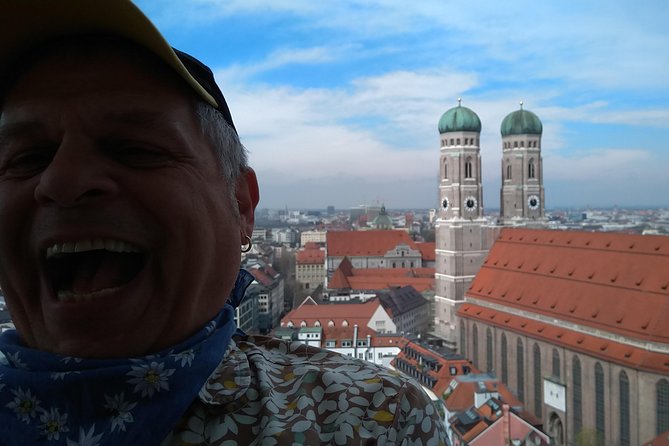
At the Justizpalast, the walk turns toward law and resistance. The guide covers the trial of the Scholl siblings and later Nazi trials.
This is a particularly important stop because the Scholl story gives the tour a human center. Hans and Sophie Scholl were members of the White Rose resistance, and their trial shows the danger of opposing the regime openly. The Justice Palace also links Nazi-era crimes with the legal process that followed.
The stop is listed as free and lasts around five minutes. That is enough for a focused explanation, but you should expect the guide to keep moving rather than recreate the full courtroom history.
Doctors, decisions, and the former Gestapo center
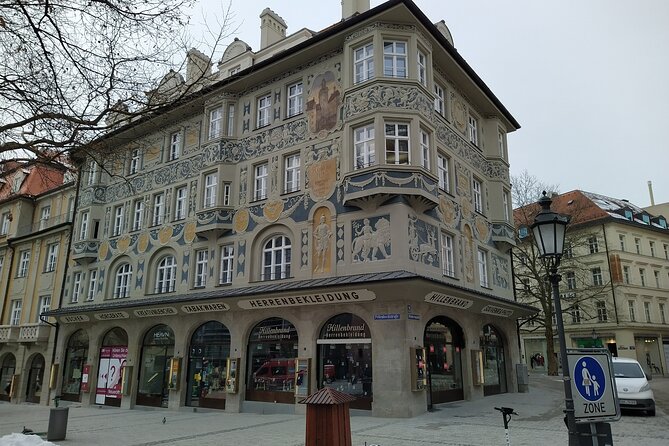
On Briennerstrasse, the guide points out Haus der Deutschen Ärzte at number 23 and explains its dark connection to doctors who made decisions about life and death.
This part broadens the story beyond political leaders and soldiers. It addresses the role of medical professionals in Nazi crimes, a subject that can be overlooked on a standard city walk. The stop lasts about five minutes and is presented as an outdoor explanation.
The route then passes the former Wittelsbacher Palais before reaching the Platz der Opfer des Nationalsozialismus. The palais was the central headquarters of the Gestapo in Munich, according to the tour information. At the square, you see the monument to victims of the Nazi Party.
This sequence is effective because it places the machinery of persecution next to a memorial to those who suffered. The stop takes about 10 minutes and is free. Give yourself room to listen here. It is one of the more solemn sections of the walk.
The Residenz and Nazi power inside a royal setting
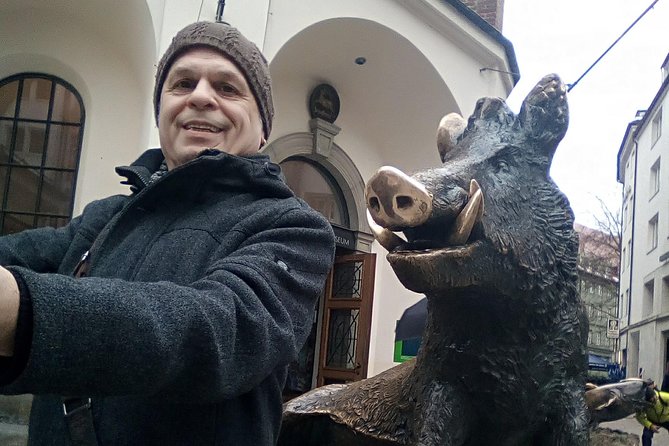
The Residenz München brings together Bavaria’s older royal history and the Nazi period. The guide explains that a Nazi figure once lived in this residence of Bavarian kings and dukes. The route also includes a reference to the night of the Amazons.
The supplied information does not explain that phrase in detail, so you should ask the guide for clarification if the subject interests you. The stop lasts around 10 minutes, and admission to the Residenz is not included.
That limitation is worth noting. The setting is important, but this experience does not function as a full Residenz tour. You are getting a Nazi-era interpretation of the site rather than a complete examination of the palace interiors.
Hofgarten and the politics of art
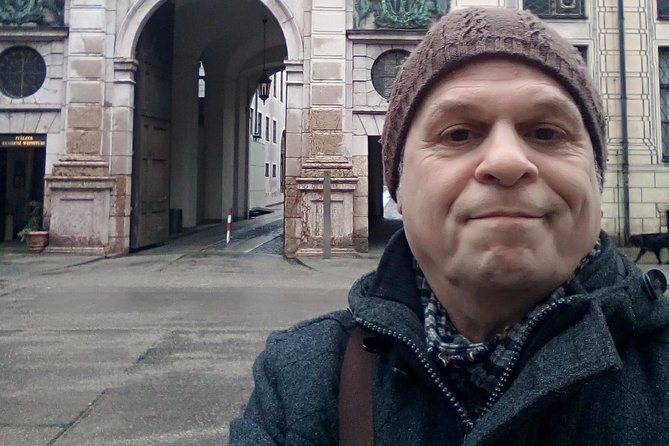
At the Hofgarten, the guide discusses Degenerate Art, the Nazi label for an exhibition that attacked many expressionist artists.
This stop shows how cultural control worked alongside political repression. The Nazi government did not only target opponents in offices and prisons. It also tried to decide which art was acceptable and which artists should be ridiculed or removed from public life.
The Hofgarten stop is free and lasts about 10 minutes. Since the subject concerns an exhibition and artistic policy, the guide’s explanation is more important than any single object at the site. If modern art interests you, this may be one of the places where you want to ask extra questions.
Ludwig Maximilian University and the White Rose
At Ludwig Maximilian University, you hear the story of the Scholl siblings and the White Rose resistance against the Nazis.
This is one of the strongest reasons to choose this particular route. The White Rose gives you a clear example of young people using words and ideas to oppose a dictatorship. The university setting makes the story feel immediate, since the resistance was connected to student life and a place of learning.
The stop lasts about 10 minutes and is free. It follows the Justice Palace earlier in the walk, allowing you to see both the resistance and the legal punishment imposed on it.
The route does not promise an indoor university visit, so expect a street-level explanation. Still, the location gives the story a strong sense of place.
Odeonsplatz and Hitler’s Putsch
Odeonsplatz appears twice in the route, with a combined emphasis on the Hitler Putsch and other major events in the Nazi campaign. One stop is listed at about 10 minutes, while the final Odeonsplatz segment lasts around 15 minutes.
That repeated appearance can seem unusual, but it reflects the importance of the site. The Putsch was a major early chapter in Hitler’s attempt to seize power. At Odeonsplatz, the guide explains the event as part of the larger political campaign rather than treating it as an isolated incident.
You should expect discussion rather than a preserved battlefield or a large monument. The value is in understanding what happened at the square and why it mattered to the Nazi movement.
Because this stop appears late in the walk, the earlier sites should help you place the Putsch in context. You will have already heard about party organization, social support, propaganda, resistance, and the use of public space.
Haus der Kunst and Nazi cultural ambition
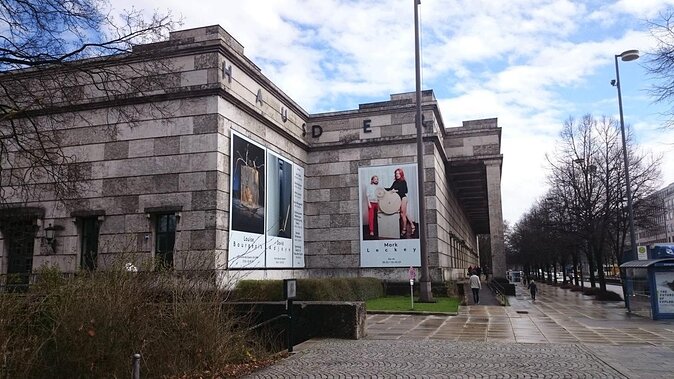
The final stop is Haus der Kunst on Prinzregentenstraße. The guide discusses another work by Paul Ludwig Troost and the building’s role in Nazi art.
Admission is not included, so the tour ends with an explanation of the building rather than a guaranteed visit inside. That is still a useful finish. The route began with political theater at Königsplatz and ends with a building designed to express Nazi cultural ambition.
The official end point is Haus der Kunst, although the information also notes that Paul sometimes helps bring people back. Do not treat that as a guaranteed transfer. Plan to finish at the museum unless you receive different instructions from the guide.
Price, group size, and walking effort
The price is $109.86 per person, which is high for a two to three hour walking tour. The value depends on what you want from the experience.
If you only need directions to Munich’s Nazi-era sites, the price will seem steep. Much of the route is free to enter, and you will not receive admission to the Residenz, Museum für Abgüsse Klassischer Bildwerke, NS-Dokumentationszentrum, or Haus der Kunst.
If you want a guide to organize the route, explain connections, and handle a difficult subject in person, the price makes more sense. You are paying for structure and interpretation, not tickets. A group capped at 15 also offers a more personal format than a large city walk.
The tour starts at 1:00 p.m. near Karlstor on Neuhauser Strasse and ends at Haus der Kunst. It lasts approximately two to three hours. Wear comfortable shoes, since the route links many central sites on foot. Public transportation is nearby, and the starting point is easy to reach within central Munich.
The experience is suitable for most people, and service animals are allowed. The guide may be multilingual, so if language clarity matters to you, confirm the available language when booking.
Who should book this walk?
I would recommend this tour to you if you want a focused introduction to Munich’s Nazi period and prefer learning outdoors rather than spending the whole afternoon in museums. It suits history-minded visitors who value context, questions, and a connected route.
It is also a good choice if you have only one free afternoon. In a few hours, you will see Königsplatz, the Justice Palace, the Gestapo headquarters site, the White Rose locations, Odeonsplatz, the Residenz area, and Haus der Kunst.
You may want something else if you prefer long museum visits, detailed architectural study, or a slower pace at every site. The stops are often only five or 10 minutes, and several admissions are not included.
Free cancellation is available until 24 hours before the start time. If the minimum number of participants is not reached, the experience may be moved or refunded. Since the tour is often booked about 24 days ahead, reserving early is sensible if your Munich dates are fixed.
Should you book it?
Book this walk if you want Munich’s World War II story explained through real places and human choices. The strongest parts are the White Rose material, the Justice Palace, the Gestapo site, and the way the route links propaganda, social connections, art, law, and resistance.
At $109.86, it is not a bargain sightseeing stroll. Its value comes from Paul Riedel’s personal guiding style, the small group, and the work of connecting a complicated past across the city. If that kind of guided context matters to you, this is a worthwhile afternoon. If you mainly want entry to museums, spend the money on admissions and explore at your own pace.
FAQ
How long does the tour last?
The walking tour lasts approximately two to three hours.
Where does the tour begin?
It begins at Karlstor, Neuhauser Strasse, 80331 Munich, Germany.
Where does the tour end?
The stated end point is Haus der Kunst at Prinzregentenstraße 1, 80538 Munich, Germany.
What time does the tour start?
The tour starts at 1:00 p.m.
How many people can join the group?
The group has a maximum of 15 participants.
Are admission tickets included?
No. Admission is not included for the Museum für Abgüsse Klassischer Bildwerke, NS-Dokumentationszentrum München, Residenz München, or Haus der Kunst. Several outdoor stops are free.
Can I cancel for a full refund?
Yes. You can cancel up to 24 hours before the experience start time for a full refund. Cancellations or changes made less than 24 hours before the start time are not refunded.
Recently reviewed in Munich
- München: Vegetarische Viktualienmarkt-Probiertour Deutsch★ 4.8 · 6 reviews
- Wright Europe Vacations – Private Escorted Auto Tours★ 5.0 · 35 reviews
- Best of Munich Electric Bike Tour★ 5.0 · 38 reviews
- Munich Walking Quiz: Explore and Discover the City’s Highlights★ 5.0 · 7 reviews
- Walking Tour on Resistance to Nazism in Munich★ 5.0 · 8 reviews
- Private Transfer from Munich to Salzburg with 2 hours for sightseeing★ 4.5 · 13 reviews
- Private Transfer from Munich to Vienna with 2 hours for sightseeing★ 4.5 · 6 reviews
- 2 hour Sights Guided E-Scooter Tour in Munich★ 4.0 · 6 reviews
Munich Third Reich & WWII Tours, compared.
Birthplace of the Third Reich Guided Walking Tour
Read our review →
Munich World War II Sites Including Dachau Concentration Camp
Read our review →
Munich 3-Hour Segway Tour: Nazi Munich & Royal Architecture
Read our review →
Dachau Concentration Camp Memorial Site And Third Reich Day Tour From Munich
Read our review →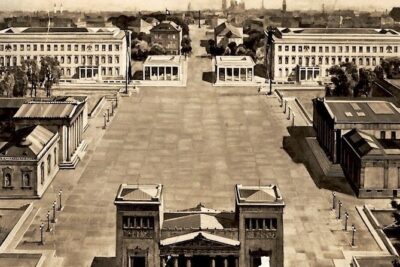
Browse the lists this tour appears in