
Reviewed · MUNICH THIRD REICH & WWII TOURS
Private Tour: Munich Third Reich Walking Tour
Munich’s Nazi past is not tucked away in one museum. It is spread through the Old Town, where ordinary squares and famous beer halls connect to Hitler’s rise. This private two-hour walk brings those places together with a guide who can explain what happened and why Munich became the center of the Nazi movement.
I like the personal format, since your guide can adjust the pace and answer the questions that matter to you. I also like the hotel pickup and return, especially if you are still finding your way around Munich. The main drawback is the price: at $240.28 per person, it makes the most sense for a small group that values private guiding and has a serious interest in 20th-century history.
Key points to know
- Hitler’s political beginnings: See the building where Adolf Hitler first joined the Nazi Party and learn how his Munich years shaped his rise.
- The Beer Hall Putsch: Visit the place connected with Hitler’s failed 1923 attempt to seize power in Munich.
- Private attention: Only your group takes part, so the guide can slow down, answer questions, or adapt the discussion for children.
- Hotel pickup included: Start and finish at a central Munich hotel if you provide the details in advance.
- Hofbräuhaus stop: The tour includes time at the famous beer hall, though food and drinks are not included.
- Strong but not perfect record: The experience is rated 4.7 out of 5, with 90 percent of participants recommending it, though one reported cancellation and one uneven guiding experience deserve attention.
Why Munich is the right place for this difficult history
Munich was not simply a backdrop to Hitler’s career. It was the city where he entered politics, where the Nazi movement developed, and where important policies were formed. That makes a walking tour here more useful than a general city stroll if you want to understand how local streets became tied to national catastrophe.
The subject calls for care. You will not be visiting a theme park version of the past. The point is to connect present-day Munich with events that are often hard to see because many buildings have changed, been rebuilt, or serve ordinary modern purposes.
That is where a guide adds real value. A good guide can show you a present-day street, then explain what once occupied the site and how it fit into the Nazi system. One guide, Mark, was praised for patiently handling a slow walking pace and many questions. Sarah was noted for explaining lesser-known memorials and for helping with the subway afterward. Steve was described as flexible, including with a family whose children were nine and thirteen.
The quality of the guide matters greatly here. The subject is complex, and the tour is short. You want someone who can put events in a clear order without turning the walk into a lecture.
Other Third Reich and wartime history tours in Munich:
- Munich: Third Reich & WWII Walking Tour
★ 4.6 · 6,181 reviews - Third Reich Walking Tour Munich
★ 4.5 · 4,291 reviews - Munich: Birthplace of the Third Reich Guided Walking Tour
★ 4.6 · 771 reviews
Starting at Dachauer Strasse or your central hotel
The normal meeting point is the Radius Tours office at Dachauer Strasse 4, near public transportation. If you provide your hotel details, pickup and drop-off are offered from a central Munich accommodation.
That hotel service is more useful than it may sound. Munich is easy to reach by public transport, but a pickup removes the need to locate an office before an early or tightly planned tour. It also gives you a simple finish, with no need to work out where to go next.
The tour lasts about two hours. That is enough time for a focused introduction to Nazi-era Munich, but not enough for a slow museum visit or a full treatment of every political and military development. Think of it as a guided city walk with historical stops, not a substitute for a major documentation center or museum.
Since this is a private activity, only your own group participates. You can ask for more explanation at one site and less at another. If your group includes children, you can also ask the guide to shape the discussion for their age, as Steve did for one family.
Marienplatz: Munich’s central square and a useful starting point
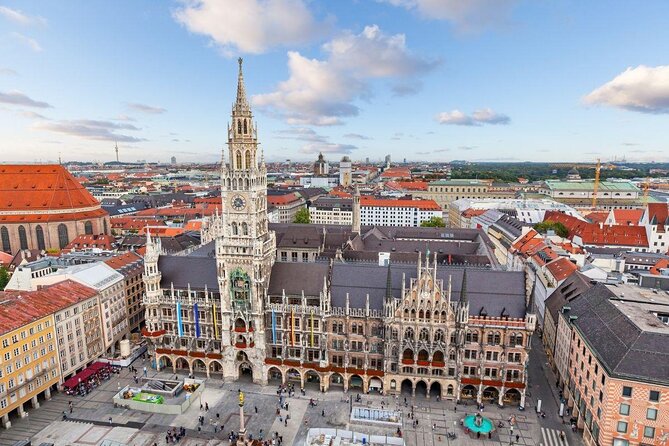
Marienplatz is the center of Munich and one of the most natural places to begin orienting yourself. The stop is brief, about ten minutes, but it places the political story within the city you are seeing today.
You will get a sense of how the Old Town links together. From here, the walk moves through places associated with Munich’s Nazi era, helping you understand that Hitler’s rise did not happen in some distant government district. It unfolded in a city center used for commerce, meetings, ceremonies, and everyday life.
The short time at Marienplatz is both a strength and a limit. It keeps the tour moving, but you should not expect a long architectural explanation or a full account of every event connected with the square. The guide’s role is to use it as a reference point and then lead you toward more specific Nazi-era locations.
I would pay close attention to how your guide connects the square with the rest of the route. The best version of this tour will give you a clear sequence: Hitler’s early political activity, the development of the Nazi Party, the failed coup, and the later machinery of repression.
Hitler’s early party connection and the former Gestapo site
One of the most important stops is the building where Hitler first joined the Nazi Party. The experience is valuable because it shifts the story from abstract dates to a specific place in Munich.
You can ask your guide what the building was used for at the time, what Hitler’s role was when he entered the party, and how his local political work developed. The supplied tour information does not give a precise length for this stop, so the amount of time spent there will depend on the route and your questions.
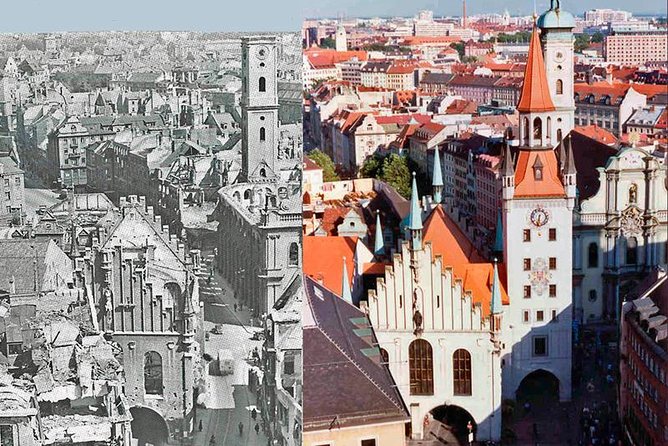
The former Gestapo headquarters offers a different kind of lesson. It connects the political movement with the system of surveillance and persecution that followed. Do not expect the remains of a preserved headquarters to provide all the answers on their own. A guide’s photographs, explanations, and sense of place are especially useful when the original buildings no longer look as they once did.
One participant specifically appreciated a guide who used old photographs to show how areas had changed. That is an important tool on this walk. Munich does not always announce its Nazi history through dramatic ruins, so visual comparison can make the past easier to picture.
More walks through the old town:
- Munich: Old Town & Viktualienmarkt City Walk in German
★ 4.7 · 2,304 reviews - Munich: Night Watchman Walking Tour
★ 4.7 · 2,092 reviews - Munich Ghosts and Spirits Evening Walking Tour
★ 5.0 · 1,900 reviews - Munich Old Town Walking Tour
★ 4.5 · 1,287 reviews
The Beer Hall Putsch and Hitler’s failed 1923 gamble
The tour also visits the location associated with the Beer Hall Putsch, known as the Munich Putsch. In 1923, Hitler and other Nazi leaders attempted to seize power in Munich. The attempt failed, but it became a key moment in Hitler’s career.
This stop helps explain a major turning point. A failed coup might have ended Hitler’s political career, yet the consequences instead gave him publicity and a new strategy for gaining power. Your guide can place the event within the larger story of Munich’s political unrest and the Nazi movement’s effort to turn a failed action into a political advantage.
The value here lies in hearing the sequence while standing in the city. You can ask direct questions about who took part, what Hitler hoped to achieve, and why the event mattered later. Because the walk is private, you do not have to save your questions for a scheduled pause.
This is also a spot where the quality of the guide makes a difference. One participant found a guide thorough but hard to follow because the sights were presented out of order. For a subject with several names, dates, and political shifts, a clear timeline is not a small detail. At the start, I would ask your guide to explain the route’s basic sequence.
Hofbräuhaus: beer, politics, and a modern-day setting
The final listed stop is the Staatliches Hofbräuhaus, Munich’s famous beer hall. The tour allows about twenty minutes here, though food and drinks are not included.
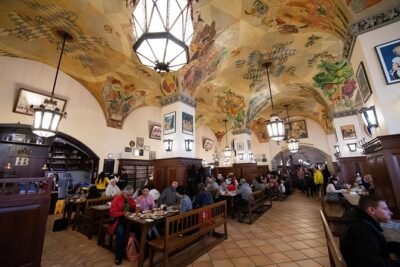
The stop gives the route a distinctly Munich finish. You are seeing a working beer hall rather than only a memorial or former political office. At the same time, the guide can explain how beer halls served as meeting places in Munich’s political life, including during the period covered by the tour.
Do not confuse a stop at Hofbräuhaus with a beer tasting. You may have time to look around or order something at your own expense, but the tour price covers the guide, not refreshments. If you want a meal, plan for it separately rather than expecting the twenty-minute stop to provide one.
I like this inclusion because it connects the serious historical material with the city you are visiting now. Still, if you want a quiet meal, the brief stop may feel too short. The guide’s main purpose here is historical context, not restaurant service.
What the private format is worth at $240.28 per person
The listed price is $240.28 per person, which is high for a two-hour walk. The value depends on your group size and your priorities.
For one or two people, the cost is difficult to justify unless private guiding, hotel pickup, and a tailored conversation are especially important to you. For a larger private group, the price may feel more reasonable, particularly with group discounts available. You are paying for exclusivity and flexibility rather than a long list of attractions.
The price includes:
- A private tour for your group
- A professional guide
- Hotel pickup and drop-off
- An English-language experience
- A mobile ticket
Food and drinks are not included. Admission tickets are not listed as an extra concern for the named walking stops, which keeps the cost easier to understand.
I would compare this with your alternative. If you only want a quick introduction to Nazi-era Munich, a shared walk or museum visit may offer better value. If your group wants to ask many questions, move at a slower pace, or adapt the discussion for children, private guiding can make the higher price worthwhile.
The walking pace and how to prepare
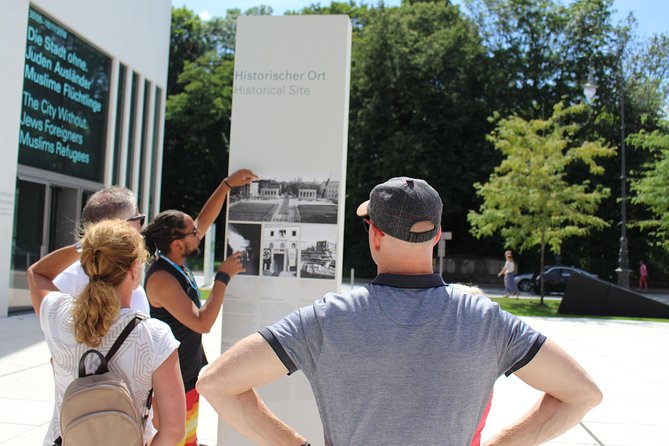
This is a walking tour through Munich’s Old Town, not a vehicle tour. One participant described a lot of walking, while another specifically valued a guide’s patience with slower walkers. That tells you to wear comfortable shoes and leave enough time between this activity and your next appointment.
The route is near public transportation, and most people can participate. Service animals are allowed. The supplied information does not give an exact distance, step count, or full accessibility assessment, so you should contact the operator if your group has specific mobility needs.
You may want to bring water and dress for the weather. Food and drinks are not included, and the Hofbräuhaus stop is short. Since the tour moves through active city streets, you should also expect ordinary urban noise and changing conditions rather than a quiet museum setting.
The mobile ticket is convenient, but the most important practical step is giving the company your hotel details if you want pickup. Without that information, the expected starting point is the Radius Tours office at Dachauer Strasse 4.
The guides make or break the experience
The strongest part of this experience is the guide. Mark was praised for patience and for answering many questions. Sarah was singled out for clear explanations, lesser-known memorials, and help with Munich’s subway. Steve was praised for flexibility and for keeping children engaged.
Those details suggest that you should use the private format actively. Tell the guide at the start if you want more political context, more information about memorials, or an explanation suitable for younger members of your group. Do not be shy about asking for a timeline if the story starts to feel scattered.
There is one important caution. One participant found a guide well informed but flustered, with the route presented in an order that was difficult to follow. Another reported that the company cancelled a tour without notifying the group. These accounts do not erase the overall 4.7 rating or the 90 percent recommendation rate, but they are reasons to confirm the start details before the day of the tour and to speak up if you need a clearer structure.
The activity is offered in English. Specific guide assignments are not guaranteed, so Mark, Sarah, and Steve are examples of guides who have led this experience, not names you can necessarily request.
Who should book this Munich history walk
I would choose this tour if you have a strong interest in Nazi Germany and want to connect political events with real Munich streets. It also suits families who prefer to ask questions privately and groups that value hotel pickup.
It is a good fit for:
- First-time Munich visitors who want historical orientation
- Small groups sharing the cost of a private guide
- Families with older children or teenagers
- People who want lesser-known details rather than only famous landmarks
- Visitors who prefer a focused two-hour walk
I would hesitate if you want a relaxed sightseeing stroll, a long museum visit, or a low-cost activity. The subject is serious, the walking is substantial, and the price is not modest.
Book at least a few days ahead if you can. The experience is booked, on average, 38 days in advance, which suggests that waiting until the last moment may not be wise. Confirmation is normally issued at booking, but reservations made within seven days of the date may take up to 48 hours and depend on availability.
Should you book the Third Reich Walking Tour?
Book it if you want a private, question-friendly introduction to Munich’s Nazi past and can accept the premium price. The combination of Hitler-linked locations, the former Gestapo site, the Beer Hall Putsch location, Marienplatz, and Hofbräuhaus gives you a useful two-hour framework for understanding the city.
I would especially recommend it for a small group with a serious interest in history, or for a family that wants a guide to adjust the discussion. If you are traveling alone or on a tight budget, the cost is harder to defend. Confirm your hotel pickup, allow for plenty of walking, and ask your guide to keep the timeline clear. Done that way, this can give you a thoughtful first look at one of Munich’s most difficult subjects.
FAQ
How long does the private Third Reich walking tour last?
The tour lasts approximately two hours.
Where does the tour start?
It starts at the Radius Tours office at Dachauer Strasse 4, 80335 Munich, unless you provide hotel details for pickup.
Is hotel pickup included?
Yes. Hotel pickup and drop-off are included from a central Munich accommodation when you provide the hotel information.
Where does the tour end?
The activity ends back at the meeting point, or at your starting hotel when hotel pickup and drop-off are arranged.
Is the tour private?
Yes. Only your group participates in the activity.
What language is the tour offered in?
The tour is offered in English.
Is food or drink included?
No. Food and drinks are not included in the price.
Does the tour visit the Hofbräuhaus?
Yes. The route includes a visit to the Staatliches Hofbräuhaus, with about twenty minutes listed for that stop.
Can I cancel for a full refund?
Yes, if you cancel at least six full days before the experience start time. Cancellations made two to six full days in advance receive a 50 percent refund, while cancellations less than two full days before the start time are not refunded.
Recently reviewed in Munich
- München: Vegetarische Viktualienmarkt-Probiertour Deutsch★ 4.8 · 6 reviews
- Wright Europe Vacations – Private Escorted Auto Tours★ 5.0 · 35 reviews
- Best of Munich Electric Bike Tour★ 5.0 · 38 reviews
- Munich Walking Quiz: Explore and Discover the City’s Highlights★ 5.0 · 7 reviews
- Walking Tour on Resistance to Nazism in Munich★ 5.0 · 8 reviews
- Private Transfer from Munich to Salzburg with 2 hours for sightseeing★ 4.5 · 13 reviews
- Private Transfer from Munich to Vienna with 2 hours for sightseeing★ 4.5 · 6 reviews
- 2 hour Sights Guided E-Scooter Tour in Munich★ 4.0 · 6 reviews
Munich Third Reich & WWII Tours, compared.
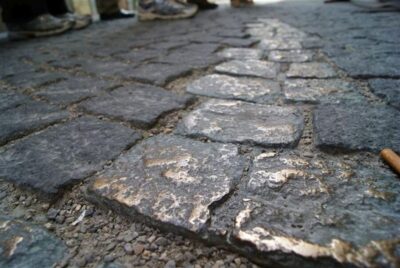
Birthplace of the Third Reich Guided Walking Tour
Read our review →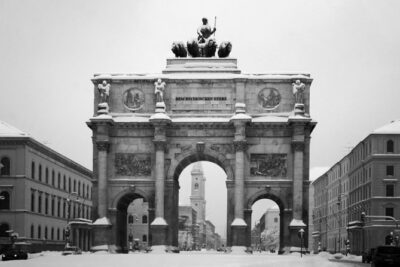
Munich World War II Sites Including Dachau Concentration Camp
Read our review →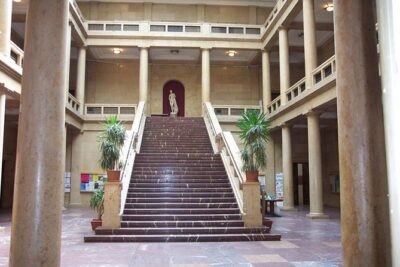
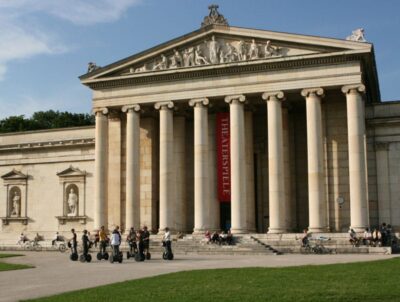
Munich 3-Hour Segway Tour: Nazi Munich & Royal Architecture
Read our review →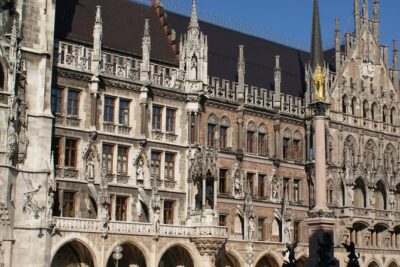
Dachau Concentration Camp Memorial Site And Third Reich Day Tour From Munich
Read our review →
Browse the lists this tour appears in