
Reviewed · MUNICH THIRD REICH & WWII TOURS
Munich Third Reich and WWII Segway Tour
Munich’s Nazi past comes into sharper focus when you ride between the places tied to Hitler’s rise, the resistance against him, and his plans to remake the city. This three-hour Segway tour connects sites such as Königsplatz, the Führerbau, the White Rose memorial area, Hofbräuhaus, and Odeonsplatz.
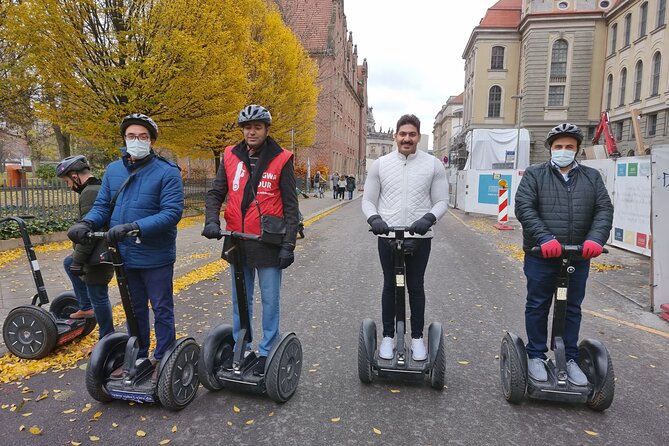
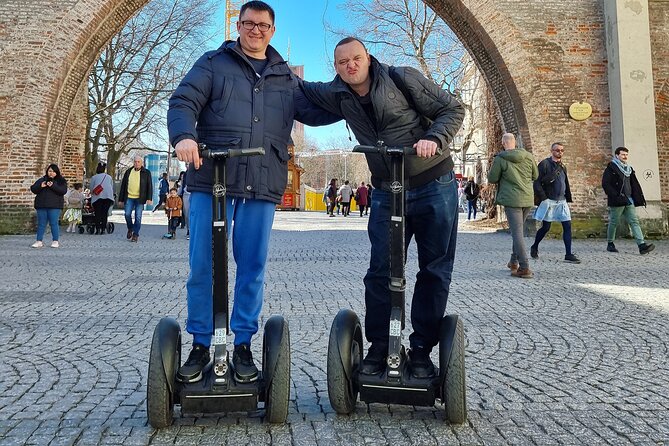
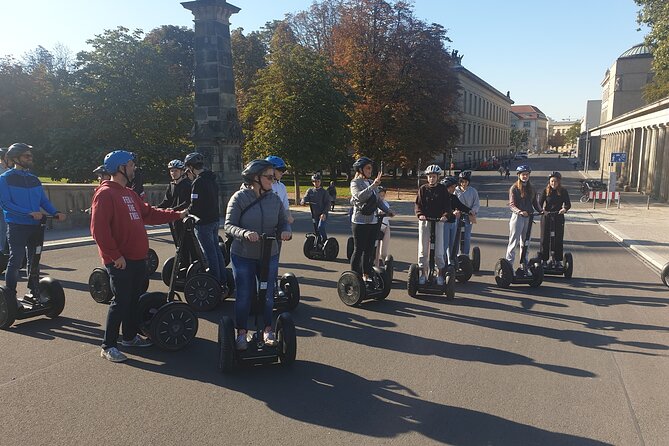
I like the way the Segway lets you cover more ground than a walking tour, and I like the human touch from guides such as Karl, Josef, Claudia, and Rawen. They give beginners time to learn, stop for photographs, and answer questions. The main drawback is that a Segway is exposed to the weather, and one rider reported a mechanical failure that caused a fall, so careful equipment checks matter.
Key points to know before you book
- Three hours on a Segway: Cover central Munich more quickly than you would on foot, with the tour returning to its starting point.
- A serious historical theme: Visit Nazi-era political sites, places linked to resistance, and locations connected with Hitler’s Munich years.
- Helpful instruction for beginners: Guides allow time to get used to the Segway, which is useful if you have never ridden one.
- Several major city sights in one outing: The route includes Königsplatz, the Führerbau, Haus der Kunst, Hofbräuhaus, the Residenz, and Odeonsplatz.
- Small maximum group: The tour accepts no more than 20 people, allowing a more manageable ride through the city.
- Weather makes a real difference: Dress warmly on cold days, since riding in the open air feels colder than walking.
Munich’s Nazi past, seen from a moving viewpoint
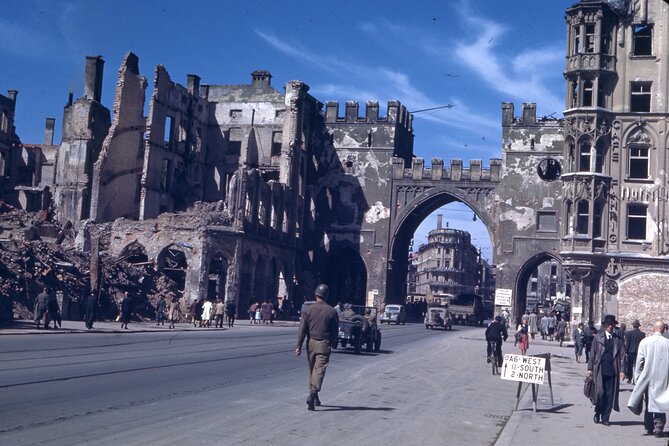
This is not a general city sightseeing ride with a few historical comments added at the end. Its central subject is Munich’s role in the rise of National Socialism and the city Hitler hoped to turn into the movement’s political capital.
The route also places that story beside older and more ordinary Munich. You pass grand royal buildings, busy central streets, beer halls, museums, and broad squares. That contrast helps you see how Nazi leaders used familiar civic spaces, grand architecture, and popular institutions to project power.
A Segway changes the rhythm of the experience. You are not sitting in a vehicle behind glass, and you are not limited to a short walk between stops. You move through the city at street level, then pause where the guide can explain what happened there.
I would not treat the tour as a substitute for a museum visit or a full academic study of the period. Instead, it works as a well-paced introduction, giving you a map of Munich’s Nazi-era sites and enough background to make later visits more meaningful.
Other Third Reich and wartime history tours in Munich:
- Munich: Third Reich & WWII Walking Tour
★ 4.6 · 6,181 reviews - Third Reich Walking Tour Munich
★ 4.5 · 4,291 reviews - Munich: Birthplace of the Third Reich Guided Walking Tour
★ 4.6 · 771 reviews
Getting started at Artur-Kutscher-Platz
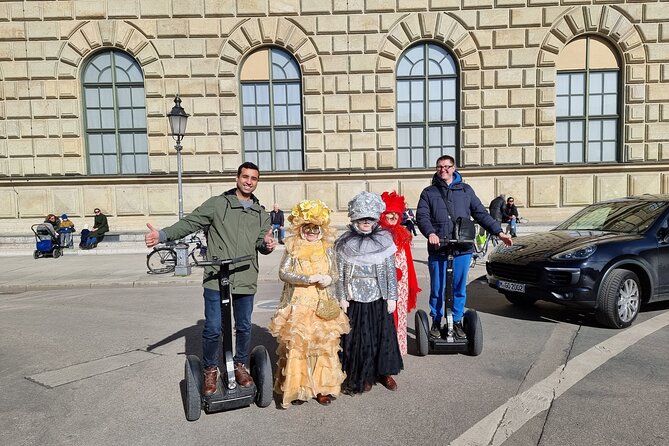
The tour begins at Artur-Kutscher-Platz 2A, 80802 Munich, at 10:00 in the morning. It ends back at the same meeting point, which makes the outing easier to fit into a day of sightseeing.
Before you set off, the guide gives you time to become comfortable with the Segway. This part matters. The machine can feel strange at first, especially if you are nervous about balance or have never used one before. The strongest practical detail from the experience is that guides have been willing to coach hesitant riders rather than rush them into city traffic.
The tour is offered in English and uses mobile tickets. It is near public transportation, and most people can take part. The maximum group size is 20, though the actual riding feel will depend on the number booked for your date.
I would arrive ready to listen closely to the safety instructions. Keep your attention on the road, give other riders space, and tell the guide if you need another minute before moving off. One reported mechanical problem led to a rider falling backward, though the rider was not seriously hurt. That does not define the whole outing, but it is a good reason to check that your Segway feels secure before departure.
Königsplatz and the machinery of power
Königsplatz is one of the most important stops because its monumental setting helps explain how politics can use architecture and public space. The broad square was central to Hitler’s public image of Munich, and the surrounding buildings formed part of the city’s Nazi-era political stage.
The tour includes the Führerbau, a major Nazi government building associated with Hitler. You can expect the guide to explain how the building fit into the regime’s plans for Munich and why this part of the city mattered to the movement.
The route also identifies the former Braunes Haus, once the headquarters of the Nazi Party. Even when a building has changed or disappeared, knowing where it was helps you understand how power was organized in the city.
This is where a guide adds real value. A quick stop and a photograph would tell you little. The location becomes useful when connected to the people, offices, ceremonies, and political ambitions that shaped it.
From the Old Synagogue to the White Rose
The Old Synagogue is included among the historical stops. Its presence gives the tour a chance to address the Jewish community and the destruction of Jewish life under Nazi rule, though the exact amount of time spent at each location can vary with the group and traffic.
The route also includes the White Rose, the student resistance group that opposed Hitler. This is an important counterpoint to the story of Nazi power. Munich was not simply a city of enthusiastic support. Some people resisted, and the White Rose members paid with their lives.
I appreciate this part of the route because it keeps the subject from becoming a parade of Nazi buildings. You see both the machinery of dictatorship and the courage of people who challenged it.
The tour also passes Schelling-Salon, a place connected with Munich’s intellectual and student life. Its inclusion helps connect the political story to the city’s university district and the world of ideas in which resistance could take shape.
More segway tours in Munich:
- Munich: City Highlights Guided Segway Tour
★ 4.6 · 266 reviews - Munich 3-Hour Segway Tour: Nazi Munich & Royal Architecture
★ 4.9 · 194 reviews - Munich Segway Tour
★ 5.0 · 181 reviews - Munich: City Highlights Guided Segway Tour
★ 4.5 · 161 reviews
Haus der Kunst and the Angel of Peace
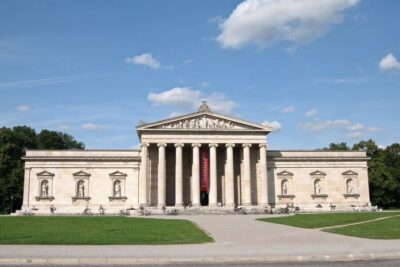
Haus der Kunst brings the tour back to the Nazi regime’s use of art and culture. The building was created as a major cultural statement, reflecting the regime’s taste and its attempt to control what Germans saw as acceptable art.
A guide can make this stop more useful by explaining not only the building’s appearance but also its purpose. The Nazis understood that power was expressed through museums, ceremonies, architecture, and public taste, not only through police and laws.
The Angel of Peace offers a very different visual experience. This landmark is tied to Munich’s broader civic identity rather than being solely a Nazi-era site. Passing from political architecture to a famous city monument gives the ride more range and keeps it from feeling like one long sequence of grim addresses.
The change of subject is also practical. Three hours of difficult history can feel heavy. A varied route gives you time to absorb the main ideas while still seeing more of Munich itself.
Hitler’s Munich addresses and the Hofbräukeller
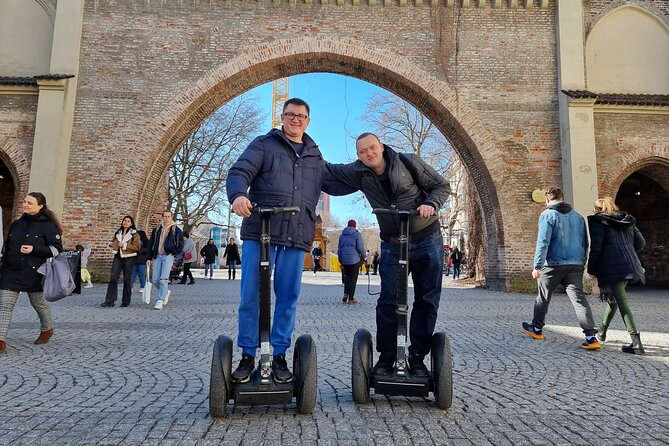
The tour points out Hitler’s apartment from 1933 and his earlier apartment from 1920 to 1929. These stops trace the shift from political newcomer to national leader, at least through the places associated with his years in Munich.
The addresses are not grand attractions in the usual sightseeing sense. Their value is historical. They help you place a political biography onto the city map and see how Munich figured in Hitler’s early career.
The Hofbräukeller adds another setting linked to Nazi-era political activity. Beer halls played an important role in Munich’s political culture, providing places where speeches, arguments, and party organizing could reach a broad audience.
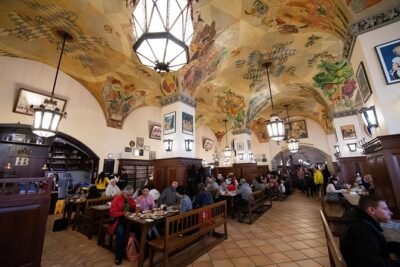
You will also pass the Hofbräuhaus, one of Munich’s best-known beer halls. The stop is useful because it shows how an ordinary part of Munich’s public life could become connected with political theater. Do not expect a long meal or a dedicated beer tasting here. This is a sightseeing and history tour, not a food outing.
The Beer Hall Putsch and Munich’s wider story
The tour’s stated theme includes the Beer Hall Putsch, the failed 1923 attempt by Hitler and his supporters to seize power in Bavaria. The guide explains why the attempt did not succeed and how its failure affected Hitler’s later political strategy.
This is one of the strongest reasons to choose the experience if you want a focused introduction to the period. The story is easier to follow when you move through the city rather than hear a list of dates without a sense of place.
At the same time, the tour cannot give every event equal treatment. You are covering a long route in about three hours, and the group has to keep moving. If you want detailed discussion of the putsch, the White Rose, Jewish Munich, or Nazi architecture, ask questions when the guide stops.
The guides named in the experience feedback include Karl, Josef, Claudia, and Rawen. Their approach may differ by date, but the useful pattern is clear: the better guide gives you time for photographs, responds to questions, and adjusts the pace for people who are still learning the Segway.
Maximilianeum, the Residenz, and Odeonsplatz
The Maximilianeum and Maximilianestrasse broaden the tour beyond Hitler’s personal story. These grand locations help you see Munich as a royal and civic capital before the Nazi period, not merely as a backdrop for twentieth-century politics.
The Residenz Munich adds another layer. Its palace buildings represent the long history of Bavarian rulers and court culture. Placing the Residenz beside Nazi political sites helps you compare different ideas of authority: dynastic power, elected government, and dictatorship.
Odeonsplatz is another key endpoint in the city’s political geography. It is associated with important Nazi-era events, including the aftermath of the Beer Hall Putsch. The square is also one of Munich’s major central public spaces, so you get both the historical explanation and a clear sense of how the city is laid out.
The route’s variety is one of its practical strengths. You are not asked to spend three hours looking at identical office buildings. Instead, you see royal architecture, political monuments, cultural institutions, streets, squares, and beer halls.
What the $82.82 price means
At $82.82 per person, this is not the cheapest way to see Munich. You are paying for the Segway, instruction, a guide, and a three-hour route that connects many locations in one outing.
I think the value depends on how you like to explore. If you enjoy walking and plan to visit each central sight on your own, you may prefer to spend less and use a map or audio guide. If you want a structured introduction and like the idea of covering more distance without a long walk, the price is easier to justify.
The tour also saves planning time. You do not need to work out how to connect Königsplatz, the Führerbau, the White Rose sites, Haus der Kunst, the Hofbräukeller, the Residenz, and Odeonsplatz. The guide creates a route and gives the stops a shared story.
For families and couples, the Segway can make a serious subject more active. Teenagers aged 17 and 14 were reported to have enjoyed the format, and several riders found the machines easy to learn. Still, the price is best spent by people who genuinely want to ride. If you dislike wheeled tours or feel uneasy balancing, a walking history tour may suit you better.
Weather, comfort, and group size
You will be outdoors for about three hours. On a cold day, riding can feel especially chilly because you are moving through the air rather than walking at your own pace. Wear warm clothing and do not underestimate the need for layers.
The tour is offered in English, and confirmation arrives when you book. It is near public transportation, which helps with the 10:00 start. Since the outing returns to the meeting point, you can plan lunch or another central activity afterward without arranging a second pickup.
The maximum group size is 20. That is not a private tour, but it is small enough to keep the group together more easily than a large coach outing. One account described a day affected by a guide not arriving, which made the organization less smooth. I would allow some flexibility in your schedule rather than booking a tight connection immediately afterward.
Free cancellation is available if you cancel at least 24 hours before the local start time. Changes or cancellations inside that window are not refunded, and the activity requires a minimum number of participants. If that minimum is not met, you are offered another date or experience, or a full refund.
Who should book this Munich ride?
I would choose this tour if you want a clear introduction to Munich’s Nazi-era sites, prefer active sightseeing, and would rather cover a lot of ground than walk between scattered locations.
It is a good fit for couples, families with older children, first-time Segway riders, and anyone who wants a guide to connect places that might otherwise seem unrelated. It also works well early in a Munich visit, since the route gives you a useful mental map for later independent exploring.
I would be more cautious if you dislike cold weather, have trouble balancing, or want long, detailed time at each memorial and building. The tour keeps moving, and the historical subject is broad. A rider who expected only WWII sites was disappointed when the route also passed through shopping areas, so keep your expectations clear: this is a Nazi-era and Munich history tour, not a museum-only WWII excursion.
Should you book it?
Book it if the mix of history, movement, and city sightseeing appeals to you. The best parts are the range of sites, the chance to reach them efficiently, and the patient instruction that makes the Segway approachable for many beginners.
Skip it if you want a quiet, deeply detailed study of one subject or if you are likely to be uncomfortable riding outdoors for three hours. For the right rider, $82.82 buys more than transport. It gives you a guide-led route through Munich’s political past, with enough variety to keep the day lively and enough context to make the places meaningful.
FAQ
How long does the Munich Third Reich and WWII Segway Tour last?
The tour lasts approximately three hours.
Where does the tour begin?
It begins at Artur-Kutscher-Platz 2A, 80802 Munich, Germany.
What time does the tour start?
The scheduled start time is 10:00 am.
Where does the tour end?
The activity ends back at the starting meeting point.
Is the tour offered in English?
Yes. The tour is offered in English.
What places are included on the route?
The route includes the Old Synagogue, Königsplatz, the Führerbau, the former Braunes Haus, Schelling-Salon, the White Rose, Haus der Kunst, the Angel of Peace, Hitler’s former apartments, Hofbräukeller, the Maximilianeum, Hofbräuhaus, the Residenz Munich, and Odeonsplatz.
Can I cancel for a full refund?
Yes, if you cancel at least 24 hours before the experience’s start time. Cancellations made less than 24 hours before the start are not refunded.
Recently reviewed in Munich
- München: Vegetarische Viktualienmarkt-Probiertour Deutsch★ 4.8 · 6 reviews
- Wright Europe Vacations – Private Escorted Auto Tours★ 5.0 · 35 reviews
- Best of Munich Electric Bike Tour★ 5.0 · 38 reviews
- Munich Walking Quiz: Explore and Discover the City’s Highlights★ 5.0 · 7 reviews
- Walking Tour on Resistance to Nazism in Munich★ 5.0 · 8 reviews
- Private Transfer from Munich to Salzburg with 2 hours for sightseeing★ 4.5 · 13 reviews
- Private Transfer from Munich to Vienna with 2 hours for sightseeing★ 4.5 · 6 reviews
- 2 hour Sights Guided E-Scooter Tour in Munich★ 4.0 · 6 reviews
Munich Third Reich & WWII Tours, compared.
Birthplace of the Third Reich Guided Walking Tour
Read our review →
Munich World War II Sites Including Dachau Concentration Camp
Read our review →
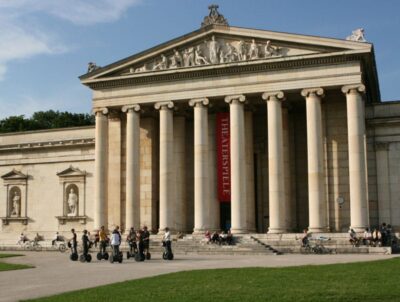
Munich 3-Hour Segway Tour: Nazi Munich & Royal Architecture
Read our review →
Dachau Concentration Camp Memorial Site And Third Reich Day Tour From Munich
Read our review →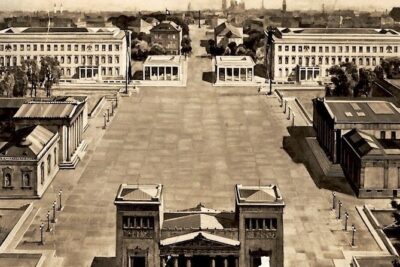
Browse the lists this tour appears in