
Reviewed · MUNICH THIRD REICH & WWII TOURS
Munich: Private or Group Third Reich and WWII Walking Tour
Munich’s prettiest squares hide some of its darkest stories. On this two-hour walk, you follow the Nazi movement from its early beer hall speeches to the failed Beer Hall Putsch, the terror of the Brownshirts, and the wartime destruction that followed. The route links original buildings and authentic sites rather than treating this painful past as a distant museum display.
I like the way the guide uses old photographs and documents to show what stood in each place before, during, and after the Nazi era. I also like the clear route from Marienplatz to Königsplatz, which gives you a strong sense of how Munich became the Capital of the Movement. The main consideration is the pace: two hours is enough for an introduction, but not enough for every detail or museum interior.
Key points before you book
- Marienplatz meeting point: Find the Mariensäule, a golden statue on a tall red marble column, and look for the guide’s blue Weis(s)er Stadtvogel bag.
- A route through Nazi Munich: The walk connects Marienplatz, former Nazi headquarters, Beer Hall Putsch locations, Königsplatz, and memorial sites.
- Photos make the past visible: Your guide brings documents and historic images to compare with the buildings you see today.
- Private group format: The listed price is $259 for a group of up to 25, which can be good value for families or friends traveling together.
- English or German: Tours are offered in both languages by a certified guide.
- Serious subject, accessible format: This is a history tour for adults and older children, with the stated policy that it is not suitable for children under 10.
Why Munich matters to the story
Munich is not simply a backdrop for this tour. It was where Adolf Hitler built his early public reputation, where the Nazi Party began, and where the movement developed its symbols, rituals, and political machinery.
After World War I, Germany was unsettled by defeat, economic hardship, and political conflict. Munich became fertile ground for extremist groups. Hitler first gained attention as a forceful speaker in the city’s beer halls. A small political group grew around him, and his followers began calling him the Führer before he became a national figure.
The city later received the official title Hauptstadt der Bewegung, or Capital of the Movement. That title tells you why a walking route here can add something that a general Munich sightseeing tour cannot. You are not just hearing a national story. You are seeing where its local beginnings took place.
The tour also keeps the focus on victims and resistance. That matters. A useful Nazi history tour should explain how the regime gained power, but it should not turn Hitler into the main attraction. The best parts of this route place political events beside the people who resisted, suffered, or died under the system.
Other Third Reich and wartime history tours in Munich:
- Munich: Third Reich & WWII Walking Tour
★ 4.6 · 6,181 reviews - Third Reich Walking Tour Munich
★ 4.5 · 4,291 reviews - Munich: Birthplace of the Third Reich Guided Walking Tour
★ 4.6 · 771 reviews
Starting beneath the Mariensäule at Marienplatz
The meeting point is easy to identify if you go directly to the Mariensäule in the center of Marienplatz. The statue sits on a tall red marble column and is topped by a golden figure. Look for a guide carrying a blue bag marked Weis(s)er Stadtvogel.
Marienplatz is one of Munich’s most familiar gathering places, which makes it a useful place to begin. You start in the middle of the city’s postcard image, then look at the same setting through a more troubling lens. The contrast is important. Munich’s grand center can appear timeless, yet its streets witnessed political violence, propaganda, anti-Semitic attacks, and wartime damage.
At this point, your guide sets the historical frame. You can expect an explanation of Munich after World War I, Hitler’s arrival in the city, and the early growth of National Socialism. Historic photos and documents help you picture how the square and nearby streets looked during the regime.
I would arrive a few minutes early. Marienplatz can be crowded, and the meeting instructions depend on finding one particular monument and identifying the blue bag. Comfortable shoes are essential, since the tour is entirely on foot. Bring a drink, especially if you are visiting in warm weather.
Beer halls, early speeches, and the failed putsch
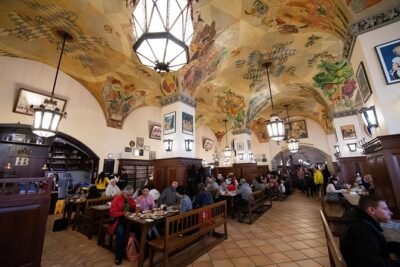
Munich’s beer halls were not just places for food and drink. In the years after World War I, they also served as political meeting rooms. Hitler used them to build a following through long, aggressive speeches aimed at people angry with the government and the postwar settlement.
The walk shows you locations connected with those early appearances and explains how a minor political group became a disciplined movement. Seeing the actual setting helps you understand the scale of the beginning. The Nazi Party did not emerge fully formed as a national power. It grew through meetings, speeches, loyal followers, intimidation, and careful use of public space.
The Beer Hall Putsch is one of the route’s key events. In 1923, Hitler and his supporters tried to seize power in Bavaria. The attempt failed, and the march ended in violence. The failed coup could have ended Hitler’s political career, but it instead helped him gain publicity and taught the movement important lessons about the use of law, propaganda, and elections.
Your guide’s photos and documents are particularly useful here. A building can look ordinary until you know who gathered there and what was planned inside. The tour’s value comes from connecting the physical place to the political choices made there.
This section may be uncomfortable, and it should be. The point is not to make the early Nazi movement seem dramatic or romantic. It is to show how extremism can begin with speeches, organized resentment, and a small group that learns how to turn anger into power.
The scars of persecution in central Munich
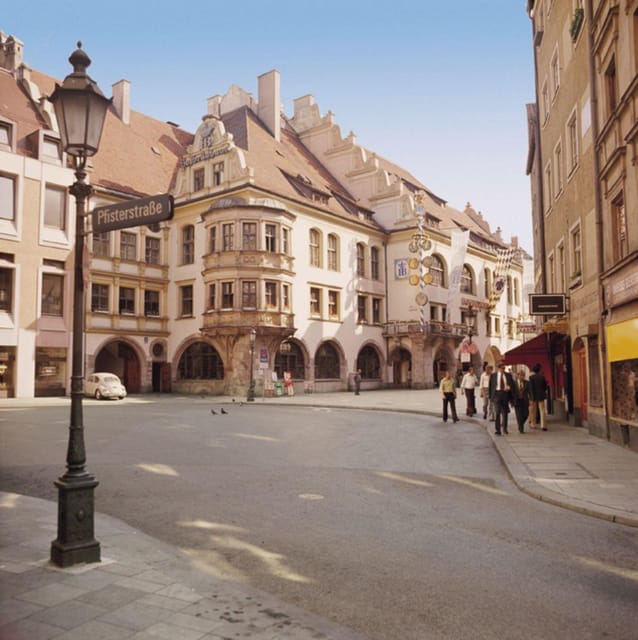
The tour also covers the violence directed at Jewish people and political opponents. Munich witnessed anti-Semitic pogroms, the destruction of synagogues, and the public burning of books. The route places those crimes within the city where they occurred, rather than presenting them only as abstract dates.
You will also hear about the Brownshirts, the Nazi paramilitary force that helped spread fear and enforce the movement’s authority. Their role shows how intimidation worked alongside speeches and elections. The growth of the regime was not only a matter of politicians making promises. It involved public threats, street violence, discrimination, and the steady removal of democratic freedoms.
One strength of a guided walk is that the guide can explain what remains and what has disappeared. Some original buildings survive. Other places have changed, been rebuilt, or are marked only by a memorial. The photographs help fill in those gaps.
Expect the tone to remain serious. This is not a tour that softens the subject with constant jokes or turns the past into a spectacle. Still, the guides appear to keep the material approachable. Karl is described as welcoming and well prepared, while Ina is described as personal and responsive to questions. Guide assignments can change, so you should not book on the assumption that either person will lead your tour.
More walks through the old town:
- Munich: Old Town & Viktualienmarkt City Walk in German
★ 4.7 · 2,304 reviews - Munich: Night Watchman Walking Tour
★ 4.7 · 2,092 reviews - Munich Ghosts and Spirits Evening Walking Tour
★ 5.0 · 1,900 reviews - Munich Old Town Walking Tour
★ 4.5 · 1,287 reviews
Former Nazi headquarters and the machinery of power
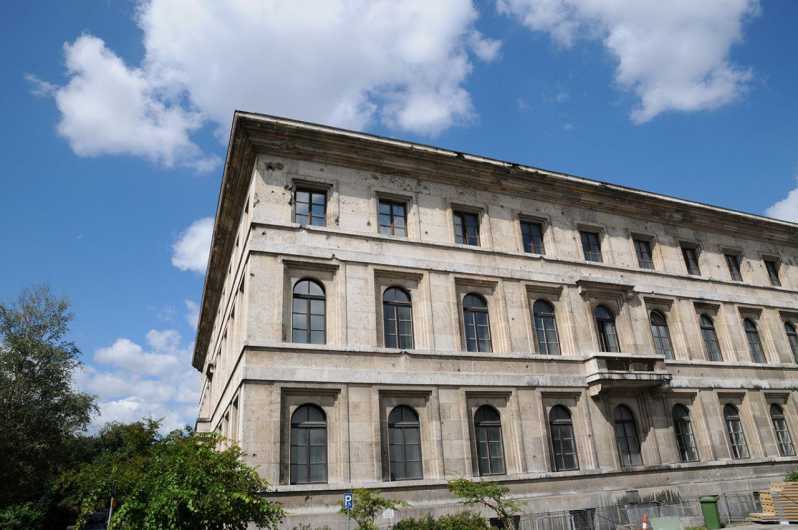
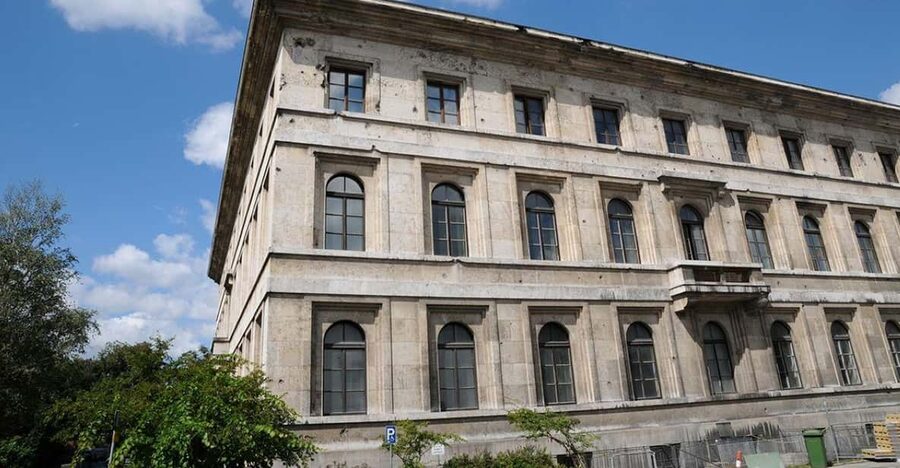
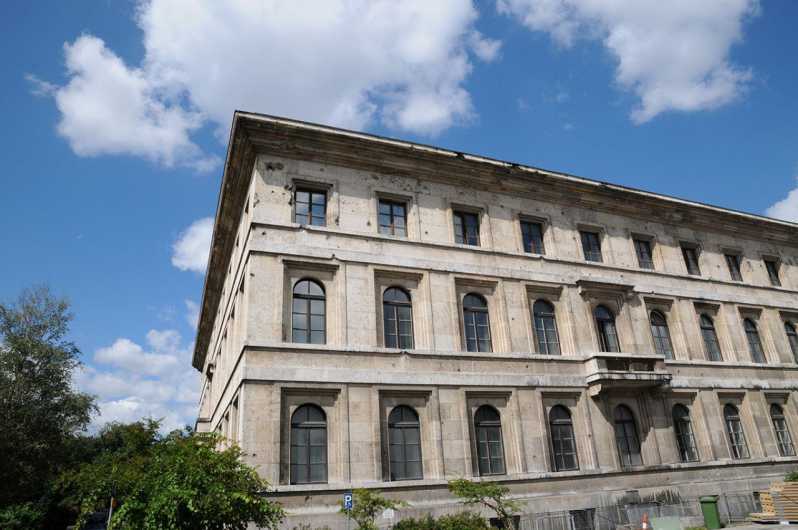
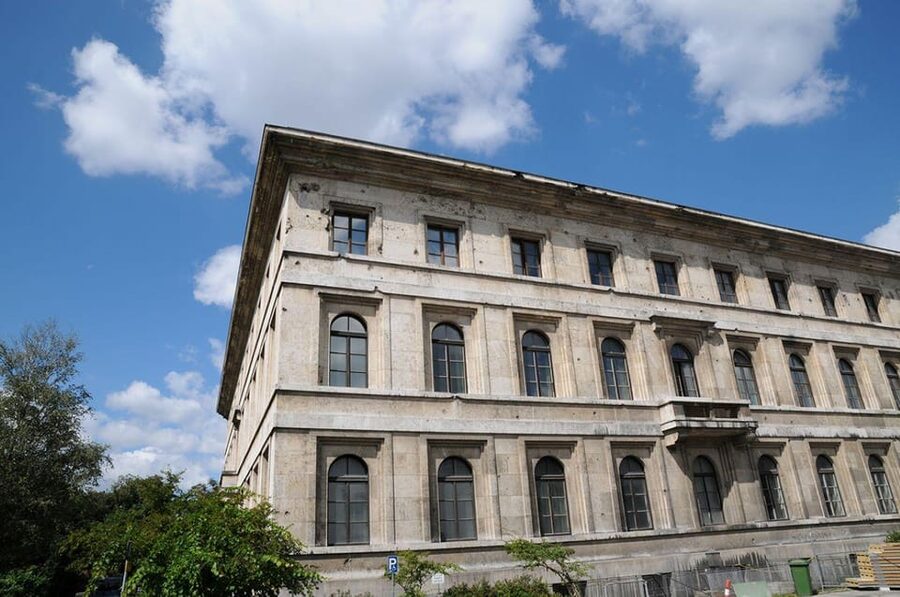
A major stop is the former Nazi headquarters. This is where the tour moves from the movement’s early meetings to the machinery of government and control. You see the place where Hitler and the Nazi leadership operated after the party had gained power.
The building matters because it shows how quickly a local political movement became a state system. Munich was not only the city where Hitler first spoke. It became an official center of Nazi power, propaganda, and administration.
The guide’s job here is to keep the focus on what happened at the site and why it mattered. Historic photos can show how the architecture was used to project authority. Monumental buildings were part of the message. Their size, order, and formal design were intended to make the regime appear permanent and all-powerful.
Yet the tour also points out an unsettling contrast. Allied bombing destroyed large parts of central Munich, while several grand structures commissioned under Hitler survived. That leaves you looking at buildings that still exist, even though the system that built them caused enormous suffering and destruction.
I find this kind of comparison useful because it avoids a simple before-and-after story. Munich was damaged by the war, rebuilt, and returned to daily life, but its surviving Nazi-era buildings remain part of the city. A good guide helps you understand what to do with that uncomfortable physical legacy.
Königsplatz and the architecture of propaganda
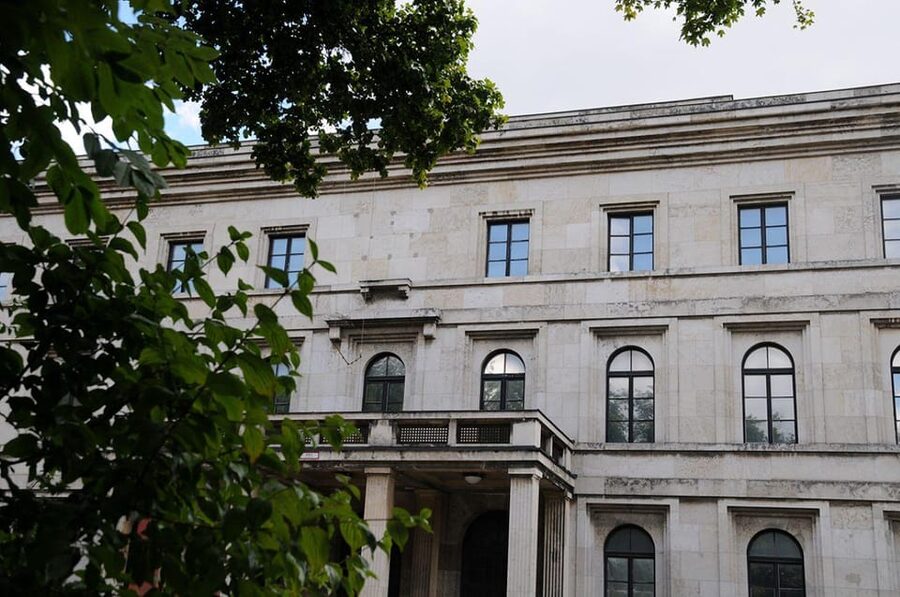
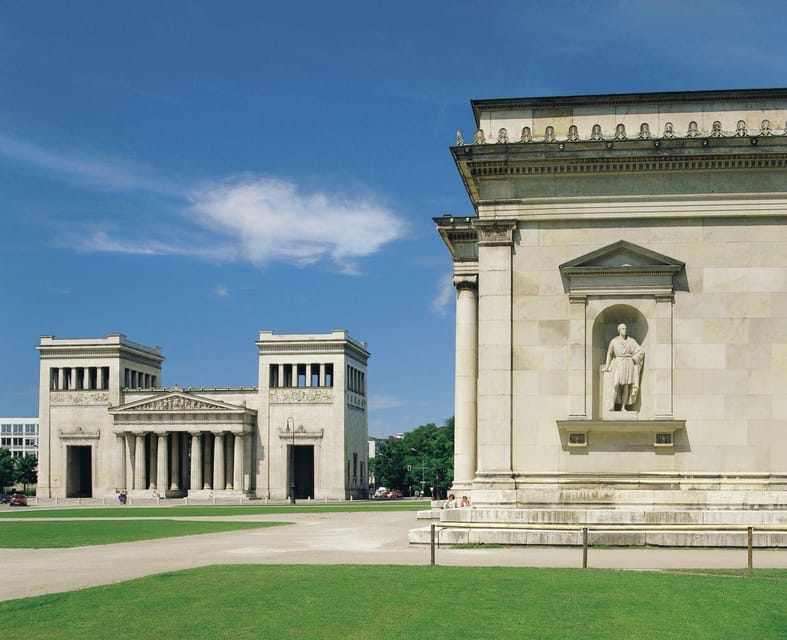
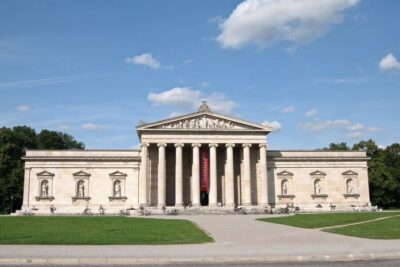
Königsplatz is one of the route’s major endpoints. The square is associated with grand Nazi ceremonies and monumental architecture. Its open space and formal buildings were suited to rallies, parades, and carefully staged public displays.
Here, the tour shows how architecture can serve politics. Buildings and open spaces can be designed not only for practical use, but also to make people feel small, watched, or part of a powerful crowd. The scale of Königsplatz helps explain how the regime used public places to create obedience and spectacle.
The location is also useful for discussing what happened after 1945. A city must decide how to live with buildings connected to dictatorship. Demolition, preservation, memorials, and public explanation all carry meaning. The route does not erase the past, and it does not treat the surviving structures as neutral decoration.
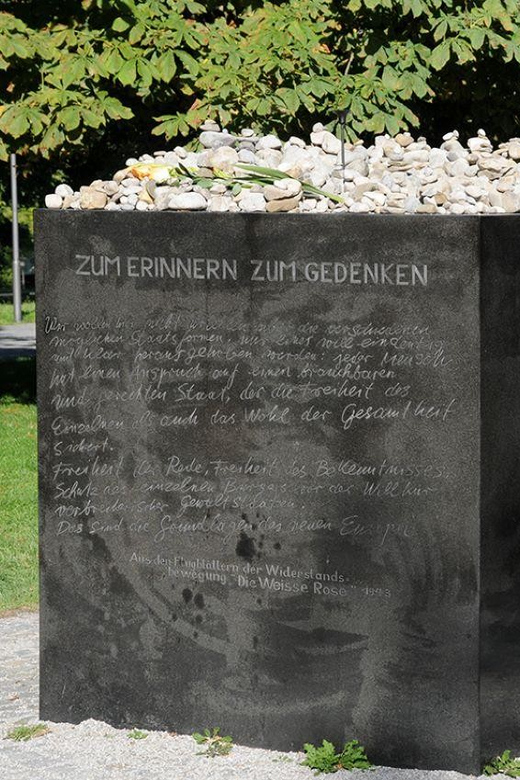
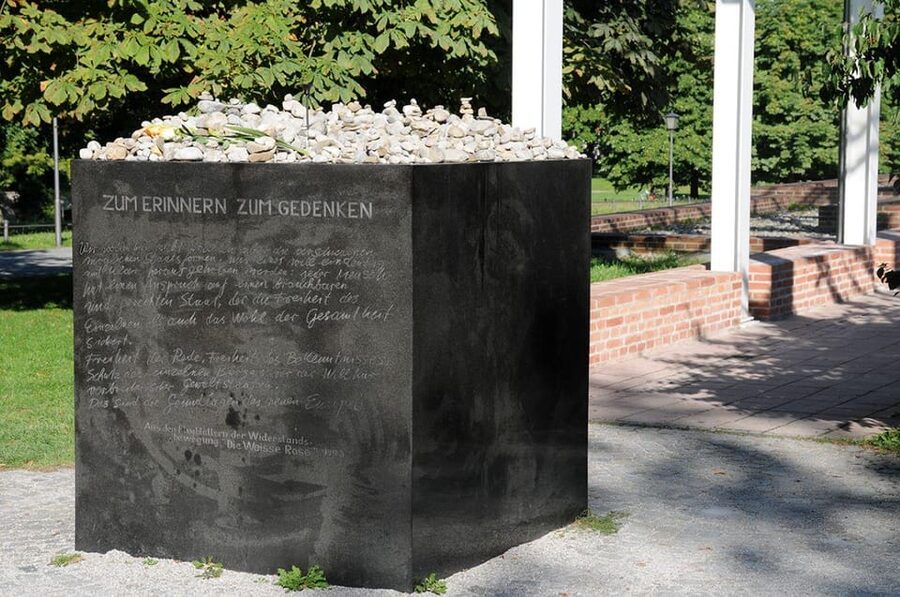
The walk from Marienplatz to Königsplatz gives the tour a clear shape. You begin with the early movement, pass through the city center where persecution and violence unfolded, then reach a space associated with the regime at its height. You also encounter memorials to victims and people who resisted Hitler’s ideology.
Resistance, victims, and the human side of the route
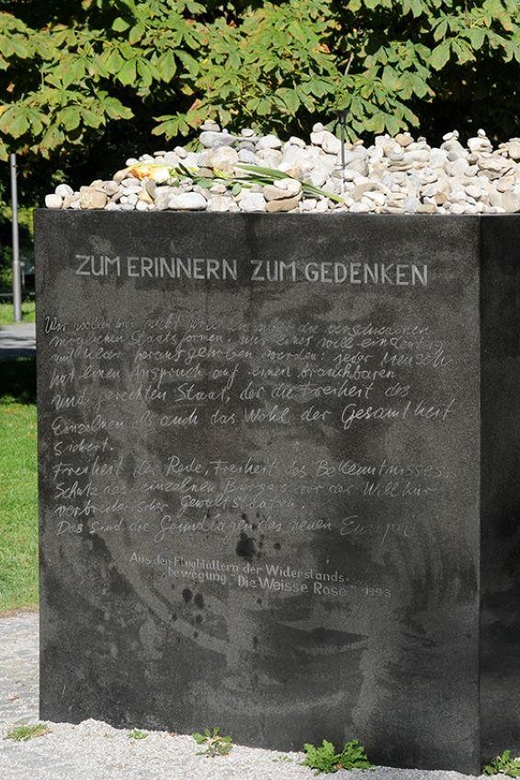
A tour focused on Hitler can easily become too centered on one man. This experience makes room for those who opposed the regime and for the people targeted by it.
That includes people who defended democracy, resisted Nazi rule, or sacrificed their lives in opposition to Hitler. It also includes the Jewish community and others persecuted by the state. The memorials along the route help shift attention away from Nazi power and toward the human cost of that power.
I would pay close attention to this part if you have studied World War II mainly through military campaigns. Munich’s story begins earlier, in the collapse of political trust and the growth of an extremist movement. It shows how democracy can be weakened before a dictatorship fully reveals its intentions.
The tour does not replace a visit to a concentration camp memorial or a specialist museum. Its strength is different. It gives you a citywide framework and shows how political history occupied ordinary streets, squares, meeting halls, and government buildings.
What two hours can and cannot cover
Two hours is a practical length for a walking tour in a busy city. You get a focused introduction without giving up an entire day. It also fits well before or after other Munich plans.
The limit is depth. Munich’s Nazi history is vast, and this route cannot explain every organization, victim group, wartime event, or postwar debate. You should think of it as a strong foundation. If the subject matters deeply to you, you may want to add a museum or memorial visit on another day.
The tour is listed at $259 per group of up to 25. That price makes more sense for a private party than for one or two people. Split among a larger family or group of friends, it can be reasonable for a dedicated guide and a tailored discussion. For a solo visitor, the cost is harder to justify unless the private format and subject are especially important to you.
The private setup should also give your group room to ask questions and follow points that interest you. The experience can be especially useful for a mixed-age family or group with different levels of background knowledge. One guide handled questions patiently for a younger child, while another group praised the interactive style and clear explanations. Still, the official information says children under 10 are not suitable, so families should follow that rule when planning.
Practical details that affect your day
The tour is offered in English or German. Transportation is not included, but that is less of a problem here because the route is designed as a city-center walk. You need comfortable shoes, a drink, and a willingness to spend two hours outdoors.
The walk is wheelchair accessible, which makes the route available to more visitors, though the exact comfort of any historic pavement can depend on conditions at the time. Since weather can affect the experience, dress for the season. One guide still delivered a strong morning in poor weather, but a raincoat or umbrella can make the difference between thoughtful attention and simply trying to stay dry.
Video recording is not allowed. Bring your attention instead of a camera rig. Historic photos and documents are part of the guide’s presentation, so you will get more from the tour by listening and comparing those images with the buildings around you.
Cancellation is free up to 24 hours before the start, and you can reserve without paying immediately. Starting times vary, so check availability for your date.
Who should book this Munich history walk?
I would choose this tour if you want the Nazi story tied to real streets and buildings rather than presented only in a book. It suits adults, older teenagers, solo visitors, and private groups who want to ask questions as they go.
It is also a good choice early in your Munich stay. After the walk, you will look at Marienplatz, Königsplatz, and the surrounding streets with more context. The route adds weight to a city that is often presented only through palaces, churches, food, and beer halls.
You should skip it if you want a light sightseeing stroll or if you have very limited interest in political history. The subject is disturbing, and the walk does not avoid that fact. You may also prefer a museum or indoor visit if the weather is poor or if walking for two hours is difficult.
Should you book it?
Book this tour if you want a clear, place-based explanation of how Munich helped launch National Socialism and how the city remembers that past today. The strongest features are the original sites, the historic photos, the route from Marienplatz to Königsplatz, and guides who can respond to questions rather than simply recite dates.
The $259 price is best shared by a private group. Solo visitors should weigh the cost carefully, but history-minded visitors may find the focused format worthwhile. For a first visit to Munich, this walk gives you a more honest picture of the city, one that includes beauty, damage, responsibility, resistance, and remembrance.
FAQ
Where does the tour meet?
Meet at the Mariensäule in the center of Marienplatz. It is a golden statue on a tall red marble column. Look for a guide carrying a blue bag marked Weis(s)er Stadtvogel.
How long does the tour last?
The walking tour lasts two hours.
What languages are available?
The tour is offered in English and German.
Is transportation included?
No. Transportation is not included. The experience is a guided walking tour.
Is the tour wheelchair accessible?
Yes, the activity is listed as wheelchair accessible.
Can children join the tour?
The stated information says the tour is not suitable for children under 10.
What should I bring?
Bring comfortable shoes and drinks. Video recording is not allowed.
Recently reviewed in Munich
- München: Vegetarische Viktualienmarkt-Probiertour Deutsch★ 4.8 · 6 reviews
- Wright Europe Vacations – Private Escorted Auto Tours★ 5.0 · 35 reviews
- Best of Munich Electric Bike Tour★ 5.0 · 38 reviews
- Munich Walking Quiz: Explore and Discover the City’s Highlights★ 5.0 · 7 reviews
- Walking Tour on Resistance to Nazism in Munich★ 5.0 · 8 reviews
- Private Transfer from Munich to Salzburg with 2 hours for sightseeing★ 4.5 · 13 reviews
- Private Transfer from Munich to Vienna with 2 hours for sightseeing★ 4.5 · 6 reviews
- 2 hour Sights Guided E-Scooter Tour in Munich★ 4.0 · 6 reviews
Munich Third Reich & WWII Tours, compared.
Birthplace of the Third Reich Guided Walking Tour
Read our review →
Munich World War II Sites Including Dachau Concentration Camp
Read our review →
Munich 3-Hour Segway Tour: Nazi Munich & Royal Architecture
Read our review →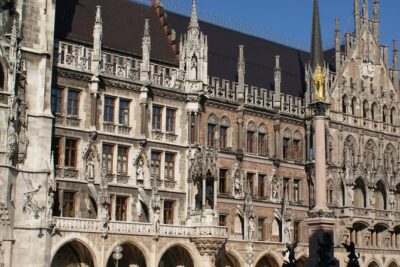
Dachau Concentration Camp Memorial Site And Third Reich Day Tour From Munich
Read our review →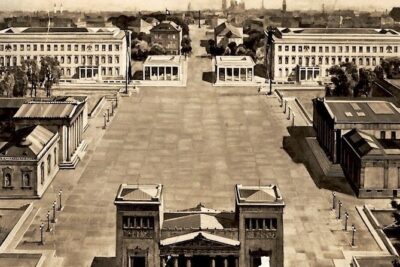
Browse the lists this tour appears in