
Reviewed · MUNICH THIRD REICH & WWII TOURS
Munich City Walking Tour, includes Third Reich & Viktualienmarkt
Munich’s story is best understood on foot, and this tour connects royal squares, Nazi-era history, churches, beer halls, and everyday city life in one long walk. Guides such as Ozzie bring plenty of personality, while Patrick is also listed among the guides, so expect the tone and exact delivery to vary.
I like the useful city advice and the market stop, where you can have a Bavarian bratwurst or potato salad, a pretzel, and a beer. I also like that the tour treats the Third Reich period as part of Munich’s story rather than skipping it. The main caution is simple: this is a talk-heavy walk, and cold weather can make long outdoor explanations uncomfortable.
Key points to know before booking
- A broad Munich introduction: You see central squares, churches, medieval gates, royal buildings, and the Viktualienmarkt in about three hours and 15 minutes.
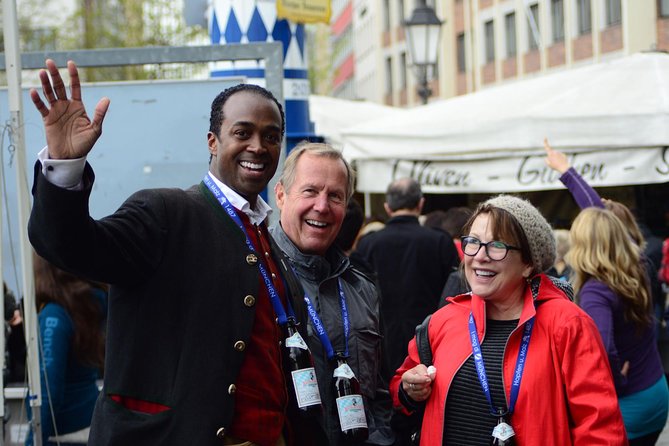
- Strong guide factor: Ozzie, also spelled Ozzy in some feedback, receives especially warm praise for humor, local advice, and clear explanations. Patrick is another named guide.
- Third Reich context included: The subject is handled as part of the city’s wider political story, though this is not a dedicated concentration camp or museum tour.
- Food and beer break: The mid-tour stop includes a Bavarian market snack, beer, and a reusable beer bottle holder.
- Expect a real walking tour: The group can include up to 20 people, and much of the time is spent outdoors listening to the guide.
- Best timing: Take it early in your Munich stay so you can use the transport, restaurant, market, and sightseeing tips afterward.
What this Munich walk is really trying to do
This is less a parade of photo stops and more a guided orientation to Munich. You move through the old center while the guide explains how the city developed, how Bavaria fits into Germany, and how to get around once the tour ends.
That approach explains the strong response from people who wanted more than quick facts about buildings. Ozzie is praised for moving from broad themes, such as Bavarian identity and city planning, down to details at individual monuments. He also brings in present-day German politics and current affairs, giving the history a modern connection.
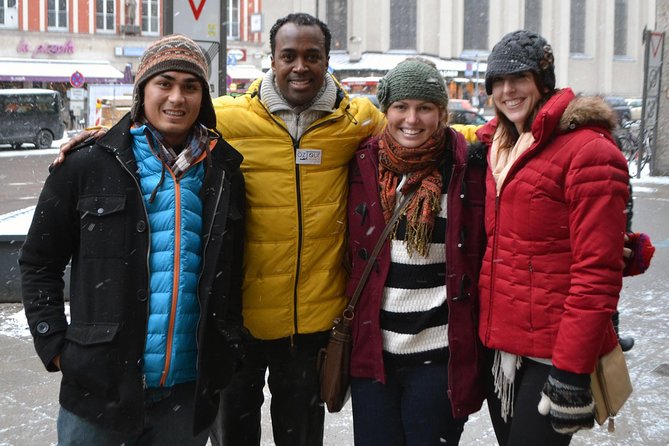
That style will suit you if you enjoy a guide who talks, asks you to think, and adds personal views. It will not suit you as well if you want a fast-moving route with a short sentence at each sight. Several comments point to long explanations and too much standing, especially in freezing or snowy weather.
The tour is offered in English, with a maximum group size of 20. That is not an intimate private walk, but it is small enough for a guide to keep an eye on the group and answer questions. The pace is described as calm rather than strenuous, though you should still expect several hours on your feet.
More tastings around the Viktualienmarkt:
- Munich: Old Town & Viktualienmarkt City Walk in German
★ 4.7 · 2,304 reviews - Munich: Viktualienmarkt Food Tour
★ 4.5 · 1,127 reviews - Munich: Walking Tour Old Town and Viktualienmarkt
★ 4.7 · 839 reviews
Starting at Schützenstrasse and the Frauenkirche
The meeting point is Schützenstrasse 11, near Munich’s central railway area. From there, the route heads toward the city center and the Frauenkirche, Munich’s instantly recognizable cathedral with its twin towers.
The church is a useful first lesson in Munich’s scale and identity. It was built in the 15th century in the late Gothic style and serves as the seat of the Archbishop of Munich and Freising. Inside, you may hear about the historic crypt and the famous Devil’s Footstep, a mark tied to local legend.
The listed time here is about 10 minutes, so do not expect a full church visit or a tower climb. This is primarily a guided introduction from the outside and, if conditions allow, a brief look inside.
Nearby, the German Hunting and Fishing Museum occupies a former Augustinian church. Its exhibits cover hunting and fishing in Germany, with stuffed wildlife, old weapons, and the fanciful Bavarian Wolpertinger creatures. The museum is not presented as a full visit with admission, so treat it as a passing sight and possible idea for later.
Hofbräuhaus, Isartor, and Munich’s old city walls
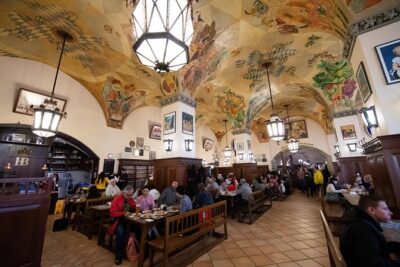
The walk continues to the Staatliches Hofbräuhaus, Munich’s famous beer hall. Founded in 1589 as a royal brewery, it now represents the city’s long relationship with beer, food, music, and public social life.
The stop lasts about 10 minutes. That is enough to see the grand hall and hear why the place matters, but not enough for a relaxed meal inside. The actual food break comes later at Viktualienmarkt, so do not arrive expecting a full Hofbräuhaus dining experience.
At Isartor, one of Munich’s last medieval gates, the guide shifts from beer culture to city defenses. Built in 1337, the gate has a central tower and historic frescoes. It also houses the Valentin-Karlstadt Museum, devoted to Bavarian comedian Karl Valentin, though entering the museum is not part of the listed tour.
These short stops show the tour’s basic rhythm. You get a string of landmarks, but the guide supplies much of the value through explanation. If you mainly want interior visits, this route may feel light on admissions.
Marienplatz and the heart of central Munich

Marienplatz has been Munich’s main square since 1158, and the tour allows about 25 minutes here. That makes it one of the more substantial stops.
You will see the New Town Hall and its famous Glockenspiel, along with the Mariensäule column. The square is also a practical orientation point, with shopping streets and several routes leading into the older center.
This is one place where a guide can save you time later. You learn what you are looking at, where the main pedestrian routes run, and how the old center fits together. The square can be crowded, so a guide’s meeting point and commentary help keep the stop organized.
The Third Reich portion of the experience is folded into the walk rather than separated into a dedicated block. The subject is handled sensitively and connected to Munich’s wider political history. If this period is your main reason for booking, set your expectations carefully. Some people wanted more time devoted to it, while others valued the broader treatment.
Other Third Reich and wartime history tours in Munich:
- Munich: Third Reich & WWII Walking Tour
★ 4.6 · 6,181 reviews - Third Reich Walking Tour Munich
★ 4.5 · 4,291 reviews - Munich: Birthplace of the Third Reich Guided Walking Tour
★ 4.6 · 771 reviews - Munich World War II Sites Including Dachau Concentration Camp
★ 4.5 · 570 reviews
Royal Munich at Max-Joseph-Platz and the Maximilianeum
Max-Joseph-Platz introduces the city’s royal and cultural side. The square is framed by the National Theatre and the Munich Residenz, with a statue of King Maximilian Joseph at its center.
The stop is brief, about five minutes, so you will mainly hear the guide explain the setting rather than tour the Residenz. The square is a good reminder that Munich was shaped by rulers who wanted grand, Italian-inspired architecture and institutions to match their ambitions.
The route also points out the Maximilianeum, the large palatial building above the Isar River. King Maximilian II founded it in 1852 to support gifted students. Since 1949, it has housed the Bavarian State Parliament.
Platzl adds a smaller-scale Bavarian scene, with cobblestones, old buildings, restaurants, the ornate Orlandohaus, and the Hofbräuhaus nearby. I like this contrast. You move from formal royal spaces to a setting that feels more connected to food, drink, and daily city life.
St. Michael, St. Peter, and the city’s church interiors
St. Michael’s Church is Munich’s largest Renaissance church. Built in the late 16th century for the Jesuit order, it has a dramatic facade and a huge barrel-vaulted ceiling. Its royal crypt contains Bavarian rulers.
The visit is listed at about 10 minutes. That gives you time to see the scale of the interior and hear why the church matters, but it is still a short stop. If you want a slow look at the artwork or crypt, return on your own.
St. Peter’s Church, known locally as Alter Peter, is Munich’s oldest parish church, with roots reaching back to the 12th century. Its interior brings together Gothic, Baroque, and Rococo features. The 91-meter tower is known for its city views, but climbing it is not part of this walking tour.
The scheduled time here is only about five minutes. Again, this is a quick orientation, not a full church visit. The guide may also point out the Wolfsbrunnen, an Art Nouveau fountain from 1904. Its bronze scene of Little Red Riding Hood and the wolf was commissioned by the Wolf family as a memorial to their name.
Odeonsplatz, Karlsplatz, and the political city
Odeonsplatz is one of Munich’s grandest public spaces. Designed in the early 19th century by Leo von Klenze, it brings together the Theatine Church, Feldherrnhalle, and the Residenz. The square also marks the start of Ludwigstrasse.
The tour allows about 15 minutes here, which is useful because the area carries both architectural and political weight. The guide’s Third Reich discussion may connect with Feldherrnhalle and Munich’s role in the Nazi movement, though the exact emphasis depends on the guide and the day.
Karlsplatz, usually called Stachus, gives you a different piece of the city. The square formed after the medieval walls were removed and includes the Karlstor gate. It has a fountain in summer and an ice rink in winter.
The listed stop is another 15 minutes. These two squares help explain how Munich expanded beyond its medieval core. They are also useful transport and orientation points, so pay attention if you plan to explore independently afterward.
The Viktualienmarkt food break
The best practical feature of the tour is the stop at Viktualienmarkt. This historic open-air market began as a farmers’ market in the early 19th century and now sells produce, Bavarian specialties, and handmade goods around a beer garden and maypole.
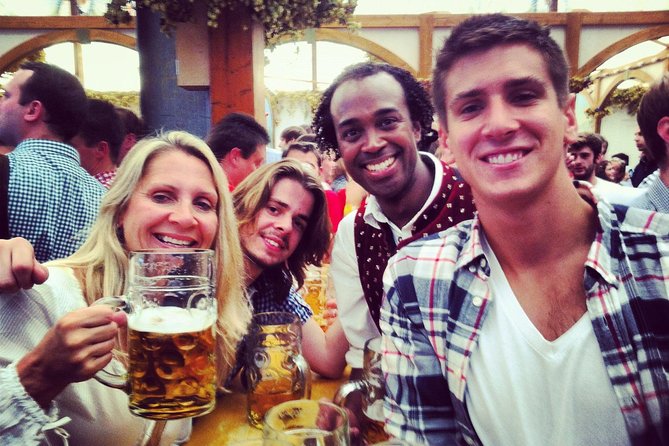
The break lasts about 30 minutes. You can expect a traditional market snack: one Bavarian bratwurst, with choices such as spicy, cheese, or regular, or Bavarian potato salad with a pretzel. The package also includes one Bavarian beer and a reusable beer bottle holder.
This is not a long restaurant lunch. Thirty minutes gives you a chance to eat, drink, look around, and ask the guide questions, but you will not have time to inspect every stall. The food selections are described as free from artificial flavors, colors, preservatives, additives, fillers, and GMOs.
The market stop also gives the group a natural pause after several hours of sightseeing. If you are hungry, it is a welcome part of the price. If you do not drink alcohol or prefer a larger meal, you may need to arrange something else later.
The advertised ending point is Odeonsplatz, while the route information also includes the market as a later stop. Confirm the day’s exact finish with the guide so you know where to collect your bearings afterward.
Price, pace, and the value of the experience
At $31.78 per person, the tour is fairly priced for a guided half-day walk with a beer and a market snack. You are not paying for major museum admissions, and the listed stops are free to enter. The value comes from the guide’s explanation, route planning, local advice, and the chance to cover many parts of central Munich without arranging the route yourself.
I would especially value it on my first day in town. You get practical tips about moving around Munich, ideas for later sightseeing, and a clearer sense of where the old center ends and the grander 19th-century city begins.
The main cost is your time and attention. The walk can feel long when the guide gives extended explanations outdoors. In cold weather, wear warm clothing and shoes suited to several hours on city streets. Some people left at the food stop because the talk-heavy format was not what they wanted.
Free cancellation is available up to 24 hours before the start time. The tour is near public transportation, service animals are allowed, and most people can participate. Those details make it a straightforward choice for many visitors, but the outdoor format remains the key practical concern.
Who should book this Munich walking tour?
Book it if you want a first-day orientation, enjoy history with present-day context, and like a guide who talks beyond the obvious facts. It is also a good match if you want beer and Bavarian food built into the route rather than added as a separate evening plan.
Families can join, and the guide has been praised for engaging with children. Still, younger children may find the longer explanations tiring. The calm pace helps, but the amount of standing matters.
Choose a different experience if your priority is a dedicated Third Reich tour, extensive time inside churches and museums, or a fast route with little commentary. This tour touches many important subjects, but it does not spend a long time at each one.
Should you book it?
I would book this for the beginning of a Munich visit, especially if you want help understanding the city before exploring alone. The combination of Ozzie’s lively teaching style, major central sights, a thoughtful look at the Third Reich period, and the Viktualienmarkt food break gives you a useful starting point.
Go in expecting a talk-rich walk, not a quick photo circuit. Dress for the weather, allow time to stand outdoors, and tell the guide early if you need a break. If that sounds like your kind of sightseeing, $31.78 is a good buy.
FAQ
How long does the Munich walking tour last?
The tour lasts approximately 3 hours and 15 minutes.
What language is the tour offered in?
The tour is offered in English.
Where does the tour start?
The listed meeting point is Schützenstrasse 11, 80335 Munich, Germany.
Where does the tour end?
The listed end point is Odeonsplatz, Odeonsplatz 3, 80539 Munich, Germany.
What food is included?
The market break includes one Bavarian bratwurst, or Bavarian potato salad and a pretzel.
Is beer included?
Yes. The sample menu includes one Bavarian beer and one reusable beer bottle holder.
Is the Viktualienmarkt stop included?
Yes. The route includes about 30 minutes at Viktualienmarkt, where the mid-tour food break takes place.
Does the tour cover Third Reich history?
Yes. Third Reich history is included as part of the Munich walking tour. It is not presented as a separate museum or concentration camp visit.
How many people can join the tour?
The maximum group size is 20 people.
Can I cancel for a refund?
You can cancel for a full refund up to 24 hours before the experience start time. Cancellations or changes made less than 24 hours before the start time are not accepted.
More Walks Through the Old Town
- Munich: Night Watchman Walking Tour
★ 4.7 · 2,092 reviews - Munich Ghosts and Spirits Evening Walking Tour
★ 5.0 · 1,900 reviews - Munich Old Town Walking Tour
★ 4.5 · 1,287 reviews - Munich: Old Town Walking Tour
★ 4.7 · 589 reviews
Recently reviewed in Munich
- München: Vegetarische Viktualienmarkt-Probiertour Deutsch★ 4.8 · 6 reviews
- Wright Europe Vacations – Private Escorted Auto Tours★ 5.0 · 35 reviews
- Best of Munich Electric Bike Tour★ 5.0 · 38 reviews
- Munich Walking Quiz: Explore and Discover the City’s Highlights★ 5.0 · 7 reviews
- Walking Tour on Resistance to Nazism in Munich★ 5.0 · 8 reviews
- Private Transfer from Munich to Salzburg with 2 hours for sightseeing★ 4.5 · 13 reviews
- Private Transfer from Munich to Vienna with 2 hours for sightseeing★ 4.5 · 6 reviews
- 2 hour Sights Guided E-Scooter Tour in Munich★ 4.0 · 6 reviews
Munich Third Reich & WWII Tours, compared.
Birthplace of the Third Reich Guided Walking Tour
Read our review →
Munich World War II Sites Including Dachau Concentration Camp
Read our review →
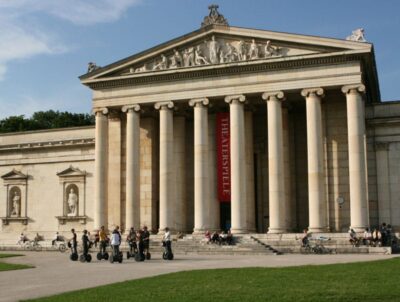
Munich 3-Hour Segway Tour: Nazi Munich & Royal Architecture
Read our review →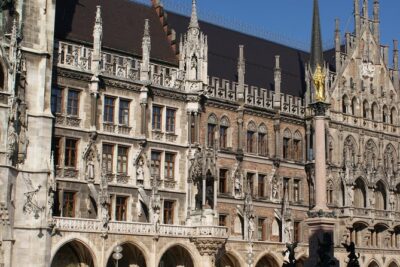
Dachau Concentration Camp Memorial Site And Third Reich Day Tour From Munich
Read our review →
Browse the lists this tour appears in