
Reviewed · MUNICH THIRD REICH & WWII TOURS
Inside the Third Reich (Private Tour)
Munich’s Nazi past is written into ordinary streets, grand squares, damaged facades, and memorials that are easy to miss on your own. This private walk with Curt Milburn connects those places to Hitler’s rise, the Nazi dictatorship, resistance, and the city’s difficult postwar memory.
I like the way Curt uses an iPad loaded with old photographs and films, so you can compare Munich then and now. I also like the private format, which lets you stop, ask questions, and spend more time on the subjects that matter most to you.
The main drawback is scope. In roughly two to three hours, you cover a broad subject at a brisk pace, and some stops are brief. This is a powerful introduction, but it cannot replace a museum visit or a full study of the period.
Key points at a glance
- Hitler’s early Munich landmarks: Follow the sites linked to his first speeches, political meetings, failed putsch, and rise to power.
- Historic images on an iPad: Curt uses photographs and films to show how streets and buildings looked during the Nazi era.
- A genuinely private walk: Your group alone takes part, with room to shape the conversation around your interests.
- War damage in plain sight: Learn to spot scars and rebuilt sections on buildings you might otherwise pass without noticing.
- Memorials and resistance: The route includes Munich’s memorial to victims of National Socialism and stories of opposition to the regime.
- Good group value: The price is $180.72 for up to 15 people, making the cost far more attractive for a family or larger party than for one or two people.
Why this Munich history walk matters
Munich was not just another German city during the Third Reich. It was central to Hitler’s political story, and many early events unfolded in the old town and around the grand buildings of central Munich.
That makes this tour useful for more than identifying famous Nazi sites. You get a sense of how political movements grow in familiar places: beer halls, public squares, government buildings, and streets used by ordinary residents. The subject is grim, but the walk keeps it tied to real locations rather than leaving it as a string of dates and names.
Curt’s approach also sounds well suited to different levels of interest. If you already know the broad outline of Hitler’s rise, you can ask about individuals, resistance, public life, or the effect of the war on Munich. If your knowledge is basic, the route gives you a clear framework without requiring you to arrive as a history student.
Other Third Reich and wartime history tours in Munich:
- Munich: Third Reich & WWII Walking Tour
★ 4.6 · 6,181 reviews - Third Reich Walking Tour Munich
★ 4.5 · 4,291 reviews - Munich: Birthplace of the Third Reich Guided Walking Tour
★ 4.6 · 771 reviews
Meeting at Marienplatz and setting the scene
The walk begins at Marienplatz 18 at 10:30 a.m. That central location is easy to fit into a day of sightseeing, though you should allow time to find the precise meeting point in the busy old town.
From there, the route moves through Munich’s historic center and returns to the same meeting point. You do not need to arrange a separate pickup or find your way across the city at the end. The tour is on foot, and the stops are linked by central streets and public spaces.
Curt brings more than a standard spoken commentary. The iPad contains hundreds of films and images covering more than 1,000 years of European history. For this particular tour, its most useful role is visual: you can see wartime scenes, older views of buildings, and images that help explain how the city changed.
That is especially valuable in Munich, where a modern facade can hide a complicated past. A photograph can show you a missing building, a damaged corner, a different street arrangement, or the way a square was used for political theater.
Isartor and the beer hall beginnings
The first stop is Isartor, where you hear about the original beer hall connected with Hitler and the early Nazi movement. The stop lasts about 15 minutes and has no admission charge.
This is a good opening because it places the movement in a social setting rather than beginning with monuments and official buildings. Beer halls were important gathering places in Munich, and the story here concerns the early meetings that helped the Nazis build support.
You should expect context rather than a preserved interior or a long museum visit. The value comes from understanding the location and hearing how a political movement used public spaces to gather followers. Curt’s images can help fill in what the present-day setting no longer shows.
Platzl and Hitler’s first speeches
At Platzl, the focus shifts to Hitler’s first speeches and the early stages of his success. The scheduled stop lasts around 20 minutes.
This is one of the more important sections for understanding political performance. Hitler’s rise did not happen in a vacuum. He developed a public voice, found audiences, and used Munich’s gathering places to turn anger and grievance into organized political support.
A private guide can make this section more useful than a fixed script. You can ask how much of the story concerns Hitler personally, how the Nazi movement attracted supporters, or how ordinary people encountered its message. The route does not treat the rise of the Nazis as an inevitable event. It shows a process, with choices and consequences.
A few more Munich tours worth comparing
- Munich Private Tour with a Local – Highlights & Hidden Gems
★ 5.0 · 469 reviews - Mike’s Neuschwanstein & Linderhof Private Tour from Munich
★ 5.0 · 197 reviews - Dachau Concentration Camp Private Tour by Train from Munich
★ 5.0 · 185 reviews - Fall in Love with Munich in a Private Old Town Walking Tour
★ 5.0 · 182 reviews
The Old Town Hall, Kristallnacht, and an assassination attempt
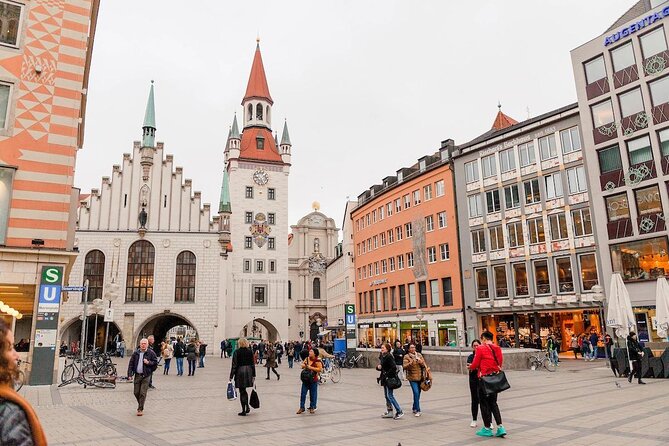
The Old Town Hall is tied to two sharply different stories: the beginning of Kristallnacht and an assassination attempt on Hitler’s life. The stop lasts about 20 minutes.
Kristallnacht, the coordinated anti-Jewish violence of November 1938, is a crucial point in any account of Nazi Germany. Connecting it to a specific Munich location helps you grasp how persecution moved from policy and propaganda into open violence against Jewish people, their homes, businesses, and places of worship.
The assassination attempt adds another layer. It reminds you that opposition to Hitler existed, even though resistance was dangerous and often isolated. The stop may feel dense because it brings together persecution, political power, and resistance in one place. That is where a private discussion helps. You can ask Curt to slow down and separate the events instead of accepting a quick list of facts.
Seeing war damage around Platzl
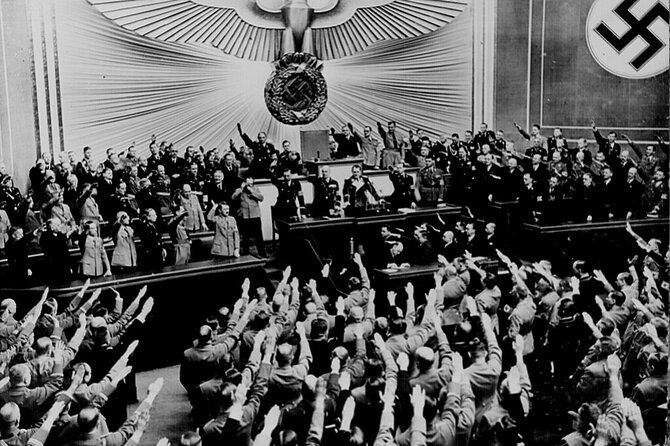
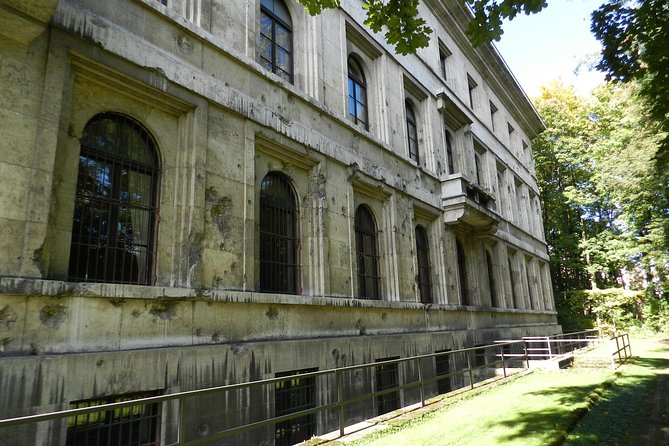
A second stop at Platzl looks at evidence of war damage on Munich’s beautiful buildings. It lasts about 15 minutes.
This is a detail many sightseeing walks skip. You may admire old architecture without noticing which sections were rebuilt, repaired, or altered after the bombing. Curt’s historical images give you a way to compare the present streets with earlier views.
The point is not simply to count damaged buildings. It is to see how war changes a city and how reconstruction affects the way history is remembered. A polished facade can make destruction easy to forget. Looking closely at the buildings gives the discussion a physical focus.
The limitation is that this is an outdoor observation stop. The amount you learn will depend on how clearly the surviving evidence can be seen on the day and on how much time your group spends discussing it.
Odeonsplatz and the purge of the SA
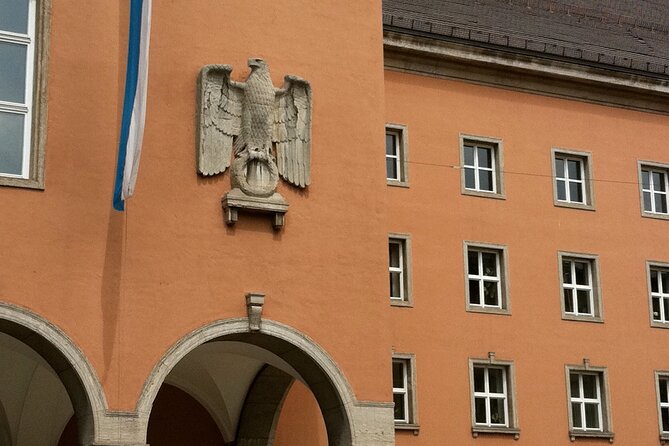
At Odeonsplatz, the tour covers Hitler’s purge of the SA and the square’s use for Nazi speeches. The stop is about 10 minutes.
Odeonsplatz is one of the route’s briefest stops, but the subject is important. The purge of the SA showed how Hitler removed rivals and consolidated control. It also helps explain the difference between a movement’s early street politics and a dictatorship using state power to eliminate threats.
The square’s role as a speech site shows how public architecture can be turned into political theater. You can consider how the buildings, open space, and crowds helped create an image of authority.
Because only about 10 minutes are planned here, you may want to ask your questions promptly. This is one of the places where Curt’s broad experience matters, since he can connect a short stop to the larger story rather than treating it as an isolated fact.
A pause at the victims’ memorial
The tour continues to Platz der Opfer des Nationalsozialismus, Munich’s memorial to those who died at the hands of the Third Reich. The planned stop is about 15 minutes.
This is an important change in tone. Earlier stops focus on political meetings, speeches, power struggles, and buildings. Here the emphasis is on the people harmed and killed by the regime.
Memorials can be easy to pass while sightseeing, especially when you are trying to reach the next major attraction. A guide gives you time to understand what the place commemorates and why it belongs on a tour of Munich’s Nazi past.
I would treat this as a moment for careful attention rather than casual photography. The subject includes mass persecution and death, so the value of the stop comes from its seriousness and from the connection between the city’s political history and the people who suffered under it.
The Glyptothek and surviving fascist buildings
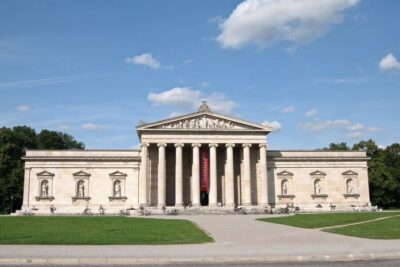
At the Glyptothek, the route examines Munich’s rally grounds and fascist buildings associated with Hitler. This stop lasts around 20 minutes.
The name Glyptothek may suggest a museum visit, but the tour information describes this part as an outdoor look at rally spaces and buildings that still exist. No admission ticket is included or required for the tour stop, so you should not expect an indoor museum tour as part of the experience.
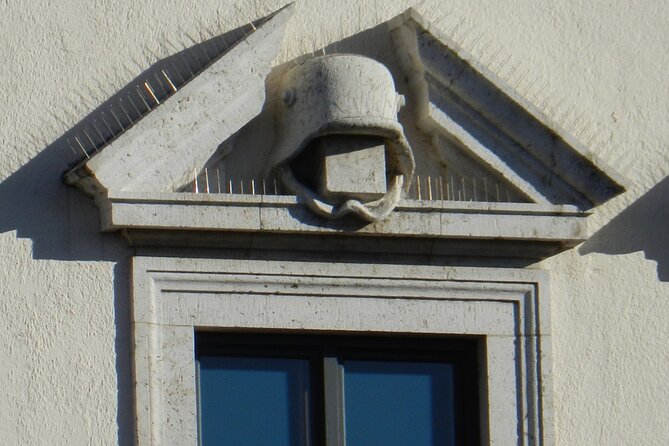
This is one of the most visually useful sections. Nazi architecture was designed to project authority, order, and permanence. Seeing the surviving structures helps you understand how buildings were used to shape public behavior and political emotion.
The continued presence of these buildings also raises a difficult question: how should a city deal with structures created by a criminal regime? Curt can place the architecture in its political setting, rather than asking you to admire it simply because it is large or imposing.
Alter Botanischer Garten and the Nazi eagle
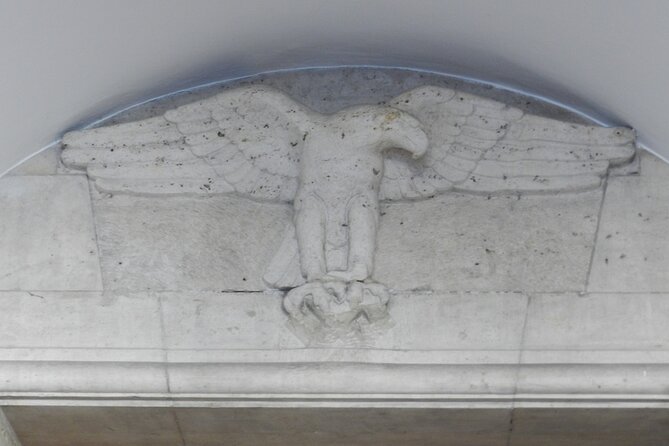
At the Alter Botanischer Garten, you see what is described as the largest Nazi eagle still on public display in Germany, along with examples of Nazi architecture and art. The stop lasts about 15 minutes.
This is a striking detail because it shows how symbols survive after the system that created them has fallen. The eagle is not presented as decoration. Its importance comes from what it reveals about propaganda, public power, and the difficulty of dealing with physical remnants of dictatorship.
For you, this may be one of the tour’s most memorable stops. An image in a book can explain Nazi symbolism, but seeing a large surviving emblem in a city you are actively walking through creates a more immediate connection.
Again, the schedule is fairly tight. You will have time to see and discuss the symbol, but not an extended treatment of every example of Nazi art in Munich. Ask Curt which details matter most if this subject interests you.
The Residenz and the failed putsch
The final stop is the Residenz München, with about 20 minutes devoted to Hitler’s failed putsch and resistance during the Third Reich.
The failed putsch is a key event in Hitler’s early career. It shows that his movement did not simply march from first speeches to national control. There were setbacks, confrontations, and failed attempts to seize power.
The Residenz section also returns to resistance. That is essential for a balanced account, since the history of the period includes not only Nazi leaders and institutions but also people who opposed the regime in different ways.
You should expect to view the Residenz in relation to these events, not take a full palace tour. If you want to see the interior rooms, collections, and court apartments, plan a separate visit. The private walk gives you the political setting and the story tied to the site.
Curt Milburn’s teaching style and the private format
Curt Milburn has more than seven years of guiding experience in Munich, and his approach is built around conversation. You are not simply listening while walking from one point to the next. You can ask questions throughout and adjust the level of detail to your own background.
That matters on a subject as wide as the Third Reich. One person may want dates and political structure. Another may want personal stories, resistance, architecture, or the effect of bombing on Munich residents. The private format gives you room to choose.
The iPad is another strong part of the experience. Historic photographs and films can make familiar streets easier to read, especially when present-day Munich has been rebuilt or cleaned up. Curt also brings anecdotal material and less commonly discussed details, which can help the history feel connected to particular streets and buildings.
The group limit is 15 people, but only your own party participates. For a large family, a group of friends, or a school-style party, that is a meaningful advantage. For a couple, the private arrangement offers flexibility, but the total price is less economical.
Is $180.72 good value?
The price is $180.72 per group, with up to 15 people included. At the maximum group size, that works out to roughly $12 per person, which is excellent value for a private, guide-led history walk.
For two people, the cost is about $90 each. That is a much bigger commitment, though the private attention and ability to shape the conversation may justify it if this subject is central to your Munich visit.
There are no paid admissions listed for the stops, so the price mainly covers Curt’s time, research, commentary, images, and the private setup. You are paying for interpretation, not attraction tickets.
The tour takes roughly two to three hours. The planned stop times add up to about two and a half hours, so the listed duration makes sense. Wear comfortable shoes and expect to remain outdoors for much of the route. The tour begins at 10:30 a.m. and ends back at Marienplatz, making it easy to continue with lunch or other central Munich sights.
Who should book this walk?
I would choose this tour if you want the Nazi period explained through actual Munich locations rather than through a general city walk. It suits history-minded visitors, families with older children, students, and anyone who wants to ask detailed questions without a large group setting.
It is also a good choice if you have limited time. In one morning, you cover early Nazi meetings, Hitler’s speeches, Kristallnacht, war damage, Nazi architecture, victims’ memorials, the failed putsch, and resistance.
I would not choose it as your only activity if you want long museum visits or a slow architectural tour. The route is broad, and several stops last only 10 to 15 minutes. If your interest is intense, you may leave wishing for more time, which is a good reason to ask Curt in advance about the topics you most want to cover.
FAQ
Where does the tour begin?
It begins at Marienplatz 18, 80331 München, Germany.
What time does the tour start?
The scheduled start time is 10:30 a.m.
Where does the tour end?
The activity ends back at the meeting point in Marienplatz.
How long does the tour last?
The tour lasts approximately two to three hours.
How many people can join the private tour?
The price covers one private group of up to 15 people.
Are admission tickets included for the stops?
The listed stops have free admission for this walking experience. The tour does not describe admission to an interior museum or palace visit.
Is the tour accessible by public transportation?
The meeting area is near public transportation.
Can I cancel for a full refund?
Yes. You can cancel at least 24 hours before the local start time for a full refund. Cancellations or changes made less than 24 hours before the start are not accepted for a refund.
Should you book it?
Book this private walk if you want Munich’s Third Reich story tied to real streets, buildings, memorials, and surviving symbols. Curt Milburn’s flexible style, visual material, and willingness to answer questions are the main reasons to choose it.
The best value comes when several people share the $180.72 group price. For a couple, it is more expensive, but the private attention can make sense if this is a major reason for your Munich visit. Just keep your expectations clear: this is a focused outdoor history walk, not a full museum program.
Recently reviewed in Munich
- München: Vegetarische Viktualienmarkt-Probiertour Deutsch★ 4.8 · 6 reviews
- Best of Munich Electric Bike Tour★ 5.0 · 38 reviews
- Wright Europe Vacations – Private Escorted Auto Tours★ 5.0 · 35 reviews
- Munich Walking Quiz: Explore and Discover the City’s Highlights★ 5.0 · 7 reviews
- Walking Tour on Resistance to Nazism in Munich★ 5.0 · 8 reviews
- Private Transfer from Munich to Salzburg with 2 hours for sightseeing★ 4.5 · 13 reviews
- Private Transfer from Munich to Vienna with 2 hours for sightseeing★ 4.5 · 6 reviews
- 2 hour Sights Guided E-Scooter Tour in Munich★ 4.0 · 6 reviews
Munich Third Reich & WWII Tours, compared.
Birthplace of the Third Reich Guided Walking Tour
Read our review →
Munich World War II Sites Including Dachau Concentration Camp
Read our review →
Munich 3-Hour Segway Tour: Nazi Munich & Royal Architecture
Read our review →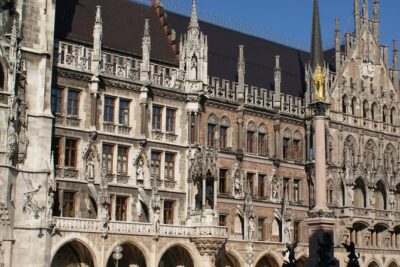
Dachau Concentration Camp Memorial Site And Third Reich Day Tour From Munich
Read our review →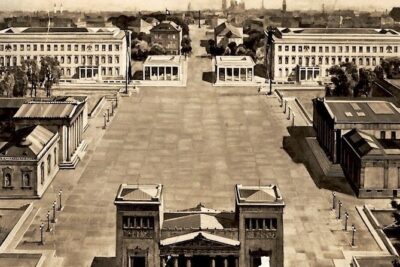
Browse the lists this tour appears in