
Reviewed · MUNICH THIRD REICH & WWII TOURS
Third Reich & WWII Walking Tour
Munich’s Nazi past comes into focus on this nearly three-hour walk from Marienplatz to Königsplatz. You follow the movement from its early meetings at the Hofbräuhaus to the failed 1923 power grab at Feldherrnhalle, then consider mass rallies, resistance, and the wartime destruction of the city. I like the route because it links famous Munich sights to specific events, and I like the guides’ careful handling of a grim subject. Josh, Alex, Michael, and Ulrich are among the guides praised for clear storytelling and thoughtful answers.
The main drawback is physical rather than historical: you walk and stand for most of 2 hours 45 minutes, with little time to sit or stop for food. Bring water and a snack, dress for the weather, and note that the advertised small group of 10 conflicts with separate booking information listing a maximum of 30 people.
Key points to know before booking
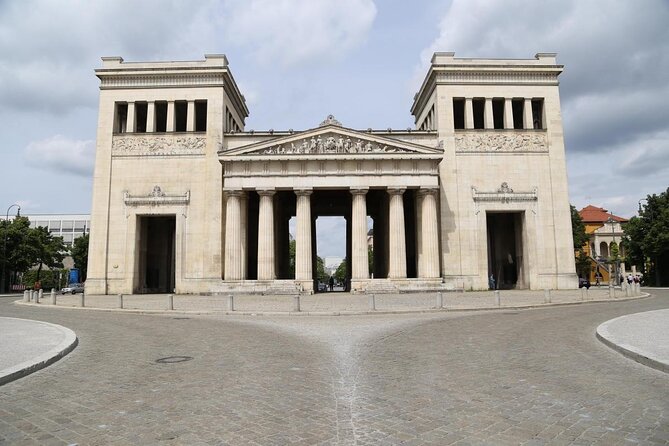
- Marienplatz to Königsplatz route: The tour starts in central Munich and ends at Königsplatz 1, near Hitler’s former headquarters.
- Six or more important sites: Stops include the Hofbräuhaus, Feldherrnhalle, Königsplatz, Hofgarten, and locations tied to the White Rose resistance.
- Serious, fact-based presentation: Guides explain the rise of Nazism without softening the crimes or turning the subject into spectacle.
- Nearly three hours outdoors: You should be comfortable walking and standing, often with only a short indoor pause.
- Strong guide reports: Josh, Alex, Michael, Ulrich, Danielle, Joel, and Bridget are named among the guides who have led this experience.
- Good value at $35.09: You pay for a focused local history lesson, not for meals, transport, or museum admission.
Why Munich is the right place for this history
Munich was not just another German city during the Nazi period. It became a central setting for the movement’s early growth, political theater, and later memory. That gives this walk a useful focus: instead of covering all of World War II in broad strokes, it shows you how national events took shape on ordinary streets and in familiar public buildings.
The tour begins with Germany’s postwar crisis after 1918. Defeat, political violence, revolution, assassination, and hyperinflation created an unstable setting. The point is not to excuse what followed. It is to show how fear, anger, economic misery, and political manipulation helped create an opening for extremist politics.
I value this kind of context because it keeps the tour from becoming a simple parade of Nazi landmarks. You learn how a movement built support, how public spaces were used, and how people responded when democracy weakened. The emphasis stays on cause, consequence, responsibility, and remembrance.
Other Third Reich and wartime history tours in Munich:
- Munich: Third Reich & WWII Walking Tour
★ 4.6 · 6,181 reviews - Third Reich Walking Tour Munich
★ 4.5 · 4,291 reviews - Munich: Birthplace of the Third Reich Guided Walking Tour
★ 4.6 · 771 reviews
Starting at Marienplatz
Meeting at Marienplatz puts you in the middle of Munich’s historic center. This is a practical starting point, but it can also be confusing if you rely only on the first map pin provided during booking. Detailed directions have reportedly been easier to follow than the initial Google location, so check the meeting instructions carefully and allow extra time.
From Marienplatz, the guide sets the period in motion. You are not simply looking at old buildings. You are learning how Munich’s existing civic spaces became stages for speeches, political gatherings, confrontation, and public approval.
The central location also means crowds can be an issue, especially during the Christmas market season. A good guide needs to keep the group together while still making the explanation easy to hear. Josh was especially praised for managing a crowded route, while other named guides, including Alex and Michael, were praised for answering questions and adjusting to the group.
The Hofbräuhaus and the movement’s early public life
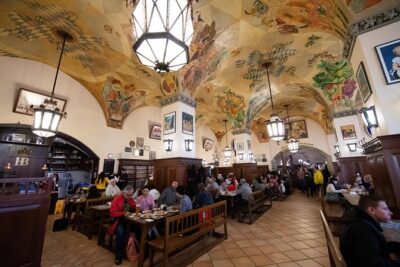
The Hofbräuhaus is one of Munich’s best-known beer halls, but on this tour it appears in a much darker political setting. The guide explains its connection to one of the Nazi movement’s first mass meetings and uses the site to show how political organizing moved from small circles into public life.
This stop is useful because it puts ideology in a real social setting. You begin to see how speeches, slogans, group identity, and public gatherings helped turn a fringe movement into a force capable of attracting wider attention.
The tour does not treat the Hofbräuhaus as a curiosity or a place for dramatic photo opportunities. The strongest guides keep the focus on how propaganda and political theater worked. They also connect local developments to the wider crisis in Bavaria and Germany.
Expect questions and discussion here. Alex, Josh, and Michael were repeatedly praised for making the material accessible without reducing it to a basic lecture. That matters if you know little about the period. It also helps if you already have a firm grasp of World War II but want to understand Munich’s specific role.
Feldherrnhalle and the failed seizure of power
At Feldherrnhalle, the tour turns to the failed 1923 attempt by Hitler and his supporters to seize power. This location helps explain an important shift: the Nazi movement did not simply march straight into government. It suffered setbacks, then changed tactics.
That distinction is valuable. The site shows how political movements can learn from failure, alter their methods, and later use legal and electoral systems to destroy those same systems from within. Your guide should connect the street-level event to the broader rise of Hitler rather than present it as an isolated clash.
This stop may also require extra attention to sound. One person found the guide difficult to hear, despite praising the content. Crowded central Munich streets, traffic, weather, and group size can all affect how well you catch every detail. Stand close to the guide and speak up if you are missing key points.
More walks through the old town:
- Munich: Old Town & Viktualienmarkt City Walk in German
★ 4.7 · 2,304 reviews - Munich: Night Watchman Walking Tour
★ 4.7 · 2,092 reviews - Munich Ghosts and Spirits Evening Walking Tour
★ 5.0 · 1,900 reviews - Munich Old Town Walking Tour
★ 4.5 · 1,287 reviews
Königsplatz and political spectacle
Königsplatz provides the tour’s clearest example of how architecture and public space served political power. The square was used for major Nazi party rallies, and the guide explains how these events created a sense of scale, unity, and obedience.
The setting makes the subject tangible. You can see how a large open space might be shaped for ceremony and mass participation. The guide’s task is to help you imagine the political function of the site without turning it into a theatrical reenactment.
The tour ends at Königsplatz 1, identified as Hitler’s former headquarters. Admission to any attraction is not included, so you should treat the walking tour and any museum visit as separate parts of your day. One guide suggested continuing into the documentation museum, where films, photographs, and artwork provide a powerful follow-up. That visit is not part of the $35.09 tour price, but it may help you absorb what you have just heard.
Hofgarten and the White Rose resistance
The Hofgarten section gives the walk a needed change of focus. Here, the guide discusses the White Rose resistance movement and the people who opposed Nazi rule from within Germany.
This is one of the most important parts of the route because it prevents the story from becoming only a history of Nazi leaders and institutions. You also hear about courage, moral choice, and the risks taken by people who rejected the regime.
The best presentation of this material includes time for silence and reflection. Several guides were praised for handling painful events with respect, allowing the group to pause before opening discussion. That tone is important. The subject is too serious for casual jokes or exaggerated storytelling, and the guides named in the feedback appear to have understood that.
Guides and the quality of the storytelling
The assigned guide can shape the experience. Josh was praised for his preparation, passion, visual aids, group control, and ability to explain the psychology behind the Nazi rise. Alex was praised for combining detailed history with a personable style and for offering ideas for museums and other sights in Munich.
Michael was described as easy to follow and willing to answer questions beyond the basic route. Ulrich was praised for clear narration and for pointing out the documentation museum at the end. Danielle, Joel, and Bridget also received strong marks for their presentation, local advice, and ability to keep the group engaged in difficult weather.
These names do not guarantee who will lead your departure. Still, the pattern is useful: this tour depends heavily on the guide’s ability to speak clearly, manage a group, and explain difficult material without turning it into a performance.
You should feel free to ask questions. Guides have handled both newcomers and people with strong interest in modern German history. If you are new to the subject, the number of names, dates, and events can feel like a lot. A good guide will help you see the main story first, then add detail.
Nearly three hours of walking and standing
The stated duration is about 2 hours 45 minutes, and the route includes several locations rather than one long talk in a single room. You should expect sustained walking and standing, with only a short chance to sit or warm up.
That is manageable for most people who walk well, but it is not a relaxed coffee-and-history outing. One person found the length tiring, especially with limited sitting time. Cold weather made the physical demand harder for some groups, although guides sometimes found a place indoors for a brief break.
Wear comfortable shoes. Bring water and a small snack because there is no food or drink included, and the tour does not set aside much time for a proper meal. In winter, gloves and warm layers matter. In warm weather, water and sun protection are sensible.
Children under 12 are not recommended for this experience. That guidance makes sense because the tour deals with dictatorship, persecution, war, resistance, and mass death. Older teenagers may find it worthwhile, but the tone is serious and the walking is substantial.
Group size, meeting details, and value
The price is $35.09 per person. For a guided city walk lasting almost three hours, that is a fair price if you want structured history and the chance to ask questions. You are paying for the guide’s preparation, local route, and interpretation of sites that can otherwise look like ordinary parts of central Munich.
The value is strongest for people who want local context. A standard sightseeing walk might show you Marienplatz, the Hofbräuhaus, and Königsplatz as attractive city landmarks. This tour explains how those same places were used during one of Europe’s darkest political periods.
The group size needs clarification. The tour is presented as limited to 10 people for a more personal experience, while the additional booking information lists a maximum of 30. Confirm the expected group size before booking if that detail matters to you. A group of 10 allows more questions and easier movement. A group closer to 30 may be harder to hear in crowded streets.
The tour is offered in English and uses a mobile ticket. Hotel pickup and drop-off are not included, so you need to reach Marienplatz independently. Public transport is nearby, which makes the meeting point practical once you have located the correct spot.
How to fit it into a Munich day
Because the walk begins at Marienplatz and ends at Königsplatz, it works well as a morning activity followed by a museum visit or lunch near the city center. It also gives you a useful framework before visiting other sites connected to Munich’s wartime past.
Do not schedule it immediately before a fixed reservation if you dislike rushing. The official duration is approximate, and questions, crowds, weather, or a slower group can affect the finish time.
I would also avoid placing a strenuous activity right after it. Even fit walkers may want a quiet pause after nearly three hours of difficult subject matter and outdoor standing.
Free cancellation is available if you cancel at least 24 hours before the local start time. Changes or cancellations made later are not accepted for a refund, so check the time zone and your plans before the cutoff.
Who should book this walk?
I would choose this tour if you want to understand Munich’s local role in the rise of Nazism, rather than receive a general World War II overview. It suits adults, older teenagers, history readers, and anyone interested in how public spaces are used by political movements.
It is also a good choice if you prefer learning through places. The route gives names and dates a physical setting, while the guide adds the connections that plaques and guidebooks often leave out.
I would look elsewhere if you want a short, light sightseeing stroll, a tour with frequent café breaks, or an activity designed for young children. The subject is heavy, the route is active, and the pace leaves little room for extended rest.
FAQ
How long does the Third Reich and WWII Walking Tour last?
The tour lasts approximately 2 hours and 45 minutes.
Where does the tour begin?
It begins at Marienplatz in Munich, Germany.
Where does the tour end?
It ends at Königsplatz 1, near Hitler’s former headquarters.
Which language is the tour offered in?
The tour is offered in English.
What places does the tour visit?
The route includes Königsplatz, Feldherrnhalle, Hofbräuhaus, Hofgarten, and sites connected with the White Rose resistance movement.
Is food or drink included?
No. Food and drinks are not included, so bring water and consider carrying a snack.
Is the tour suitable for children?
The tour is not recommended for children under 12 because of the serious subject matter.
Should you book it?
Book this walk if you want a serious, place-based explanation of Munich’s Nazi past and can handle nearly three hours of walking and standing. The strongest reasons to go are the route, the careful treatment of resistance and remembrance, and guides such as Josh, Alex, Michael, and Ulrich, who have been praised for clear and thoughtful storytelling.
At $35.09, it offers good value for a focused history lesson with a local guide. Just confirm the group size, check the meeting directions carefully, bring water and a snack, and leave room in your schedule for the experience to run its full length.
Recently reviewed in Munich
- München: Vegetarische Viktualienmarkt-Probiertour Deutsch★ 4.8 · 6 reviews
- Wright Europe Vacations – Private Escorted Auto Tours★ 5.0 · 35 reviews
- Best of Munich Electric Bike Tour★ 5.0 · 38 reviews
- Munich Walking Quiz: Explore and Discover the City’s Highlights★ 5.0 · 7 reviews
- Walking Tour on Resistance to Nazism in Munich★ 5.0 · 8 reviews
- Private Transfer from Munich to Salzburg with 2 hours for sightseeing★ 4.5 · 13 reviews
- Private Transfer from Munich to Vienna with 2 hours for sightseeing★ 4.5 · 6 reviews
- 2 hour Sights Guided E-Scooter Tour in Munich★ 4.0 · 6 reviews
Munich Third Reich & WWII Tours, compared.
Birthplace of the Third Reich Guided Walking Tour
Read our review →
Munich World War II Sites Including Dachau Concentration Camp
Read our review →
Munich 3-Hour Segway Tour: Nazi Munich & Royal Architecture
Read our review →
Dachau Concentration Camp Memorial Site And Third Reich Day Tour From Munich
Read our review →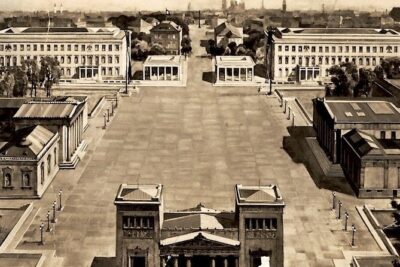
Third Reich and World War II Segway Tour of the City
Read our review →Browse the lists this tour appears in