
Reviewed · MUNICH THIRD REICH & WWII TOURS
Third Reich Walking Tour Munich
Munich was the birthplace of the Nazi movement, and this walking tour shows how ordinary city streets became stages for propaganda, political marches, and terror. Over about two and a half hours, you move from Königsplatz and Odeonsplatz through old beer halls and central squares, while your guide explains how Hitler and the Nazi Party built power here.
I like the tour’s clear route through key sites and the way guides connect buildings to events instead of tossing out dates. I also like the use of old photographs, which several guides, including Aileen and other members of the Radius Tours team, have used to show how familiar places looked under the Nazi regime.
The main drawback is simple: you are outside for the whole walk. A cold or wet day can make the experience tough, and the subject is heavy. Two and a half hours also goes quickly if you already have a strong background in the period.
Key points to know before booking
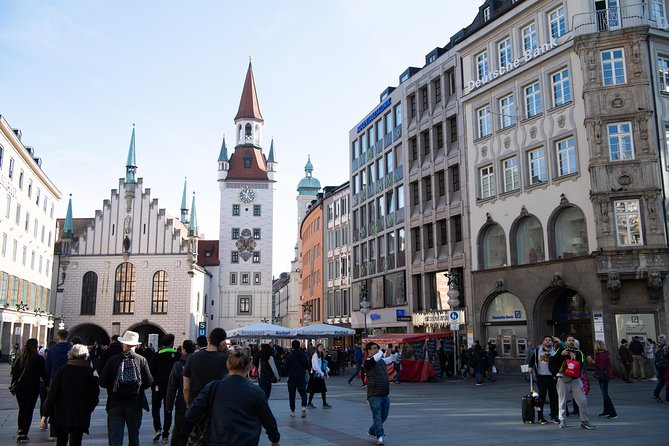
- Munich’s Nazi-era center: See Königsplatz, Odeonsplatz, the Hofbräuhaus, Old Town Hall, and Marienplatz.
- English-speaking local guides: Guides such as Jake, Michael, Nicola, Paul, Steve, and Aileen have led the walk.
- A walking history lesson: The tour covers the Nazi Party’s rise, propaganda, marches, persecution, and the destruction of World War II.
- Historic photos add context: Guides may show images that help you compare the modern city with its wartime past.
- Plan for outdoor conditions: The tour lasts about 150 minutes, with no indoor sightseeing built into the route.
- Small enough for questions: The maximum group size is 25 people, and guides welcome questions and discussion.
Why Munich is the right place for this subject
Munich is not simply a backdrop for this tour. It was central to the Nazi movement’s early growth, so the route can explain how a political group moved from speeches and marches to control of a country.
That local focus is the tour’s main strength. You are not hearing a general account of Nazi Germany while walking past unrelated sights. The guide points to locations where the movement organized, staged public events, built support, and faced opposition.
The tour also helps explain how propaganda worked in daily life. Grand squares, public ceremonies, beer halls, and city buildings all played a role. Seeing these places in person makes the subject more concrete than reading a list of dates in a guidebook.
This is a serious tour, but it is not presented as a lecture. Guides have been praised for adding humor at suitable moments, speaking clearly, and keeping the group involved without making light of the subject. Jake, for example, has been described as both entertaining and careful with the material. That balance matters when the topic includes political murder, persecution, and war.
Other Third Reich and wartime history tours in Munich:
- Munich: Third Reich & WWII Walking Tour
★ 4.6 · 6,181 reviews - Munich: Birthplace of the Third Reich Guided Walking Tour
★ 4.6 · 771 reviews - Munich World War II Sites Including Dachau Concentration Camp
★ 4.5 · 570 reviews
Starting at Radius Tours on Dachauerstrasse
The meeting point is Radius Tours at Dachauer Str. 4, about a short walk from Munich’s central sights and near public transportation. Check-in takes about five minutes, then the group sets off on foot.
I like beginning a serious tour from a clear city-center location. You do not need to find a distant suburb or arrange a special transfer. The route finishes at Marienplatz, so the tour works well near the beginning of a Munich visit. It gives you a framework for later sightseeing, and you can continue exploring the old town as soon as the walk ends.
The group can include up to 25 people. That is not a private tour, but it is small enough for questions if the guide manages the group well. The guide names associated with this experience include Michael, Jake, Nicola, Paul, Steve, Alex, Scott, and others. Your assigned guide will vary, but the format stays focused on explanation and discussion.
Arrive ready to walk. The tour covers several central locations, and the time between stops is part of the experience. Wear comfortable shoes and dress for the forecast. One guide even adjusted the pace and sought sunny spots during a bitterly cold walk, but you should not count on the weather cooperating.
Königsplatz and the power of spectacle
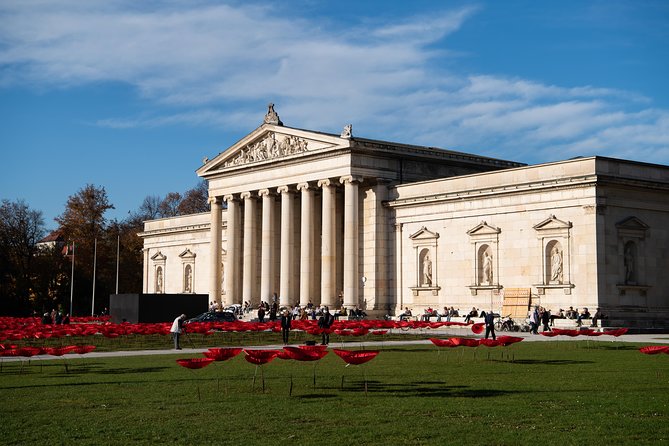
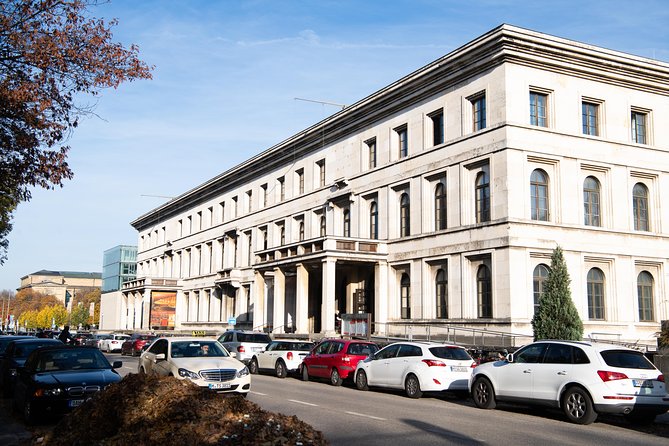
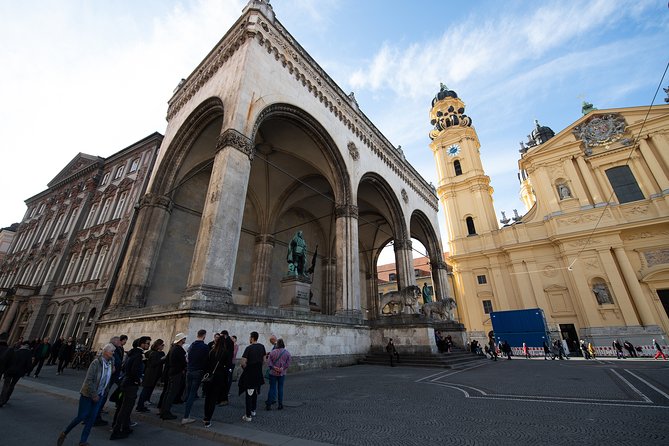
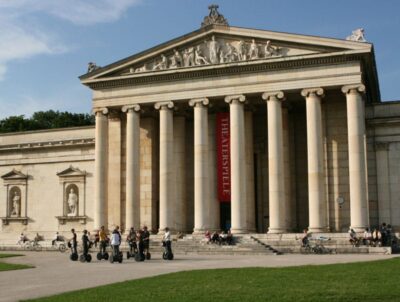
Königsplatz is the first major stop and one of the most important places on the route. The square was used by the Nazi Party for major events, and its grand design gave political gatherings a setting built for ceremony and mass display.
Your guide explains how architecture and open space helped turn politics into theater. The point is not only what happened at the square, but why the setting mattered. A large public space can make a movement appear bigger, more organized, and more powerful than it might seem in a smaller room.
You spend about 15 minutes here, enough time to understand the site and hear the main story. Do not expect a museum visit or an extended architectural study. The value comes from the guide’s explanation of how the space was used and how its meaning changed after the Nazi period.
This is also a good place to use the historic photographs that guides sometimes carry. A modern city square can look calm and ordinary. An old image can show the same space filled with flags, uniforms, crowds, and political theater.
Odeonsplatz and the march toward power
Odeonsplatz receives about 30 minutes, making it one of the longer stops. The square was used for Nazi marches and memorial events, and it helps explain the movement’s public face.
Here, the guide can connect speeches, marches, symbols, and political confrontation. You learn how the Nazis presented themselves to the public and how street politics helped create a climate of fear and obedience.
The longer stop is useful because this part of the story has several layers. It is not just a matter of saying that the Nazis marched here. You hear how public gatherings shaped the party’s image, how propaganda encouraged loyalty, and how opposition became dangerous.
A guide who welcomes questions adds real value at this point. Some of the issues are difficult and politically charged. Guides such as Michael have been praised for answering uncomfortable questions openly, while others have been noted for relating the period to modern Germany and the responsibility to remember it.
More walks through the old town:
- Munich: Old Town & Viktualienmarkt City Walk in German
★ 4.7 · 2,304 reviews - Munich: Night Watchman Walking Tour
★ 4.7 · 2,092 reviews - Munich Ghosts and Spirits Evening Walking Tour
★ 5.0 · 1,900 reviews - Munich Old Town Walking Tour
★ 4.5 · 1,287 reviews
The Hofbräuhaus and politics in a beer hall
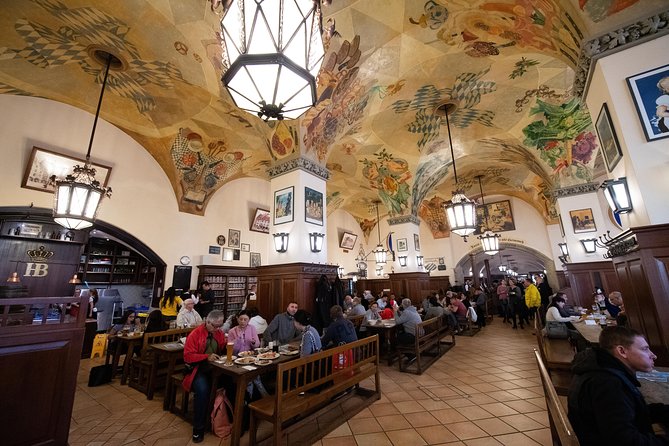
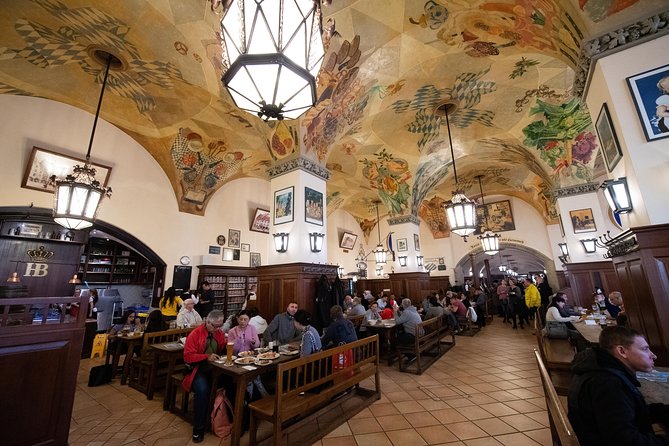
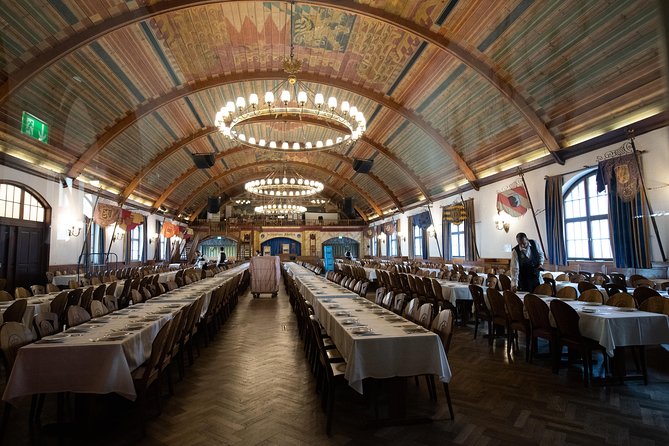
The Hofbräuhaus is better known to many visitors as a place for beer and Bavarian food, but this tour presents it as a political meeting place as well. You spend about 20 minutes learning how beer halls helped the Nazi Party gather an audience and spread its message.
This stop gives the tour a useful change of scale. Königsplatz shows politics in a grand public setting. The Hofbräuhaus shows how political ideas could be presented in a familiar social space, where people met, listened, argued, and formed loyalties.
You should not expect a meal or a tasting as part of the walk. The focus is historical, and the stop is viewed from the perspective of the building’s role in the period. Still, the location is memorable because it links everyday city life with the rise of an extremist movement.
For me, this is one of the most useful ideas in the tour. Political change does not happen only in government offices. It also spreads through public gatherings and popular meeting places.
Old Town Hall and the cost of political loyalty
The route then reaches Munich’s Old Town Hall, where the group spends about 15 minutes. The building adds another layer to the story by showing how the Nazi period touched Munich’s civic center and public institutions.
The guide uses the stop to move from party organization and public spectacle toward the consequences of Nazi rule. You hear about the ideology’s spread, the persecution it produced, and the war that followed.
This section can feel information-heavy. One visitor wished for a short outline of the stops afterward because so much was covered in a limited time. I understand that concern. The tour gives you a strong framework, but you may not remember every name, date, or connection.
Bring a phone or small notebook if you want to record key points. Taking a few notes can help you sort out the material later, especially if you plan to visit other Munich sites connected with the Nazi period.
Marienplatz and a thoughtful finish
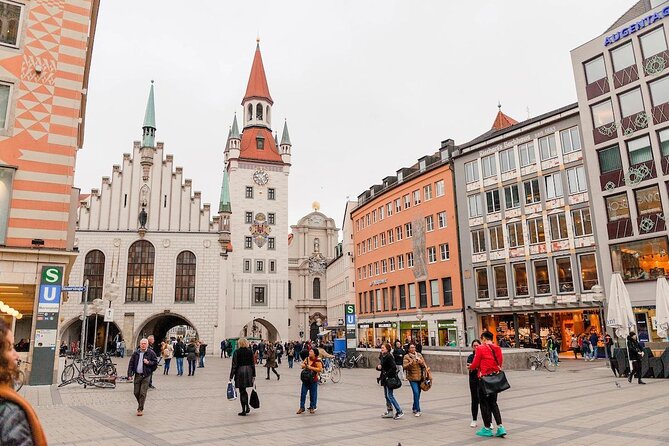
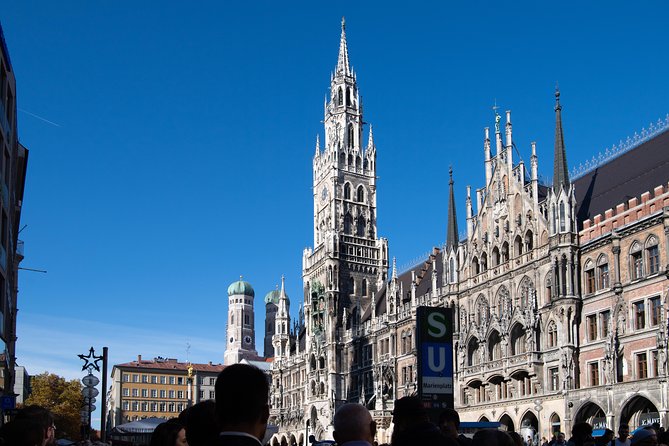
The walk ends at Marienplatz, Munich’s central square, after about 20 minutes at the final stop. This is a practical ending because you are close to restaurants, shops, public transportation, and many of the city’s main sights.
The end of the route also leaves you with a contrast. Marienplatz is one of Munich’s most familiar public spaces, yet the tour asks you to think about how public places can carry difficult memories. The city is not frozen in its Nazi past, but it has a responsibility to explain it honestly.
The tour includes memorials and places connected with people who opposed Nazi ideology. The experience does not treat the period as an exciting adventure or a collection of dramatic military stories. Its purpose is to show how hatred gained ground, how institutions were used, and how people suffered under the regime.
That approach makes the walk suitable for a first visit to Munich. You get historical context before seeing the city’s monuments as simple photo stops.
How the guides shape the experience
The guide is the biggest variable on any walking tour. The best guides on this route combine accurate information with a steady pace, clear speech, and room for questions.
The guide team has included people such as Jake, Michael, Nicola, Paul, Alex, Scott, Steve, and Aileen. Their styles differ. Some use humor to keep the group alert during a heavy subject. Others focus on political detail, personal stories, or modern German memory.
Several useful habits have appeared across the guiding style. Historic photos help connect past and present. Guides may invite questions rather than rushing through a fixed speech. They may also adjust the pace for cold weather or allow a short bathroom and coffee break if the group agrees.
An Irish guide named Keith has also led the experience and has lived in Germany for decades. That kind of personal connection can add useful context, though your own guide will determine the exact tone and depth.
The strongest guides do not simply recite facts. They explain why a site mattered, how the Nazi movement used it, and what changed afterward. That is the difference between a walking route and a history lesson with scenery.
Is $45.95 a fair price?
At $45.95 per person, this is not the cheapest way to spend two and a half hours in Munich. But you are paying for a local guide, a carefully chosen route, and the explanation that connects several separate sites.
The tour is a good value if you would otherwise walk past Königsplatz, Odeonsplatz, the Hofbräuhaus, and the Old Town Hall without understanding their political roles. You also save the work of researching locations and fitting them into a sensible route.
The value is lower if you already have extensive knowledge of Munich’s Nazi history or want to spend several hours at each location. One participant felt the tour needed at least two more hours for anyone beyond a surface-level interest. I agree that the format favors a broad, well-organized introduction over specialist study.
The average booking point is 29 days ahead, so popular dates may fill before your trip. Free cancellation is available up to 24 hours before the start time. If poor weather or too few bookings cancel the tour, you can choose another date or receive a full refund.
Who should take this Munich walking tour?
I would choose this tour if you want a clear introduction to Munich’s role in the rise of the Nazi Party. It suits first-time visitors, history students, families with older children, and anyone who wants more meaning behind the city’s central squares.
It also works well for people who have already read about the period. Several guides go beyond basic facts, and the chance to ask questions can fill gaps in your understanding.
You should think twice if you dislike outdoor walking, have limited mobility, or want a museum-based experience. The route is entirely outside, and the subject is emotionally demanding. Service animals are allowed, most people can participate, and public transportation is nearby, but the supplied details do not promise a fully step-free route.
Schedule this tour early in your Munich stay if possible. The route gives you context for other historical sites, including the White Rose museum, which one participant visited afterward. It can also help you recognize the difference between a city’s attractive appearance and the difficult events that took place in its streets.
Should you book the Third Reich Walking Tour?
Book it if you want a focused, English-language walk through Munich’s Nazi past, with a guide who can explain the link between public spaces, propaganda, political power, and persecution.
Skip it if you need indoor shelter, a very slow research-level tour, or a short sightseeing stroll with only light historical commentary. For most people interested in modern German history, the $45.95 fee is reasonable because the guide supplies the context you cannot get from the buildings alone.
Bring warm layers, comfortable shoes, and an open mind. The tour will not answer every question in 150 minutes, but it gives you a sound route through a difficult part of Munich’s story.
FAQ
Where does the Third Reich Walking Tour begin?
The tour begins at Radius Tours, Dachauer Str. 4, 80335 Munich, Germany.
Where does the tour finish?
The tour ends at Marienplatz in central Munich, at 80331 Munich Altstadt Lehel.
How long does the walking tour last?
The tour lasts approximately two hours and 30 minutes.
What language is the tour offered in?
The tour is offered in English.
What locations are included?
The route includes Königsplatz, Odeonsplatz, the Staatliches Hofbräuhaus, Munich’s Old Town Hall, and Marienplatz.
How much does the tour cost?
The listed price is $45.95 per person.
How many people can join the tour?
The maximum group size is 25 people.
Can I cancel for a refund?
You can cancel at least 24 hours before the start time for a full refund. Cancellations or changes made within 24 hours are not refunded or accepted. If poor weather or an insufficient number of bookings cancels the tour, you can choose another date or receive a full refund.
Recently reviewed in Munich
- München: Vegetarische Viktualienmarkt-Probiertour Deutsch★ 4.8 · 6 reviews
- Wright Europe Vacations – Private Escorted Auto Tours★ 5.0 · 35 reviews
- Best of Munich Electric Bike Tour★ 5.0 · 38 reviews
- Munich Walking Quiz: Explore and Discover the City’s Highlights★ 5.0 · 7 reviews
- Walking Tour on Resistance to Nazism in Munich★ 5.0 · 8 reviews
- Private Transfer from Munich to Salzburg with 2 hours for sightseeing★ 4.5 · 13 reviews
- Private Transfer from Munich to Vienna with 2 hours for sightseeing★ 4.5 · 6 reviews
- 2 hour Sights Guided E-Scooter Tour in Munich★ 4.0 · 6 reviews
Munich Third Reich & WWII Tours, compared.
Birthplace of the Third Reich Guided Walking Tour
Read our review →
Munich World War II Sites Including Dachau Concentration Camp
Read our review →
Munich 3-Hour Segway Tour: Nazi Munich & Royal Architecture
Read our review →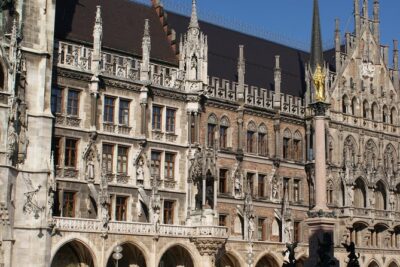
Dachau Concentration Camp Memorial Site And Third Reich Day Tour From Munich
Read our review →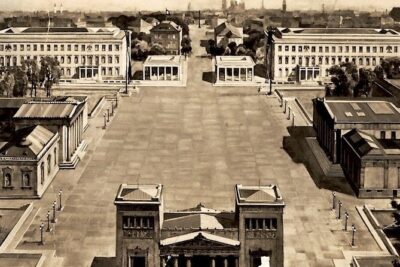
Third Reich and World War II Segway Tour of the City
Read our review →Browse the lists this tour appears in