
Reviewed · DACHAU MEMORIAL TOURS
Early-Start Dachau Memorial Half-Day Tour from Munich
Dachau is not a sightseeing stop in the usual sense. It is a place for careful attention, honest history, and quiet reflection. This early-start half-day tour gets you there before the site becomes crowded and takes care of the train and shuttle connections from Munich.
I like two things here: the clear two-hour guided walk, which puts the camp’s history into human terms, and the free time afterward, which lets you return to a place, read more, or sit with what you have seen. The main drawback is simple: Dachau contains more material than you can absorb in one morning, especially if you want to read every exhibition panel.
Key points at a glance
- Early departure from Karlsplatz: Start in central Munich and avoid arranging the train and shuttle connections yourself.
- About two hours with a specialist guide: Learn how Dachau developed from its opening in 1933 through liberation in 1945.
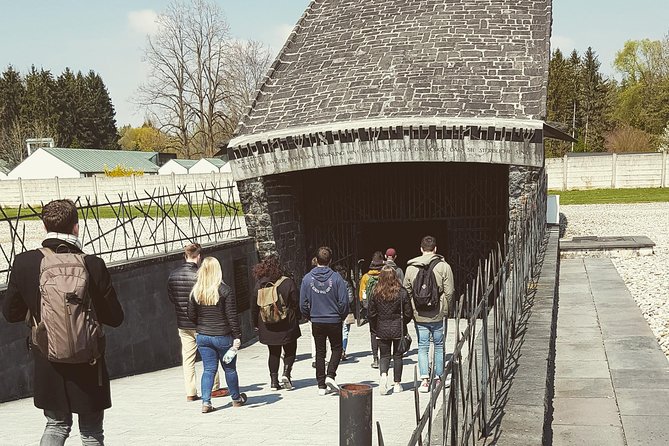
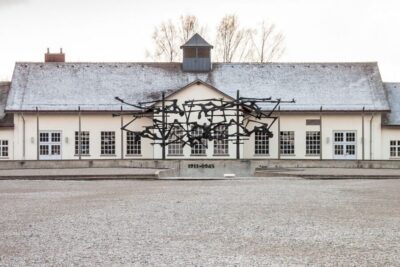
- The key areas are included: See Roll-call Square, the museum, memorial areas, and other important buildings.
- Time to think for yourself: You get roughly 45 minutes to an hour after the guided portion.
- Small-group format: The advertised maximum is 25 people, with mobile tickets and English-language service.
- A serious, emotional visit: This is an important historical experience, but it can be overwhelming and is not a casual day trip.
Why the early start matters at Dachau
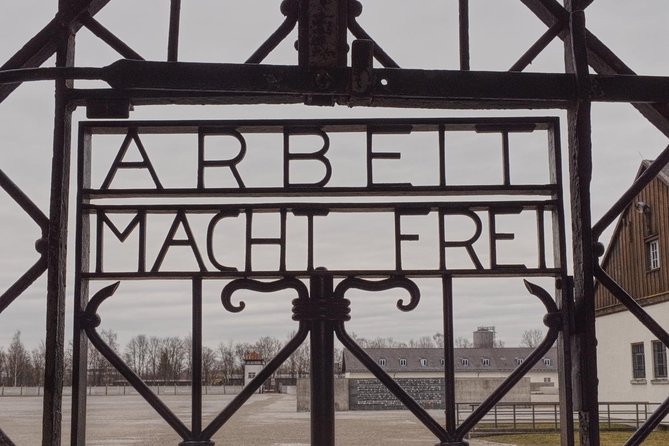
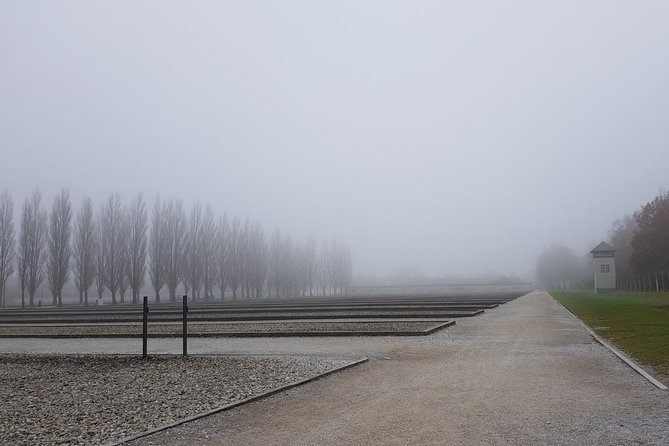
The early departure is more than a scheduling trick. Dachau is a place where silence and space help you pay attention. Arriving before the site grows busy gives the group a better chance to move through Roll-call Square, the museum, and the memorial grounds without as much distraction.
You meet at Karlsplatz in central Munich. The guide helps with check-in, explains the plan, and leads the group through the transport connections. That matters because a visit to Dachau involves more than one simple train ride. You travel from Munich to Dachau by train, then continue by shuttle bus to the memorial site.
The train journey takes about 30 minutes. Transport costs are included, and Wi-Fi is available during the journey. You do not have to work out which ticket to buy, where to change, or how to keep the group together. That is a real benefit if you are visiting Munich for only a few days and would rather spend your limited time thinking about the site than studying a transit map.
The tour is offered in English. The group size is advertised at no more than 25 people, which is large enough to keep the price reasonable but still manageable for a walking tour. Bring a mobile ticket, arrive at Karlsplatz with time to spare, and pay attention to the meeting instructions. One person who missed the meeting point had to make an urgent journey to Dachau and rely on the operator to reconnect them with the group. The staff helped, but it is far better not to begin the morning that way.
Other guided visits to the Dachau memorial site:
- Dachau Concentration Camp Memorial Site Tour from Munich by Train
★ 4.5 · 5,637 reviews - From Munich: Dachau Memorial Site Day Tour
★ 4.8 · 2,723 reviews - From Munich: Dachau Memorial Site Half-Day Trip
★ 4.7 · 2,526 reviews
From Munich to the Dachau Visitors’ Center
After the train ride, the group reaches the Dachau Visitors’ Center. There is a short break of about 10 minutes for restrooms, a light snack, and a moment to settle in before the main visit.
This pause is useful. Dachau is not a site to rush into while distracted by coffee, directions, or the practical business of getting there. You can use the break to gather yourself before the guide begins the historical portion.
The memorial site is free to enter as part of the tour, but the value of the experience comes from the interpretation. Dachau has a large amount of written material and historical detail. A guide helps you understand what deserves your attention first and explains how the different parts of the site fit together.
You should not expect a light, entertaining introduction. The subject is severe, and good guiding here means accuracy, restraint, and respect. Guides named in past departures include Jamie, Tom, Aline, and Scott. The strongest comments about these guides focus on clear explanations, careful answers to questions, and a willingness to give people quiet time when words are not enough.
The two-hour guided visit inside the memorial site
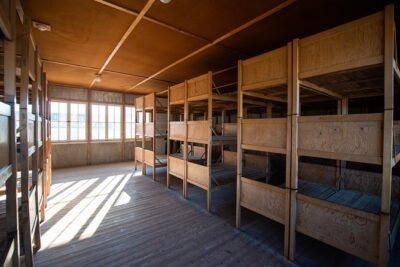
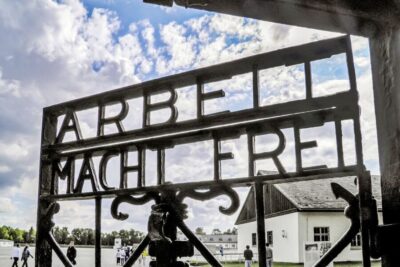
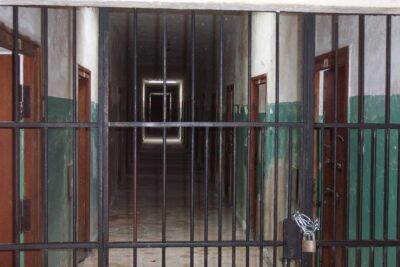
The main guided portion lasts about two hours. The guide leads you through the principal areas, including Roll-call Square, the museum, memorial spaces, and key buildings connected with the camp.
Dachau opened in 1933, before the Second World War, and first held political opponents of the Nazi regime. Over time, its prisoner population changed, and Jewish prisoners became a much larger part of the camp system. The site was liberated in 1945. The guide explains this development so you do not see the camp as a single, unchanging institution.
That wider context is one of the strongest reasons to choose a guided visit. The history is not only about buildings and fences. It is also about administration, transport, forced labor, imprisonment, persecution, and the machinery that allowed mass crimes to be carried out. A well-prepared guide can show how those pieces connected without reducing the visit to a list of dates.
Past guides have also explained the personal side of the camp. Survivor accounts and individual stories help you understand that this was not an abstract system. The people imprisoned at Dachau had names, families, beliefs, jobs, fears, and hopes. The guide’s job is to bring those human details forward without turning the visit into a performance.
You will walk through areas where tens of thousands of people died. That fact can land with particular force once you see the physical scale of the grounds and the stark arrangement of the buildings. Some people become visibly upset. That is not a sign that the tour is doing something wrong. It is a reminder that the place carries real emotional weight.
The pace is important. Guides such as Jamie and Aline have been praised for explaining a large amount of material without speaking too quickly or piling on facts. The best approach here leaves room for silence. You should have time to listen, ask questions, and take in what you are seeing.
One limitation is that two hours cannot cover every line of the exhibition. The museum contains more text, images, and historical material than most people can read during a single visit. If you want to study everything, plan on needing more time than this half-day format allows. The bookshop sells a catalogue containing the exhibition’s text and images, which can help you continue reading after the visit.
Free time for your own pace
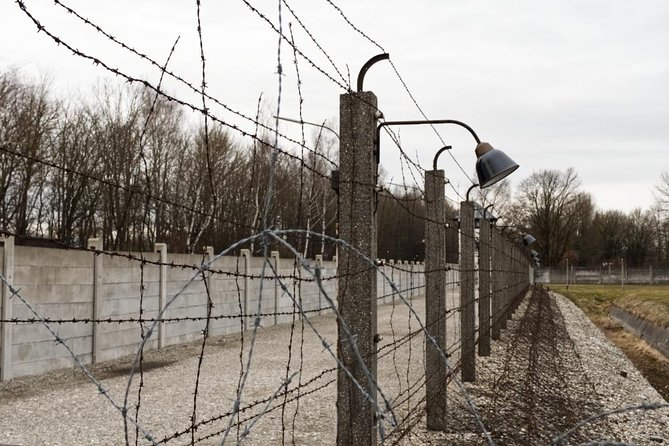
After the guided tour, you get around 45 minutes to one hour on your own. This is an important part of the schedule, not a filler.
You might return to a section that moved you, read signs you had to pass during the group walk, visit the bookshop, or simply sit quietly. The free time gives you control after a structured tour. Some people will want more historical detail. Others will need a few minutes without commentary.
The bookshop is particularly useful if the two-hour visit leaves you wanting more. The catalogue is a practical choice because it allows you to read the exhibition material later, when you are no longer trying to keep up with a group.
The schedule does not include lunch. The short stop at the Visitors’ Center allows time for a light snack, and one past departure had enough time for lunch at the cafeteria, but you should not treat a full meal as guaranteed. If you need lunch before returning to Munich, bring something suitable or confirm what time your group will have available.
A few more Munich tours worth comparing
- Dachau Small-Group Half-Day Tour from Munich By Train
★ 5.0 · 811 reviews - Munich: Half-Day Skip-the-Line Neuschwanstein Castle Tour
★ 4.6 · 110 reviews - Munich Private & Personalized Half-Day Tour with a Local Guide
★ 5.0 · 48 reviews - Half-Day Private Dachau Concentration Camp Tour From Munich
★ 5.0 · 29 reviews
Returning to Munich by early afternoon
The guide accompanies you back to the shuttle and train. You return to Karlsplatz at about 1:30 PM, making this a useful choice for a Munich itinerary that still includes an afternoon museum, market, or walking tour.
The return journey is another place where the guide saves you effort. You do not have to remember the route after an emotionally demanding visit, and the group receives help staying together. Scott, one of the guides named in past departures, has also helped people with later train connections and suggestions for things to do in Munich.
The five-hour length is well judged for many visitors. A full day would give you more time to read and reflect, but it would also ask you to spend much longer with difficult material. The half-day format lets you see the main areas, hear the essential background, and return to Munich while leaving space for a quieter afternoon.
What you get for $62.88
At $62.88 per person, this tour is priced above the cost of arranging basic public transport yourself. The comparison is not quite fair, though. The fee also covers the guide, round-trip train and shuttle transport, organization at the meeting point, and the interpretation that makes sense of the site.
I see the price as reasonable if you value convenience and historical explanation. You are paying to have the transport handled, but the larger cost is the guide’s time and preparation. Dachau is not a place where a few disconnected facts are enough. The right guide can explain the site in a way that is accurate, direct, and respectful.
You may save money by visiting independently. An independent visit can also give you more time with the museum and exhibition panels. But you will need to arrange transport, decide how to use the site map, and make sense of a large amount of information on your own.
The guided option is especially good for a first visit. It gives you a framework, then leaves you some time to explore alone. That balance is better than a tour that talks without pause, and better than arriving without any historical preparation.
Guided tour or independent visit?
Choose this tour if you want:
- Transport from central Munich arranged for you
- A guide who can answer questions about Dachau and the wider camp system
- A structured visit that covers the major areas
- An early arrival and a return to Munich around lunchtime
- Some personal time after the guided walk
- A group experience rather than a solo visit
An independent visit may suit you better if you want to read every panel, spend a full day at the site, or move entirely at your own pace. One useful point from the tour experience is that guided visitors do not receive the audio headset used by independent visitors, so you should not expect both formats at once.
I would choose the guided tour for a first visit, especially if you are unfamiliar with Munich’s public transport or want the history explained by a specialist. I would choose an independent visit for a second trip or for anyone who prefers long, quiet study over a fixed schedule.
Preparing for an emotional place
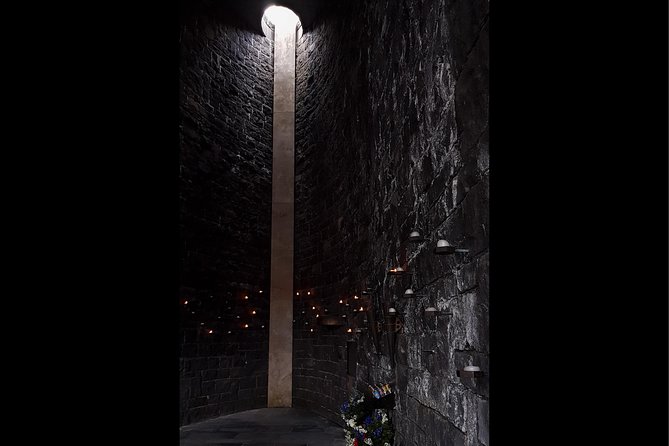
Dachau is not appropriate for every mood or every member of a family group. The tour includes persecution, imprisonment, death, and the legacy of the Nazi camp system. You should prepare yourself for difficult material and allow time afterward to process it.
The guides are expected to treat the subject seriously. Past departures have been praised for compassion, accuracy, and restraint. Jamie has been singled out for answering detailed questions and explaining the wider system of genocide. Tom has been praised for making complex material understandable while remaining respectful. Aline has been noted for giving the group quiet time rather than overwhelming it with facts.
Still, your own response is unpredictable. You may find the visit informative and controlled, or you may find it deeply upsetting. Neither response is unusual. If you decide to go, do not crowd the rest of your day with another demanding activity. The early return gives you the option of a calm afternoon in Munich.
The tour is suitable for most people, and service animals are allowed. It is near public transportation, and confirmation is provided when you book. The experience requires good weather. If poor weather causes a cancellation, you are offered another date or a full refund.
Who should book this Dachau tour?
This is a strong choice for anyone staying in Munich who wants a serious, guided introduction to Dachau without giving up an entire day. The early start, included transport, and return around 1:30 PM make it easy to fit into a short city break.
It is also a good fit if you want a guide who can explain the camp’s development from 1933 to 1945, connect the site to the wider Nazi system, and answer questions as they arise. The free time afterward gives you a little independence without leaving you to manage the whole visit alone.
I would hesitate only if your main goal is to read every exhibition panel or spend a full day at the memorial. In that case, independent travel may serve you better. For most first-time visitors, though, the structure is practical and the historical guidance adds real value.
Final verdict
Book this tour if you want Dachau handled with care, clear historical explanation, and simple transport from Munich. The early start is a major advantage, the two-hour guided walk covers the essential areas, and the free time lets you reflect privately.
Just go with the right expectations. This is not a cheerful excursion, and the half-day schedule cannot contain everything the museum offers. But if you are ready for a difficult and important visit, this tour gives you a sensible way to reach Dachau, understand what happened there, and return to Munich with the afternoon still ahead.
FAQ
How long does the Dachau tour take?
The experience lasts about five hours. You leave Karlsplatz in Munich in the morning and return to the meeting point at approximately 1:30 PM.
Where does the tour start?
The meeting point is Karlsplatz 8, 80335 Munich, Germany. The activity also ends back at this meeting point.
How do I reach Dachau during the tour?
The group travels from Munich to Dachau by train and then uses a shuttle bus to reach the memorial site. Round-trip transport costs are included.
Is the tour offered in English?
Yes. The tour is offered in English with a professional guide specializing in Holocaust history.
How much free time do I have at Dachau?
After the approximately two-hour guided visit, you have about 45 minutes to one hour of free time. You can revisit areas, read more, or visit the bookshop.
Can I cancel for a full refund?
Yes. You can cancel at least 24 hours before the experience begins for a full refund. Cancellations or changes made less than 24 hours before the start time are not refunded or accepted.
Recently reviewed in Munich
- München: Vegetarische Viktualienmarkt-Probiertour Deutsch★ 4.8 · 6 reviews
- Wright Europe Vacations – Private Escorted Auto Tours★ 5.0 · 35 reviews
- Best of Munich Electric Bike Tour★ 5.0 · 38 reviews
- Munich Walking Quiz: Explore and Discover the City’s Highlights★ 5.0 · 7 reviews
- Walking Tour on Resistance to Nazism in Munich★ 5.0 · 8 reviews
- Private Transfer from Munich to Salzburg with 2 hours for sightseeing★ 4.5 · 13 reviews
- Private Transfer from Munich to Vienna with 2 hours for sightseeing★ 4.5 · 6 reviews
- 2 hour Sights Guided E-Scooter Tour in Munich★ 4.0 · 6 reviews
Dachau Memorial Tours, compared.
Dachau Concentration Camp Memorial Site Tour from Munich by Train
Read our review →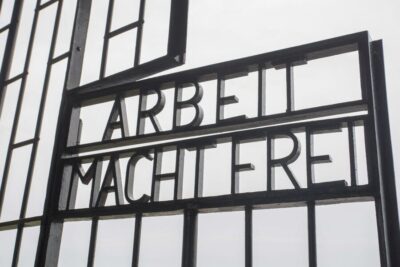
Dachau Concentration Camp Memorial Tour with Train from Munich
Read our review →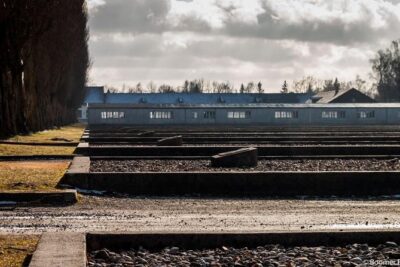
Full-Day Dachau Concentration Camp Memorial Site Tour from Munich
Read our review →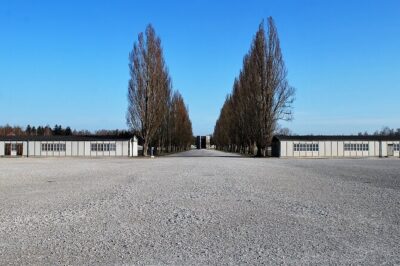
Dachau Small-Group Half-Day Tour from Munich By Train
Read our review →
Munich World War II Sites Including Dachau Concentration Camp
Read our review →Browse the lists this tour appears in