
Reviewed · DACHAU MEMORIAL TOURS
Dachau Memorial Public Tour
Dachau is not a sightseeing stop in the usual sense. It is a place to confront how a modern state built a system of imprisonment, forced labor, and mass murder. This five-hour guided visit gives the site the time and careful explanation it demands, rather than reducing it to a quick photo stop.
I like two things here: the small maximum group of 15, which makes it easier to hear and ask questions, and the guides’ serious approach. Charlotte is praised for her command of the Nazi period, while Michael led a respectful minute of silence near the crematorium. The main drawback is the price, $118.74 per person, and the emotional weight of the visit. This is not a light half-day outing.
Key points to know before booking
- Dachau was the Nazis’ first concentration camp in Germany, opened in 1933 for political prisoners before becoming a major forced-labor camp.
- The five-hour schedule gives the memorial room to breathe, with time for the museum, prison, barracks, memorials, and crematorium area.
- The group is capped at 15 people, a useful middle ground between a private tour and a large coach group.
- Guides Charlotte and Michael bring different strengths, including broad historical context and a quiet, respectful approach at the crematorium.
- The tour begins and ends at Fischbrunnen by Marienplatz, at 10:00 a.m., with public transportation nearby.
- Free cancellation is available until 24 hours before departure, but late cancellations are not refunded.
Why Dachau needs a guided visit
Dachau opened in 1933, making it the first concentration camp established by the Nazi government in Germany. It began as a place for political prisoners, but its purpose widened as Nazi persecution spread. Over 12 years, more than 200,000 people were imprisoned there, and inmates came from 34 nations.
That basic timeline matters because Dachau was not an isolated prison hidden from public life. It became a training ground for camp personnel and a model for the wider concentration-camp system. The site shows how terror was organized through rules, buildings, guards, forced labor, punishment, and propaganda.
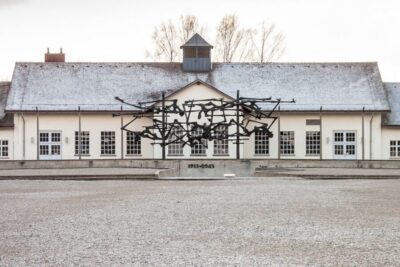
You can walk through the grounds on your own, but the meaning of each area is not always clear at first glance. A guide helps connect the Main Gate to the camp administration, the Roll Call Area to the daily control of prisoners, and the barracks to the physical reality of overcrowding and forced labor.
I would choose a guided visit here for the same reason I prefer a guide at a major historic battlefield or memorial: the structures alone cannot explain the full story. The best part of this tour is not simply seeing the remains. It is having someone place them in order and explain how the system worked.
Other guided visits to the Dachau memorial site:
- Dachau Concentration Camp Memorial Site Tour from Munich by Train
★ 4.5 · 5,637 reviews - From Munich: Dachau Memorial Site Day Tour
★ 4.8 · 2,723 reviews - From Munich: Dachau Memorial Site Half-Day Trip
★ 4.7 · 2,526 reviews
Meeting at Marienplatz at 10:00 a.m.
The tour begins at Fischbrunnen, at Marienplatz 8 in central Munich. That is a practical meeting point in the heart of the city, and the area is near public transportation. You return to the same meeting point after the visit.
The start time is 10:00 a.m., and the full activity lasts about five hours. That length includes the trip out to Dachau and the guided visit, so plan on giving the experience most of your morning and afternoon. Do not schedule a tight lunch reservation or an important afternoon appointment immediately afterward.
A mobile ticket is accepted, and confirmation is provided when you book. The group maximum of 15 is worth noting. It is small enough for a guide to address the group directly, but it is still a public tour rather than a private outing.
You should arrive ready for a serious day. Food and beverages are not included, so plan around your own needs before or after the tour. Since the visit deals with imprisonment, starvation, violence, and death, you may also want a little quiet time afterward rather than rushing straight into another major attraction.
Entering through the Jourhaus and Main Gate
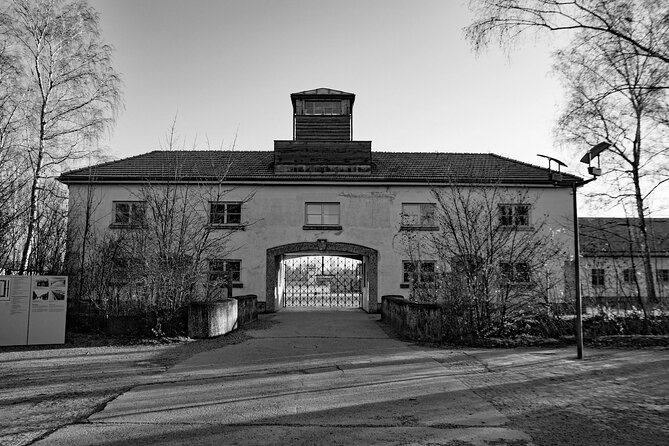
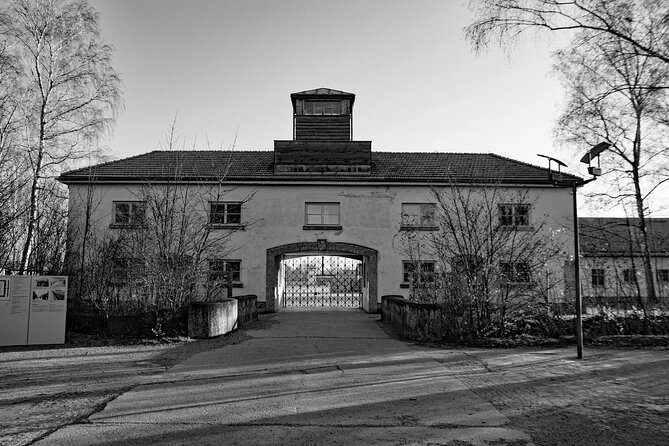
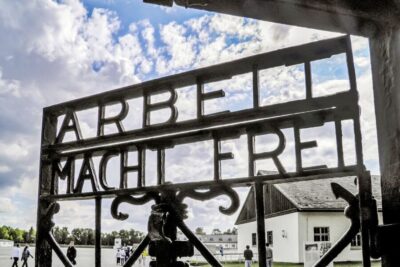
The visit begins with the Main Gate, known as the Jourhaus. This was not just an entrance. It was part of the camp’s administrative system, and passing through it gives you an immediate sense of how the site was controlled.
The gate is one of the most recognizable parts of Dachau, but the guide’s explanation keeps the focus on function rather than appearance. You learn how prisoners entered a place designed to strip away freedom, identity, and personal control.
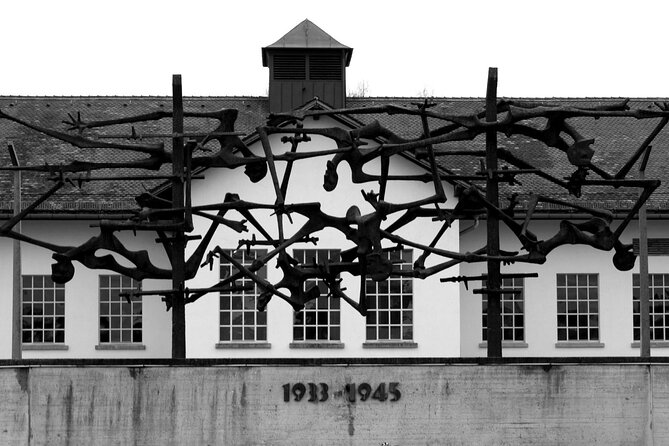
From there, the tour reaches the Roll Call Area. Prisoners were assembled here for head counts and orders, making this open space central to the daily routine of the camp. Today, the International Monument occupies the area as a memorial to those who suffered there.
This first section sets the tone for the entire visit. You are not simply walking from one old building to another. You are following the movement of prisoners through a carefully planned system of control.
The museum in the Former Maintenance Building
The Former Maintenance Building now houses the main museum. This is where the tour’s broader historical framework becomes clearer through exhibits and documentary material.
The museum helps explain who was imprisoned at Dachau, how the camp changed over time, and how forced labor became part of the camp’s operation. It also gives attention to the international character of the prisoner population. People from 34 nations were held here, so the story is not limited to Germany alone.
I find this part especially useful for anyone who knows the broad outline of Nazi persecution but wants a clearer sense of how Dachau developed. The museum connects political imprisonment, forced labor, camp administration, and mass death instead of treating them as separate events.
A guide can also help you keep the scale in mind. More than 200,000 inmates passed through Dachau during its 12 years of operation. Around 40,000 people died there, according to the historical information provided for the site. Those numbers are difficult to grasp, but the museum gives them context through individual stories, documents, and images.
Charlotte is specifically praised for her command of Dachau and the wider Second World War period in Germany and Europe. If you want historical explanation rather than a silent walk through displays, that kind of guide is a major part of the tour’s value.
Same city, a very different afternoon:
- From Munich: Neuschwanstein & Linderhof Castle Full-Day Trip
★ 4.5 · 12,494 reviews - Neuschwanstein & Linderhof Castle-Fairytale Day Tour from Munich
★ 4.5 · 7,275 reviews - Munich: Third Reich & WWII Walking Tour
★ 4.6 · 6,181 reviews - Neuschwanstein Castle Tour from Munich
★ 4.5 · 5,117 reviews
The Bunker and reconstructed barracks
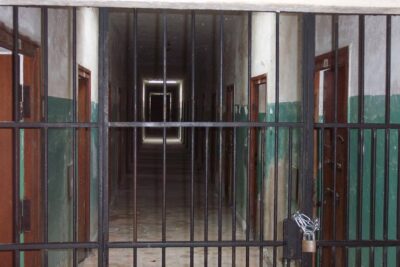
The Bunker was the camp prison. Its purpose was punishment and intimidation within an already brutal system. Walking through this part helps show that Dachau had layers of confinement. Prisoners were not only held inside the camp as a whole. They could also face additional imprisonment and punishment inside the camp.
The Bunker is stark, and that is part of its effect. There is no need for elaborate presentation. The plain rooms and narrow spaces make the system feel administrative and deliberate, which can be more disturbing than dramatic displays.
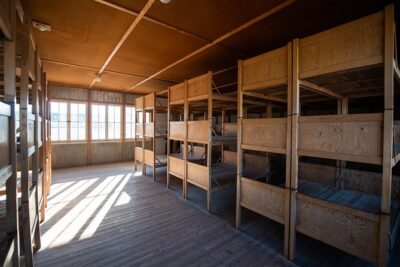
The tour also includes two reconstructed barracks. These provide a look at daily prisoner life, including the cramped and controlled conditions in which people were forced to live.
Keep in mind that the barracks are reconstructed, not untouched original living quarters. That does not make them unimportant. They help you understand the layout and conditions, while the museum and guide provide the historical explanation needed to interpret them correctly.
This is one reason a five-hour visit works well. You have time to consider the difference between original structures, reconstructed buildings, memorial spaces, and documentary evidence. A quick visit can leave these categories blurred.
Religious memorials and the International Monument
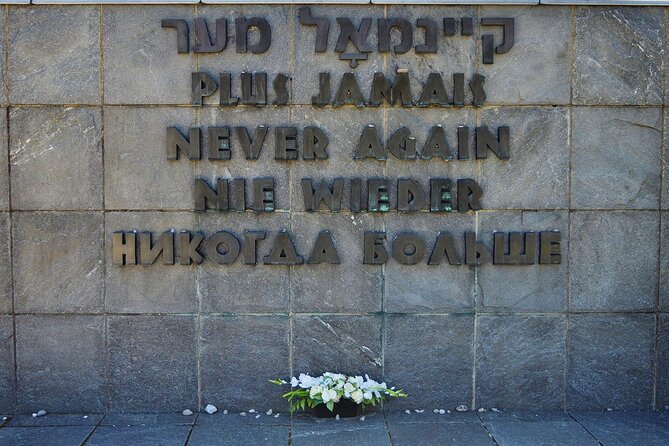
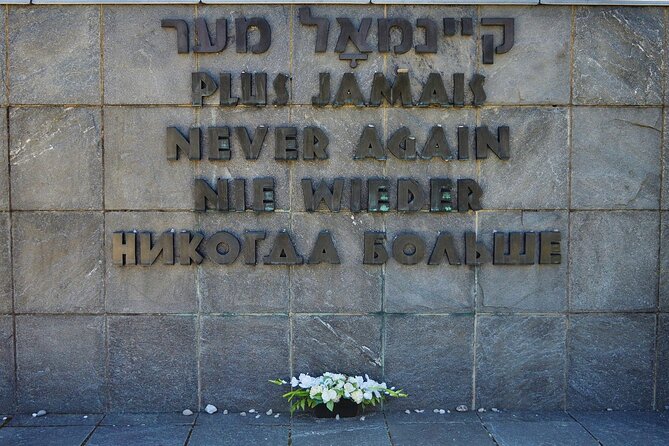
Several religious memorials occupy the site, symbolizing the many faiths and national backgrounds represented among those imprisoned at Dachau. Their presence adds a human dimension to a place that could otherwise feel dominated by numbers and institutional structures.
These memorials also show how remembrance has developed over time. Dachau is not preserved as a frozen historical exhibit. It is a memorial site shaped by the need to honor victims and warn future generations.
The International Monument near the Roll Call Area carries a similar purpose. It serves as a central tribute to those who endured the camp. Your guide can help explain how these memorial elements relate to the original camp grounds and the later work of remembrance.
I appreciate that the tour does not treat the religious memorials as decorative stops. They give you a chance to think about the people behind the statistics and the range of communities affected by Nazi persecution.
Guard towers, walls, and the crematorium area
Security installations, including guard towers and sections of the outer wall, show how the camp was physically enclosed and watched. These features can seem simple at first, but they reveal the practical machinery of imprisonment: controlled access, surveillance, boundaries, and the threat of force.
Some parts of the outer wall are partially reconstructed. As with the barracks, it is useful to know what you are seeing. The value lies in understanding the camp’s structure and purpose, not in assuming every section is original.
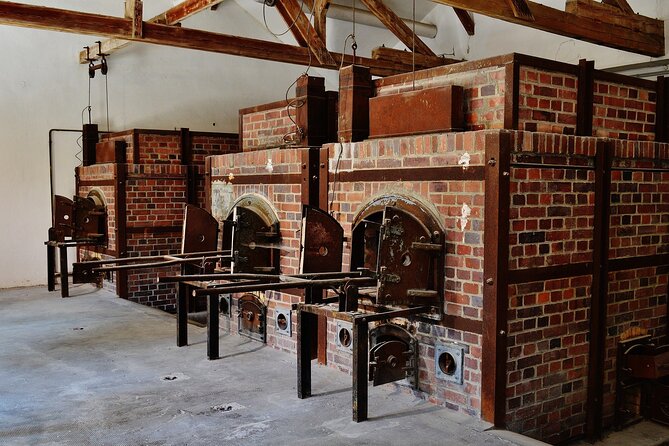
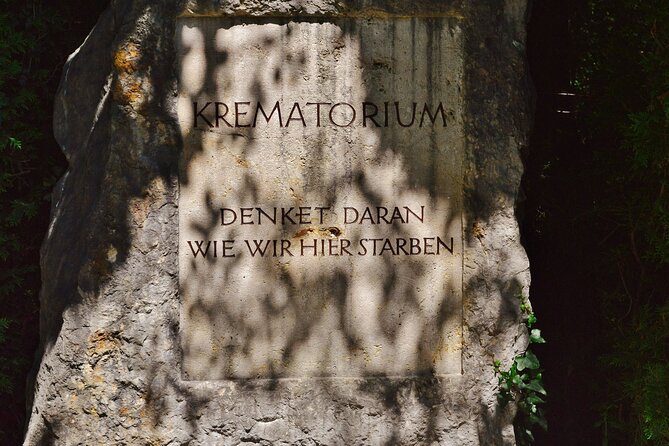
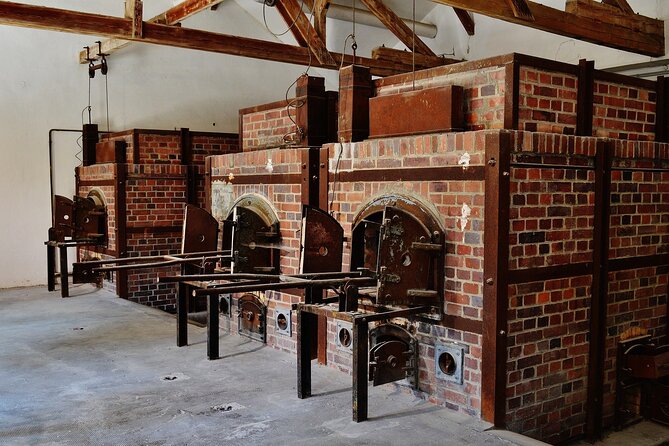
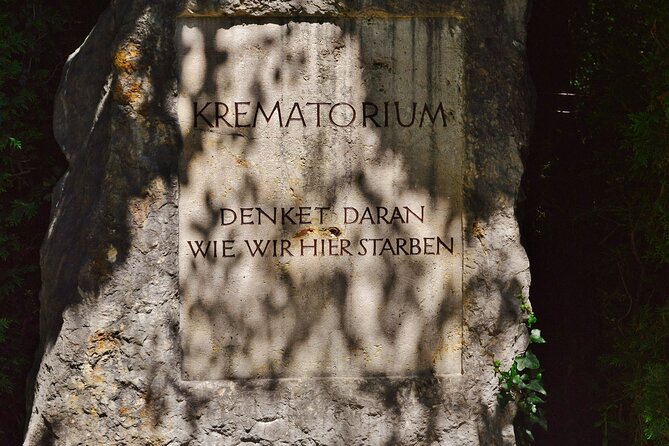
The tour also includes the crematorium area, one of the most difficult parts of the visit. This is where the historical reality becomes especially direct. Michael is praised for leading a minute of silence outside the crematorium as a sign of respect for those who died.
That quiet pause may be meaningful to you, but it also shows why this tour requires emotional preparation. The visit is educational, yet it is also a memorial act. You are being asked to remember people who were imprisoned, abused, forced to work, and killed.
Do not expect your guide to make the site entertaining. A good guide here should be clear, respectful, and restrained. The available information suggests that both Charlotte and Michael approach the subject in that spirit.
What the $118.74 price includes
At $118.74 per person, this is not a budget outing. The price pays for a local professional guide on the public tour, while admission to the memorial site itself is listed as free. Food and beverages are not included.
The key question is what you want from your visit. If you only want to reach Dachau, walk around independently, and spend a short time there, the tour may feel expensive. If you want a structured five-hour visit with historical explanation and a small group, the cost is easier to justify.
The maximum group size of 15 improves the value. You are not paying for a private guide, but you are also less likely to be lost in a large crowd. That matters at a memorial site, where the ability to hear a guide and pause at important locations is more useful than a flashy presentation.
The tour is also a practical choice if you are uncomfortable planning a sensitive historic visit on your own. A professional guide gives the day a clear sequence and helps explain why each part of the grounds matters.
Group discounts are available, which may help if you are booking for several people. Check the final price for your party before booking, since the listed cost is per person.
Who should book this Dachau tour
I would recommend this experience to you if you want serious historical context, prefer a guide, and can give the visit a full half-day. It is especially suitable for first-time visitors to Dachau who do not want to miss the museum, prison, barracks, memorials, and crematorium area.
It also suits people who value a smaller group. A limit of 15 creates a more focused setting than a large coach tour, while keeping the price below that of a private visit.
You may want to skip it if your Munich schedule is extremely tight, if you are looking for a light excursion, or if the subject matter feels too heavy for your trip. Dachau is important, but importance does not make it emotionally easy.
Because the tour ends back at Marienplatz, it can fit neatly into a day based in central Munich. Still, allow yourself time afterward. The most respectful way to visit is not to treat the memorial as just another item to check off.
Booking, cancellation, and practical details
You can cancel for a full refund up to 24 hours before the experience starts. Cancellations made less than 24 hours before the 10:00 a.m. start are not refunded, and changes made inside that period are not accepted.
The tour is generally suitable for most participants, and it is near public transportation. The site admission is listed as free, but the guided service is the part you are paying for.
This activity is often booked well ahead, with an average booking time of 36 days in advance. That does not guarantee that every date fills early, but it is a sensible reason to reserve ahead if your Munich dates are fixed.
Should you book it?
Book this Dachau Memorial Public Tour if you want a careful, guided introduction to one of Germany’s most important memorial sites. The five-hour format, 15-person limit, and strong guide focus give you more than simple transportation and a quick walk around the grounds.
The price is the main question. At $118.74, you are paying a premium for structure, explanation, and a smaller public group, not for admission to the memorial itself. For a place as complex and emotionally demanding as Dachau, I think that service can be worthwhile, especially with guides such as Charlotte or Michael.
Choose it when you want to learn, listen, and remember. Do not choose it expecting an easy or cheerful morning. Dachau asks for attention, and this tour gives you the time and guidance to offer it.
FAQ
Where does the Dachau Memorial Public Tour begin?
It begins at Fischbrunnen, Marienplatz 8, 80331 Munich, Germany.
What time does the tour start?
The tour starts at 10:00 a.m.
How long does the experience last?
The tour lasts approximately five hours.
Where does the tour end?
It ends back at the meeting point at Fischbrunnen in Marienplatz.
How large is the tour group?
The activity has a maximum of 15 participants.
Is admission to Dachau Memorial included?
The memorial site admission is listed as free. The booking includes a local professional guide on the public guided tour.
Is food included?
No. Food and beverages are not included.
Can I cancel for a full refund?
Yes. You can cancel at least 24 hours before the experience start time for a full refund.
Is the tour near public transportation?
Yes. The meeting point and activity are near public transportation.
Recently reviewed in Munich
- München: Vegetarische Viktualienmarkt-Probiertour Deutsch★ 4.8 · 6 reviews
- Wright Europe Vacations – Private Escorted Auto Tours★ 5.0 · 35 reviews
- Best of Munich Electric Bike Tour★ 5.0 · 38 reviews
- Munich Walking Quiz: Explore and Discover the City’s Highlights★ 5.0 · 7 reviews
- Walking Tour on Resistance to Nazism in Munich★ 5.0 · 8 reviews
- Private Transfer from Munich to Salzburg with 2 hours for sightseeing★ 4.5 · 13 reviews
- Private Transfer from Munich to Vienna with 2 hours for sightseeing★ 4.5 · 6 reviews
- 2 hour Sights Guided E-Scooter Tour in Munich★ 4.0 · 6 reviews
Dachau Memorial Tours, compared.
Dachau Concentration Camp Memorial Site Tour from Munich by Train
Read our review →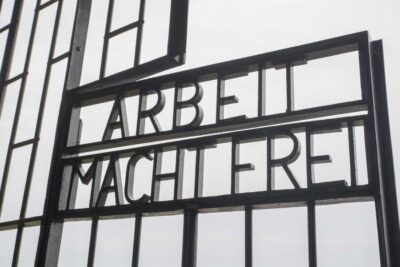
Dachau Concentration Camp Memorial Tour with Train from Munich
Read our review →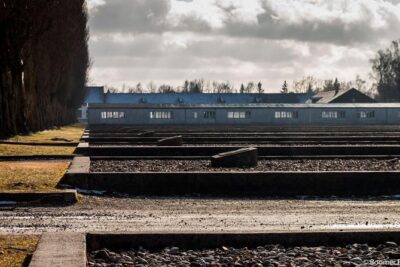
Full-Day Dachau Concentration Camp Memorial Site Tour from Munich
Read our review →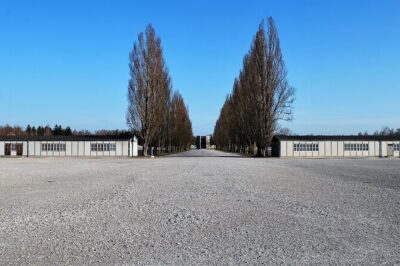
Dachau Small-Group Half-Day Tour from Munich By Train
Read our review →
Munich World War II Sites Including Dachau Concentration Camp
Read our review →Browse the lists this tour appears in