
Reviewed · VIKTUALIENMARKT FOOD TOURS
Munich: Walking Tour Old Town and Viktualienmarkt
Munich’s center packs a lot into a small area, and this 90-minute walking tour gives you a clear first look without asking you to spend half a day on your feet. You move from Marienplatz and St. Peter’s Church to Viktualienmarkt, the Hofbräuhaus, the Residenz, and Odeonsplatz, with a guide explaining how the city grew around its rulers, churches, beer culture, and markets.
I especially like the food-market stop, where you can see Munich’s everyday culinary life rather than only grand buildings. I also like the flexible guiding style: guides such as Karen, Claudia, Gerhard, Gitti, and Sabine have adjusted the conversation to suit families, history fans, German learners, and even repeat visitors.
The main thing to consider is the pace. You cover many major sights in just 1.5 hours, so this is an orientation walk, not a detailed visit inside Munich’s museums or churches. The meeting point can also be hard to identify around the Mariensäule, so arrive early and confirm the exact spot.
Key points at a glance
- Munich in one concentrated walk: Cover Marienplatz, St. Peter’s Church, Viktualienmarkt, Alter Hof, Hofbräuhaus, Maximilianstraße, the Residenz, and Odeonsplatz.
- A useful food-market pause: Walk among stalls selling bread, cheese, sausages, and other local products at Viktualienmarkt.
- Strong guide-led storytelling: The best part is the human explanation, with history, architecture, local customs, beer culture, and personal stories.
- Private or shared format: Choose a private group or a shared tour, depending on the option available when you book.
- Good for a first day: The route helps you get your bearings and collect ideas for restaurants, sights, and later visits.
- A brisk outdoor experience: Bring comfortable shoes and expect the tour to run in rain or shine.
A smart first look at Munich’s historic center
This tour works best as a get your bearings fast introduction. The route links the city’s most recognizable central sights in a logical walk, moving through public squares, narrow lanes, market stalls, royal buildings, and grand streets.
You do not spend long at any one stop. The scheduled sightseeing time is about 10 minutes at each major place, with additional time spent walking between them. That format keeps the tour moving, but it also means you should not expect a full interior visit at the Residenz, St. Peter’s Church, or the Bavarian State Opera.
The guide is the real variable, and the available feedback points to a strong emphasis on personal storytelling. Guides have answered questions, changed the focus for families, allowed spontaneous stops, and offered advice for the rest of a Munich visit. One guide even encouraged a child learning German to practice during the walk.
More tastings around the Viktualienmarkt:
- Munich: Old Town & Viktualienmarkt City Walk in German
★ 4.7 · 2,304 reviews - Munich: Viktualienmarkt Food Tour
★ 4.5 · 1,127 reviews - Munich City Walking Tour, includes Third Reich & Viktualienmarkt
★ 5.0 · 458 reviews
Starting at Marienplatz and the New Town Hall
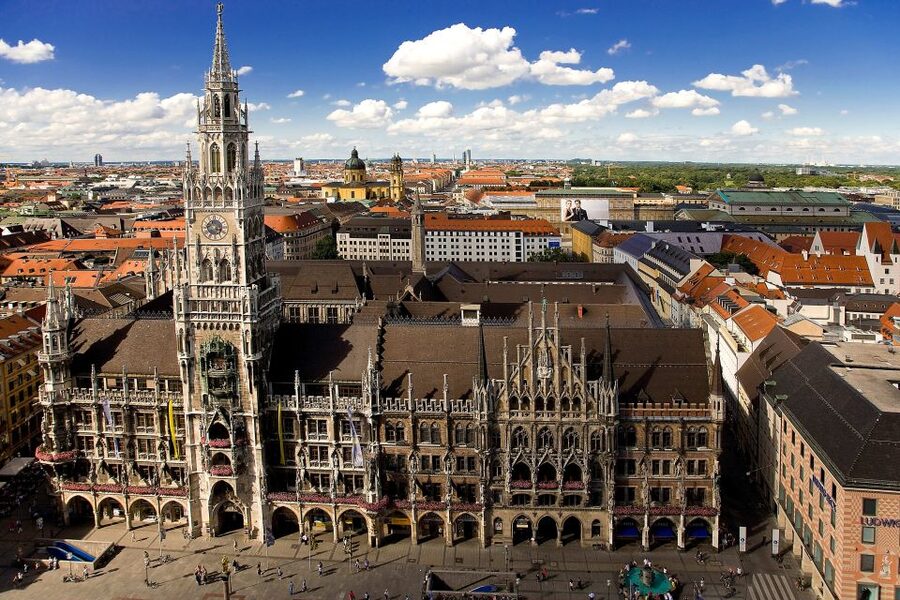
The usual starting area is Marienplatz, near the Mariensäule. This is the natural heart of Munich and a good place to begin because the square immediately puts the city’s history in front of you.
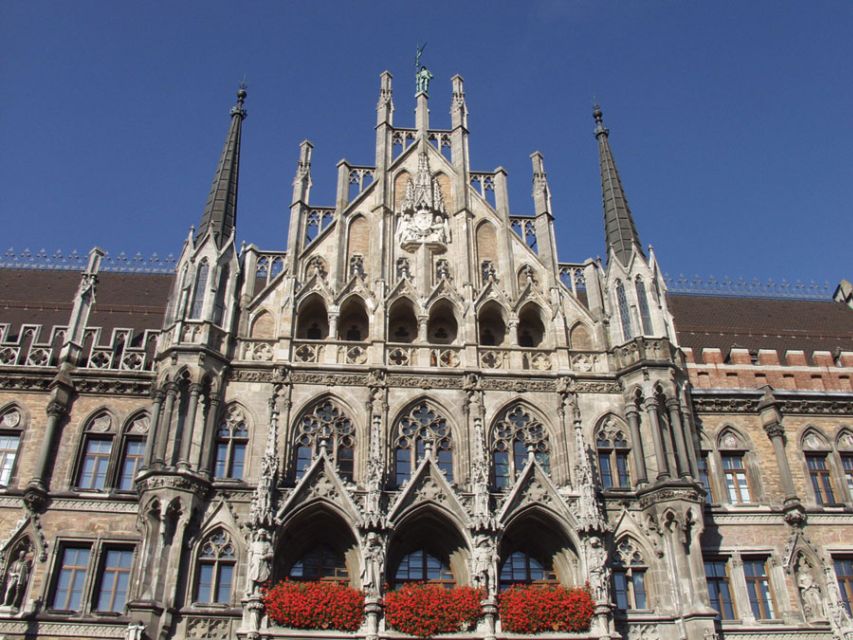
The New Town Hall dominates the scene with its Neo-Gothic façade and famous Glockenspiel. Your guide can use the building to explain Munich’s civic identity and the stories represented by the clock figures. You will have time to look up, take photographs, and get the basic orientation before moving on.
The meeting point deserves care. Mariensäule sits in a broad, busy square with several possible approaches, and it has not always been obvious exactly where the group should gather. I would arrive 15 minutes early, check the booking instructions closely, and keep your phone available in case you need to contact the guide.
St. Peter’s Church and Munich’s oldest parish tradition
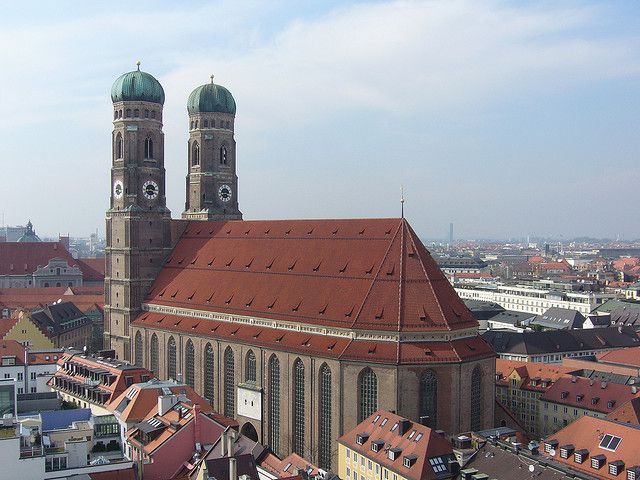
A short walk brings you to St. Peter’s Church, described as Munich’s oldest parish church. This stop adds an older layer to the grander nineteenth-century buildings around Marienplatz.
The value here is not simply seeing another church façade. A good guide can place the church within the long growth of Munich and explain how religious buildings helped shape the city center. The stop is brief, so you may look around the exterior rather than expect an extended church visit.
If church interiors or sacred art are high on your list, you will need to return independently. The tour gives you context and a first impression, not enough time for close inspection.
Viktualienmarkt: the tour’s most flavorful pause
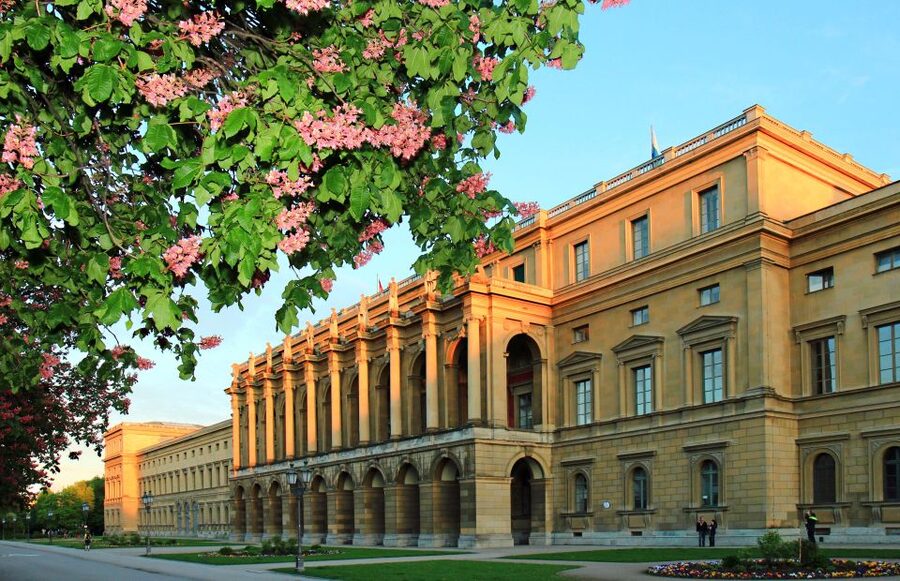
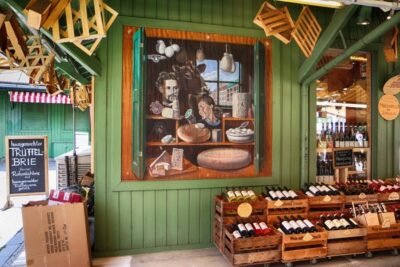
Viktualienmarkt is the most distinctive stop on the route. Munich’s largest traditional food market spreads through the Old Town with stalls selling fresh bread, cheeses, sausages, and other delicacies.
I like this part because it gives the walk a daily, local feel. The grand squares tell you about Munich’s rulers and public life. The market shows how people eat, shop, and gather in the present day. You can pause near the stalls, take in the smells, and note places you may want to revisit after the tour.
Your 1.5-hour ticket does not include meals or drinks, so food purchases are extra. The short stop is better for looking and choosing what to return for than for sitting down to a full meal. If you want to sample several things, allow separate time after the tour.
More walks through the old town:
- Munich Old Town Walking Tour
★ 4.5 · 1,287 reviews - Munich: Spooky Tour of Old Town in German
★ 4.6 · 1,112 reviews - Munich: Old Town Walking Tour
★ 4.7 · 589 reviews - Munich: Old Town Guided Walking Tour
★ 4.6 · 479 reviews
Alter Hof and the city’s medieval core
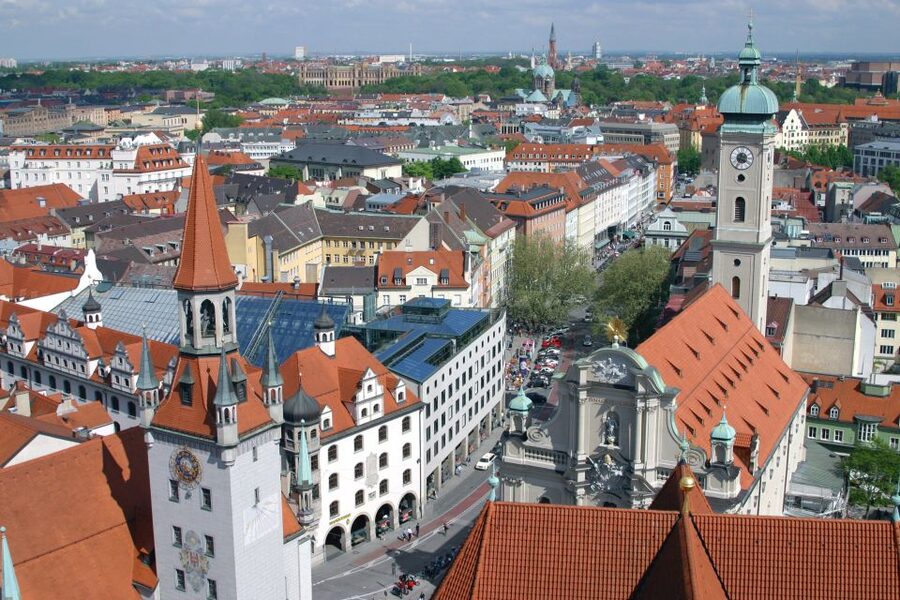
The route then follows Burgstraße, one of Munich’s oldest streets, toward Alter Hof. This former seat of the Wittelsbach dukes brings royal and medieval Munich into the story.
Alter Hof is useful because it connects the busy modern center with the city’s earlier political life. The guide can explain how the Wittelsbach family shaped Bavaria and how power was once concentrated in this part of town.
This is also where a good storyteller makes a difference. Several guides have been praised for adding unusual details, funny stories, and clear explanations of how Munich developed before the modern era. If you enjoy political history, ask questions here. The short stop can open up a much larger story.
Narrow lanes and the Hofbräuhaus
From Alter Hof, the walk passes through the Platzlgassen alleys toward the Hofbräuhaus. Here, the city feels less formal. Narrow passages lead into a district known for traditional beer culture and lively public life.
The Hofbräuhaus is one of Munich’s best-known beer halls. The route treats it as a sightseeing stop, not as an included meal or drinking session. You can admire the building and learn why it matters, then return later if you want to eat or drink there.
Beer culture is a recurring theme in the guiding. One guide tailored a tour around the history of Munich beer, while another gave a stag group a mix of historical information and old-city bar atmosphere. That makes this stop useful for more than a photograph. It helps explain why beer halls became such an important part of Munich’s public identity.
Maximilianstraße and Munich’s modern luxury
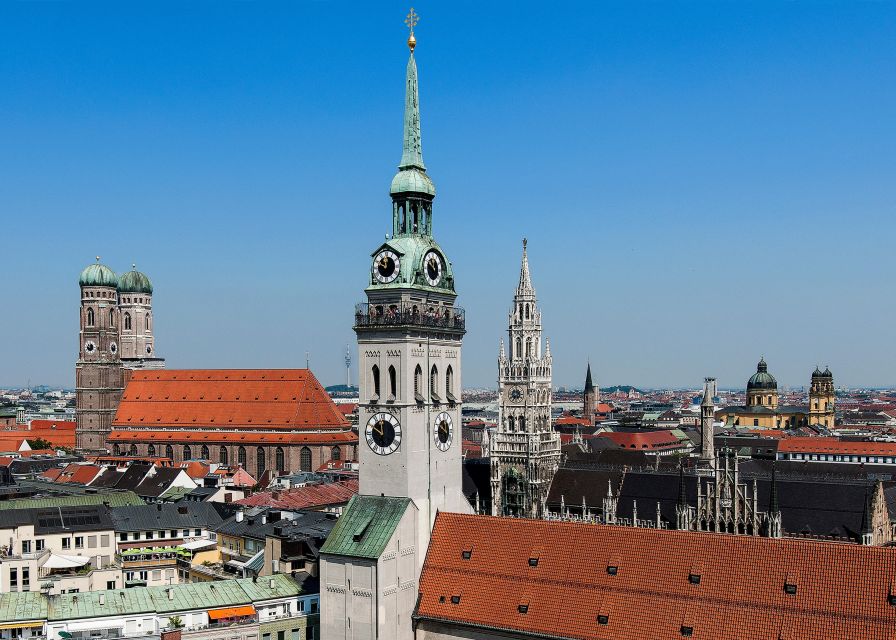
The mood changes sharply on Maximilianstraße, Germany’s most exclusive shopping street. High-end boutiques, jewelers, and designer showrooms replace the market stalls and medieval lanes.
You are unlikely to spend much time shopping during this tour, but the street offers a useful contrast. Munich is both an old Bavarian capital and a wealthy modern city. Walking from Alter Hof and the Hofbräuhaus to Maximilianstraße lets you see that change within minutes.
If luxury shopping is a main reason for visiting, treat this as a preview. The tour gives you the setting and a quick look at the architecture, but you would need extra time to browse the shops.
The Residenz and Bavarian royal power
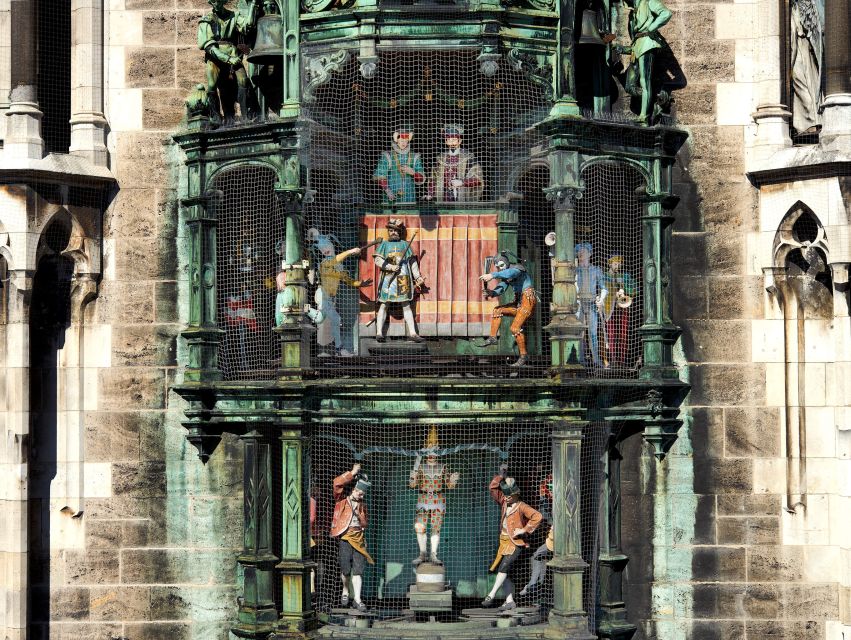
The route continues past the Munich Residenz, former home of Bavarian royalty. The building is one of the major historical anchors of the Old Town, even if your visit here is limited to an outside look.
The guide can explain how the Bavarian rulers used architecture to display status and control. This helps tie together the earlier stops at Alter Hof and the later grand spaces around Odeonsplatz.
Entrance fees are not included. If you want to see the royal rooms, collections, and interiors, plan a separate visit. The walking tour is still useful beforehand because you will arrive with a basic understanding of why the Residenz matters.
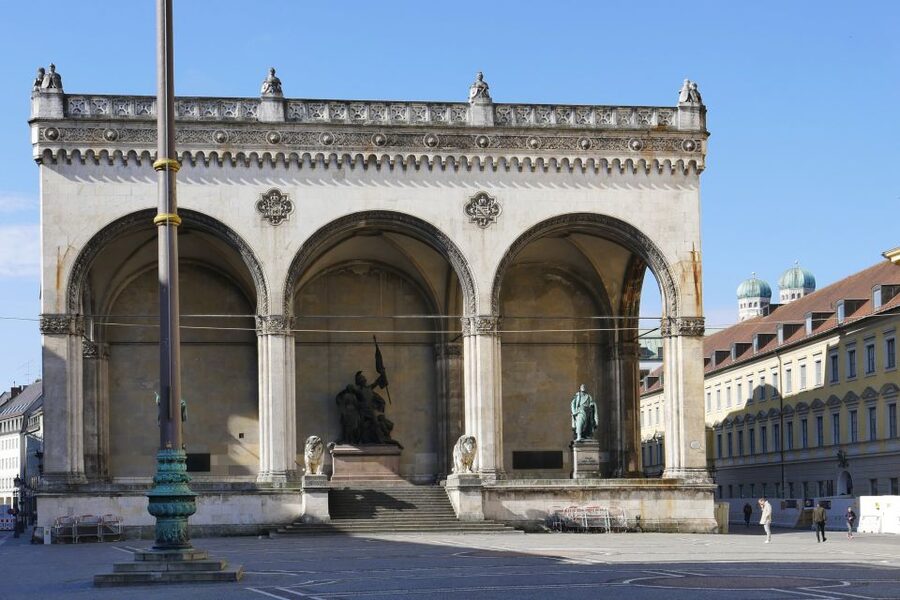
Odeonsplatz, the Feldherrnhalle, and Theatinerkirche
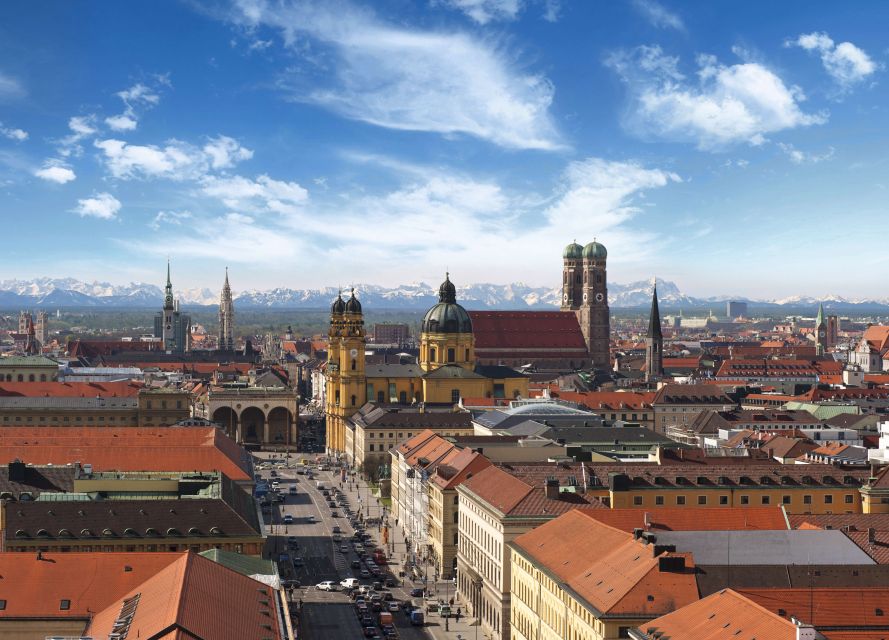
The final major stop is Odeonsplatz, one of Munich’s most impressive squares. The Feldherrnhalle gives the space a strong monumental character, while the Theatinerkirche adds a very different note with its Italian Baroque design.
This is a satisfying end to the route because several strands come together here: Bavarian power, Italian influence, royal planning, and Munich’s taste for grand architecture. The city is sometimes called the northernmost city of Italy, and Theatinerkirche helps explain why. Its style feels distinctly different from the Gothic appearance of the New Town Hall.
The Bavarian State Opera and the Residenz are also part of this final stretch. You get a good sense of how Munich’s cultural and royal institutions cluster around the old center, though the tour does not include performances or interior admission.
What the guides add
The strongest reason to choose a guided walk rather than follow a map is the explanation between the buildings. The guide can point out details you might pass without noticing and connect each stop to Munich’s political, religious, social, and architectural past.
Several guide styles have worked especially well for different groups. Karen adapted the walk for a family with a 10-year-old and encouraged a child’s German practice. Claudia focused closely on history and architecture, while Gerhard offered restaurant and sightseeing suggestions. Gitti adjusted the content for visitors who had already taken other tours and concentrated on earlier Munich, beer culture, and architecture.
You should tell the guide what interests you at the start. The route is fixed enough to cover the key sights, but the conversation can often shift toward history, food, local customs, architecture, or family needs.
Price, group size, and overall value
The listed price is $282 per group of up to 30 people. That price makes the most sense for a private group that can divide the cost among several people. For a large family, school group, or organized party, a private guide can be good value because you receive a focused introduction without booking several separate places.
For one or two people, the value depends on the shared-group price offered for your date. The benefit is not admission to attractions, food, or transport. You are paying for the guide’s time, route planning, and ability to explain Munich efficiently.
A shared group of 20 has been handled successfully, but a large group can make it harder to hear and ask questions. A private group gives you more control and makes it easier to request a slower pace or a particular historical focus.
Timing, comfort, and practical limits
You walk outdoors for about 1.5 hours, so comfortable shoes are essential. The tour runs rain or shine, and Munich weather can change quickly, so bring suitable clothing.
The route is listed as wheelchair accessible, but the activity information also says it is not suitable for people with mobility impairments. That is an important inconsistency. If you use a wheelchair, walker, or have difficulty walking, confirm the exact route and group option before booking rather than relying on the general accessibility label.
Transportation to the starting point is not included. You must make your own way to the meeting area, and the precise meeting point may vary by booking option. Entrance fees, meals, and drinks are also separate.
Who should book this walk?
I would choose this tour if you are visiting Munich for the first time and want a fast, guided introduction before exploring on your own. It is also a good choice for families because the guides can adjust their style and keep the history approachable.
History fans should benefit from the focus on Munich’s foundations, the Wittelsbach dukes, royal power, and the city’s development. Food lovers will enjoy the Viktualienmarkt, though you should reserve extra time for eating. Repeat visitors can also get value if they tell the guide what they have already seen and ask for architecture, beer culture, or lesser-known stories.
I would not choose it as your only Munich sightseeing experience if you want long interior visits. The pace is brisk, and the main purpose is to connect the city’s major sights rather than explore each one in depth.
Should you book it?
Book this walking tour if you want a practical first orientation, enjoy learning through stories, and prefer a human guide to a self-guided route. The combination of Marienplatz, Viktualienmarkt, the Hofbräuhaus, the Residenz, and Odeonsplatz gives you a strong central overview in a short time.
Skip it if you dislike group walks, need a slow pace, or want included food and entrance tickets. If you do book, arrive early at the Mariensäule, wear comfortable shoes, dress for rain or sun, and tell the guide your interests at the start. That small step can turn a standard sightseeing route into a much more personal introduction to Munich.
FAQ
How long does the Munich Old Town tour last?
The tour lasts 1.5 hours.
Where does the tour start?
The listed starting area is München 1, near the Mariensäule at Marienplatz. The exact meeting point may vary depending on the option booked.
Which languages are available?
The live tour guide service is available in English and German.
Is this a private tour?
A private group option is available. Shared group availability depends on the option selected when booking.
Is Viktualienmarkt included?
Yes. Viktualienmarkt is one of the sightseeing stops on the walking route.
Are food and drinks included?
No. Meals and drinks are not included, so any food or drink you buy at Viktualienmarkt or elsewhere costs extra.
Are entrance fees included?
No. Entrance fees are not included. The tour provides guided sightseeing at the listed locations.
Is transportation included?
No. You are responsible for getting to the starting location.
What should I bring?
Bring comfortable shoes. The tour takes place outdoors and runs rain or shine.
Can I cancel for a full refund?
You can cancel up to 24 hours in advance for a full refund. A reserve-now, pay-later option is also available.
Recently reviewed in Munich
- München: Vegetarische Viktualienmarkt-Probiertour Deutsch★ 4.8 · 6 reviews
- Wright Europe Vacations – Private Escorted Auto Tours★ 5.0 · 35 reviews
- Best of Munich Electric Bike Tour★ 5.0 · 38 reviews
- Munich Walking Quiz: Explore and Discover the City’s Highlights★ 5.0 · 7 reviews
- Walking Tour on Resistance to Nazism in Munich★ 5.0 · 8 reviews
- Private Transfer from Munich to Salzburg with 2 hours for sightseeing★ 4.5 · 13 reviews
- Private Transfer from Munich to Vienna with 2 hours for sightseeing★ 4.5 · 6 reviews
- 2 hour Sights Guided E-Scooter Tour in Munich★ 4.0 · 6 reviews
Viktualienmarkt Food Tours, compared.


Lunch Like a Local: Munich’s ORIGINAL Viktualienmarkt Food Tour
Read our review →
Munich Viktualienmarkt and Beyond Small-Group Food Tasting Tour
Read our review →

Private – Viktualienmarkt Food Tour and Beyond – best Munich tastings
Read our review →
Marienplatz and Viktualienmarkt Private Tour and Tasting
Read our review →Browse the lists this tour appears in