
Reviewed · MUNICH THIRD REICH & WWII TOURS
National Socialism WWII with licensed guide – private tour
Munich was not just a backdrop to the Nazi era. It was where Hitler built his political career, where the NSDAP took shape, and where the movement turned public spaces into symbols of power. This private walking tour follows that story from the steps of the Feldherrnhalle to Königsplatz, using photographs and on-site explanation to make the past easier to understand.
I like two things right away. The route connects places to events, rather than treating Munich’s Nazi history as a list of buildings. I also like the chance to learn about resistance, especially the White Rose group at LMU, instead of hearing only about Nazi leaders and institutions. The main drawback is the pace: two hours covers a lot, so you should visit the NS Documentation Centre afterward if you want a fuller museum experience.
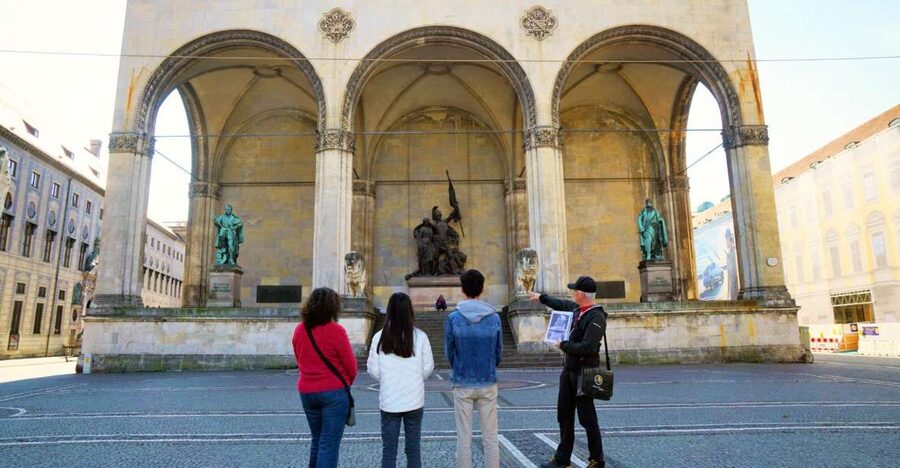
- The Hitler coup begins and ends at Odeonsplatz: Feldherrnhalle gives the opening story a clear physical setting.
- The White Rose adds a vital human side: At LMU, you hear about students who opposed the regime and were executed.
- Nazi art gets its own stop: Haus der Kunst and Galeriestraße show how the regime used culture as political control.
- Historic buildings appear in their political setting: Munich Residenz, Karolinenplatz, and Königsplatz help explain power, money, and public spectacle.
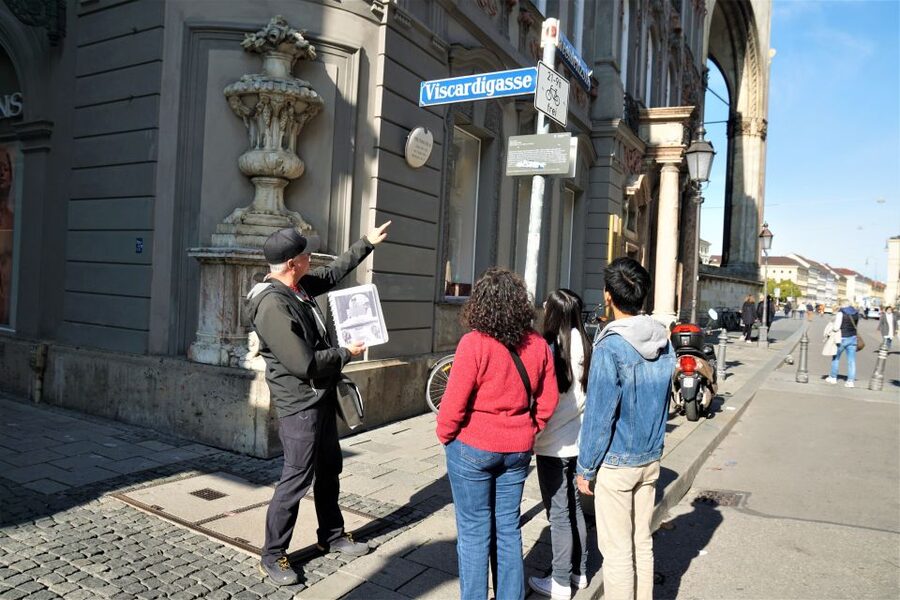
- Photographs support the walking tour: The guide uses extensive visual material while you stand at the relevant sites.
- The private format offers flexibility: One group pays $259 for up to 30 people, with English or German guiding available.
Starting at Feldherrnhalle and Odeonsplatz
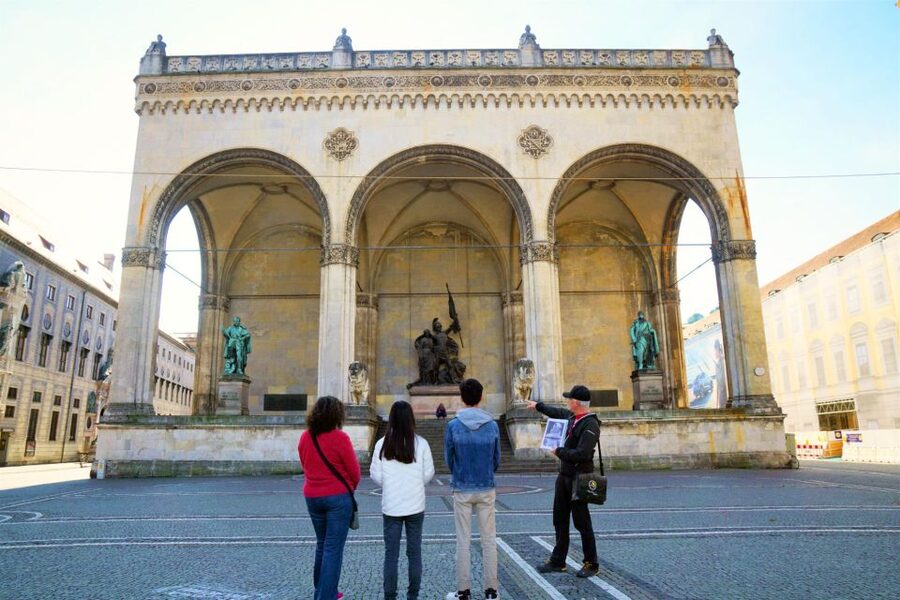
The meeting point is the steps at Feldherrnhalle on Odeonsplatz. This is a useful starting place because the site is directly tied to the failed Hitler coup, also known as the Beer Hall Putsch, and to the early public rise of the Nazi movement in Munich.
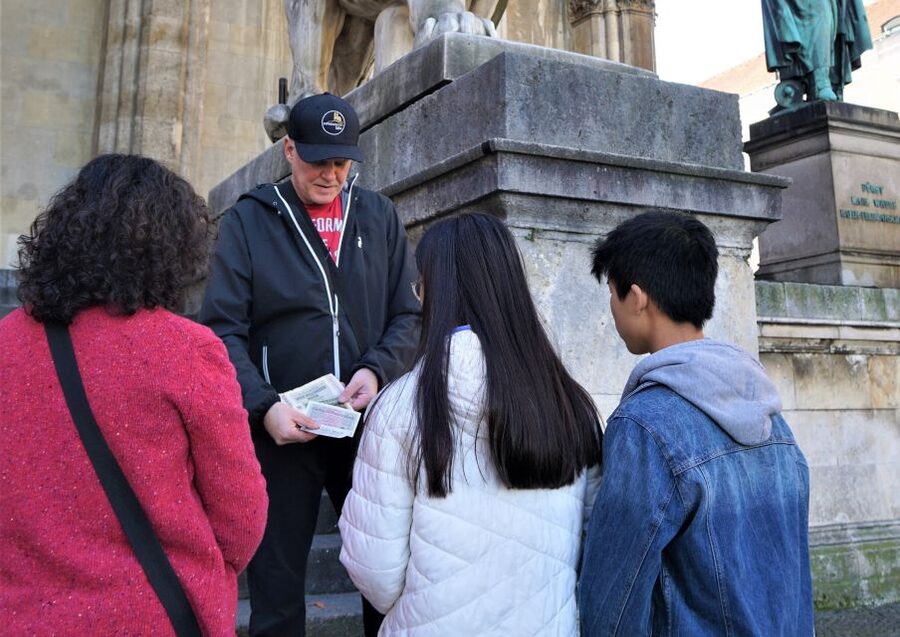
The guide begins with why Hitler came to Munich, where he lived, and how he made a living before entering politics. That early background matters. It helps you see Hitler not as a fully formed dictator who appeared out of nowhere, but as a political figure who found a receptive setting in postwar Munich.
At Feldherrnhalle, you learn where the coup ended and where a monument to the dead putschists once stood. The stop lasts only about 10 minutes in the listed schedule, followed by another short explanation at Feldherrnhalle. That may sound repetitive, but it allows the guide to separate the physical scene from the wider political story.
I would pay close attention here. The stones and traffic around you do not automatically explain anything. The value comes from knowing what happened at this exact point and why the Nazis later treated it as a sacred political site.
Resistance in the Court Garden and at LMU
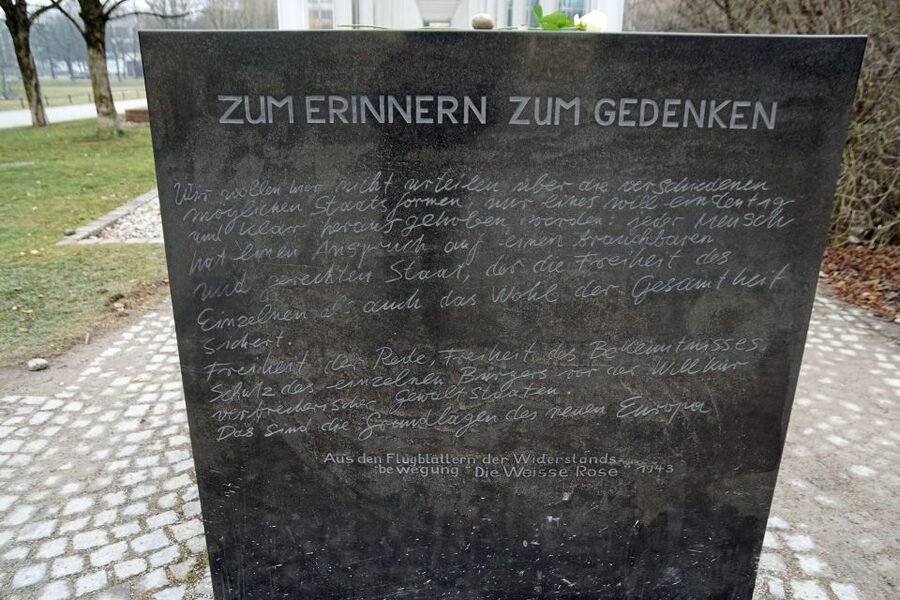
The walk continues through the court garden, where you see a monument connected with resistance fighters. This shifts the focus from Nazi power to opposition against the regime.
The most important resistance story comes at the Ludwig Maximilian University of Munich, commonly called LMU. Here, the guide discusses the White Rose, a student-led resistance group that produced and distributed anti-Nazi leaflets. Several members were arrested and beheaded.
This is one of the strongest parts of the tour because it gives you a clearer sense of personal risk. Resistance can sound abstract when discussed only in terms of institutions or military plots. At LMU, the story centers on young people making a direct choice to oppose a dictatorship, knowing the possible cost.
A GCSE history student found this part of the tour especially useful, and I can see why. The guide links people, place, action, and consequence in a way that should help students remember the material. Parents booking this for older teenagers should still consider the serious subject matter. The tour deals directly with execution and political terror.
Other Third Reich and wartime history tours in Munich:
- Munich: Third Reich & WWII Walking Tour
★ 4.6 · 6,181 reviews - Third Reich Walking Tour Munich
★ 4.5 · 4,291 reviews - Munich: Birthplace of the Third Reich Guided Walking Tour
★ 4.6 · 771 reviews
Munich Residenz and the Square of the Victims
The route includes Munich Residenz, with about 10 minutes of guided explanation. The supplied information does not specify a separate entrance to the palace, so you should expect an exterior stop rather than a palace visit included in the tour.
The importance here is location. The Residenz is part of Munich’s historic center, and placing it within this route shows how Nazi activity occupied an older royal and civic setting. The tour is not only about purpose-built Nazi buildings. It also asks you to notice how the regime operated within an existing city.
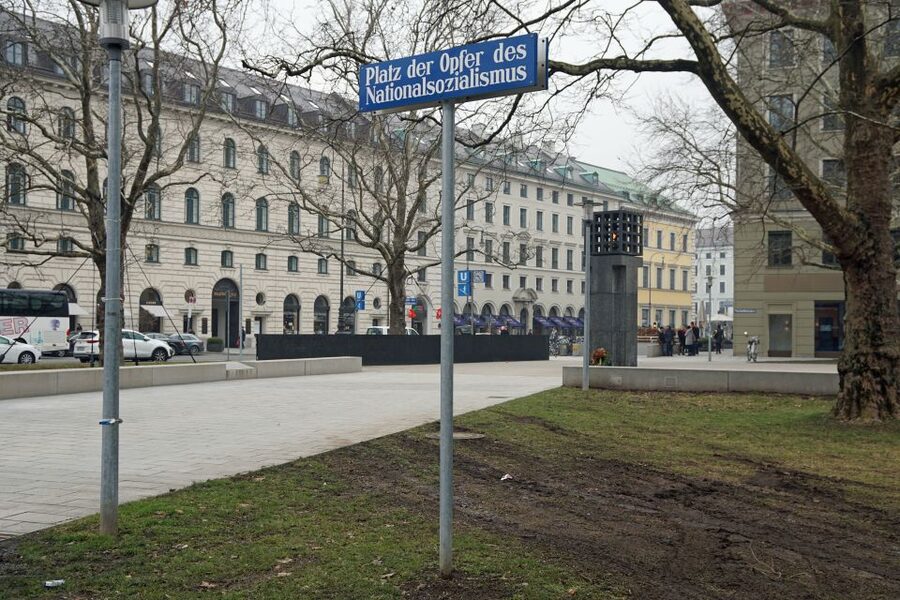
Next comes the Square of the Victims of National Socialism. Here, the guide explains who the victims were. That wording is important because Nazi persecution affected many groups, not only political opponents. This stop gives the tour a memorial focus and helps keep the subject grounded in the people harmed by the regime.
The square is also a useful pause in the route. After hearing about party politics, propaganda, and buildings, you are brought back to the human cost. I would expect this section to be brief, around 10 minutes, but it should carry more weight than its timing suggests.
Haus der Kunst and the Politics of Art
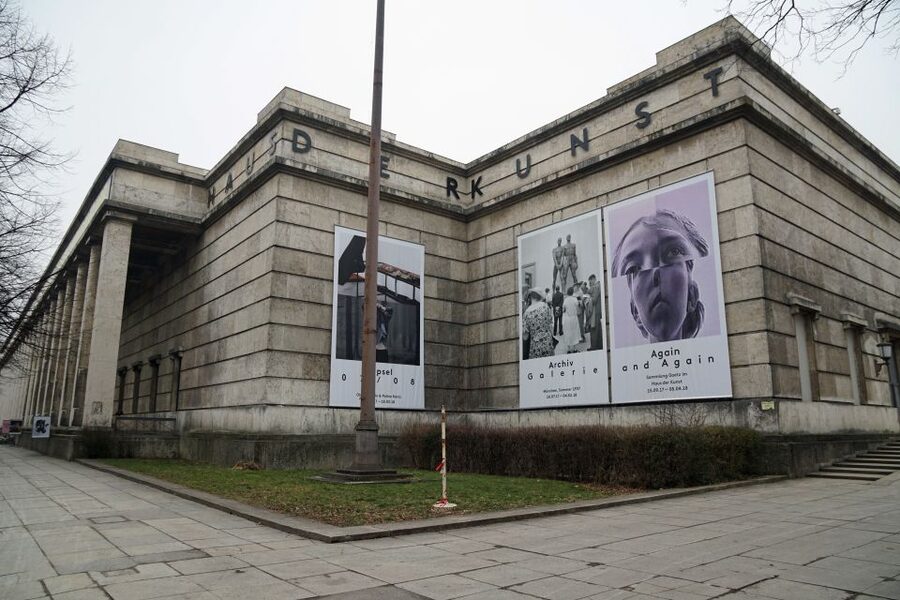
Haus der Kunst receives about 15 minutes of guided attention. The subject is not simply architecture or museum design. The guide explains how the Nazis influenced art and used official culture to promote their ideas.
You also hear about the Degenerate Art exhibition and its location in Galeriestraße. This is a valuable addition because it shows that repression was not limited to elections, newspapers, or street violence. The regime tried to decide what counted as acceptable art and used public exhibitions to shame work it rejected.
I like this stop for travelers who want more than military history. The Nazi system depended on images, public rituals, design, and cultural rules. Seeing where art policy played out gives you a broader understanding of how ideology entered ordinary public life.
Haus der Kunst is also a reminder that buildings can carry more than one story. A visitor who knows only its present-day identity may miss how closely art and political power were tied during the Nazi period. The guide’s photographs should help bridge that gap, especially when the present view does not look exactly like the historical one.
Karolinenplatz and the Money Behind the Movement
At Karolinenplatz, the guide discusses the main sponsors of the Nazis. This is a practical correction to the idea that the movement grew only through speeches and mass enthusiasm.
Political movements need money, connections, and institutional support. The Karolinenplatz stop adds that financial angle to the tour. It helps you ask who backed the Nazis, why powerful people supported them, and how a radical party gained the resources to expand.
The schedule does not give a separate time for Karolinenplatz, so this may be one of the shorter explanations along the walking route. That is a limitation if you want a detailed study of business involvement. Still, it is an important subject to include, and the location gives the guide a clear point from which to discuss it.
A few more Munich tours worth comparing
- Munich Private Tour with a Local – Highlights & Hidden Gems
★ 5.0 · 469 reviews - Mike’s Neuschwanstein & Linderhof Private Tour from Munich
★ 5.0 · 197 reviews - Dachau Concentration Camp Private Tour by Train from Munich
★ 5.0 · 185 reviews - Fall in Love with Munich in a Private Old Town Walking Tour
★ 5.0 · 182 reviews
Königsplatz and the Former Nazi Party Center
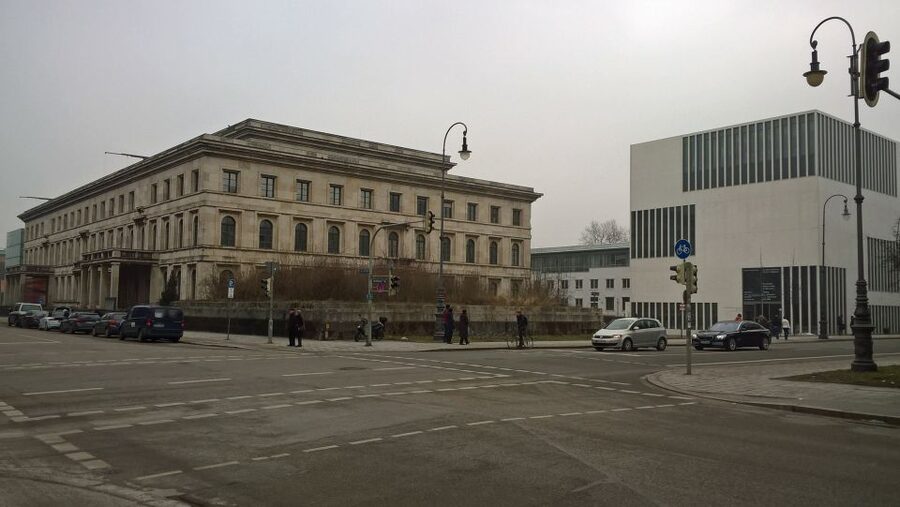
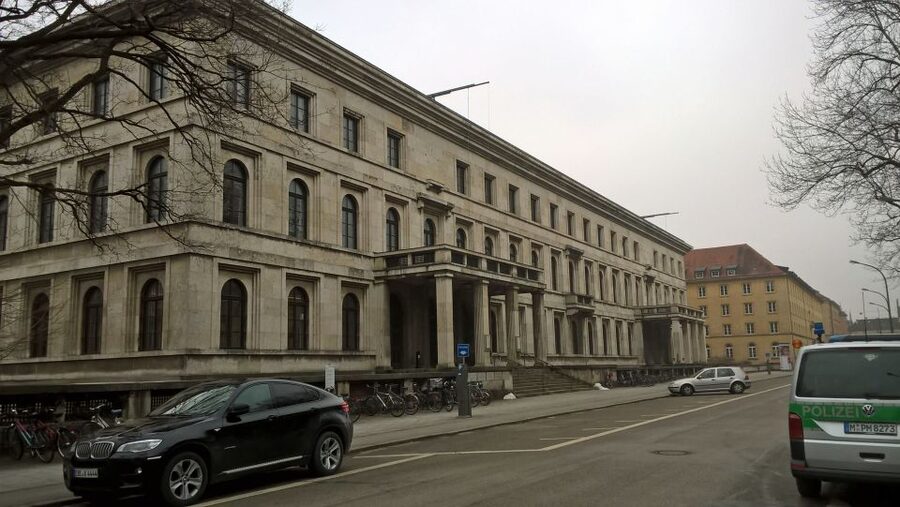
The final stretch leads to Königsplatz, once the Nazi party center in Munich. This is where the tour brings together several major strands of the story: the Brown House, the Führerbau, the former NSDAP administration, and the Nazi headquarters.
The Führerbau was associated with Hitler’s office, and you hear about its role during the tour. The Brown House served as the party headquarters. These names can blur together in a classroom, but seeing their locations in relation to one another makes the structure of Nazi power easier to follow.
Königsplatz was also used for large political displays and ceremonies. The open space helped the Nazis create a sense of order, authority, and mass participation. Even without entering every building, you can understand why this part of Munich mattered to the regime.
The tour ends at Königsplatz 1, near the NS Documentation Centre. That makes the finish practical. You do not need to retrace the route to continue your study of the subject.
Add the NS Documentation Centre After the Walk
Admission to the NS Documentation Centre is not included, but you have the option to visit after the guided walk. I strongly recommend allowing time for it if your schedule permits.
The walking tour gives you a framework: Hitler’s arrival in Munich, the Hitler coup, the White Rose, Nazi art, financial support, and the party center. The museum can then give you more documents, photographs, names, and chronology. Going straight from the outdoor sites into the documentation center should make the exhibits easier to place.
The museum stop listed in the tour schedule is a guided explanation of about 15 minutes, not a full included museum visit. Do not confuse seeing the building and hearing about its purpose with admission to the exhibits. You must pay the entry fee separately.
If you only have two hours in Munich, the walk gives you a compact introduction. If this topic matters to you, plan extra time for the center. The tour and museum serve different purposes, and the combination should be much more useful than either one alone.
How the Two-Hour Format Works
The duration is two hours, with several short stops. This is a walking tour through central Munich, not a bus excursion or a long indoor museum program.
The pace should suit you if you want a focused introduction and can keep moving between sites. It may feel quick if you want to stop for extensive questions or study every building in detail. The use of historical photographs helps compensate for the limited time, since the guide can show you what has changed without requiring a long lecture at every stop.
A private group can contain up to 30 people. That is a generous limit, so private does not always mean a tiny party. The advantage is that your group is not combined with strangers, and the guide can direct the tour to your own interests within the fixed two-hour route.
The tour is available in English or German. It is wheelchair accessible, which is useful for a route through the city center, though you should still confirm practical route details at booking if mobility needs are important to your group.
Guide, Price, and Overall Value
The guide is Wolfgang Brehm, a certified professional with more than 10 years of experience. The clear teaching style described in the available feedback makes this a good match for visitors who want explanation rather than a simple photo walk.
The price is $259 per group of up to 30 people. For one or two people, that is a substantial cost for two hours. For a larger family, school group, or private party, the calculation changes quickly. A group of 10 pays about $26 per person, while a full group of 30 pays less than $9 per person, before any museum admission.
That pricing makes the tour best value for groups rather than solo visitors. You are paying for a certified guide, a private arrangement, historical photographs, and a route shaped around your group. A public tour may cost less per person, but it may not offer the same control over group size or language.
The tour also has a practical booking cushion. You can cancel up to 24 hours before the start for a full refund, and you can reserve now and pay later. Those policies help if your Munich plans are still changing.
Who Should Book This Munich History Tour
I would recommend this tour to:
- Families with older teenagers studying European history
- Small private groups wanting an English or German guide
- Visitors interested in political history, resistance, and propaganda
- People who want to connect famous Munich sites with the Nazi period
- Anyone planning to visit the NS Documentation Centre afterward
I would not choose it if you want a broad Munich sightseeing tour. The subject is narrow and serious. You will see central landmarks, but the purpose is to examine National Socialism, persecution, resistance, and political power.
The tour is also not intended for right-wing extremists or Nazi enthusiasts. That point is made clearly, and the experience is educational and critical in purpose.
Should You Book It?
Book it if you want a short, private, place-based introduction to Munich’s Nazi past and you can share the cost with a group. The strongest features are the route from Feldherrnhalle to Königsplatz, the inclusion of the White Rose and Nazi art, and the use of historical photographs.
For the best experience, treat the two hours as the beginning rather than the whole subject. Wear comfortable walking shoes, meet at the Feldherrnhalle steps, and plan a separate visit to the NS Documentation Centre. If you are alone or traveling as a couple, the $259 group price may be hard to justify. For a family, school group, or larger party, it offers a focused and efficient way to understand why Munich played such a central role in the Nazi era.
FAQ
Where does the tour begin?
The meeting point is the steps at the Feldherrnhalle on Odeonsplatz in Munich.
Where does the tour finish?
The tour finishes at Königsplatz 1, 80333 Munich, Germany.
How long does the tour last?
The walking tour lasts two hours.
What is the price?
The price is $259 per private group of up to 30 people.
Is the tour private?
Yes. It is offered as a private group experience.
Which languages are available?
The live guide is available in English and German.
Who leads the tour?
The tour is led by Wolfgang Brehm, a certified guide with more than 10 years of experience.
Is admission to the NS Documentation Centre included?
No. Admission to the NS Documentation Centre is not included and must be paid separately.
Can I visit the NS Documentation Centre after the tour?
Yes. The tour ends near the center, and you have the opportunity to visit it afterward.
Is the tour wheelchair accessible?
Yes. The activity is listed as wheelchair accessible.
Recently reviewed in Munich
- München: Vegetarische Viktualienmarkt-Probiertour Deutsch★ 4.8 · 6 reviews
- Wright Europe Vacations – Private Escorted Auto Tours★ 5.0 · 35 reviews
- Best of Munich Electric Bike Tour★ 5.0 · 38 reviews
- Munich Walking Quiz: Explore and Discover the City’s Highlights★ 5.0 · 7 reviews
- Walking Tour on Resistance to Nazism in Munich★ 5.0 · 8 reviews
- Private Transfer from Munich to Salzburg with 2 hours for sightseeing★ 4.5 · 13 reviews
- Private Transfer from Munich to Vienna with 2 hours for sightseeing★ 4.5 · 6 reviews
- 2 hour Sights Guided E-Scooter Tour in Munich★ 4.0 · 6 reviews
Munich Third Reich & WWII Tours, compared.
Birthplace of the Third Reich Guided Walking Tour
Read our review →
Munich World War II Sites Including Dachau Concentration Camp
Read our review →
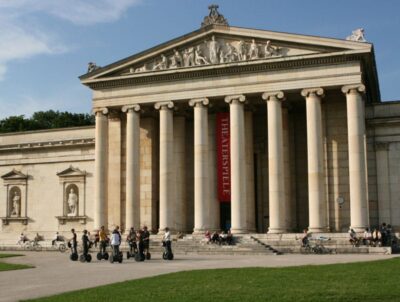
Munich 3-Hour Segway Tour: Nazi Munich & Royal Architecture
Read our review →
Dachau Concentration Camp Memorial Site And Third Reich Day Tour From Munich
Read our review →
Browse the lists this tour appears in