
Reviewed · MUNICH THIRD REICH & WWII TOURS
Munich: Third Reich Guided City Walking Tour
Munich was not just a backdrop to the Nazi era. It was where Hitler built his political career, where the Nazi movement took shape, and where the Beer Hall Putsch began. This 2.5-hour walking tour puts those events on city streets you can still visit today, moving from Marienplatz toward Odeonsplatz, Haus der Kunst, Führerbau, and Königsplatz.
I like the route for two clear reasons: it connects major political events to actual Munich locations, and it gives proper space to the German Resistance, including Georg Elser and the White Rose. The main thing to consider is the language. This tour is only for Spanish speakers, and children under 13 cannot join.
Key points to know before you book
- The tour begins at Marienplatz: Meet your Spanish-speaking guide in front of the Tourist Information Office.
- The Hofbräuhaus anchors the early story: Learn about Hitler’s putsch and the beginnings of the National Socialist German Workers’ Party.
- Haus der Kunst reveals the regime’s art policy: The building was the first propaganda building in Nazi Germany.
- Resistance stories receive real attention: Georg Elser and the White Rose are part of the route, not a brief footnote.
- Führerbau links Munich to the Munich Agreement: This is where the 1938 agreement was signed.
- The price is modest: At $23 per person, the tour offers a focused historical walk at a reasonable cost, especially if you want guided context rather than a self-guided route.
Why this Munich history walk matters
You can walk through central Munich and see grand squares, famous beer halls, and elegant buildings without realizing how closely they are tied to the Nazi movement. This tour changes that. It asks you to look at familiar places through the political events that took place there.
That approach is useful because the subject can otherwise feel scattered. You might read about Hitler’s rise, the Beer Hall Putsch, Nazi cultural policy, and resistance groups in separate books or museum displays. Here, the guide links those subjects as you move through the city.
The tour is not presented as a general Munich sightseeing walk. Its focus is the political origins of Adolf Hitler and the Nazi movement. That makes it a better fit for someone who wants a serious historical account than for someone looking mainly for architecture, shopping, or food.
The walking format also matters. You are not viewing these places from a bus window. You go from Marienplatz to Odeonsplatz and onward to the major sites on foot, with the guide explaining why each location belongs in the story.
Other Third Reich and wartime history tours in Munich:
- Munich: Third Reich & WWII Walking Tour
★ 4.6 · 6,181 reviews - Third Reich Walking Tour Munich
★ 4.5 · 4,291 reviews - Munich: Birthplace of the Third Reich Guided Walking Tour
★ 4.6 · 771 reviews
Starting at Marienplatz
The meeting point is in front of the Tourist Information Office at Marienplatz. This is a practical place to begin because it is easy to identify, central, and already part of most first visits to Munich.
From here, the tour sets out through the city center and follows the key events of the Third Reich in Munich. The opening section focuses on the city’s role in Hitler’s political beginnings and the early Nazi movement.
I like this start because it gives you a clear frame before the route reaches the more specific sites. You are not simply collecting buildings. You are learning how Munich became important to the movement and how political activity grew in places that still function as part of everyday city life.
The activity information says the tour ends back at the meeting point, while the route description places the final historical stop at Königsplatz. If the exact end location matters to your plans, confirm it when booking or with the guide. Either way, the walk remains centered on Munich’s historic core.
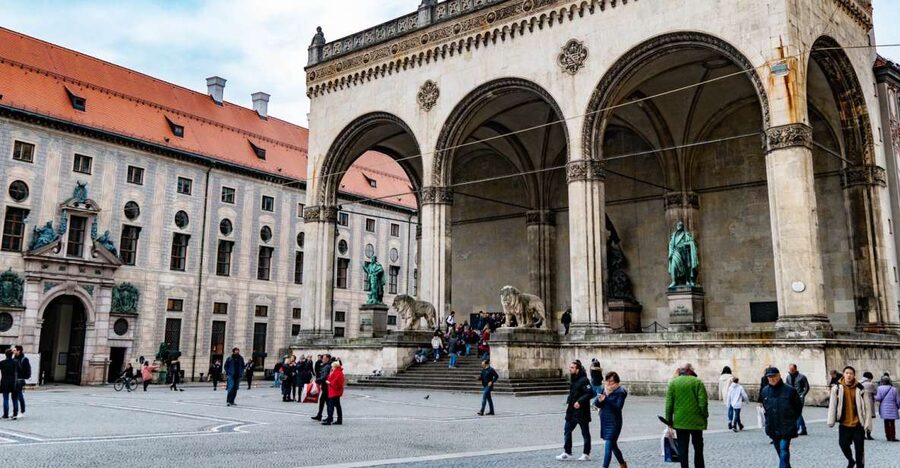
Odeonsplatz and the Beer Hall Putsch
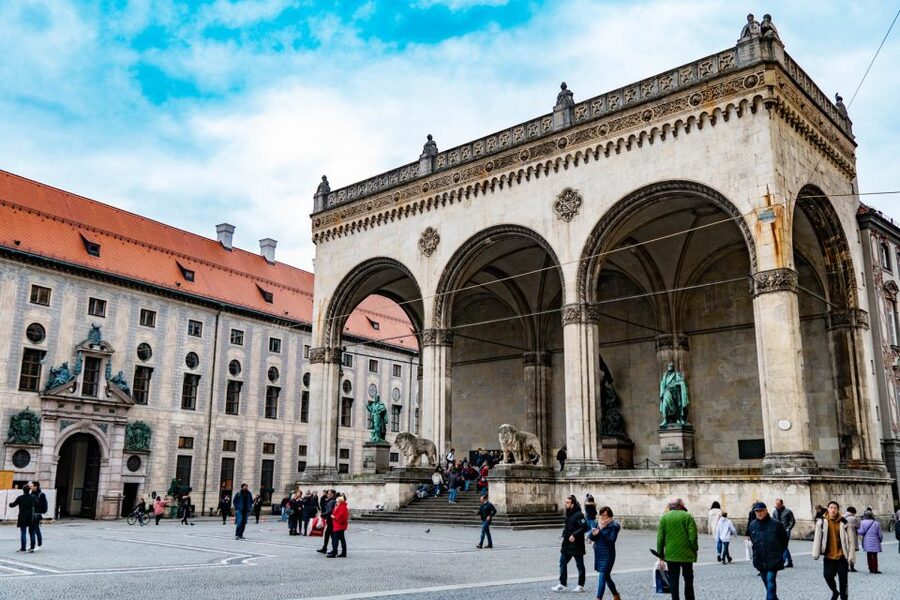
The route continues toward Odeonsplatz, one of the most important areas on the walk. This section covers Hitler’s putsch and the origins of the National Socialist German Workers’ Party.
The Beer Hall Putsch is one of the tour’s main subjects. Learning about it at the point where the story unfolded gives the event a stronger sense of place than a short paragraph in a guidebook. The guide can show how Munich’s political setting connected to the attempted seizure of power.
You should expect this portion to deal with political organizing, the early Nazi movement, and the failed putsch. The subject is serious, and the value comes from hearing the sequence explained in relation to the streets and buildings around you.
The tour does not treat Hitler’s rise as an isolated personal story. It places him within the development of a political movement in Munich. That distinction is important. You leave with a clearer idea of how the Nazi Party began and why the city became central to its identity.
The Hofbräuhaus and Munich’s political past
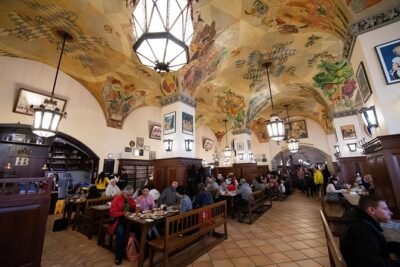
The Hofbräuhaus is another major stop. It is famous today for beer, food, and traditional Bavarian atmosphere, but this tour uses it to explain the political history connected with Hitler’s putsch and the early Nazi Party.
That contrast is exactly why the stop works. A place that many people visit for a cheerful evening meal also carries a darker political past. The guide’s job here is to make that connection clear without letting the modern restaurant setting turn the subject into a curiosity.
You will not be getting a food tour. Food and drinks are not included, and the experience is built around the historical walk. If you want to visit the Hofbräuhaus for a meal, plan that separately rather than expecting time for dining during the tour.
I would keep your attention on the historical explanation at this stop. The point is not simply that Hitler once appeared in a well-known beer hall. The important issue is how Munich’s beer hall culture and political meetings formed part of the story of the Nazi movement.
More walks through the old town:
- Munich: Old Town & Viktualienmarkt City Walk in German
★ 4.7 · 2,304 reviews - Munich: Night Watchman Walking Tour
★ 4.7 · 2,092 reviews - Munich Ghosts and Spirits Evening Walking Tour
★ 5.0 · 1,900 reviews - Munich Old Town Walking Tour
★ 4.5 · 1,287 reviews
Haus der Kunst and the banning of art
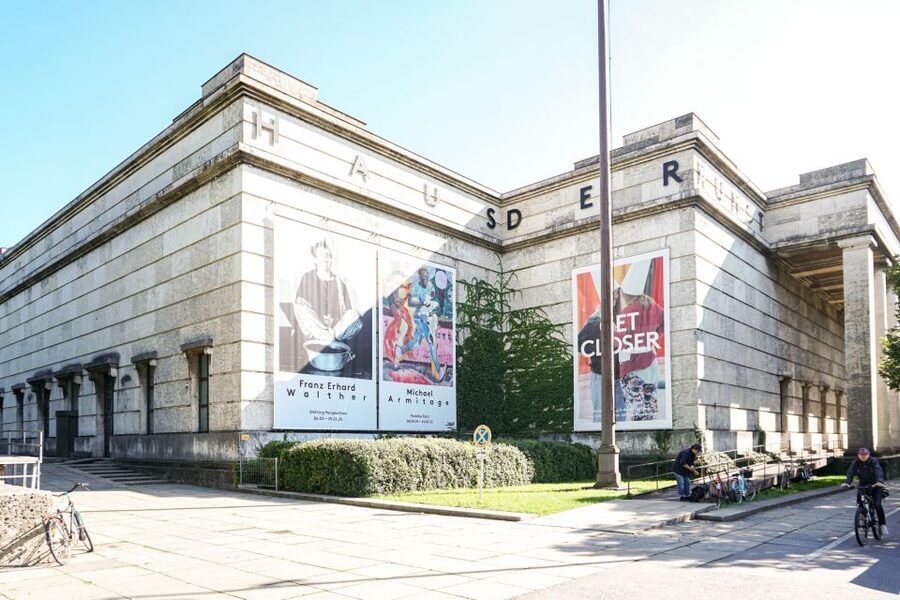
The next important section takes you to the front of Haus der Kunst. The tour identifies it as the first propaganda building in Nazi Germany, making it one of the clearest places to discuss the regime’s influence on art.
This is one of the strongest parts of the route for anyone who wants more than a political biography. Nazi rule was not limited to speeches, party organization, and military policy. It also tried to control culture and decide which forms of art were acceptable.
At Haus der Kunst, the guide explains the regime’s influence on art and the banning of what it called degenerate art. You gain a useful second angle on the period: the Nazis were trying to shape public ideas not only through politics, but also through official cultural policy.
The stop is viewed from the front of the building, so you should not expect a museum visit or an interior tour as part of the activity. That is a limitation, but it also keeps the walk focused and moving. You get the building’s place in the Nazi story without turning the outing into a general art museum visit.
German Resistance: Georg Elser and the White Rose
A major strength of this experience is its attention to resistance. The tour includes Georg Elser and the White Rose, giving you a chance to learn about people who opposed the Nazi regime rather than hearing only about its leaders and institutions.
That balance is important. A tour about Hitler and the Nazi Party can easily become too centered on the people who held power. Bringing in resistance figures shows that opposition existed, even under a brutal dictatorship, and that Munich also played a part in those efforts.
The inclusion of Georg Elser and the White Rose gives the route a more human scale. Instead of seeing only grand buildings and official events, you also hear about individuals and groups who acted against the regime.
The supplied information does not give a separate building or memorial for each resistance figure, so you should not book this expecting a dedicated museum visit. Their stories are part of the guided route and its historical explanation.
For me, this is the section that keeps the tour from becoming a simple march through Nazi landmarks. It recognizes the danger of reducing history to powerful men and official buildings. The resistance portion adds moral and personal context to the political story.
Führerbau and the 1938 Munich Agreement
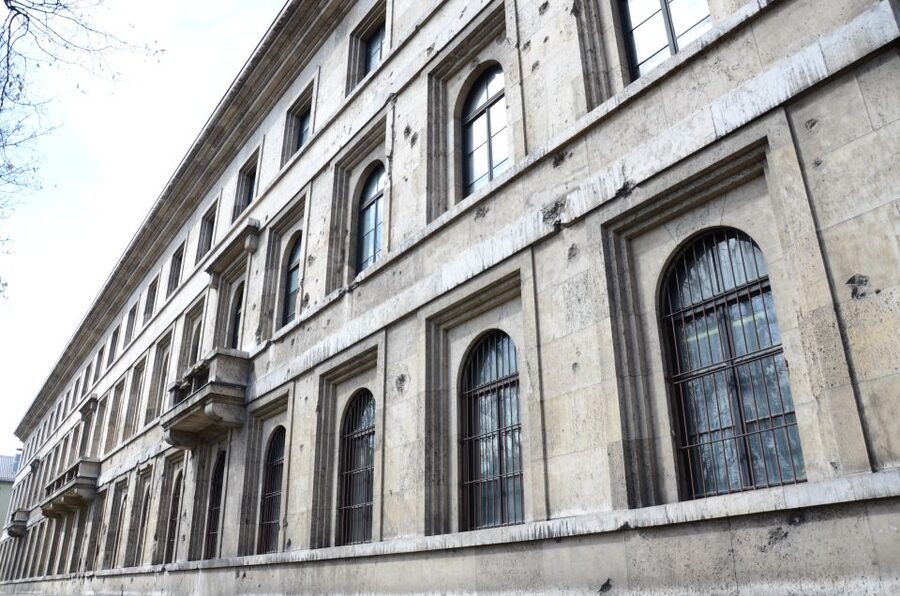
The route then reaches Führerbau, where the Munich Agreement was signed in 1938. This stop connects Munich’s local Nazi history to a major European political event.
The building is significant because it represents the regime at the level of international diplomacy. Earlier stops focus on party origins, political organizing, and cultural control. Here, the story moves toward the use of power on an international stage.
A guide can help you understand why the building matters without requiring you to arrive with a large amount of background reading. The tour is designed to explain the events as you go, which is particularly useful if you know the main names but not the exact locations.
Führerbau also helps give the walk a sense of progression. You begin with the early Nazi movement in Munich, examine the regime’s ideas and methods, hear about resistance, and then reach a site tied to the 1938 agreement. The stops are not random. They form a route through different stages of the period.
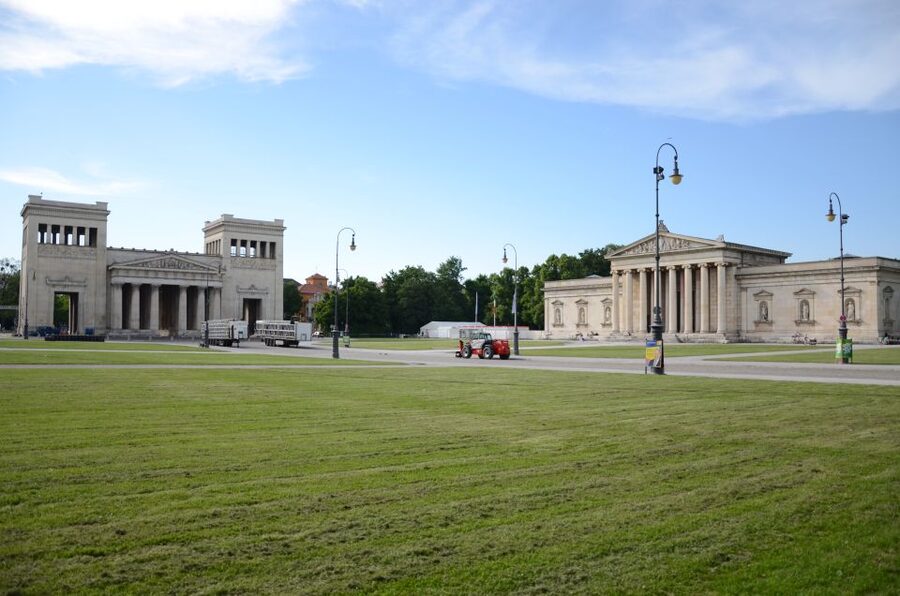
Finishing at Königsplatz
The tour concludes at Königsplatz, one of the main historical areas associated with the route. By this point, you have covered the origins of the Nazi movement, the Beer Hall Putsch, Nazi propaganda and art policy, resistance, and the Munich Agreement.
Königsplatz gives the walk a strong closing point because it brings together the public and political character of the tour. You have moved through places tied to meetings, propaganda, resistance, and international decisions.
The activity details also state that the experience ends back at the meeting point. Since the route description specifically names Königsplatz as the conclusion, check the final meeting arrangement if you have a tight schedule afterward. This is a small planning point, but it is worth knowing before you commit to another activity.
The walk lasts 2.5 hours, so you should wear comfortable shoes. There is no food or drink included, and the tour is long enough that you may want to eat before or after it rather than count on a break.
What the $23 price gets you
At $23 per person, this is a reasonably priced guided history walk. The fee covers the guide and the walking tour, not admissions, meals, or drinks.
The value depends on how you like to learn. If you are comfortable reading about Munich’s Nazi past on your own and locating the sites with a map, you may prefer an independent walk. But if you want the political events explained as you move from one place to the next, the price is fair.
A guided walk also saves you from having to build the route yourself. The stops cover several connected subjects, and the guide keeps them within a single 2.5-hour story. That structure is likely to be the main benefit for most people.
The experience has a rating of 4.9 from 34 reviews, and the strongest praise centers on two things: a large amount of important historical information and a well-paced route. That combination matters. Historical tours can overload you with dates, or they can rush through difficult material. Here, the available feedback points to a tour that gives you plenty to absorb without losing its rhythm.
No guide name is provided, so you cannot request a particular guide based on the available information. The guide is Spanish-speaking, and the activity is not open to people who do not speak Spanish.
Who should book this tour
I would recommend it to you if you want a focused introduction to Munich’s Nazi past and prefer learning through places rather than a long museum visit. It suits adults and children aged 13 or older who can manage 2.5 hours of walking and serious historical discussion.
It is also a good choice if you are especially interested in:
- Hitler’s political beginnings in Munich
- The Beer Hall Putsch
- The early National Socialist German Workers’ Party
- Nazi control of art and propaganda
- Georg Elser and the White Rose
- The 1938 Munich Agreement
You should skip it if you do not speak Spanish, want a general city tour, or are looking for food and drink experiences. Children under 13 are not allowed, and the subject matter is not designed as light sightseeing.
The tour requires at least four participants to operate. If that minimum is not reached, the local partner will contact you and offer an alternative. You can cancel up to 24 hours before the start for a full refund, and the reserve-now, pay-later option gives you some flexibility while finalizing your plans.
Should you book the Munich Third Reich walking tour?
Book this tour if you want a clearly organized Spanish-language history walk that ties Munich’s streets to the rise of Hitler, the Nazi Party, the Beer Hall Putsch, Nazi art policy, resistance, and the Munich Agreement.
The best reasons to choose it are the modest $23 price, the well-paced 2.5-hour format, and the attention given to the German Resistance. The main reasons to think twice are the Spanish-only format, the serious subject matter, the walking requirement, and the minimum of four participants.
If those conditions work for you, this is a practical way to understand why Munich occupies such an important place in the story of the Third Reich. You will not simply see famous buildings. You will learn what happened there and why each stop matters.
FAQ
Where does the tour begin?
Meet the Spanish-speaking guide in front of the Tourist Information Office at Marienplatz.
Where does the tour end?
The activity information says it ends back at the meeting point. The route description says the historical walk concludes at Königsplatz, so confirm the exact final arrangement if you have plans immediately afterward.
How long does the walking tour last?
The tour lasts 2.5 hours.
What language is the tour conducted in?
The tour is conducted in Spanish. It is not open to people who do not speak Spanish.
How much does the tour cost?
The price is $23 per person.
Are food and drinks included?
No. Food and drinks are not included.
What should I bring?
Bring comfortable shoes for the walking route.
Can children join the tour?
Children under 13 are not allowed to participate.
What happens if fewer than four people book?
The tour requires a minimum of four participants. If that minimum is not met, the local partner will contact you and offer an alternative.
Recently reviewed in Munich
- München: Vegetarische Viktualienmarkt-Probiertour Deutsch★ 4.8 · 6 reviews
- Wright Europe Vacations – Private Escorted Auto Tours★ 5.0 · 35 reviews
- Best of Munich Electric Bike Tour★ 5.0 · 38 reviews
- Munich Walking Quiz: Explore and Discover the City’s Highlights★ 5.0 · 7 reviews
- Walking Tour on Resistance to Nazism in Munich★ 5.0 · 8 reviews
- Private Transfer from Munich to Vienna with 2 hours for sightseeing★ 4.5 · 6 reviews
- Private Transfer from Munich to Salzburg with 2 hours for sightseeing★ 4.5 · 13 reviews
- 2 hour Sights Guided E-Scooter Tour in Munich★ 4.0 · 6 reviews
Munich Third Reich & WWII Tours, compared.
Birthplace of the Third Reich Guided Walking Tour
Read our review →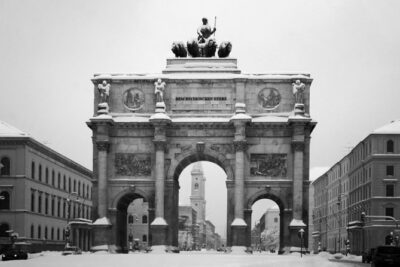
Munich World War II Sites Including Dachau Concentration Camp
Read our review →
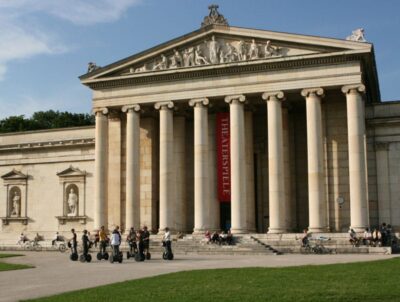
Munich 3-Hour Segway Tour: Nazi Munich & Royal Architecture
Read our review →
Dachau Concentration Camp Memorial Site And Third Reich Day Tour From Munich
Read our review →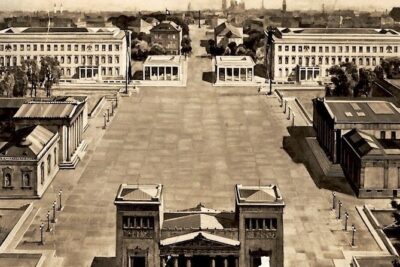
Browse the lists this tour appears in