
Reviewed · MUNICH GHOST & LEGEND TOURS
Munich: Raven Black Witches and Executioners Walking Tour
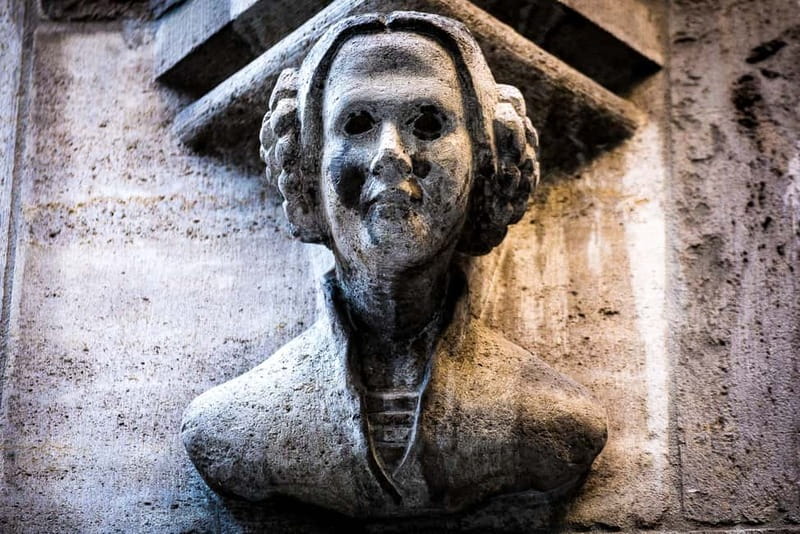
Munich’s old town looks polished today, but this 105-minute walk follows the places where fear, punishment, and death once shaped daily life. Starting at the Frauenkirche, you cross the Hackenviertel and Angers quarter toward Sendlinger Tor, hearing about witches, executioners, gravediggers, ravens, and other people pushed to the edge of society.
I like the focused route through the southern old town, which gives the stories a real setting instead of treating Munich’s dark past as a string of disconnected tales. I also like the German guides’ personal touch. Dhruv, one guide named in the feedback, was praised for clear explanations and patient answers.
The main thing to consider is language. This is a German-language tour, even though the booking information is available in English. Some guides speak English and may help with questions, but you should understand enough German to follow the stories comfortably.
Key points at a glance
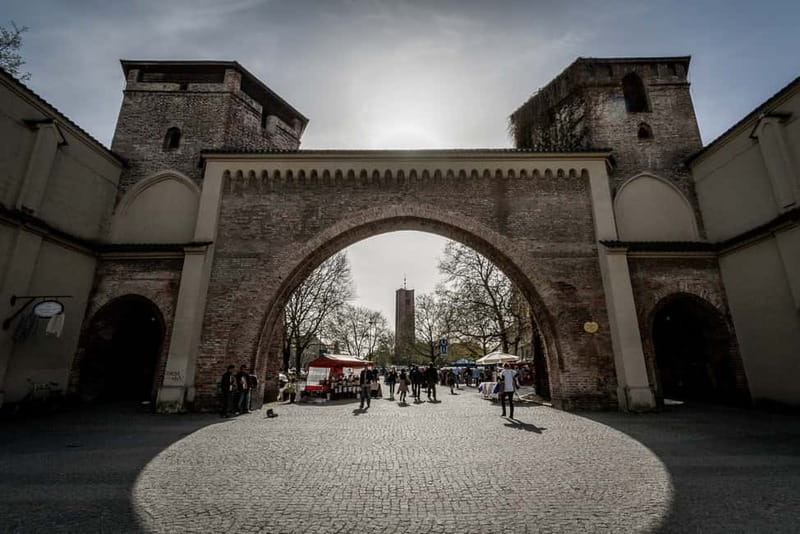
- A walk through Munich’s darker past: Follow a route from Frauenkirche to Sendlinger Tor through the Hackenviertel and Angers quarter.
- Stories of society’s outsiders: Hear about witches, executioners, gravediggers, whores, sorcerers, and other condemned figures.
- A tour with a clear setting: Learn where the gravedigger carried his spade, where ravens circled, and where executioners used their hatchets.
- German-language guiding: Guides speak German, with some ability to assist English-speaking participants.
- A manageable city-center outing: The tour lasts about 1 hour and 45 minutes and finishes where it begins.
- Best for older visitors: Children under 14 are not permitted, and the subject matter is plainly dark.
Starting beneath the Frauenkirche towers
Meet your guide in front of the main entrance to the Frauenkirche on Frauenplatz, between the cathedral’s two towers. This is a practical meeting point in the heart of Munich, easy to identify once you are in the square.
The location also sets the mood. The Frauenkirche is one of Munich’s most familiar landmarks, yet the tour quickly shifts your attention from grand architecture to the less respectable stories once found nearby. You begin in a place associated with the city’s public identity, then move into streets connected with punishment, fear, and social exclusion.
Give yourself time to reach the meeting point. Frauenplatz is central, but the old town can be busy with pedestrians, shops, and other sightseeing groups. The tour returns to this same location at the end, so you do not need to plan a separate pickup or find your way back across town.
The meeting point is also useful if you are building a day around Munich’s center. You can visit the Frauenkirche before the walk, or continue sightseeing afterward without needing public transport. The activity itself does not include transportation because the route is entirely on foot.
More ghost and legend walks in Munich:
- Munich Ghosts and Spirits Evening Walking Tour
★ 5.0 · 1,900 reviews - Munich: Spooky Tour of Old Town in German
★ 4.6 · 1,112 reviews - Mystic Munich – Sagas and Legends of the Old Town
★ 4.8 · 208 reviews
The southern old town and the Hackenviertel
The walk crosses the southern old town, including the Hackenviertel and the Angers quarter. These districts matter because the tour uses the streets themselves as part of the story. You are not simply hearing a lecture about medieval wrongdoing. You are moving through the areas where the city’s less honored work once took place.
The route criss-crosses the Hackenviertel before continuing toward Sendlinger Tor. Along the way, the guide introduces the people who performed jobs that respectable citizens needed but did not want to discuss too openly. Executioners, gravediggers, and other workers connected with death often lived apart from ordinary society.
That is one of the tour’s more useful ideas. Medieval cities needed people to punish criminals, bury the dead, and deal with the unpleasant tasks of public life. Yet those same workers could be treated as unclean or dangerous. The walk uses their stories to show how a city functioned behind its official churches, markets, and civic buildings.
You will also hear about people accused of witchcraft and sorcery, along with other figures associated with sin and scandal. The material includes stories of whores and a wider rogue rabble whose activities were said to make the streets unsafe after respectable citizens had gone home.
The tone is dark, but the route is not described as a haunted-house attraction. Its appeal comes from seeing how old beliefs, fear of crime, and public punishment affected ordinary urban life.
Where gravediggers and ravens belonged
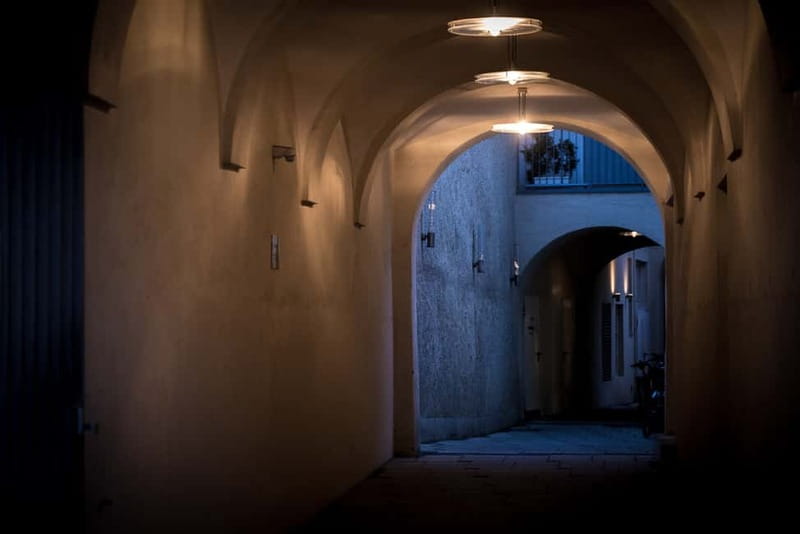
One of the most memorable details is the attention given to specific work and symbols. The guide points out where the gravedigger shouldered his spade, where ravens were said to circle, and where executioners handled their hatchets.
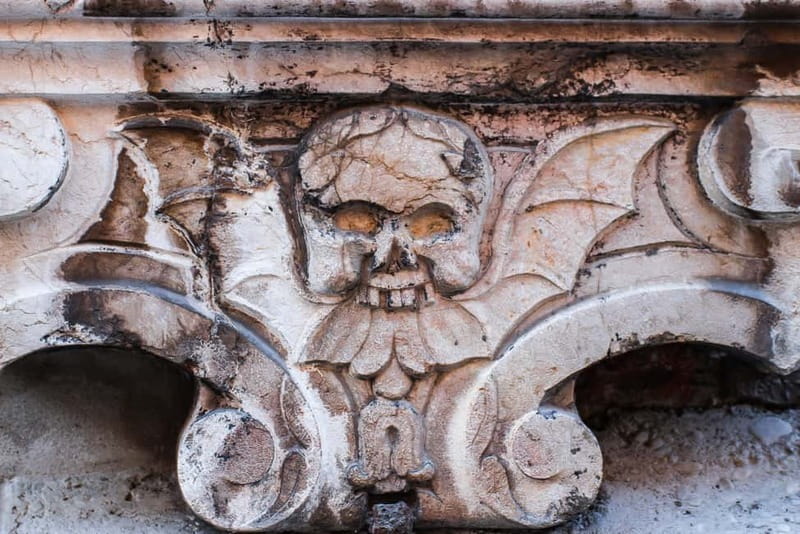
These details give the walk a physical shape. Instead of hearing only broad statements about medieval death, you get images tied to particular corners and streets. A spade, a raven, and an executioner’s tool become reminders of how close death was to daily life.
The raven imagery adds a grim layer to the tour, but the guide’s job is not simply to frighten you. The stories help explain why certain places gained a sinister reputation. A street could become feared because of the work carried out there, the people who lived nearby, or an event remembered long after its facts had faded.
That blend of documented city history and legend is important to understand before booking. The title promises witches and executioners, and the experience does feature those figures. It also includes mysterious and cursed places, so you should expect folklore and old tales alongside information about medieval occupations and punishment.
Meeting Munich’s condemned figures
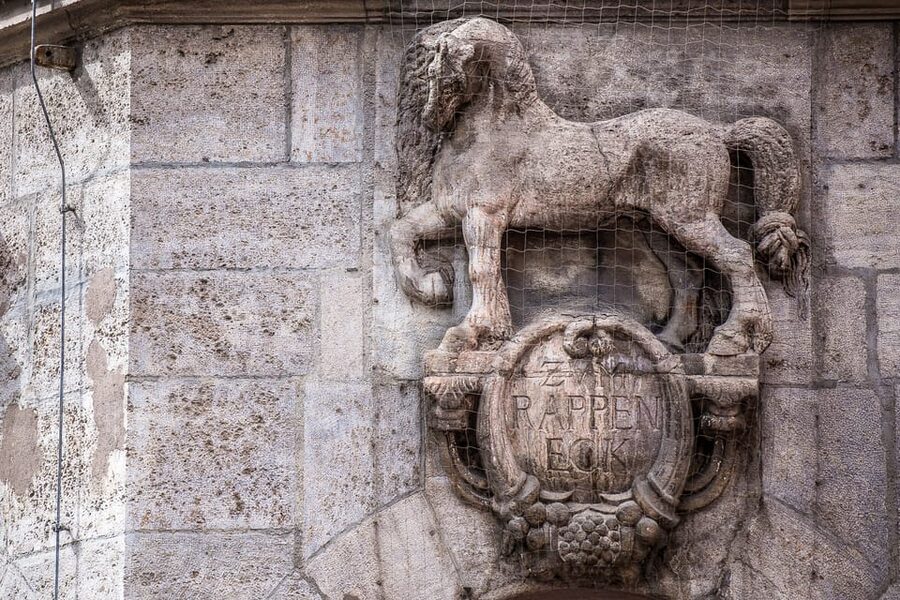
The central characters are the people who lived and worked on society’s fringes. You meet the hangman, the witch, the gravedigger, the sorcerer, and other figures associated with death or dishonesty.
Executioners are especially interesting because their role was both official and rejected. A city required someone to carry out sentences, but that person could still be viewed with suspicion. The tour uses this contradiction to show the uncomfortable gap between public necessity and private shame.
The stories of witches and sorcerers offer a different kind of warning. They reflect fear of magic, unexplained events, and people who did not fit accepted social roles. The tour’s title may attract you with its spooky subject, but the bigger value comes from seeing how communities labeled certain people as dangerous.
The inclusion of whores and other dishonest occupations widens the subject beyond punishment. You get a picture of a city where moral rules, public order, and survival often collided. The guide talks about the figures who were blamed for disorder and about the people who appeared when good citizens retired for the night.
I would not book this expecting a light stroll with a few amusing ghost stories. The material is suited to an older audience and carries a clear focus on crime, death, fear, and social judgment. That is also why the minimum age is 14.
More walks through the old town:
- Munich: Third Reich & WWII Walking Tour
★ 4.6 · 6,181 reviews - Third Reich Walking Tour Munich
★ 4.5 · 4,291 reviews - Munich: Old Town & Viktualienmarkt City Walk in German
★ 4.7 · 2,304 reviews - Munich: Night Watchman Walking Tour
★ 4.7 · 2,092 reviews
Cursed places and scary events

The tour includes places described as cursed, along with scary events connected to them. The guide’s storytelling is important here. The streets may look ordinary now, so the explanation gives them a second identity tied to older fears.
This is a good format if you enjoy seeing familiar city spaces in a new way. A daytime walk through Munich can easily become a parade of churches, palaces, and shopping streets. This route asks you to look at the same center through the experiences of people who were punished, feared, or ignored.
You should keep your expectations measured. The supplied details do not promise theatrical actors, costumes, special effects, or access to underground sites. This is a guided walking tour, so the atmosphere comes from the route, the subject, and the guide’s delivery.
That can be an advantage. You are not being distracted by a performance. You can listen, ask questions, and notice how the modern city sits on top of older stories. Guides such as Dhruv have been praised for answering questions, which matters on a subject that can prompt plenty of them.
A German tour with some language flexibility
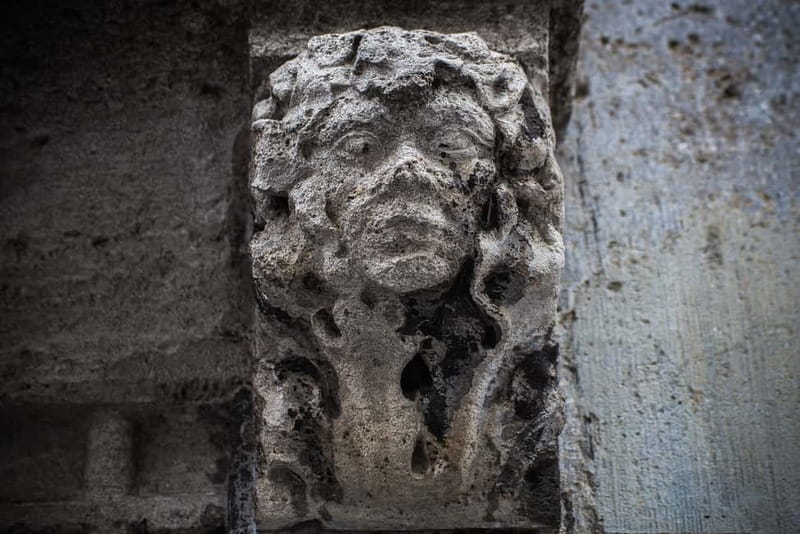
The live tour is conducted in German. This is the most important practical detail in the whole booking decision.
English-language booking information does not mean the tour itself is in English. The activity details clearly identify German as the tour language. If you speak German, you can expect the experience to work as intended. If you speak only English, you may still manage some of it, but your experience will depend on the guide and on how much German you understand.
There is some encouraging flexibility. Dhruv was described as speaking English and helping with the language challenge, and another guide was praised for speaking clear German that was easy to understand even for people whose first language was not German. Still, English assistance is not the same as an English-language tour.
I would contact the provider before booking if language is a serious concern. You can also ask at the start whether the guide can clarify key points in English. Do not assume that every departure will offer the same help or that the tour will switch languages for the whole group.
This language issue explains the mixed practical value for English speakers. At $25 per person, the price is reasonable for a nearly two-hour guided walk in central Munich, especially if you understand German. For someone who catches only a few words, however, even a low price may not be good value.
Timing, comfort, and access
The tour takes about 105 minutes, or 1 hour and 45 minutes. That is long enough to cover several neighborhoods and themes without taking over your entire day.
I would place it after a general orientation to Munich, not before an early-morning appointment. The route begins in the old town and ends at the same point, so it fits neatly between other central sights. Check the available start times when booking, since the exact departure schedule is not fixed in the basic details.
This is a walking activity, but it is listed as wheelchair accessible. That is useful information for planning, though old-town walking routes can still involve changes in pavement and crowded areas. If you need precise details about surfaces or group movement, ask the provider before you go.
There is no stated group-size limit in the information provided. You should therefore avoid assuming a private or very small group. The experience does include a small gift, which is a pleasant extra but not a reason to choose the tour on its own.
The activity allows free cancellation up to 24 hours before the start, and you can reserve without paying immediately. Those terms make it easier to fit the walk into a changing Munich itinerary.
Who will get the most from this walk
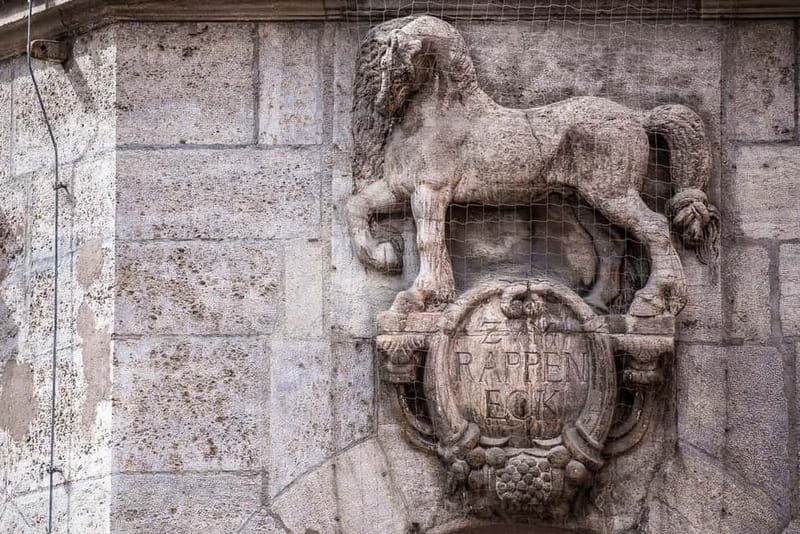
I would recommend this experience to you if you like city history with a grim edge, enjoy local legends, or want a break from Munich’s grander sights. It works especially well for people who want to understand the social rules behind old cities, not just photograph their churches and squares.
It is also a good choice if you have already seen some of central Munich and want a different theme. The route does not take you far from the familiar center, but it changes what you notice. The same streets become connected with punishment, burial, fear, and rumor.
You should think twice if you want a tour in English, dislike stories about execution and death, or prefer a relaxed sightseeing walk with no disturbing subject matter. Families with younger children cannot book it because children under 14 are not permitted.
German speakers receive the clearest value. Non-German speakers may still enjoy the physical route and occasional English help, but they should treat that as a possibility rather than a promise. The strongest praise has focused on guides who explain clearly, answer questions, and handle language challenges with patience.
Is the $25 price fair?

At $25, the tour is priced in the range of a modest city walking experience. The value depends less on a major attraction ticket and more on the guide’s storytelling.
You are paying for a route, a local guide, a structured look at several old-town districts, and nearly two hours of interpretation. There is no separate entrance attraction listed, so the experience is best judged as a guided history walk rather than as a package of admissions.
For German speakers, I think the price is fair. The subject is specific, the route is convenient, and the tour gives you a focused way to see the old town. The small gift is a nice touch, but the real value comes from connecting ordinary streets with the city’s darker stories.
For English-only participants, the calculation is less certain. The price remains modest, but a language barrier can reduce what you take away. Ask about English support before reserving, especially if this will be one of your few paid activities in Munich.
Should you book the Raven Black Witches and Executioners tour?
Book it if you want Munich beyond the postcard, speak German or can comfortably follow a German guide, and enjoy stories about witches, executioners, gravediggers, and the city’s condemned outsiders.
The walk earns its place through its specific route and sharp subject. It shows you where the city’s darker work belonged and explains why certain people were feared or rejected. Guides such as Dhruv have also shown that a clear, patient approach can make the material easier to follow.
Skip it if you need a guaranteed English tour, are traveling with children under 14, or want a gentle introduction to Munich. For the right audience, $25 buys a memorable change of viewpoint. For everyone else, confirm the language first.
FAQ
Where does the tour start?
It starts in front of the main entrance to the Frauenkirche on Frauenplatz, between the two towers.
Where does the tour finish?
The tour ends back at the meeting point in front of the Frauenkirche.
How long does the walking tour last?
The tour lasts approximately 105 minutes, or 1 hour and 45 minutes.
What language is the tour conducted in?
The live tour guide speaks German.
Can English speakers take the tour?
English speakers can take the tour, but the official tour language is German. Some guides speak English and may help with questions or language difficulties, but a full English tour is not promised.
What subjects does the tour cover?
It covers witches, sorcerers, executioners, gravediggers, whores, ravens, cursed places, scary events, and other people associated with dishonest or feared work in medieval Munich.
Is the tour suitable for children?
No. The activity is not suitable for children under 14 years old.
Is the tour wheelchair accessible?
Yes, the activity is listed as wheelchair accessible.
Can I cancel the booking?
Yes. You can cancel up to 24 hours in advance for a full refund. You can also reserve now and pay later.
Recently reviewed in Munich
- München: Vegetarische Viktualienmarkt-Probiertour Deutsch★ 4.8 · 6 reviews
- Wright Europe Vacations – Private Escorted Auto Tours★ 5.0 · 35 reviews
- Best of Munich Electric Bike Tour★ 5.0 · 38 reviews
- Munich Walking Quiz: Explore and Discover the City’s Highlights★ 5.0 · 7 reviews
- Walking Tour on Resistance to Nazism in Munich★ 5.0 · 8 reviews
- Private Transfer from Munich to Salzburg with 2 hours for sightseeing★ 4.5 · 13 reviews
- Private Transfer from Munich to Vienna with 2 hours for sightseeing★ 4.5 · 6 reviews
- From Munich: Neuschwanstein Castle and Linderhof Private Tour★ 5.0 · 13 reviews
Munich Ghost & Legend Tours, compared.

Mystic Munich – Sagas and Legends of the Old Town
Read our review →
Ghosts of Munich: The Haunted Apprentice Exploration Game
Read our review →
Browse the lists this tour appears in