
Reviewed · MUNICH GHOST & LEGEND TOURS
Munich Macabre Group Walking Tour
Munich’s old town looks polished today, but this walking tour reveals the grim stories beneath its churches, markets, and royal buildings. Archaeologist and historian Taff Simon leads you through plague, witch trials, murder, burial customs, and medieval prejudice, using artifacts and props rather than a memorized speech.
I like the hands-on approach, especially handling ancient coins, pottery, replica swords, and bits of armor. I also like the way the tour connects the past to later events, including the Pappenheimer witch trial and its link to the Salem witch trials. The main consideration is the subject matter: some stories and archaeological images are genuinely unsettling, and the uneven old-town route requires comfortable shoes.
Key points
- Ancient objects in your hands: Examine original coins and pottery, not only photographs behind glass.
- A guide with field experience: Taff Simon draws on his work as an archaeologist and forensic archaeologist.
- Seven compact old-town stops: The route begins and ends at the Fischbrunnen in Marienplatz.
- Dark history with humor: Expect serious subjects, theatrical storytelling, and some deliberately bad jokes.
- A taste of medieval brewing: Sample historic beer while learning why brewing mattered in Munich.
- Small English-speaking group: The tour accepts a maximum of 15 people and lasts about two and a half hours.
Why this Munich tour feels different
I’ve taken plenty of city walks that point out a church, a palace, and a market square, then move on. This one asks you to look more closely at the objects and stories that shaped everyday life: who was allowed inside the city, how the dead were treated, why beer mattered, and how accusations could destroy an entire family.
The tour is called macabre for good reason, but it is not simply a parade of gruesome tales. You’ll hear about antisemitism, the Black Death, witch trials, medieval punishments, murder, and battlefield practices. Taff also explains the social and economic forces behind these events, which gives the stories more weight than a collection of spooky anecdotes.
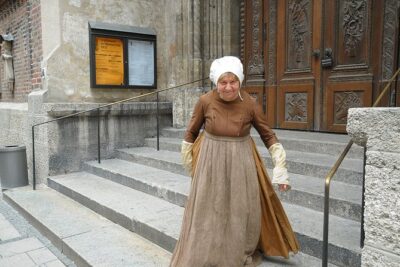
The format suits people who want history to feel physical. A coin passed around a group can prompt questions about alms, trade, and belief. A fragment of pottery can lead to a discussion of how archaeologists read broken objects. Replica weapons make medieval combat easier to picture, while the guide’s period costume adds a theatrical touch without replacing the historical content.
The tone changes depending on the group. With adults, the humor may be fairly dry or dark. With families, Taff can soften the more graphic descriptions. The tour has worked well for teenagers, but very young children may find parts of it too intense.
More ghost and legend walks in Munich:
- Munich Ghosts and Spirits Evening Walking Tour
★ 5.0 · 1,900 reviews - Munich: Spooky Tour of Old Town in German
★ 4.6 · 1,112 reviews - Munich: Raven Black Witches and Executioners Walking Tour
★ 4.7 · 294 reviews
Starting at Marienplatz and reading the city
Meet at the Fischbrunnen in Marienplatz at 6 p.m. This is a practical starting point because the square is central, easy to reach by public transportation, and familiar to anyone staying in Munich’s old town.
The first 15 minutes provide a short introduction to Munich’s origins and the reasons the city looks as it does today. It is not a long lecture. You get the basic frame before moving into the darker material: how the old center developed, where power sat, and how public spaces once served very different purposes.
The tour finishes at the same fountain, so you do not need to arrange a pickup or figure out an unfamiliar end point after dark. Taff can also suggest nearby places to eat and drink at the end, which is useful if you want to continue the evening close to Marienplatz.
Landschaftstraße and Munich’s medieval Jewish quarter
Landschaftstraße may not look like an important sightseeing stop at first. That is part of its value. The tour uses this ordinary-looking stretch to explain the former medieval Jewish quarter and the role its community played in Munich’s commercial and cultural life.
You’ll also hear how Jewish residents were targeted by false accusations of blood libel, blamed for the spread of the Black Death, and associated with criminals and witches. These are difficult subjects, but the tour places them in the setting of medieval fear, rumor, and political pressure rather than treating them as isolated curiosities.
Recent archaeological work connected with a new U-Bahn project adds another layer. Construction can disturb buried evidence, and excavations sometimes reveal how a neighborhood was arranged or used. This stop helps you see archaeology as an active way of testing old accounts, not merely as the display of old objects.
Allow about 20 minutes here. Since this is an outdoor stop, the quality of the experience depends partly on being able to hear clearly beside city traffic and nearby activity.
St. Peter’s Church and the meaning of graves
At St. Peter’s, Munich’s oldest church, the focus turns to death, burial, social class, and religious belief. You’ll learn how to read symbols on gravestones and how markings can reveal a person’s trade, guild, or place in society.
The discussion moves from early Bavarian and medieval burial customs to later practices. Grave goods such as jewelry and weapons receive attention because they offer clues about belief, identity, and social structure. You may also handle original ancient coins that would once have been given as alms.
This is one of the most distinctive parts of the tour, but it needs a clear warning. Taff uses photographs from archaeological excavations, including work on construction sites, to show how earlier communities treated their dead. Some images may be disturbing, especially if you have a vivid imagination.
The stop lasts about 25 minutes. Seating may be available at some locations, but not everywhere on the route. If standing for long periods is difficult, mention it when booking so the route can be adjusted where possible.
More walks through the old town:
- Munich: Third Reich & WWII Walking Tour
★ 4.6 · 6,181 reviews - Third Reich Walking Tour Munich
★ 4.5 · 4,291 reviews - Munich: Old Town & Viktualienmarkt City Walk in German
★ 4.7 · 2,304 reviews - Munich: Night Watchman Walking Tour
★ 4.7 · 2,092 reviews
Viktualienmarkt, beer, and medieval punishment
Viktualienmarkt is now a pleasant food market with pretzels, cheese, produce, and a popular beer garden. The tour asks you to imagine a very different past, when this area could be associated with outcasts and harsh social penalties.
This is also where the beer portion comes in. You’ll sample an authentic medieval-style brew, or at least two historical examples when supplies permit. These are samples rather than full drinks, so you should not book the tour expecting a pub crawl.
The beer is not a gimmick tacked onto the end of a history walk. Munich’s brewing traditions are tied to regulation, trade, public health, and daily life. You’ll learn why beer mattered so much and hear about the penalties for producing poor beer or pretzels. If a specific historical beer is unavailable, a modern substitute may be used to illustrate the same brewing discussion.
The stop takes about 25 minutes. Anyone who cannot drink alcohol should be aware that alcoholic beverages are part of the advertised experience, although the information remains useful without tasting.
Alter Hof, royal crime, and medieval weapons
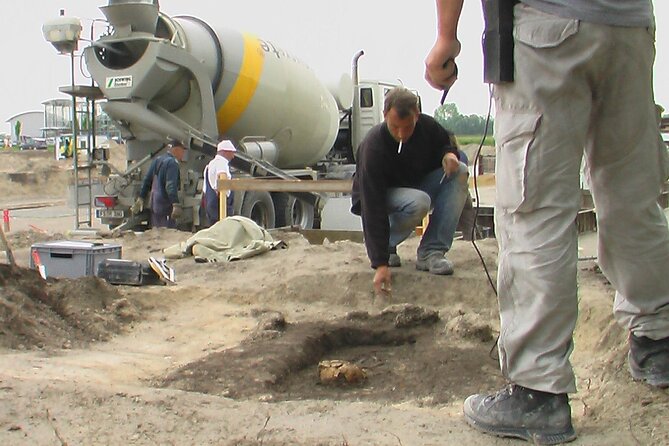
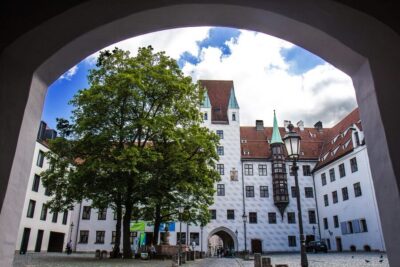
The Alter Hof was once a castle of the Wittelsbach family, Bavaria’s ruling house. Here the tour presents a murder that shocked medieval Europe and explains how its effects reached later generations of Munich residents.
That story leads into medieval combat. Taff draws on the theories of Hans Talhoffer, a late medieval sword master, while you handle replica swords and perhaps a piece of replica armor. This is a strong moment for visual learners. A discussion of medieval fighting can remain abstract until you see the balance and shape of a weapon in your hand.
If time allows, the stop also covers an archaeological discovery made in 1944. An Allied bomb accidentally exposed ancient artifacts, offering a reminder that modern destruction can sometimes uncover evidence from a much older past. You may compare different types of pottery and other objects.
This is the longest stop, at about 30 minutes, and it packs several themes together. The variety keeps the walk lively, though the pace may feel brisk if you want to linger over every story or object.
Old Town Hall and the Pappenheimer witch trial
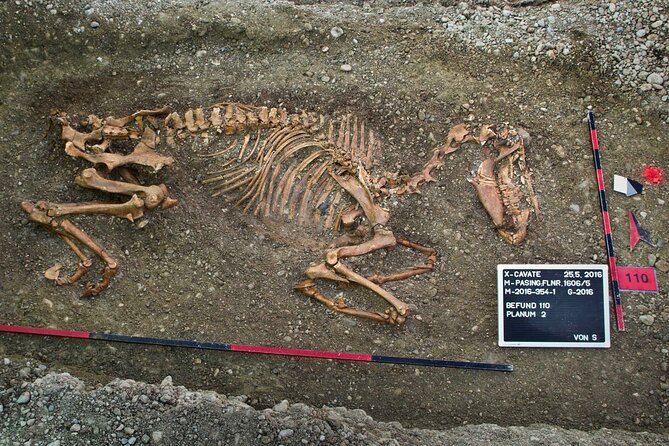
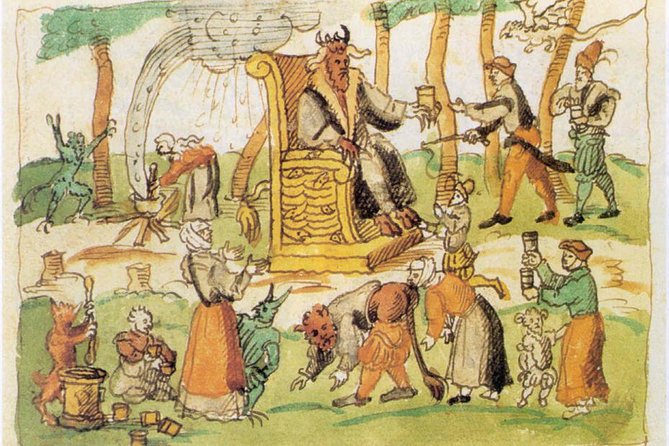
The Old Town Hall provides the tour’s most serious historical stop. A notorious witch trial was conducted here, involving the Pappenheimer family. You’ll learn about the accusations, the methods used to obtain evidence, and what happened to the family afterward.
The subject is not presented as harmless folklore. The trial shows how fear, authority, torture, and social prejudice could turn suspicion into an official case. It also demonstrates how local events could have consequences far beyond Munich, with connections reaching colonial Massachusetts and the later Salem witch trials.
Expect about 25 minutes here. The material may be too dark for young children, and even adults should know that the storytelling includes unpleasant details. Taff’s humor helps keep the tour from becoming oppressive, but he does not erase the seriousness of what happened.
The route then returns to Marienplatz for a short five-minute wrap-up. You can ask final questions, get reading suggestions, and receive ideas for food or drinks nearby.
Taff Simon’s guiding style
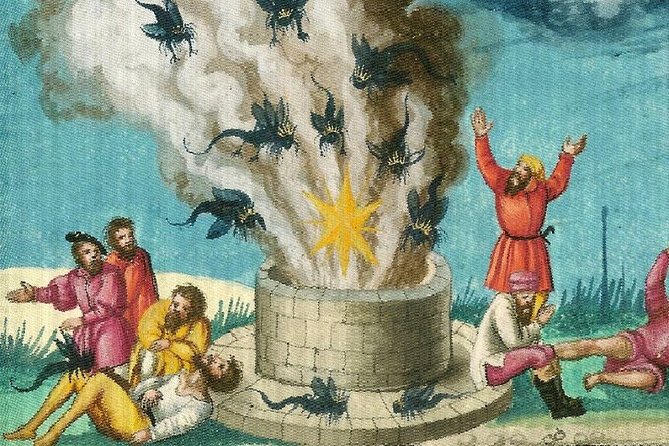
The guide is the central reason this experience works. Taff Simon is not simply reciting dates from a script. His archaeological background lets him explain how evidence is handled, interpreted, and sometimes challenged.
His approach is conversational and adaptable. Families have found that he can engage teenagers, while adults can ask detailed questions about archaeology, local history, or the meaning of an object. A group of only one person has also received a tour adjusted to personal interests, although the usual maximum is 15 people.
The costume is part of the presentation. It gives the tour a slightly theatrical look, but the historical explanation comes first. Taff uses humor, quick replies, and props to maintain attention, especially when the topic turns grim. If you prefer a silent, academic lecture, this may feel too playful. If you enjoy a guide who can explain serious subjects without sounding stiff, it is a good fit.
Price, pace, and practical value
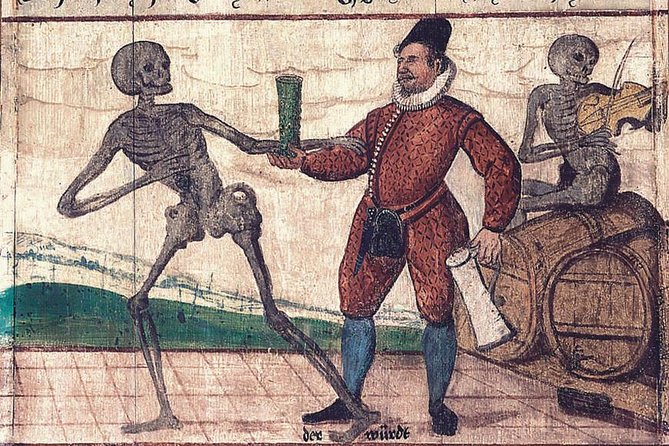
The price is $42.24 per person for roughly two hours and 30 minutes to two hours and 45 minutes. That is more than a basic orientation walk, but you are paying for a small-group experience led by a working archaeologist, plus access to original artifacts, replica weapons, and historical beer samples.
I think the cost makes the most sense if you value interpretation rather than simply seeing landmarks. The buildings and squares are free to enter from the outside, but the context, handling sessions, and connected stories are what turn them into a structured experience.
Wear sturdy, comfortable shoes. The route includes uneven surfaces, and you will be standing at several stops. Dress for local weather because the tour is outdoors. Bad weather or public events such as concerts, rallies, or protests can force a route change, though the guide aims to preserve the main historical themes.
The tour is offered only in English. Most people can participate, and service animals are allowed. If mobility or walking speed is an issue, contact the provider before the tour so the route can be adjusted where possible. A maximum of 15 people keeps the group manageable, though public seating cannot be guaranteed.
Free cancellation is available up to 24 hours before the 6 p.m. start time. The tour may also be rescheduled or refunded if poor weather or low numbers prevent it from running.
Who should book the Munich Macabre tour?
I would choose this for history fans, archaeology enthusiasts, curious teenagers, and anyone who has already seen Munich’s main sights and wants a less polished view of the old town. It also works well as an evening activity because you finish back at Marienplatz with restaurant and bar options close by.
Families should consider the ages and temperament of their children. Teenagers may enjoy the weapons, coins, beer history, and strange stories, while younger children may struggle with the burial images and witch-trial material.
I would skip it if you dislike dark subjects, alcohol tastings, theatrical guides, or walking on old and uneven streets. The tour is not designed as a gentle introduction to Munich. It is a focused look at fear, punishment, belief, and survival in the medieval city, delivered with humor and physical evidence.
If that sounds like your kind of evening, book it. The best reason is not the macabre label. It is the chance to handle the past and see how ordinary places in central Munich carry stories that a standard sightseeing route would miss.
FAQ
Where does the Munich Macabre Group Walking Tour begin and end?
It begins at the Fischbrunnen, Marienplatz 8, in Munich, at 6 p.m. The tour ends back at the same meeting point.
How long does the tour last?
The tour takes approximately two hours and 30 minutes to two hours and 45 minutes.
Is the tour offered in German?
No. This activity is offered only in English.
What can I handle during the tour?
You may handle original ancient coins and pottery, along with replica medieval swords and possibly replica armor.
Is beer included?
Yes. You receive samples of authentic medieval or historical beer. The samples are not full drinks, and supply issues may require a modern substitute that still supports the brewing discussion.
Is the tour suitable for children?
Some children and teenagers can enjoy it, but parts of the tour are not suitable for particularly young children. Burial images, murder, witch trials, and other graphic subjects are included, and the guide may adjust the level of detail for younger participants.
Recently reviewed in Munich
- München: Vegetarische Viktualienmarkt-Probiertour Deutsch★ 4.8 · 6 reviews
- Wright Europe Vacations – Private Escorted Auto Tours★ 5.0 · 35 reviews
- Best of Munich Electric Bike Tour★ 5.0 · 38 reviews
- Munich Walking Quiz: Explore and Discover the City’s Highlights★ 5.0 · 7 reviews
- Walking Tour on Resistance to Nazism in Munich★ 5.0 · 8 reviews
- Private Transfer from Munich to Salzburg with 2 hours for sightseeing★ 4.5 · 13 reviews
- Private Transfer from Munich to Vienna with 2 hours for sightseeing★ 4.5 · 6 reviews
- 2 hour Sights Guided E-Scooter Tour in Munich★ 4.0 · 6 reviews
Munich Ghost & Legend Tours, compared.
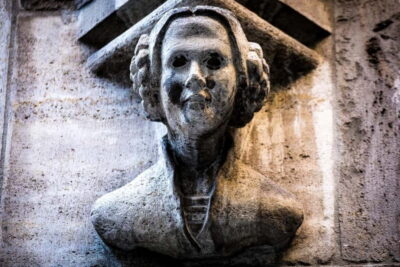
Raven Black Witches and Executioners Walking Tour
Read our review →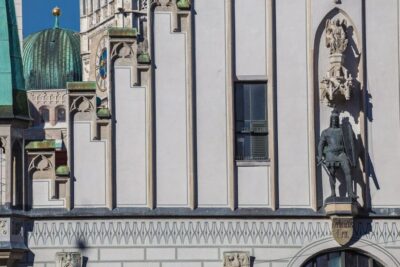
Mystic Munich – Sagas and Legends of the Old Town
Read our review →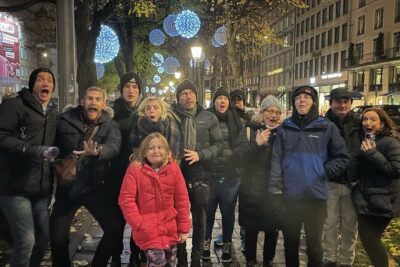
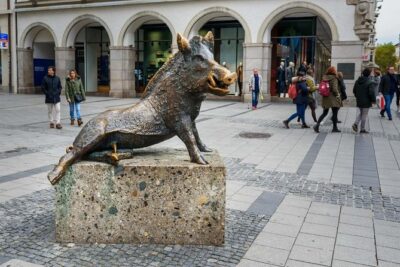
Ghosts of Munich: The Haunted Apprentice Exploration Game
Read our review →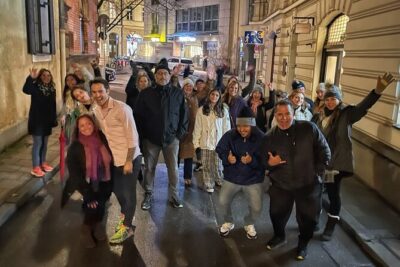
Browse the lists this tour appears in