
Reviewed · MUNICH MUSEUM TICKETS
Munich Private Walking Tour with the BMW Museum and BMW Welt
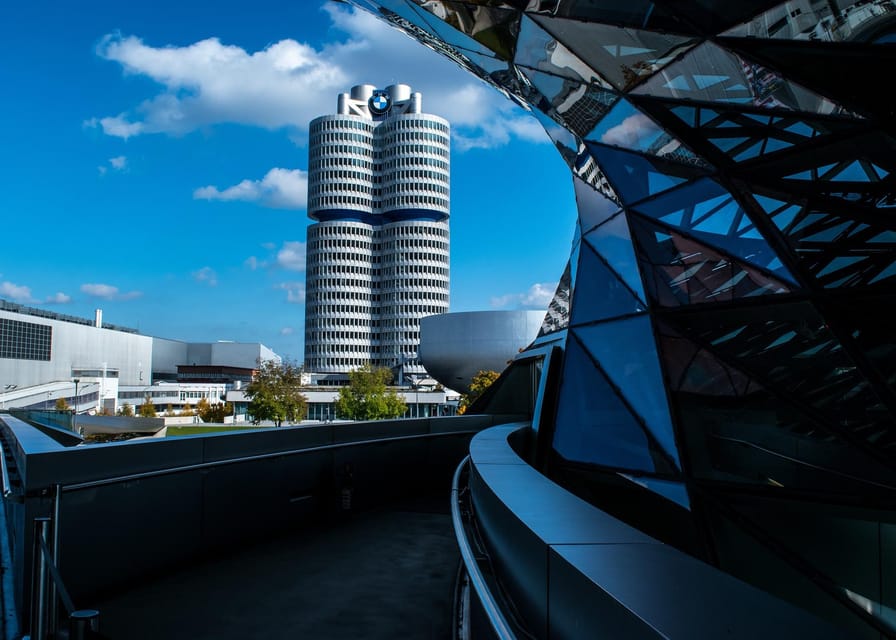
BMW’s story is the hook here: you begin with racing cars, motorcycles, engines, MINI, and Rolls-Royce before shifting to Munich’s kings, churches, beer halls, and dark 20th-century past. It is a useful pairing because the BMW visit gives you a polished look at modern engineering, while the old center supplies the human drama.
I like the private format, especially if your group wants to ask questions or set a comfortable pace. I also like the unusual historical mix: Ludwig I and Lola Montez, Ludwig II, Eva Braun, the White Rose, and Georg Elser all appear alongside Marienplatz and the Hofbräuhaus. The main catch is that four hours covers a lot, and you must pay separately for public transport, food, and drinks.
Key points
- BMW Museum and BMW Welt come first, with cars, motorcycles, engines, racing machines, MINIs, and Rolls-Royces.
- A private guide serves only your group, with English and German available.
- Munich’s history goes beyond postcard sights, including royal scandals, Hitler’s rise, resistance stories, and wartime memory.
- Public transportation connects the BMW visit with the old center, and its cost is not included.
- The tour ends at Hofbräuhaus, where you can experience Munich beer culture, though meals and drinks are extra.
- Claudio receives special praise, with one review noting his warmth and broad command of history and local information.
Why This Tour Works as a Munich Introduction
This is not a simple old-town stroll. It links two sides of Munich that can feel unrelated at first: BMW’s clean-lined world of engines and design, and the layered city center of royal ambition, church legends, political violence, and beer traditions.
That contrast is the tour’s best idea. You see Munich as both a modern industrial center and a city shaped by royal families, religious landmarks, political upheaval, and everyday drinking culture. I like tours that give you a wider frame than a list of famous buildings, and this one clearly aims to do that.
You meet at the Fish Fountain in front of Munich’s city hall on Marienplatz. From there, the experience begins with BMW Museum and BMW Welt, then returns to the central area by public transportation. The activity ends back at the same meeting point.
The four-hour length is efficient but ambitious. You get a broad introduction rather than a slow, detailed study of every stop. If you want a first look at several major themes, the pace should suit you. If you prefer long museum visits or extended time inside churches, you may find the schedule tight.
More museums and galleries in Munich:
- Munich: Law Library Guided Visit with Entry Tickets
★ 4.6 · 297 reviews - Munich: Deutsches Museum Entry Ticket
★ 4.7 · 189 reviews - SEA LIFE Munich Admission Ticket
★ 3.5 · 144 reviews
BMW Museum: Cars, Engines, and Racing Memory
The BMW Museum provides the main indoor visit and is included in the price. Its focus is BMW’s development through cars, motorcycles, and engines, with an emphasis on engineering, design, and motorsports.
You can expect displays that trace the company’s progress over about a century. The racing material gives the museum extra energy. Legendary racing cars show how BMW built its identity not only through road vehicles but also through competition and technical performance.
This section will appeal most to people who already enjoy cars, but you do not need to be a serious motor enthusiast to get something from it. The guide can help connect the machines to BMW’s larger story, including the craftsmanship and engineering choices behind the brand.
The museum is also a useful stop for families and mixed-interest groups. One person can focus on design, another on engines, and another on the social history of a famous German company. Since the museum entrance is covered, you do not have to decide on a separate museum ticket after arriving.
Still, keep your expectations in check. This is a BMW-focused museum, not a general survey of German transport or European industrial history. If BMW is not your interest, the museum portion may feel longer than the city walk.
BMW Welt: A Modern Counterpoint
BMW Welt offers a different experience from the museum. The museum looks back at the company’s development, while BMW Welt presents its current identity, future vision, and connection between technology and design.
The showroom includes MINI and Rolls-Royce displays, giving you more than one version of the BMW brand family to consider. MINI brings a small, playful design language, while Rolls-Royce represents a much more formal idea of luxury. Seeing them in the same setting helps explain the range of the company’s image.
I would pay attention here to the way the cars are presented, not just to the cars themselves. BMW Welt is about polished design, brand presentation, and the idea of mobility as technology. That makes it a sharp contrast with the historic center you visit later.
The practical issue is time. The museum and BMW Welt together could easily fill a half day for a dedicated car fan. On this tour, they form one part of a much wider program, so you should expect an overview rather than the chance to inspect every exhibit at length.
Moving From BMW to Munich’s Old Center
The tour uses public transportation to connect BMW with the historic center. The fare is not included, so budget for that separately. Since the exact transport details and ticket type are not supplied, ask your guide what you need on the day.
This transfer matters because the BMW site and Marienplatz area represent different parts of Munich. Rather than spending the full four hours in one district, you see how the city changes from modern corporate architecture to historic squares, churches, government buildings, and beer halls.
The tour begins and ends at the Fish Fountain near the city hall, which gives you a clear central reference point. It also makes the experience easier to fit into a day of sightseeing, since you finish where you started rather than at an unfamiliar outlying stop.
Same city, a very different afternoon:
- From Munich: Neuschwanstein & Linderhof Castle Full-Day Trip
★ 4.5 · 12,494 reviews - Neuschwanstein & Linderhof Castle-Fairytale Day Tour from Munich
★ 4.5 · 7,275 reviews - Munich: Third Reich & WWII Walking Tour
★ 4.6 · 6,181 reviews - Dachau Concentration Camp Memorial Site Tour from Munich by Train
★ 4.5 · 5,637 reviews
Marienplatz, the Town Halls, and the Glockenspiel
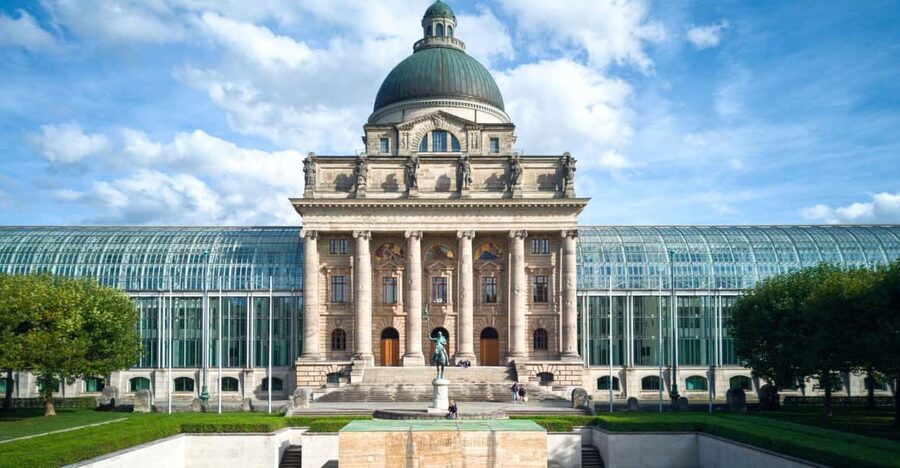
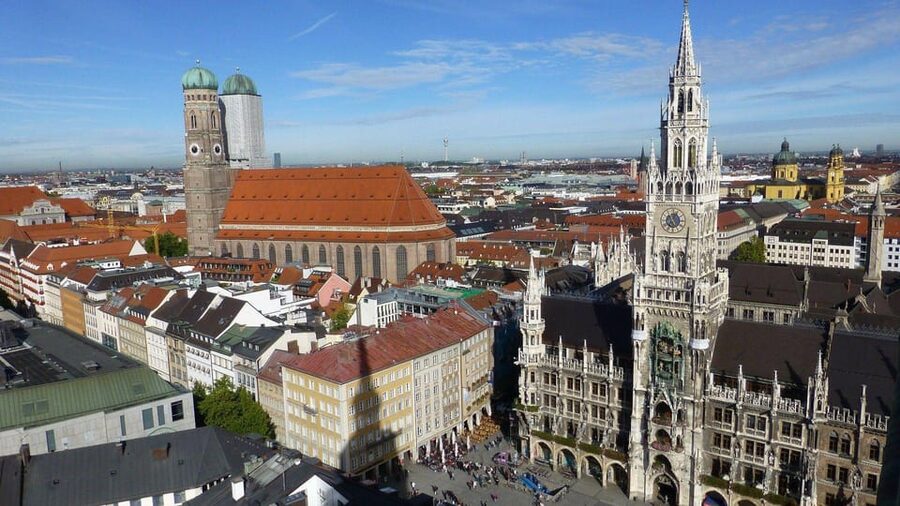
Marienplatz is Munich’s central stage. Here you see Mary’s Column, the Old Town Hall, the New Town Hall, and the famous Glockenspiel in the clock tower.
The square is more than a pretty place for photographs. It brings together Munich’s civic identity, religious tradition, and public ceremonies in one compact setting. A guide can help you read the buildings as parts of the city’s story instead of treating them as isolated façades.
The Glockenspiel is the obvious crowd-pleaser, but the town halls deserve your attention too. The Old Town Hall and New Town Hall reflect different periods of Munich’s civic development, and their contrast helps you see how the city changed over time.
Because the tour starts and finishes here, the square also functions as your orientation point. If you are new to Munich, that is useful. You leave knowing where the city’s central sights sit in relation to one another.
Royal Scandals: Ludwig I, Lola Montez, and Ludwig II
The tour adds color to Munich’s royal past through the story of King Ludwig I and Lola Montez. Their relationship is presented as a revolutionary love story, and it offers a more personal way into Bavarian political history.
Royal history can become a parade of names and dates. This story gives it conflict, emotion, and consequences. It also shows that Munich’s rulers were not distant symbols only. Their private decisions could affect public life and political stability.
You also hear about Ludwig II, often labeled the Mad King. The tour instead presents him as the Not So Mad King, encouraging a more careful view of a ruler whose reputation has been simplified over time.
That distinction is worthwhile. Munich’s royal story is not only about grand buildings and ceremonial power. It is also about how later generations interpret unusual personalities. If you enjoy history with human stories attached, this section should be one of the more memorable parts of the walk.
Eva Braun and Munich’s Difficult 20th Century
The tour also addresses Eva Braun and the often misunderstood aspects of her life. This is sensitive material, and its value depends on how carefully the guide handles it.
The subject belongs in a Munich tour because the city was central to the Nazi movement. You are not getting only royal anecdotes and picturesque churches. You are also confronting the people and choices connected to Germany’s darkest period.
The tour’s treatment of Eva Braun appears to sit within that wider effort to explain Munich through individuals, not just monuments. You should expect historical context rather than a sensational side story, though the exact depth will depend on your guide and the time available.
This is one reason a private format helps. You can ask for clarification, request more context, or move on if your group would rather spend time on architecture and local traditions.
Odeonsplatz and the Beer-Hall Putsch
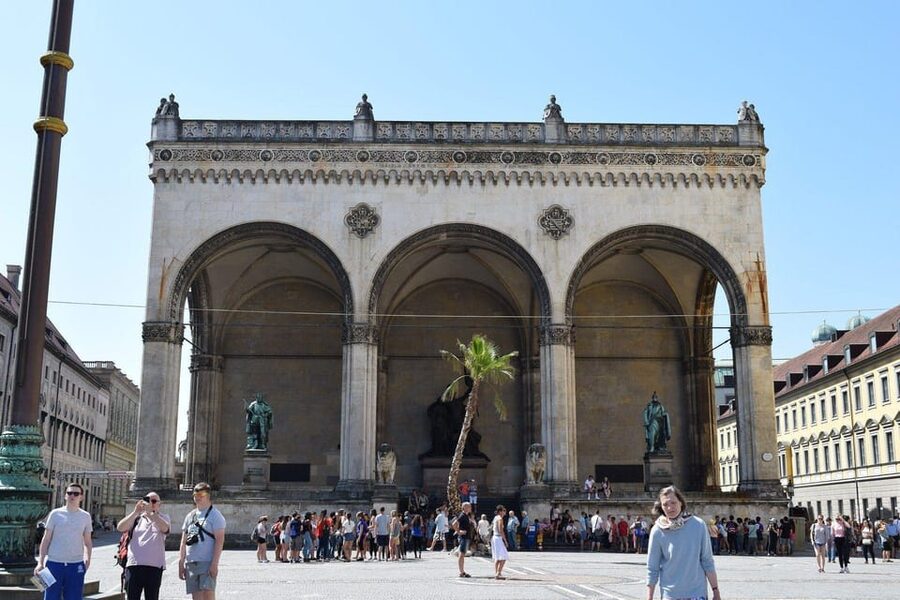
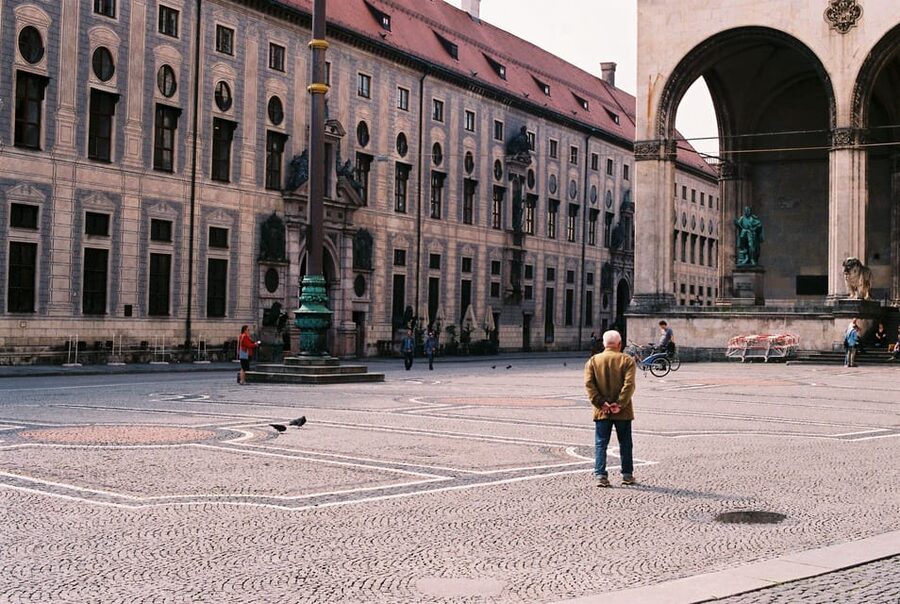
At Odeonsplatz, the guide explains the Beer-Hall Putsch, an important episode in Hitler’s attempt to seize power. Munich was a major setting for the early Nazi movement, and the square helps connect the city’s streets with that political history.
This stop can change the way you see Munich. A handsome public space may look purely decorative until you learn what happened there. The tour places the political past in the physical city, where events unfolded rather than in an abstract textbook chapter.
The subject is serious, and that is a strength. A Munich tour that discusses Hitler’s impact but skips the city’s role in his rise would leave out an essential part of the story. The guide also introduces resistance history, giving you a more complete view than one focused only on Nazi power.
The White Rose and Georg Elser
The White Rose resistance movement and Georg Elser’s bold attempt to kill Hitler broaden the tour beyond the story of Nazi leaders and institutions. These accounts show that opposition existed, even under a brutal dictatorship.
Including both subjects is valuable because it gives you a more balanced understanding of Munich during the Nazi era. You hear not only about those who supported or enabled the regime, but also about people who tried to resist it.
The White Rose story is especially tied to Munich’s student resistance, while Georg Elser represents a different kind of individual action. The two examples help you see that resistance could take more than one form.
Do not expect a separate museum visit or an extended memorial program within this four-hour route. These topics are part of the guided interpretation of the city. Their impact will come from the guide’s ability to explain the people and places clearly.
St. Peter’s Church and the Frauenkirche
St. Peter’s Church, described as Munich’s oldest Catholic church, brings religious history into the walk. Its age gives you a sense of how long Munich’s spiritual and civic life has developed around the center.
The Frauenkirche offers a larger architectural presence, with its twin towers and prominent place in Munich’s skyline. The tour also covers the legend of the devil’s footprint, a classic piece of local folklore connected with the church.
Legends work best when you know they are legends. They add character without replacing the historical facts. Here, the devil’s footprint gives you a memorable detail to look for while the church itself represents Munich’s Catholic identity and architectural tradition.
The tour appears to focus on seeing and discussing these landmarks rather than promising extended interior visits. If entering both churches is essential to you, confirm the plan with the guide. The supplied details specifically mention the BMW Museum entrance, not separate church admission.
Hofbräuhaus and the Beer Culture Finish
The final major theme is Munich beer culture, with Hofbräuhaus as the anchor. Established in 1589, it connects today’s beer-hall atmosphere with a long Bavarian tradition.
This is a fitting finish because beer is not just a drink in Munich. It is part of the city’s social identity, public life, and visitor culture. At Hofbräuhaus, you can experience the setting and decide for yourself whether you want to order local food or a drink.
Food and drinks are not included, so treat this stop as an opportunity rather than a prepaid meal. If your group wants to linger over a full lunch, the four-hour timetable may not leave much room. If you simply want to see the famous hall and understand its place in Munich culture, the stop makes sense.
I also like the way the beer theme balances the heavier political material earlier in the tour. The experience does not pretend Munich is only palaces and pretty churches, but it also leaves room for the city’s everyday pleasures.
A Private Guide, With Claudio as a Notable Example
The tour is private for your group, with a maximum group size of 15. That matters at busy city-center sights, where a large public group can make questions and conversation awkward.
English and German are available. The guide is dedicated to your group, so you can ask for more detail on BMW, royal history, Nazi-era Munich, churches, or beer culture according to your interests.
Claudio is one named guide associated with the experience, and the feedback about him is especially strong. He is described as warm and affable, with excellent command of history and practical information. That combination matters: a guide who knows dates but cannot connect with people is less useful than one who can explain, listen, and adjust.
The overall rating is 4.2 from 13 reviews, which suggests a generally positive experience but not a perfect record. I would treat the guide as an important part of the value. The itinerary is broad, and a clear, engaging guide will determine whether the transitions feel connected or rushed.
Is $539 Good Value for Your Group?
The price is $539 for a private group of up to 15 people. At the full group limit, that works out to roughly $36 per person before public transport, food, and drinks. For a smaller group, the per-person cost rises quickly.
The price includes the private guide and BMW Museum entrance. It does not cover public transportation or personal spending at Hofbräuhaus. Those exclusions are reasonable, but you should include them when comparing this with a standard walking tour.
I see the strongest value for families, friends, or a small group that wants one guide for several interests. You are paying for private attention, a museum visit, and a wide historical route rather than for a single attraction.
For one or two people, the cost is harder to justify unless you place a high value on a private guide. A public Munich walking tour plus separate BMW tickets may cost less, though it would not give you the same private format or one person connecting all these subjects.
Who Should Book This Experience?
I would recommend this tour to you if you want a broad first look at Munich and enjoy switching between technology, architecture, royal stories, political history, and local food culture.
It is especially suitable for:
- Families with mixed interests
- Small private groups
- First-time visitors who want orientation
- BMW fans who also want central Munich history
- History-minded visitors who want resistance stories included
- People who prefer asking questions without a large group around them
You may want another plan if your priority is a slow museum visit, a dedicated architectural tour, or an evening focused entirely on beer. The route covers many subjects, so it favors variety over depth.
The tour is also not ideal if you want every expense included. You will need to pay for public transportation and anything you order at Hofbräuhaus.
Should You Book the BMW and Munich Walking Tour?
Book it if the combination is what appeals to you. BMW Museum and BMW Welt give you a modern, design-focused opening, while Marienplatz, the churches, Odeonsplatz, resistance stories, and Hofbräuhaus show the many layers of Munich’s center.
The best reason to choose it is the private guide and the unusual range of subjects. The main warning is pace: four hours is enough for a well-shaped introduction, not a detailed study of every stop.
For a group of several people, the $539 price can be fair, particularly if you value a guide who can connect the car museum with Munich’s royal, political, and beer traditions. Ask for Claudio if available, and remember to budget separately for transport, food, and drinks.
FAQ
How long is the Munich BMW and walking tour?
The tour lasts four hours.
What languages are available?
The live guide is available in English or German.
Is this a private tour?
Yes. The tour is for a private group, with up to 15 people.
Where does the tour start?
It starts at the Fish Fountain in front of the city hall at Marienplatz Square, Am Marienplatz, 80809 München, Germany.
Where does the tour end?
The activity ends back at the meeting point at Marienplatz.
Is BMW Museum admission included?
Yes. Entrance to the BMW Museum is included.
Is public transportation included?
No. Public transportation is not included in the tour price.
Are food and drinks included?
No. Food, drinks, and other personal expenses are not included.
Does the tour visit BMW Welt?
Yes. The itinerary includes BMW Welt, with displays covering BMW design, technology, MINI, and Rolls-Royce.
Does the tour discuss Munich’s Nazi-era history?
Yes. It covers the Beer-Hall Putsch, Hitler’s impact, the White Rose resistance movement, and Georg Elser’s attempt to act against Hitler.
More Walks Through the Old Town
- Third Reich Walking Tour Munich
★ 4.5 · 4,291 reviews - Munich: Old Town & Viktualienmarkt City Walk in German
★ 4.7 · 2,304 reviews - Munich: Night Watchman Walking Tour
★ 4.7 · 2,092 reviews - Munich Ghosts and Spirits Evening Walking Tour
★ 5.0 · 1,900 reviews
Recently reviewed in Munich
- München: Vegetarische Viktualienmarkt-Probiertour Deutsch★ 4.8 · 6 reviews
- Wright Europe Vacations – Private Escorted Auto Tours★ 5.0 · 35 reviews
- Best of Munich Electric Bike Tour★ 5.0 · 38 reviews
- Munich Walking Quiz: Explore and Discover the City’s Highlights★ 5.0 · 7 reviews
- Walking Tour on Resistance to Nazism in Munich★ 5.0 · 8 reviews
- Private Transfer from Munich to Salzburg with 2 hours for sightseeing★ 4.5 · 13 reviews
- Private Transfer from Munich to Vienna with 2 hours for sightseeing★ 4.5 · 6 reviews
- 2 hour Sights Guided E-Scooter Tour in Munich★ 4.0 · 6 reviews
Munich Museum Tickets, compared.


Alte Pinakothek Skip-the-Line & Guided Walking Tour
Read our review →
Munich private Car & Walking Tour incl. BMW World & River Surfers
Read our review →
Browse the lists this tour appears in