
Reviewed · MUNICH MUSEUM TICKETS
Munich: Deutsches Museum Entry Ticket
The Deutsches Museum turns science into something you can see, touch, and test. On Museumsinsel, a small island in the Isar River, you can move from aviation and space travel to chemistry, atomic physics, printing, and model railways without leaving the building. I especially like the hands-on experiments and the chance to see major objects such as a lunar rover and the first diesel engine.
The one-day ticket gives you freedom to set your own pace, and the museum’s barrier-free route from the entrance to the restrooms makes it workable for many visitors with mobility needs. The main caution is scale: 20 exhibitions spread across about 20,000 square meters can feel like too much if you try to see everything in a single visit.
Key things to know before you go

- Twenty permanent exhibitions: Topics range from aviation and astronautics to chemistry, printing, atomic physics, and the natural sciences.
- Hands-on learning: Interactive stations and experiments help turn technical subjects into clear, practical ideas.
- Major historic objects: Look for the first diesel engine, historic printing presses, a lunar rover, and notable airplanes.
- Science demonstrations: The model railway, microscopy theater, and chemistry presentations add live action to the displays.
- Useful audio support: The Deutsches Museum app includes a downloadable multilingual audio guide.
- Easy planning: The museum is open daily from 9:00 to 17:00, with final admission at 16:30.
Why the Deutsches Museum is worth your time

Many museums ask you to look quietly at finished objects. The Deutsches Museum asks you to work things out. You may turn a handle, watch a mechanism operate, study a scientific process, or test an idea at an interactive station. That makes the museum a good fit for families, curious adults, and anyone who learns better by seeing cause and effect.
The museum was founded in 1903 by Oskar von Miller with the goal of presenting science and technology in a broad, accessible way. That purpose still shapes the visit. This is not a museum focused on one inventor, one period, or one narrow field. It connects practical machines with the scientific principles behind them.
That range is also the museum’s main challenge. You will not get a tidy, short story from beginning to end. Instead, you choose your own route through subjects that can feel very different from one another. One room may focus on aviation, while the next deals with chemistry or atomic physics. I recommend treating the museum as a menu, not a test. Pick the areas that fit your interests, then leave time for a few unexpected stops.
The collection contains more than 125,000 objects, though the exhibits present only part of that total. The large number matters because it gives the museum depth. You are not simply seeing a few famous machines. You are getting a broad view of how scientific ideas and technical tools developed over time.
More museums and galleries in Munich:
- Munich: Law Library Guided Visit with Entry Tickets
★ 4.6 · 297 reviews - SEA LIFE Munich Admission Ticket
★ 3.5 · 144 reviews - Munich: KUNSTLABOR 2 Entry Ticket
★ 4.2 · 89 reviews
Starting at Museumsinsel 1
Your visit begins at the main entrance at Museumsinsel 1, in central Munich. The museum sits on a small river island, close to the city center, which makes it easy to combine with other sightseeing. The activity ends at the same meeting point because this is a self-guided museum visit rather than a guided walk through town.
Open hours are daily from 9:00 to 17:00. The final admission is at 16:30, so do not plan to arrive near closing and expect a full visit. The one-day ticket is valid for the day you select, not for a set guided time inside the museum.
The $17 price is sensible if you give the museum several hours. You receive access to all exhibitions, not just one gallery, plus the downloadable multilingual audio guide in the Deutsches Museum app. If you only have an hour, the ticket may feel less useful because the museum’s value comes from its range.
You can also reserve now and pay later, which helps if your Munich plans are still changing. Cancellation is available up to 24 hours before the visit for a full refund. These terms are practical, but the real planning question is time. Try to protect at least half a day if science and technology interest you.
Twenty exhibitions across science and technology
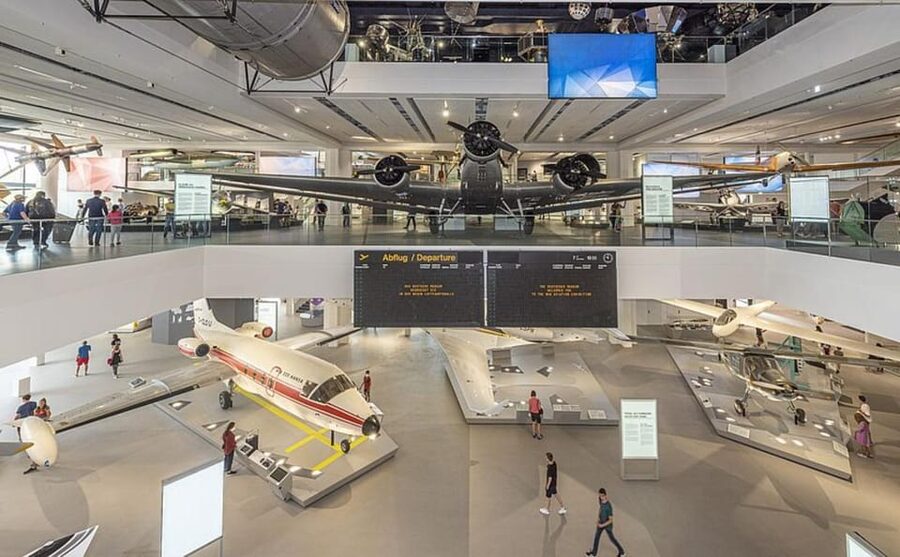
The exhibition program covers 20 permanent sections. The subjects named for this experience include aviation, astronautics, atomic physics, and chemistry, along with printing and other technical fields. The result is a visit that can appeal to very different people within the same group.
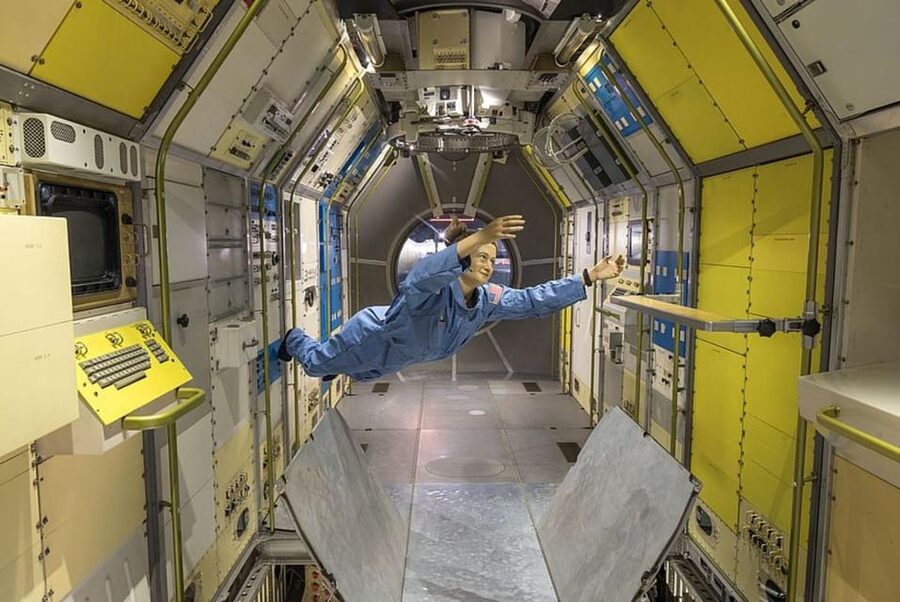
If you enjoy machines and engineering, historic engines and transport displays give you plenty to examine. If space is your interest, the astronautics material and lunar rover provide a direct link to human exploration beyond Earth. If you prefer experiments, chemistry and atomic physics offer a closer look at the rules behind the machines.
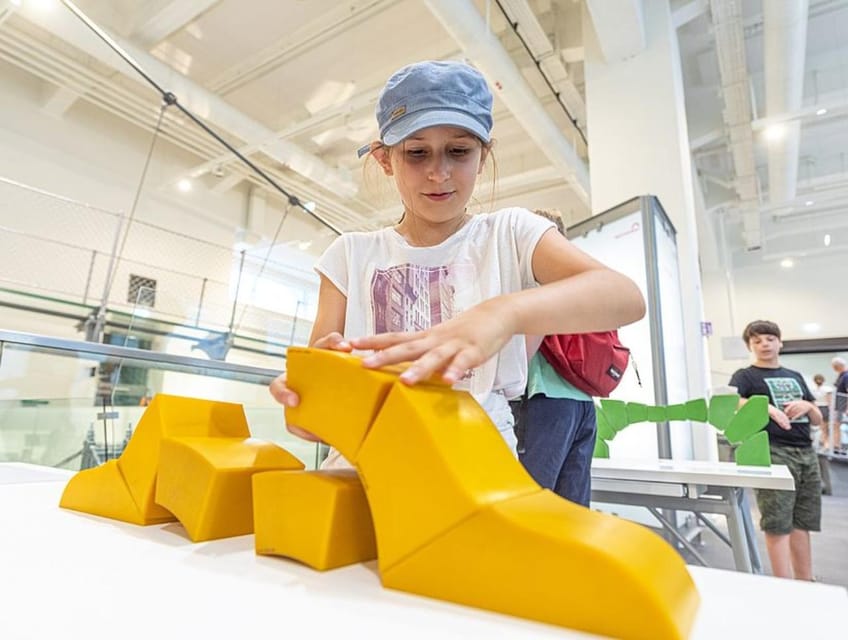
The museum is also useful for parents because the hands-on stations give children something to do. Still, not every section will hold every child’s attention. A younger visitor may prefer an experiment or moving model to a long technical explanation. Children under 12 must be accompanied by an adult, so plan to stay involved rather than simply sending children ahead.
You should not expect every display to feel equally interactive. The museum combines objects, explanations, demonstrations, and experiments. That mixture gives the visit substance, but it means you may need to change your pace from room to room.
Historic machines that give the museum its focus
Some exhibits matter because of their size or visual appeal. Others matter because they changed everyday life. The first diesel engine is a good example. It is not just an old machine in a case. It represents a major shift in how engines could be designed and used.
Historic printing presses offer another useful connection. Printing technology affected how information spread, how books were produced, and how ideas reached a wider public. Seeing the machines helps you connect a familiar result, printed material, with the mechanical work behind it.
The lunar rover brings the story into the space age. It gives you a physical object linked to exploration far from Earth, rather than only an image or a written account. The airplanes add another strong visual draw, especially for anyone interested in flight and the engineering problems of getting people safely into the air.
These objects are valuable because they make broad subjects concrete. Instead of hearing only about industrial change, communication, or space exploration, you can look at the equipment that made those changes possible.
Same city, a very different afternoon:
- From Munich: Neuschwanstein & Linderhof Castle Full-Day Trip
★ 4.5 · 12,494 reviews - Neuschwanstein & Linderhof Castle-Fairytale Day Tour from Munich
★ 4.5 · 7,275 reviews - Munich: Third Reich & WWII Walking Tour
★ 4.6 · 6,181 reviews - Dachau Concentration Camp Memorial Site Tour from Munich by Train
★ 4.5 · 5,637 reviews
Demonstrations add movement to the visit
The Deutsches Museum includes special demonstrations and shows. Three named examples are the model railway, microscopy theater, and chemistry demonstrations. Each offers a different way to watch science at work.
The model railway is likely to appeal to visitors who enjoy systems and precise movement. It shows how a complicated network can operate as a whole, which is more engaging than looking at a static train model. The attraction is not only the trains. It is the timing, control, and coordination.
The microscopy theater brings small-scale science into a format you can watch. Microscopy can be hard to understand when it is explained only through diagrams. A theater-style presentation gives the subject a clearer visual focus.
Chemistry demonstrations make reactions easier to follow because you can see change happen. The exact presentation schedule is not given in the ticket information, so check what is running when you arrive. Do not build your entire visit around one show unless you confirm the timing at the museum.
These demonstrations are especially useful if your group includes people with different interests. A child may remember an experiment, while an adult spends more time with the historical collection. The museum offers both kinds of experience under one roof.
Using the Deutsches Museum app
Your ticket includes access to a downloadable multilingual audio guide through the Deutsches Museum app. This is useful because you can choose how much explanation you want. You can move quickly through familiar subjects and spend more time with areas where the background helps.
An audio guide also changes the feel of a self-guided visit. You are not tied to a group schedule or a live guide’s route. You can pause, skip, and continue when it suits you. On the other hand, a phone-based guide requires you to keep an eye on your battery and device. The supplied information does not specify the languages or the exact length of the audio content, so check the app details before your visit if language support is important.
I would use the app selectively rather than listen to everything. With 20 exhibitions, playing every explanation could make the visit feel slow. Choose a few key displays, then let the objects and experiments carry the rest.
Planning a realistic one-day visit
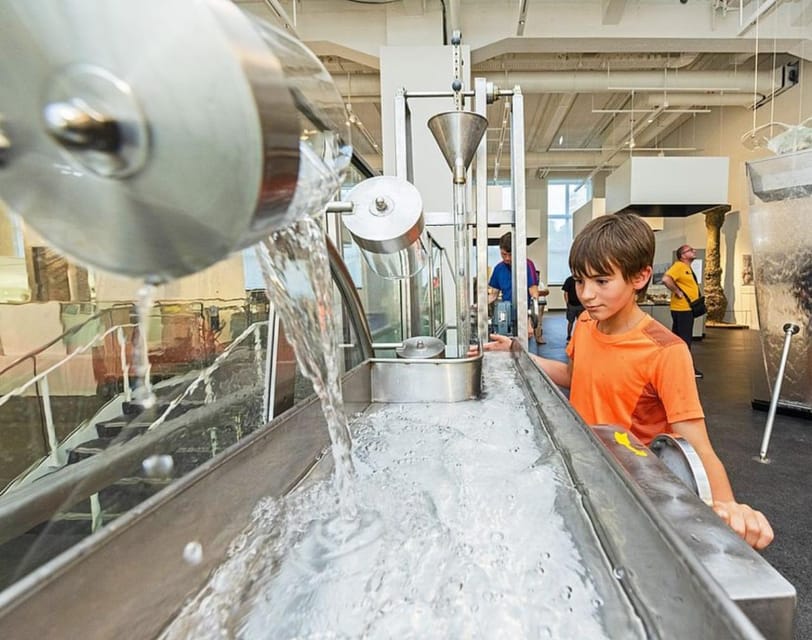
The ticket is valid for one day, but that does not mean you need to see every room. A sensible visit begins with a quick look at the exhibition layout, followed by two or three priority areas. After that, you can add demonstrations and nearby sections without constantly crossing the museum.
You might start with a subject that matters most to you, such as astronautics or aviation. This ensures that you see your top choice while your attention is fresh. Then move to a more interactive section, perhaps chemistry or another area with hands-on stations. Finish with objects that catch your eye rather than forcing yourself through every remaining display.
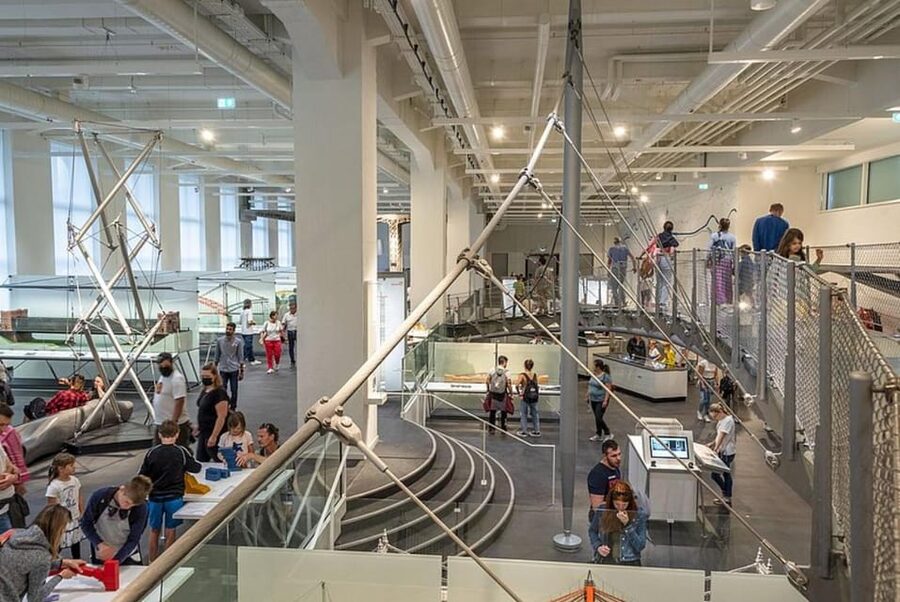
The museum has around 20,000 square meters of exhibition space at the main site. That figure explains why pacing matters. Even if you read only some of the labels, the walking and concentration add up.
A short visit can still work if you choose carefully. With one hour, select one exhibition and a demonstration if the timing fits. With several hours, you can make a proper visit of it. A full day gives you the best chance to sample many subjects, though even then, you may not absorb every display.
Accessibility and family considerations
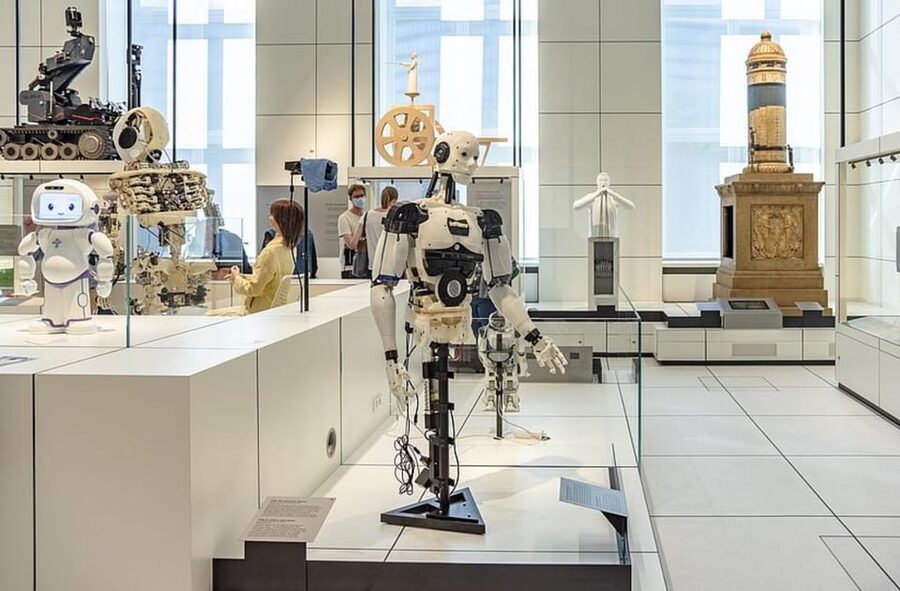
The museum is described as barrier free from the entrance to the restrooms and is wheelchair accessible. That is an important practical advantage for anyone who needs step-free access through the main visitor route. The information provided does not specify every gallery, lift, or seating arrangement, so you may want to confirm any particular access requirement before arrival.
Children under 12 must be accompanied by an adult. That rule makes sense in a museum with interactive equipment and a large amount of technical material. For families, I would plan shorter stretches in each section and use the experiments and demonstrations as natural breaks.
Reduced admission is available for pupils, trainees, full-time students, and severely disabled adults. When booking, the youth category is the one to select for those reduced-price groups. Severely disabled children and young people from 6 to 17 years have free admission under the stated conditions, and an accompanying person may enter free for a severely disabled adult or child where the required status applies.
The ticket details do not state a general free-entry policy for younger children, so check the booking options carefully before assuming a child ticket is free.
Who will enjoy this museum most
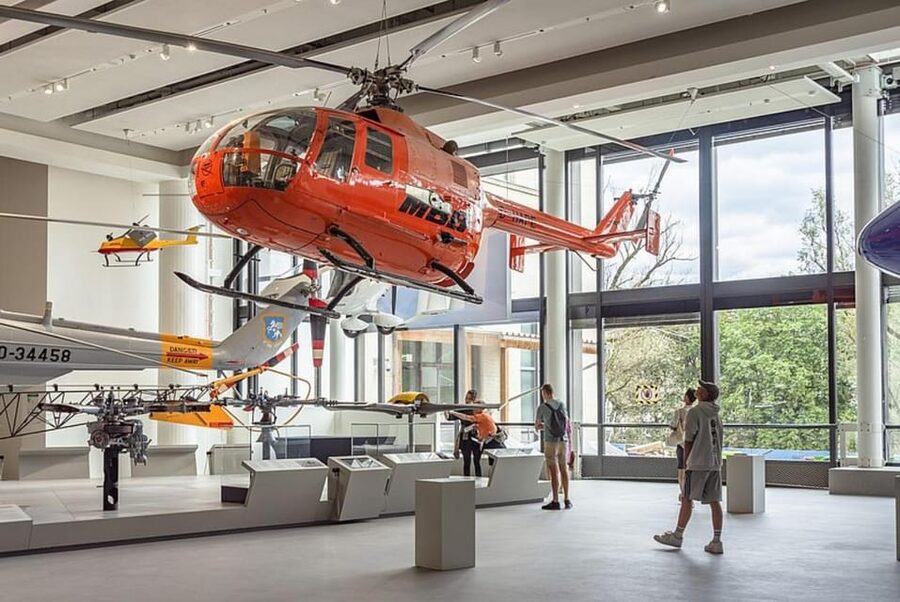
The Deutsches Museum is a strong choice for science fans, engineering enthusiasts, families, and curious people who like to understand how things work. It also suits a rainy Munich day because you can spend hours indoors without running out of subjects quickly.
It is less suitable if you want a traditional art museum, a short guided tour, or a single polished storyline. The museum is focused on science and technology only. That focus is a benefit if you like the subject, but it will not appeal to everyone in a group.
I also recommend it for repeat visits to Munich. The collection is large enough that you can take one visit for aviation and space, then return another time for chemistry, printing, or physics. The one-day ticket covers the full exhibition program for the selected day, so you can shape each visit around a different interest.
Should you book the Deutsches Museum?
Book it if you want more than a quick look at old machines. The strongest reasons are the wide choice of 20 exhibitions, the hands-on stations, and the memorable objects such as the diesel engine, lunar rover, airplanes, and printing presses.
The $17 ticket offers good value when you have several hours available. I would skip it if your Munich schedule is already packed or if nobody in your group enjoys science and technology. For everyone else, especially families and curious adults, this is one of the city’s most substantial indoor activities. Arrive well before 16:30, choose your priority sections, and let the museum surprise you with the subjects you did not plan to see.
FAQ
Where is the Deutsches Museum located?
The museum is at Museumsinsel 1, 80538 Munich, on Museumsinsel in the city of Munich.
How long is the ticket valid?
The ticket is valid for one day.
What are the museum’s opening hours?
The Deutsches Museum is open daily from 9:00 to 17:00. Last admission is at 16:30.
What does the entry ticket include?
It includes entry to the museum, access to all exhibitions, and a downloadable multilingual audio guide through the Deutsches Museum app.
How many exhibitions can I visit?
The ticket provides access to 20 permanent exhibitions.
Is the museum wheelchair accessible?
Yes. The museum is described as barrier free from the entrance to the restrooms and is wheelchair accessible.
Must children be accompanied by an adult?
Yes. Children under 12 must be accompanied by an adult.
Can I cancel my booking?
Yes. You can cancel up to 24 hours in advance for a full refund. You can also reserve now and pay later.
Recently reviewed in Munich
- München: Vegetarische Viktualienmarkt-Probiertour Deutsch★ 4.8 · 6 reviews
- Best of Munich Electric Bike Tour★ 5.0 · 38 reviews
- Wright Europe Vacations – Private Escorted Auto Tours★ 5.0 · 35 reviews
- Munich Walking Quiz: Explore and Discover the City’s Highlights★ 5.0 · 7 reviews
- Walking Tour on Resistance to Nazism in Munich★ 5.0 · 8 reviews
- Private Transfer from Munich to Salzburg with 2 hours for sightseeing★ 4.5 · 13 reviews
- Private Transfer from Munich to Vienna with 2 hours for sightseeing★ 4.5 · 6 reviews
- 2 hour Sights Guided E-Scooter Tour in Munich★ 4.0 · 6 reviews
Munich Museum Tickets, compared.




Munich Private Walking Tour with the BMW Museum and BMW Welt
Read our review →
Alte Pinakothek Skip-the-Line & Guided Walking Tour
Read our review →
Munich private Car & Walking Tour incl. BMW World & River Surfers
Read our review →

Browse the lists this tour appears in