
Reviewed · MUNICH GHOST & LEGEND TOURS
Munich – Illuminati & other Secret Societies, Tour in German
Munich’s center is full of symbols that most people walk past without a second glance. This two-hour German-language tour turns the city into a puzzle, linking church façades, royal power, Freemasons, the Illuminati, and older medieval building traditions.
I like the route for two reasons: it visits major central sights while adding an unusual theme, and it asks you to look closely at details you might otherwise miss. Guide Albert receives especially strong praise for clear explanations and for handling questions well. The main drawback is that some material can feel general rather than firmly tied to Munich, so this is not a standard city tour with a secret-society twist.
Key points to know before booking
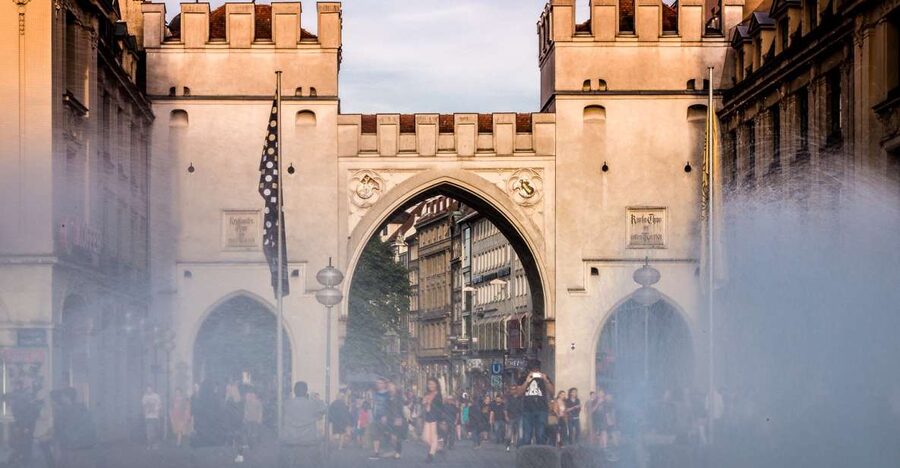
- Karlstor is the easy starting point: Meet directly beneath the Karl Gate arch at Karlsplatz, a central location in Munich’s pedestrian core.
- The tour stays in central Munich: The route includes the Old Academy, St. Michael’s Church, Frauenkirche, and Promenadeplatz.
- The focus is symbols and stories: You’ll look for signs linked with the Illuminati, Freemasons, the Knights Templar, the Order of the Golden Fleece, and the Guglmen.
- German is the regular tour language: English is available only for a private tour.
- Guide quality matters: Albert is singled out for an engaging style and strong answers to questions.
- The price is moderate: At $29 per person for two hours, the value depends on how much you enjoy historical puzzles and speculative stories.
Start beneath Karlstor, where Munich’s old center begins
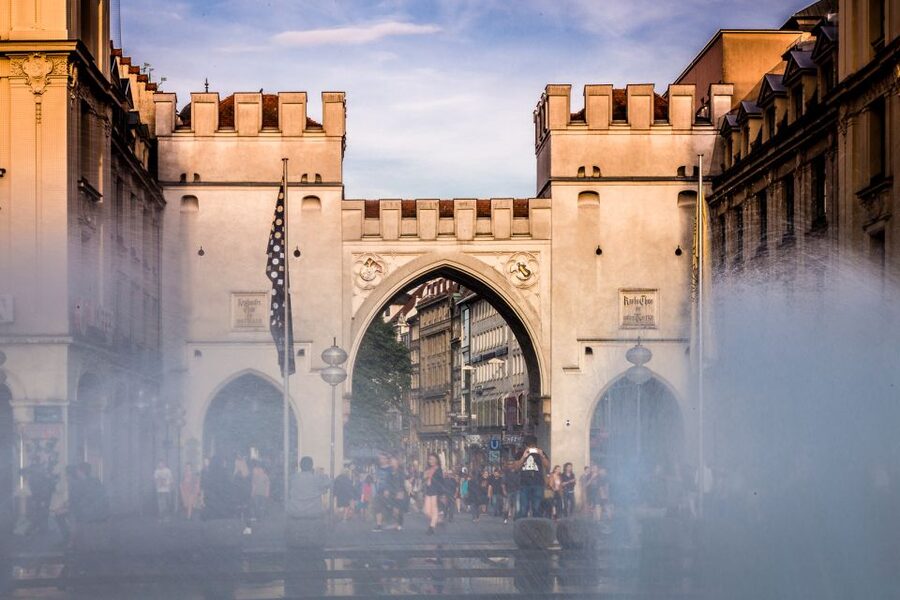
Your meeting point is directly under the archway of Karlstor at Neuhauser Strasse 47. This is a practical place to begin because it sits at Karlsplatz, one of the main gateways into Munich’s central pedestrian area.
You do not need to arrange transport during the tour. The experience unfolds on foot through the center, moving from one site to the next. Since the tour lasts two hours, you get a focused introduction rather than an all-day examination of Munich’s secret societies.
The starting point also sets the mood. Karlstor is a historic city gate, and the tour quickly shifts your attention from ordinary sightseeing to the clues built into public spaces. Your guide points out details that can be easy to miss when you are focused on shops, traffic, or the next major church.
This is best approached as a guided search for meaning. The point is not simply to hear a list of secret organizations. You are encouraged to ask why certain symbols appeared, who used them, and how later generations interpreted them.
More ghost and legend walks in Munich:
- Munich Ghosts and Spirits Evening Walking Tour
★ 5.0 · 1,900 reviews - Munich: Spooky Tour of Old Town in German
★ 4.6 · 1,112 reviews - Munich: Raven Black Witches and Executioners Walking Tour
★ 4.7 · 294 reviews
How the Illuminati story fits into Bavaria
The Bavarian Illuminati is one of the main subjects of the tour. The group is presented alongside other secret societies and political networks, including the Freemasons and the Knights Templar.
The tour’s central question is provocative: how much influence did these groups really have, and how much of their modern reputation comes from rumor, fear, or later conspiracy theories? You will hear about secret influence on political and social events, but the experience also gives you room to consider the difference between documented history and dramatic interpretation.
One featured story concerns a Bavarian Elector who acted to end the conspiracy of the Illuminati and Freemasons. That episode helps explain why secret societies worried rulers. A group that met privately, shared ideas across borders, and questioned established authority could look dangerous to a government built on hierarchy and obedience.
This subject works well in Munich because the city was a political center, not just a collection of picturesque buildings. The tour connects intellectual movements with the rulers and institutions that tried to control them. You are likely to get the most from it if you enjoy sorting fact, legend, political fear, and symbolism rather than expecting a simple answer to every mystery.
Old Academy and the city’s visible symbols
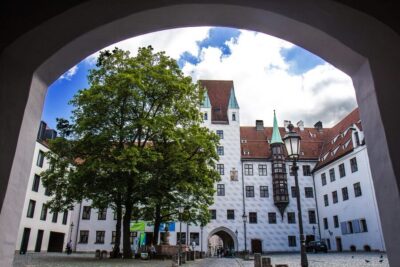
The Old Academy is one of the first important stops named on the route. Here, your guide begins to show how buildings can carry several layers of meaning.
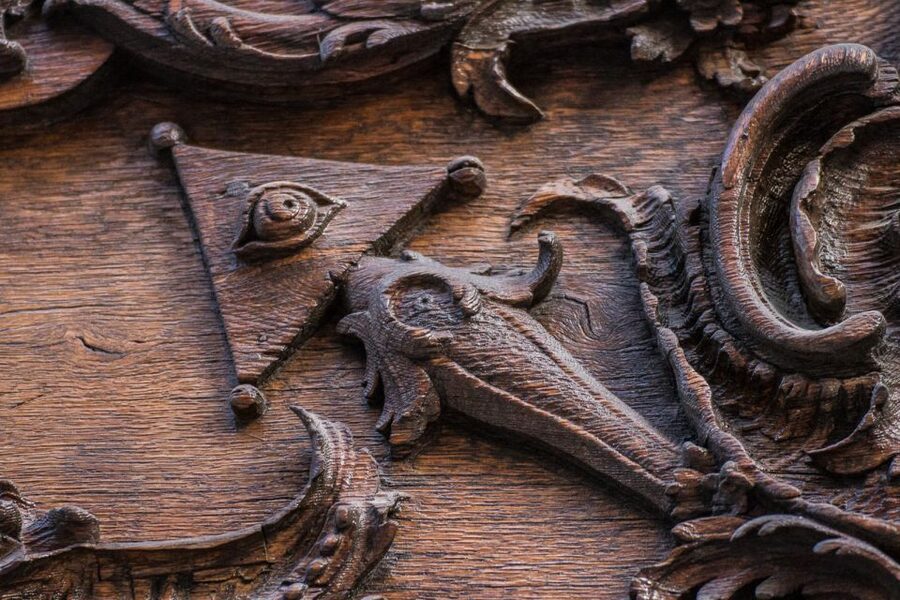
The useful part of this stop is the close looking. Instead of treating a building as a backdrop for a photograph, you examine symbols, signs, and design choices that may point toward power, religion, learning, or membership in a wider network.
Do not expect every mark to offer a secret message. Some symbols have clear religious or political origins, while others have gained new interpretations over time. A good guide helps you understand that difference, and the tour’s value depends heavily on how carefully those distinctions are made.
The Old Academy also supports the tour’s wider theme: institutions often preserve ideas in stone long after the people who created them are gone. The societies discussed on the route may no longer exist officially, but their symbols and stories can remain part of the city’s visual language.
St. Michael’s Church and the power of royal imagery
The route continues to St. Michael’s Church, one of Munich’s major central landmarks. The church is important here not only for its religious role, but also for the connection between architecture, ruling power, and public image.
Your guide uses the building and its surroundings to explain how institutions communicate authority. Churches, palaces, gates, and public squares were not neutral spaces. Their decoration could reinforce the status of a ruler, a dynasty, a religious order, or a political idea.
This is also where the tour can broaden beyond the Illuminati. The story includes the Freemasons, the Knights Templar, and other groups whose names have acquired a strong aura of mystery. You will hear how symbols associated with these organizations are read and why they continue to attract attention.
The benefit is that you begin to read Munich differently. The limitation is that the tour is not a specialist architectural visit to St. Michael’s. The church is part of a larger walking narrative, so you should not book this if your main goal is a detailed art-historical examination of the building.
Same city, a very different afternoon:
- From Munich: Neuschwanstein & Linderhof Castle Full-Day Trip
★ 4.5 · 12,494 reviews - Neuschwanstein & Linderhof Castle-Fairytale Day Tour from Munich
★ 4.5 · 7,275 reviews - Munich: Third Reich & WWII Walking Tour
★ 4.6 · 6,181 reviews - Dachau Concentration Camp Memorial Site Tour from Munich by Train
★ 4.5 · 5,637 reviews
Frauenkirche and the medieval roots of Freemasonry
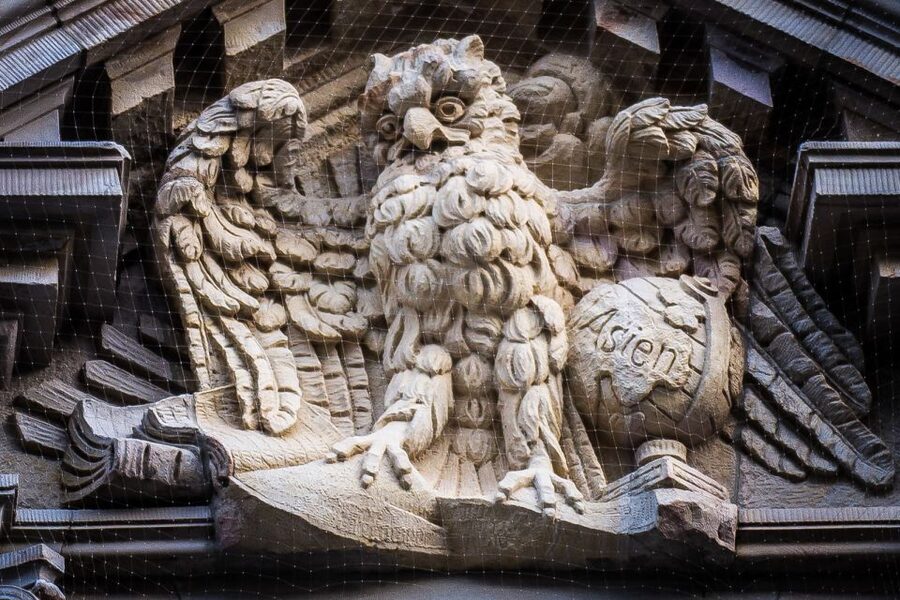
Frauenkirche provides another major setting for the discussion, especially the claimed origins of Freemasonry in medieval Dombauhütten, or cathedral building lodges.
These medieval building groups brought together skilled craftsmen working on major church projects. The tour explains how traditions of specialized knowledge, symbols, private organization, and membership could later be linked with the Freemasons.
This does not mean every medieval mason was part of modern Freemasonry. That distinction matters. The tour is most useful when it shows how historical traditions were remembered, adapted, and connected to later organizations.
For you, this stop offers a way to understand why Freemasonry has such a strong symbolic identity. Building tools, geometric forms, and craft traditions can carry practical meanings as well as moral or philosophical ones. In a city filled with monumental churches, that connection between construction and secret knowledge makes sense as a storytelling device.
At the same time, expect interpretation rather than a full lecture on medieval guild history. The two-hour format requires the guide to move between several societies and locations. If you want a narrow, academic study of cathedral builders, this tour will likely feel too wide-ranging.
Promenadeplatz and the political story of Bavaria
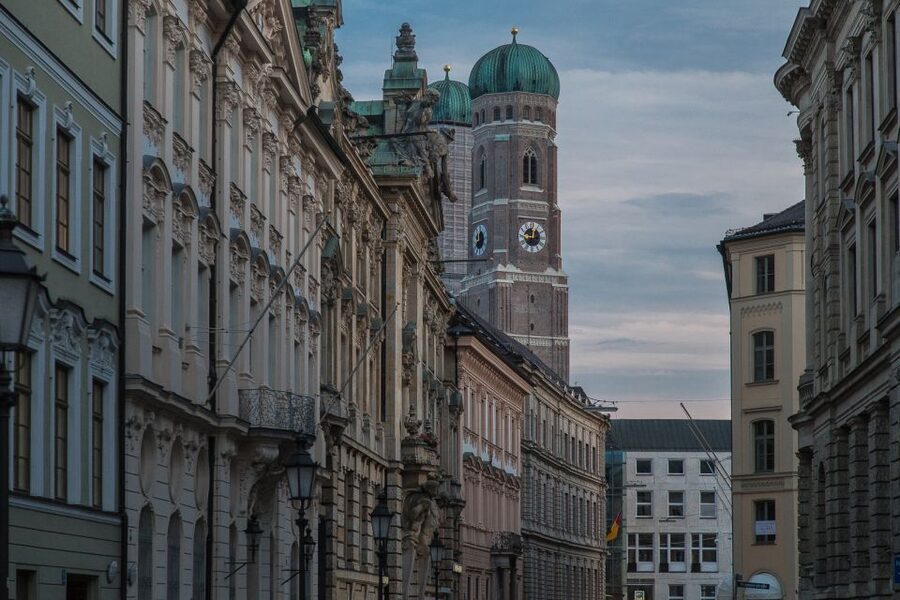
The final section of the route reaches Promenadeplatz. Here, the emphasis turns toward the role of the Masons in the founding of the Kingdom of Bavaria.
This part gives the tour a political edge. Secret societies are not treated only as shadowy clubs with hidden signs. They are also connected with Enlightenment ideas, changing political structures, and debates about how a state should be organized.
The tour asks if these groups were simply radical Enlighteners or if their influence continued in ways that still affect the modern world. You will not necessarily receive a neat yes or no. Instead, the guide lays out the stories and symbols, then helps you assess their plausibility and importance.
Promenadeplatz is a fitting place to finish because it brings the discussion back into public space. The tour begins with hidden meanings beneath a city gate and ends with the question of how private ideas can shape public institutions.
That is one reason the route works better than a purely indoor talk. You are not only hearing about secret societies in the abstract. You are connecting those ideas to real buildings and squares in Munich’s center.
The Order of the Golden Fleece and the Guglmen
Two of the more unusual subjects are the Order of the Golden Fleece and the Guglmen.
The Golden Fleece is presented through its insignia, which you may encounter in Munich in places where royal, dynastic, or political symbols are displayed. The tour uses the order to show how emblems can travel across institutions and centuries, picking up new meanings along the way.
The Guglmen add another layer of local mystery. The information provided for the tour does not define them in detail ahead of time, which is part of the appeal for people who like discovering an unfamiliar story rather than ticking off famous names.
These topics help keep the tour from becoming only an Illuminati presentation. You move among several kinds of organization: medieval craft groups, religious and military orders, Enlightenment societies, and political networks.
Still, the range can feel crowded. You are covering many names in two hours, and some subjects will receive only a short explanation. I would bring one or two questions you care about most, then use the guide’s question time to pursue them.
What the experience feels like in German
The regular tour is conducted in German, with a live guide. English is available only through a private tour, so you should be comfortable following a sustained explanation in German before booking the shared experience.
Because the subject includes political history, religious symbolism, and specialized vocabulary, language ability matters more here than on a simple sightseeing walk. You need to follow connections between groups and periods, not just identify buildings.
The strongest guide feedback is connected with Albert. He is praised for making the subject interesting and for responding well to questions and comments. That is important on a tour built around interpretation, since your experience depends on how clearly the guide separates established information from theories and popular stories.
The tour is wheelchair accessible, which makes it suitable for visitors who need an accessible route. The activity lasts two hours, and starting times vary, so check the available schedule when choosing your date.
Is $29 a fair price for two hours?
At $29 per person, this tour sits in a reasonable range for a guided central Munich experience. You are paying for a live German-speaking guide, a themed walking route, and a small gift.
The value is strongest if you already know Munich’s main sights and want a fresh way to look at them. The tour includes several important central locations without requiring a separate museum ticket or a full-day commitment.
It is less valuable if you want a conventional overview of Munich. The tour is not designed to explain the city’s major landmarks in a broad, chronological way. It selects places because they support the secret-society theme.
The small gift is a pleasant extra, but it should not drive your decision. The real value comes from the guide’s storytelling, the route, and the chance to notice symbols you might otherwise pass without seeing.
A rating of 4.7 from 122 ratings suggests a strong overall response, but the middle-ground feedback points to the main issue: some of the material can feel more general than specifically Munich-based. Keep that expectation in mind and the price is easier to judge fairly.
Who will enjoy this unusual Munich walk?
I would recommend it to you if you like:
- Conspiracy stories approached through history and symbolism
- Freemason and Illuminati traditions
- Architecture, insignia, and political imagery
- Unusual walking tours beyond standard city highlights
- Asking questions and weighing competing interpretations
- German-language cultural experiences
It is especially suitable for someone who has already seen Munich’s main sights and wants a second look at the city. It also works for visitors who enjoy unusual themes more than a standard list of dates and famous buildings.
You may want to skip it if you need a fully English-language group tour, a conventional introduction to Munich, or a tightly documented lecture focused only on local evidence. The route covers many organizations, and some material may feel broad rather than closely tied to each stop.
Practical details that affect your choice
Meet directly beneath Karlstor at Neuhauser Strasse 47, 80331 Munich. Since the start is at Karlsplatz, allow enough time to find the exact archway before the scheduled start.
The walking route passes through the central area and includes the Old Academy, St. Michael’s Church, Frauenkirche, and Promenadeplatz. Wear comfortable shoes, since the experience is a walking tour rather than a seated talk.
You can cancel up to 24 hours before the start for a full refund. You can also reserve now and pay later, which helps if your Munich schedule is still changing.
The tour is wheelchair accessible. The regular language is German, while English requires a private tour.
Should you book the Illuminati and Secret Societies tour?
Book it if you want Munich’s familiar center to feel strange and newly readable. The strongest reasons are the unusual subject, the central route, and the chance to examine symbols linked with the Illuminati, Freemasons, the Knights Templar, the Golden Fleece, and the Guglmen.
Guide Albert appears to be a particularly good match for the experience, thanks to his lively delivery and willingness to answer questions. Just remember that the tour may spend time on broader secret-society history, not only on Munich-specific evidence.
For $29, it is a fair choice for curious visitors who enjoy history with a puzzle attached. Go in ready to question the stories rather than accept every theory as fact, and you will get the most from this distinctive walk.
FAQ
Where does the tour start?
The meeting point is directly under the archway of Karlstor at Neuhauser Strasse 47, 80331 Munich.
How long does the tour last?
The tour lasts two hours.
What language is the tour in?
The regular live tour is in German. English is available only for a private tour.
Is the tour wheelchair accessible?
Yes, the activity is listed as wheelchair accessible.
Which Munich sights are included?
The route includes the Old Academy, St. Michael’s Church, Frauenkirche, and Promenadeplatz, beginning at Karlstor.
Does the tour focus only on the Illuminati?
No. It also covers the Freemasons, Knights Templar, the Order of the Golden Fleece, the Guglmen, and other secret societies connected with Munich.
Can I cancel the booking for a refund?
Yes. You can cancel up to 24 hours in advance for a full refund. You can also reserve the activity and pay later.
Recently reviewed in Munich
- München: Vegetarische Viktualienmarkt-Probiertour Deutsch★ 4.8 · 6 reviews
- Wright Europe Vacations – Private Escorted Auto Tours★ 5.0 · 35 reviews
- Best of Munich Electric Bike Tour★ 5.0 · 38 reviews
- Munich Walking Quiz: Explore and Discover the City’s Highlights★ 5.0 · 7 reviews
- Walking Tour on Resistance to Nazism in Munich★ 5.0 · 8 reviews
- Private Transfer from Munich to Salzburg with 2 hours for sightseeing★ 4.5 · 13 reviews
- Private Transfer from Munich to Vienna with 2 hours for sightseeing★ 4.5 · 6 reviews
- 2 hour Sights Guided E-Scooter Tour in Munich★ 4.0 · 6 reviews
Munich Ghost & Legend Tours, compared.
Raven Black Witches and Executioners Walking Tour
Read our review →
Mystic Munich – Sagas and Legends of the Old Town
Read our review →
Ghosts of Munich: The Haunted Apprentice Exploration Game
Read our review →
Browse the lists this tour appears in