
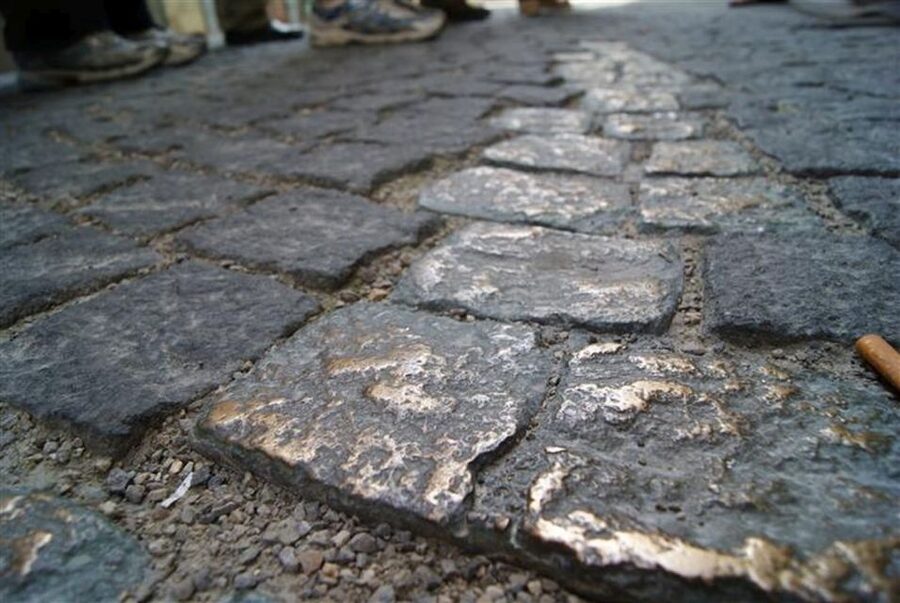
Reviewed · MUNICH THIRD REICH & WWII TOURS
Munich: Birthplace of the Third Reich Guided Walking Tour
Munich’s old center hides the story of how a small political movement gathered force in beer halls, marched through city streets, and turned Germany toward dictatorship and war. This 2.5-hour walking tour follows that story through the places tied to Hitler’s early speeches, the Nazi Party, Kristallnacht, and the people who resisted.
I like the way the tour connects ordinary buildings with major events, rather than treating history as a list of dates. I also like the use of old photographs and clear storytelling from guides such as Steve, Jake, Sam, Nick, Aileen, and Iain. The main drawback is simple: this is an outdoor walk, so rain, heat, or Munich’s winter cold can affect your comfort.
Key points to know before you book
- Beer halls and early Nazi meetings: See the places where Hitler addressed small gatherings before the movement gained national power.
- Kristallnacht brought close to home: Learn about the building where Goebbels helped plan the November 1938 attacks.
- Former Nazi headquarters: Visit the official center of the Nazi administration in Munich and see surviving wartime buildings nearby.
- Memorials beside old power sites: Understand how Munich remembers victims and opponents of Nazism.
- Strong English-language guiding: Guides including Jake, Sam, Steve, Nick, Aileen, and Iain are praised for clear explanations and thoughtful handling of a difficult subject.
- Good value at $29: You receive a guide, the walking tour, and transport to Munich’s historic center for less than the cost of many museum-led experiences.
Why Munich matters to the story of the Third Reich

Munich is not simply a handsome Bavarian city with grand squares and beer halls. It was the early political home of Adolf Hitler and the Nazi Party. The city became a testing ground for speeches, symbols, street violence, propaganda, and political alliances that later shaped Germany.
That makes this tour different from a general Second World War walk. You are not only hearing about the war years. You are tracing the earlier conditions that helped Hitler gain attention and turn a fringe movement into a force capable of taking control of a country.
I find that setting especially useful for anyone who knows the broad outline of the Third Reich but wants to understand how it became possible. The tour asks you to look at Munich as a real city, not just a backdrop. People met in beer halls. Politicians gave speeches. Paramilitary groups fought in the streets. Government offices handled repression. The ordinary appearance of these places is part of the lesson.
The subject is grim, and the tour does not soften it. At the same time, guides are expected to make the material understandable rather than burying you under dates and names. Several guides are praised for using gentle humor between the heavier sections, which can help you stay focused during a long and emotionally demanding walk.
Other Third Reich and wartime history tours in Munich:
- Munich: Third Reich & WWII Walking Tour
★ 4.6 · 6,181 reviews - Third Reich Walking Tour Munich
★ 4.5 · 4,291 reviews - Munich World War II Sites Including Dachau Concentration Camp
★ 4.5 · 570 reviews
Starting at the Radius Tours office
You meet at the Radius Tours office. The exact starting point can depend on the option you select, so check your booking details before setting out. Hotel pickup is not included, but transportation to Munich’s historic center is included.
That transport matters because it gets the group into the main walking area before the historical route begins. The tour ends at two listed drop-off points, including the Radius Tours office and the 80331 area. You should still allow a little extra time afterward if you have a train, museum reservation, or meal booked.
The tour is given in English by a live guide. Names that appear regularly among the guiding team include Jake, Sam, Nick, Steve, Aileen, Iain, Dan, Josh, and others. The tone can vary with the person leading your group, but the strongest pattern is clear explanation, openness to questions, and a personal interest in Munich’s past.
Beer halls where the movement found its voice
The beer halls are among the most memorable parts of the route because they make the early Nazi movement feel close and physical. Hitler’s first audiences were not gathered in grand government buildings. They met in popular halls where speeches, arguments, and political organizing took place amid everyday city life.
You see the locations connected with Hitler’s first party meeting and early major speeches. The value here is not simply standing outside a famous hall. Your guide explains why these rooms mattered as political spaces and how public speaking helped Hitler build a following.
This section also helps explain the difference between a small radical group and a movement trying to seize power. Speeches gave the party a chance to present simple answers to Germany’s anger and uncertainty after the First World War. The tour shows how ideology was repeated, sharpened, and carried into public life.
You will probably hear names and events that are familiar, including Hitler’s failed putsch. The useful part is seeing those events placed in the streets and buildings where they unfolded. The story becomes easier to follow when you can connect a date to a physical route through Munich.
The beer halls are active parts of the modern city, not preserved time capsules. That can feel strange. A normal street or busy hall may now look completely detached from what happened there. I consider that contrast one of the tour’s strengths, though it may surprise anyone expecting a formal museum setting.
From failed putsch to organized power
The walk follows the shift from political speeches to street conflict and institutional control. You learn how Hitler and his Brownshirts fought their way into public attention, and how the Nazi Party used Munich as a base for organizing and presenting itself.
This part is important because it avoids the lazy idea that Hitler simply appeared and took power. The tour presents a longer process involving public anger, propaganda, political maneuvering, intimidation, and the willingness of institutions to tolerate or assist the movement.
Your guide may use photographs to show how the streets and buildings looked at the time. Steve is specifically praised for carrying a binder of images that helped connect the past with the present view. That kind of visual aid is useful because Munich has changed, while many street layouts and major buildings remain recognizable.
Do not expect every stop to look dramatic. Some locations may be marked by a plaque, a façade, or a brief explanation rather than a large exhibition. The guide is doing much of the interpretive work. If you prefer museums with objects, captions, and indoor displays, you may want to pair this walk with a museum visit. If you want to understand how a political movement used a city, the street format works well.
More walks through the old town:
- Munich: Old Town & Viktualienmarkt City Walk in German
★ 4.7 · 2,304 reviews - Munich: Night Watchman Walking Tour
★ 4.7 · 2,092 reviews - Munich Ghosts and Spirits Evening Walking Tour
★ 5.0 · 1,900 reviews - Munich Old Town Walking Tour
★ 4.5 · 1,287 reviews
The building linked to Kristallnacht
One of the most sobering stops concerns Kristallnacht, the November 1938 pogrom against Jewish people, their homes, businesses, and places of worship. The tour identifies the building where Joseph Goebbels plotted the attacks, placing the event within the machinery of Nazi propaganda and political violence.
This is where the tour moves firmly from the early rise of the Nazi Party into the organized persecution that led toward the Holocaust. The location gives the discussion a sharp focus. Instead of treating Kristallnacht as a distant chapter, you are shown a place in Munich connected with decisions that affected Jewish communities across Germany.
The guide’s handling of this section matters. The strongest approach is direct and restrained, with room for questions but no theatrical treatment. Several guides are praised for explaining difficult material with care, clarity, and empathy. That balance is worth seeking, especially if you are traveling with teenagers or anyone who may find the subject particularly painful.
You may also hear about the present-day need to remember and resist anti-Semitism. The tour links the historical events to modern responsibility without pretending that the past can be reduced to a lesson with an easy ending. That makes the stop more than a photo opportunity. It asks you to consider how prejudice becomes policy, and how public silence can help it spread.
The former Nazi headquarters and wartime scars
The route stops at the official Nazi headquarters. This was the administrative center of a regime that grew out of Munich’s early political culture and later controlled Germany. Seeing the building gives you a sense of how the movement moved from beer-hall speeches into government offices and bureaucratic power.
Nearby, you see other buildings that carry the marks of the Second World War. Much of central Munich was badly damaged by Allied bombing, while a number of Nazi-era buildings survived. That contrast raises difficult questions about what remains, what disappears, and how a city chooses to explain buildings connected with a criminal regime.
The tour does not present surviving Nazi structures as monuments to admire. Their importance comes from what they reveal about the system that operated inside them. A plain administrative building can tell you more about the reach of dictatorship than a dramatic memorial alone.
This section may feel less intimate than the beer halls or Kristallnacht stop. It is more about institutions and physical traces. Still, it helps complete the picture. You see how ideology, violence, and administration worked together rather than treating them as separate subjects.
Memorials to victims and opponents
The walk also includes monuments honoring victims of Nazism and people who opposed the regime. These sites change the tone of the experience. Earlier stops focus on how the Nazi movement gained power. The memorials ask you to remember those who suffered under it and those who risked their lives to resist.
I appreciate this balance. A tour about Hitler can easily give too much attention to Hitler himself. By including victims and opponents, the route keeps the focus on human cost and moral choice.
The memorials also show how Munich has tried to confront its past. Germany’s approach to remembrance is not presented as a single finished achievement. It is an ongoing effort involving public markers, historical explanation, and continued attention to anti-Semitism and political extremism.
You may find these stops quieter than the earlier parts of the walk. Give yourself time to look and listen. The guide’s explanation can help, but the memorials are also places where a few moments of silence matter.
The guides make or break the experience
A history walk depends heavily on the person holding the group together. Here, the most praised guides are described as clear, friendly, passionate, and open to questions.
Jake is noted for strong energy, humor, and an ability to make difficult material easier to follow. Sam is praised for extensive knowledge and a personable approach. Nick is frequently described as friendly, organized, and easy to understand for people who do not speak English as a first language.
Steve brings a particularly useful visual approach with historic photographs. Aileen is praised for explaining the stages of Nazi history in a clear and orderly way while keeping the group accounted for and allowing breaks. Iain is described as willing to discuss details and answer questions from people who already know a good deal about the subject.
That range matters. A first-time learner may want a strong narrative and straightforward definitions. Someone who has studied the period may want room for discussion and lesser-known details. The guide assigned to your departure will shape the pace and personality, so it is wise to arrive ready to listen but also ready to ask questions.
The humor needs to be handled carefully. The best use is light relief between serious subjects, never jokes about the victims or the ideology. The strongest feedback points to that kind of balance.
Walking conditions and pacing
The tour lasts about 2.5 hours. That is long enough to build a connected story, but short enough to fit into a full day of sightseeing. You should expect to be outside for most of the experience and moving between locations on foot.
Munich weather can change the feel of the tour. Cold winter days have been manageable for some groups because the storytelling keeps things moving, but you should dress warmly. Rain has also been handled in good humor, though wet streets and umbrellas can make it harder to hear.
Summer brings the opposite concern. On a warm day, you may want water before the walk begins. One useful improvement would be a planned drink stop during hot weather, so carry your own water and do not rely on finding a break along the route.
Comfortable shoes are sensible. The route includes streets and city-center walking, and the experience is much better when you can concentrate on the explanation instead of tired feet. Since the tour is in English, non-native speakers should feel free to ask the guide to repeat a name or explain a term.
Is $29 a fair price?
At $29 per person, this is a good value if you want a structured introduction to Munich’s Nazi past. The price includes the guide, the tour, and transportation to the historic center. You are paying mainly for the guide’s research, storytelling, and ability to connect scattered sites into one understandable account.
The value is strongest for first-time visitors. Finding the beer halls, former headquarters, Kristallnacht-related location, and memorials on your own would not necessarily be difficult, but knowing what happened at each place is another matter. A plaque rarely explains the wider political chain.
It is also useful for people with limited time. In 2.5 hours, you receive an organized route instead of spending half a day locating sites and working out their meaning. You can then return to the places that affected you most or continue to a museum.
The price does not include hotel pickup, food, drinks, or a separate museum visit. It is not a private tour, and the amount of personal attention will depend on the group and guide. Still, the combination of transport, a live English guide, and a serious city walk makes the cost reasonable.
Free cancellation is available up to 24 hours before the tour for a full refund. You can also reserve now and pay later, which helps if your Munich schedule is still shifting.
Who should take this walk?
I would choose this tour if you want context before visiting other Second World War sites, or if you find that dates and names make more sense when tied to real streets and buildings.
It suits:
- First-time visitors to Munich
- People interested in modern German history
- Families with older teenagers who can handle the subject
- History students and readers who want local detail
- Anyone who wants an English-language introduction before visiting museums
- Visitors who prefer a guided route to independent research
You may want a different experience if you dislike long outdoor walks, need a fully indoor activity, or want a tour focused only on architecture. This is not a cheerful sightseeing stroll. It deals with political extremism, anti-Semitism, persecution, war, and mass murder.
The tour can still fit well into a broader Munich visit. Schedule it early in your stay, then use the rest of your time to explore the city with a better sense of what its grand buildings and public squares have witnessed.
Should you book the Munich Third Reich walking tour?
Book it if you want a serious, well-paced introduction to Munich’s role in the rise of Nazism, especially if you value explanation over simply checking off famous sites. The beer halls, Nazi headquarters, Goebbels-related location, wartime buildings, and memorials form a useful sequence.
I would be more cautious if the weather forecast is poor and you are not prepared for two and a half hours outdoors. Bring water in warm weather, dress properly in winter, and allow extra time for the walk after meeting at the Radius Tours office.
For $29, this is a strong choice for history-minded visitors. Its main strength is not a single spectacular building. It is the way a good guide can show you how Munich’s streets connect the early Nazi movement, state power, persecution, war, and remembrance.
FAQ
How long does the tour last?
The guided walking tour lasts 2.5 hours.
What language is the tour conducted in?
The tour is conducted in English with a live English-speaking guide.
How much does the tour cost?
The listed price is $29 per person.
Where does the tour meet?
You meet at the Radius Tours office. The precise starting location can depend on the option selected.
Is hotel pickup included?
No. Hotel pickup is not included.
Is transportation included?
Transportation to Munich’s historic center is included. The listed drop-off locations include 80331 and the Radius Tours office.
Can I cancel or pay later?
You can cancel up to 24 hours in advance for a full refund. Reserve now and pay later is also available.
Recently reviewed in Munich
- München: Vegetarische Viktualienmarkt-Probiertour Deutsch★ 4.8 · 6 reviews
- Best of Munich Electric Bike Tour★ 5.0 · 38 reviews
- Wright Europe Vacations – Private Escorted Auto Tours★ 5.0 · 35 reviews
- Munich Walking Quiz: Explore and Discover the City’s Highlights★ 5.0 · 7 reviews
- Walking Tour on Resistance to Nazism in Munich★ 5.0 · 8 reviews
- Private Transfer from Munich to Salzburg with 2 hours for sightseeing★ 4.5 · 13 reviews
- Private Transfer from Munich to Vienna with 2 hours for sightseeing★ 4.5 · 6 reviews
- 2 hour Sights Guided E-Scooter Tour in Munich★ 4.0 · 6 reviews
Munich Third Reich & WWII Tours, compared.
Munich World War II Sites Including Dachau Concentration Camp
Read our review →
Munich 3-Hour Segway Tour: Nazi Munich & Royal Architecture
Read our review →
Dachau Concentration Camp Memorial Site And Third Reich Day Tour From Munich
Read our review →
Third Reich and World War II Segway Tour of the City
Read our review →Browse the lists this tour appears in