
Reviewed · VIKTUALIENMARKT FOOD TOURS
Viktualienmarkt tasting tour
Munich’s Viktualienmarkt is best understood one bite at a time. This two-hour tasting walk moves through the historic market, pairing Bavarian food with stories about the people, produce, and curious details behind the stalls. Samples from up to eight stands can add up to a light lunch.
I like the generous range of food, from sausage and double-baked farmer’s bread to fresh pretzels, cheese, antipasti, and fruit. I also like that the guide brings you closer to the traders and leads you into corners you might skip on your own. The main caution is the tour language: at least one departure was conducted only in German, so confirm the language before paying.
Key points at a glance
- Up to eight tasting stops: You may sample sausage, bread, cheese, pretzels, antipasti, fruit, and more.
- A market tour with local context: Guides explain Munich, the market’s past, and unusual facts along the way.
- A meal-sized tasting: The portions are described as generous enough to leave you satisfied by the end.
- Small enough to follow: The maximum group size is 23 people, which matters in a crowded market.
- A useful starting point: The stated meeting point is Isartor, with the tour ending at Viktualienmarkt.
- Check the language first: German-only departures have caused serious disappointment for English-speaking customers.
Why Viktualienmarkt works so well for a food tour
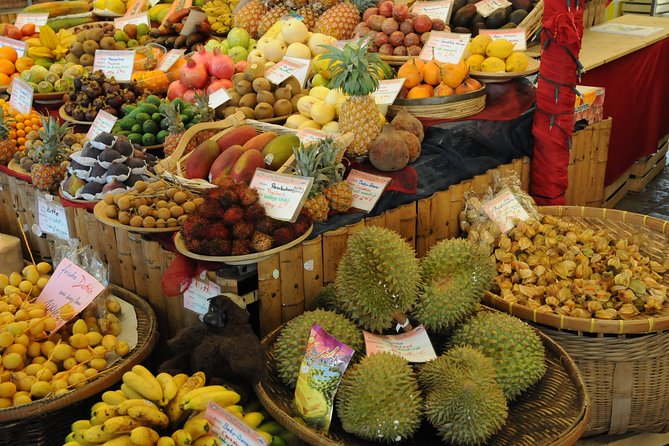
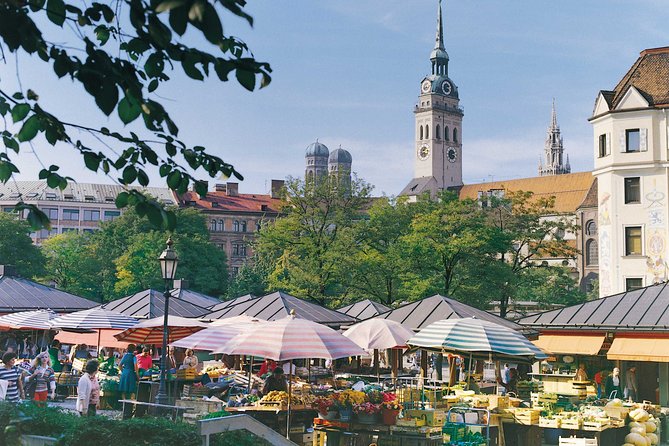
Viktualienmarkt covers about 22,000 square meters in Munich’s old town. That is a lot of ground for a first-time visitor, especially when every path seems to lead to another cheese counter, flower stall, butcher, bakery, juice stand, or pile of fruit.
I like the way this tour solves the market’s biggest problem: choice. Instead of wandering in circles and wondering what is worth buying, you follow a guide who has selected a series of tasting points. The food gives you a reason to stop, while the commentary helps you understand what you are seeing.
The market’s name comes from Viktualien, an older German term for food or provisions. You do not need to know that beforehand, but details like this make the place feel less like a collection of shops and more like an important part of Munich’s daily life.
This is not a formal restaurant meal. You eat standing or gathered near the stalls, and the pace depends partly on the market’s activity. That is part of the appeal. You get to see food in its working setting, with the sellers and their products close at hand.
More tastings around the Viktualienmarkt:
- Munich: Old Town & Viktualienmarkt City Walk in German
★ 4.7 · 2,304 reviews - Munich: Viktualienmarkt Food Tour
★ 4.5 · 1,127 reviews - Munich: Walking Tour Old Town and Viktualienmarkt
★ 4.7 · 839 reviews
Starting near Isartor and entering the old market
The published meeting point is Isartor, at 80331 Munich. From there, the walk leads toward the market and into Munich’s central old town. One account describes a start near Sendlinger Tor instead, so I would check the exact meeting instructions on your confirmation rather than rely only on a general map.
That detail matters because Munich’s center is easy to cross on foot, but a wrong tram or an extra stop can leave you rushing. Arrive early enough to find the guide and settle in before the first tasting.
The end point is given as Viktualienmarkt in the Altstadt-Lehel district. Finishing in the market is convenient. You can continue shopping, return to a stall that caught your eye, or make your own way to nearby sights after the tour.
The group can include up to 23 people. That is not an intimate private walk, but it is still manageable for a guide-led market visit. In a crowded food hall or outdoor market, stay close and keep an ear open for the next meeting point.
The first taste: a seasonal organic drink
The food begins with a refreshing or warming organic welcome drink, depending on the season. This is a small but thoughtful start. A cold drink makes sense in warmer weather, while something warm gives the tour a gentler opening in winter.
The exact drink is not specified, so you should not book expecting one particular beverage. The useful point is that the tour begins with something seasonal rather than jumping straight into a large plate of food.
It also gives the guide time to introduce the market and explain how the tasting will work. Since several stops follow, pace yourself. The samples are meant to build into a meal, not be swallowed in a single rush.
Sausage, bread, and the core of Bavarian food
Hearty sausage specialties are among the clearest links between this market tour and Bavarian food culture. The particular sausages can vary, but you can expect a substantial savory sample rather than a token nibble.
The tour also includes double-baked farmer’s crust bread. That kind of bread is a useful reminder that Bavarian food is not only about sausage and beer. The crust, grain, and baking method give you something to compare with the softer bread often found elsewhere.
These early tastings are practical as well as tasty. They provide the solid part of the meal, while later stops add salt, sweetness, freshness, and variety. The portions are described as generous, and several people finished feeling full enough to count the tour as lunch.
If you have a small appetite, you may want to sample slowly. If you are planning to eat a full restaurant lunch afterward, leave room in your schedule and stomach. The tour is not simply a few decorative bites.
More food tours in Munich:
- Bavarian Beer and Food Evening Tour in Munich
★ 4.5 · 1,575 reviews - Classic Mike’s Bike Tour daily @ 11.30 incl Beer Garden & Surfers
★ 5.0 · 1,246 reviews - Munich: Beer and Food Tour with Dinner & Oktoberfest Museum
★ 4.7 · 1,086 reviews - Munich’s Beer Halls and Breweries: 3-Hour Guided Tour
★ 4.6 · 928 reviews
Bavarian antipasti and Munich’s famous pretzel
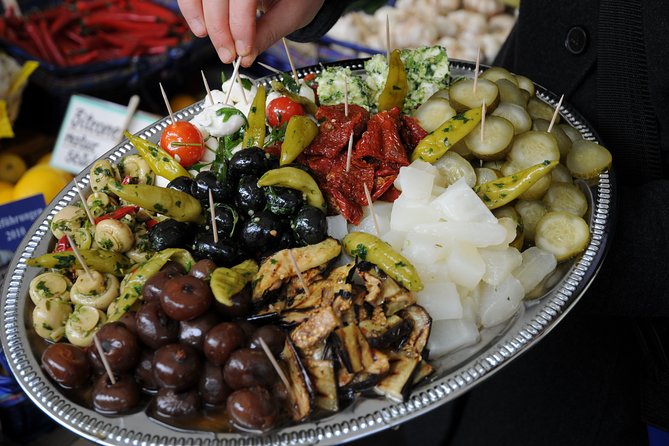
Bavarian antipasti bring a different note to the walk. The listing does not specify every item, but the idea is a selection of prepared foods that broadens the tasting beyond meat and bread.
Then comes a fresh Munich pretzel, one of the market’s most natural crowd-pleasers. The value here is not just the food itself. Your guide can place the pretzel in the larger local eating culture, where baked goods are everyday food and not merely a snack for visitors.
Freshness matters at a market. A pretzel bought from a nearby stall and eaten during the walk has a different feel from one picked up hours earlier at a station. You are tasting the product where it is sold, alongside the people who work with it.
The tour is also designed to use tasting areas with more room. That is helpful at a popular market, where stopping directly in front of a busy counter can block shoppers and make it hard to hear.
Cheese, fruit, and a wider look at the stalls
The cheese tasting adds another layer to the food. You can expect an assortment rather than one fixed cheese, giving you a chance to compare flavors and textures.
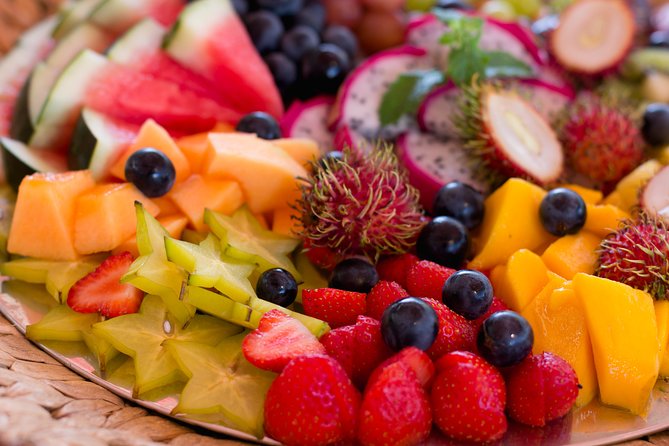
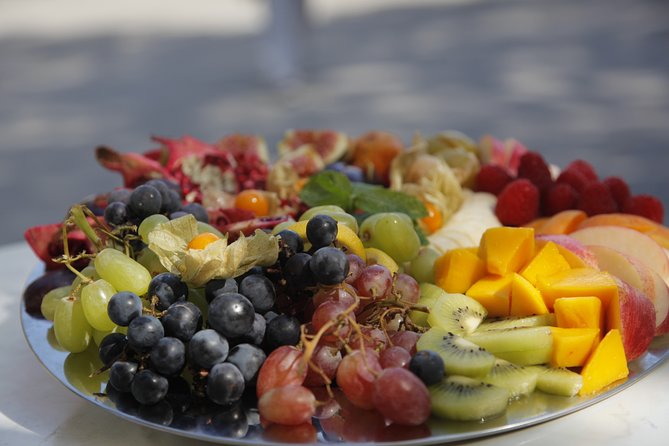
The final food choices include exotic and regional fruit. This is a smart finish after several savory samples. It shows the market’s broader range and keeps the tasting from becoming a long parade of heavy foods.
Viktualienmarkt is known for its mix of produce, fish, meat, bread, cheese, flowers, juices, fruit, antipasti, eggs, and potatoes. You will not necessarily taste all of those categories, but the guide’s route gives you a way to see how they fit together.
I especially like the focus on both regional and less familiar products. A good market tour should not simply serve the most obvious Bavarian dish. It should help you notice the variety that makes the market useful to local shoppers.
The guide’s stories are part of the meal
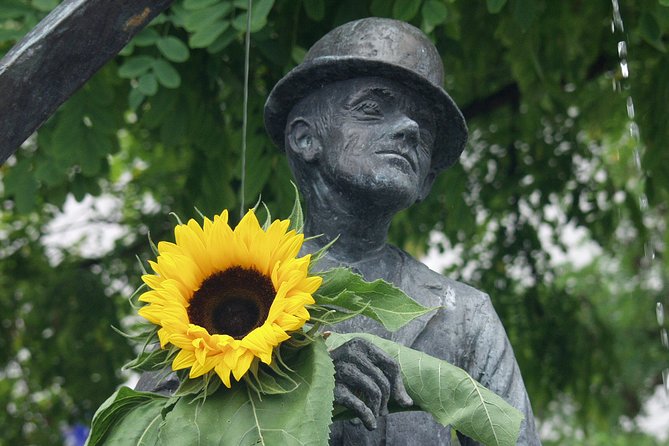
The strongest part of the experience is likely to be the guide’s running commentary. The tour includes facts and curiosities about the market, along with information about Munich itself.
The tone can vary by guide. Gert is described as lively and funny, with a gift for making historical details easy to follow. Christine is also named as a guide who combines humor with useful information. You cannot choose either guide from the details provided, but these names give you an idea of the personal style the tour aims for.
One useful feature is the contact with the stallholders. The food sellers are not treated as scenery. The tour brings you close to people who identify strongly with their market stands and the goods they sell.
That connection gives the tasting more meaning. You are not only learning that a cheese is local or that a bread is traditional. You are seeing the place where such products are selected, presented, and sold.
The stories also appeal to Munich residents. The route includes details about the market that can surprise people who already know the city. For a first-time visitor, the historical notes provide a helpful frame for the surrounding old town.
How much food do you receive?
The tour offers samples from as many as eight stalls. The advertised examples include:
- A seasonal organic welcome drink
- Bavarian sausage specialties
- Double-baked farmer’s crust bread
- Bavarian antipasti
- Fresh Munich pretzels
- A selection of cheeses
- Regional and exotic fruit
The exact combination may change. Markets depend on season, availability, and the stalls included on a particular departure.
The portions are described as generous, and the tasting is intended to provide enough food for lunch. I would treat it as a substantial tasting rather than a guaranteed formal meal. If you have dietary restrictions, the supplied information does not explain substitutions, so ask the provider before booking.
The range is the real value. Paying for eight small tastes individually would take time and planning, and you might still miss the market’s less obvious corners. Here, the guide handles the route while you concentrate on trying foods.
The language issue is not a minor detail
This is the most important practical warning. At least one departure was given in German only, and an English-speaking customer found the experience nearly useless as a result. Another person with limited German had a better outcome because the guide made an effort to include the group.
That means you should not assume the language from the English booking page alone. Confirm the language for your exact date and departure. If the tour is German-only, it may still work for you if you understand German well enough for spoken history and food explanations. If you do not, the tastings remain, but much of the value disappears.
This is especially important because the tour depends on storytelling. You are not simply being handed a food box. The guide’s explanations about Munich, the stalls, and the market’s past are a major part of what you are paying for.
Is $45.28 a fair price?
At $45.28 per person, the cost is reasonable if you want both food and orientation. You are paying for a two-hour guided route, multiple tastings, and the convenience of knowing where to stop in a large market.
The price is less attractive if you only want to sample one or two famous Munich foods. You could buy a pretzel, sausage, or drink yourself for much less. The tour earns its price through variety, interpretation, and access to a planned sequence of stalls.
It also saves you from making several small decisions in a crowded place. That matters on a short visit, when you may not have time to study every counter or figure out which products are worth trying.
With an average booking lead time of 29 days, popular dates may fill ahead of time. If your schedule is fixed, booking early makes sense. The tour has a 4.8 rating from 86 reviews and is recommended by 94 percent of customers, but the language issue keeps it from being a blind choice for everyone.
Who will enjoy this most?
I would recommend the tour to you if you want a friendly introduction to Munich’s food culture and prefer guided structure to aimless browsing. It suits first-time visitors, couples, families with older children, and anyone who wants lunch with local context.
It is also a good choice for people who enjoy trying several foods but do not know what to order. You get a broad sample without committing to full portions at every stop.
The experience may be less suitable if you want a quiet sit-down meal, a private guide, or a highly specialized food study. A group of up to 23 people will not offer the same personal attention as a private tour.
You should also think carefully about the language. If you need English, verify it before booking. That single check may determine whether this is a memorable market walk or an expensive meal with very little explanation.
Practical details before you book
The experience lasts about two hours and uses a mobile ticket. You receive confirmation when you book, and the market is near public transportation.
Most people can participate, and service animals are allowed. The available information does not give a detailed route length or seating plan, so anyone with specific mobility needs should ask the operator for current details before booking.
Free cancellation is available until 24 hours before the start time for a full refund. Within 24 hours, the amount paid is not refunded, and changes are not accepted. The tour also requires a minimum number of participants. If that minimum is not reached and the departure is canceled, you are offered another date or experience, or a full refund.
Should you book the Viktualienmarkt tasting tour?
Book it if you want to turn Munich’s largest food market into a guided meal. The best reasons are the number of tastings, the generous portions, the contact with stallholders, and the chance to hear local stories while you eat.
I would not book without confirming the tour language. I would also choose this over a regular lunch if you value variety and market atmosphere more than table service.
For most visitors who want a practical, tasty introduction to Bavarian food, this is a strong use of two hours. Check the departure language, arrive at the stated meeting point early, and come hungry enough to make the samples count.
FAQ
Where does the Viktualienmarkt tasting tour start?
The stated starting point is Isartor, 80331 Munich, Germany. One description from a participant refers to Sendlinger Tor, so check your booking confirmation for the exact meeting instructions.
Where does the tour end?
The tour ends at Viktualienmarkt, 80 München-Altstadt-Lehel, Germany.
How long does the experience last?
The tour lasts approximately two hours.
How much does the tour cost?
The listed price is $45.28 per person.
How many food stops are included?
The tour includes tastings from up to eight market stands. The exact food selection can vary.
What food might be included?
Possible samples include a seasonal organic drink, sausage specialties, double-baked farmer’s crust bread, Bavarian antipasti, fresh Munich pretzels, cheese, and regional or exotic fruit.
What is the maximum group size?
The tour can have a maximum of 23 travelers.
Can I cancel for a full refund?
Yes. You must cancel at least 24 hours before the experience’s start time for a full refund. Cancellations within 24 hours are not refunded.
Recently reviewed in Munich
- München: Vegetarische Viktualienmarkt-Probiertour Deutsch★ 4.8 · 6 reviews
- Wright Europe Vacations – Private Escorted Auto Tours★ 5.0 · 35 reviews
- Best of Munich Electric Bike Tour★ 5.0 · 38 reviews
- Munich Walking Quiz: Explore and Discover the City’s Highlights★ 5.0 · 7 reviews
- Walking Tour on Resistance to Nazism in Munich★ 5.0 · 8 reviews
- Private Transfer from Munich to Salzburg with 2 hours for sightseeing★ 4.5 · 13 reviews
- Private Transfer from Munich to Vienna with 2 hours for sightseeing★ 4.5 · 6 reviews
- 2 hour Sights Guided E-Scooter Tour in Munich★ 4.0 · 6 reviews
Viktualienmarkt Food Tours, compared.

Lunch Like a Local: Munich’s ORIGINAL Viktualienmarkt Food Tour
Read our review →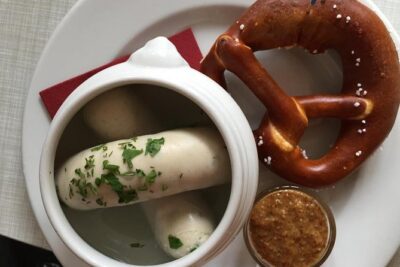
Munich Viktualienmarkt and Beyond Small-Group Food Tasting Tour
Read our review →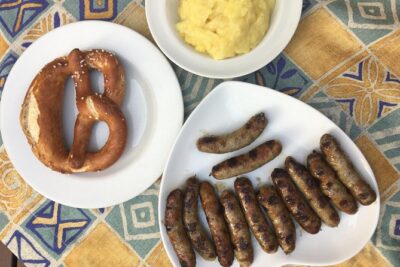
Private – Viktualienmarkt Food Tour and Beyond – best Munich tastings
Read our review →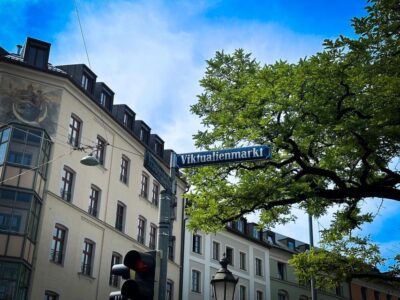
Marienplatz and Viktualienmarkt Private Tour and Tasting
Read our review →Browse the lists this tour appears in