
Reviewed · MUNICH OLD TOWN WALKING TOURS
The Old Town Walking Tour: Munich
Munich’s Old Town is compact, but it packs churches, royal squares, markets, beer halls, and wartime stories into a walk of just over two hours. This tour links the city’s best-known sights in a sensible route, with time for context instead of simply pointing at buildings and moving on.
I like the small maximum group of 24, which gives a good guide a real chance to answer questions. I also like the low listed price of $3.61, especially for a first look at Munich. The catch is that the tour needs a minimum number of bookings, so cancellation at short notice is possible.
Guides including Dani and Timmy have been singled out for lively storytelling, useful local tips, and a knack for keeping younger participants interested. You should still allow extra time before starting, since transport to Karlsplatz is not included and the final stop can shift slightly with the guide’s route.
Key points to know before you book

- A compact route through central Munich: The walk connects Frauenkirche, Marienplatz, Viktualienmarkt, Hofbräuhaus, and Max-Joseph-Platz without requiring separate transport between stops.
- English-language guiding: You receive the tour in English, with explanations of Munich’s royal past, wartime damage, famous buildings, and local customs.
- Dani and Timmy are notable guide names: If your departure is led by one of them, expect a personable style with stories, humor, and practical suggestions.
- The tour is built around public sights: Admission fees are not an issue at the listed stops, though food, drinks, and personal purchases are not included.
- A 24-person maximum: This is not a private walk, but it is smaller than a large coach-style group and should remain manageable in the Old Town.
- Minimum booking rule: The operator can cancel if too few people book, offering another date or experience, or a full refund.
Why this is a useful first walk in Munich
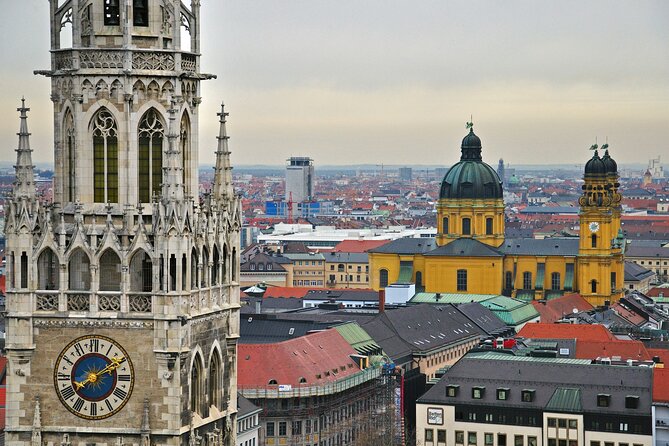
The best feature here is the route itself. Munich’s central sights are close together, yet the city’s story can feel scattered if you visit them without a plan. This walk gives you a framework: church towers, the main civic square, the food market, a beer hall, and the former royal quarter.
That framework matters because each stop shows a different side of Munich. Frauenkirche introduces the city’s religious and architectural identity. Marienplatz brings in civic life and the famous clock show. Viktualienmarkt shows how locals shop and eat. Hofbräuhaus adds the beer-hall tradition, while Max-Joseph-Platz shifts the focus to monarchy, opera, and court life.
The tour runs for about 2 hours 15 minutes, although the scheduled stop times add up to less than that. That leaves room for walking between locations, explanations along the way, questions, and changes in pace. Do not think of it as six isolated photo stops. The connecting streets and commentary are part of the value.
At $3.61 per person, the price is unusually low for a guided city walk. Even if you later explore the same streets on your own, a guide can help you notice details you might otherwise pass without understanding. The main value is not admission to attractions, since the listed stops are free. It is the structure and interpretation.
More walks through the old town:
- Munich: Old Town & Viktualienmarkt City Walk in German
★ 4.7 · 2,304 reviews - Munich Old Town Walking Tour
★ 4.5 · 1,287 reviews - Munich: Spooky Tour of Old Town in German
★ 4.6 · 1,112 reviews
Starting at Karlsplatz and finding your bearings
The meeting point is Karlsplatz 10, 80331 Munich, with a 10:15 am start. Karlsplatz is near public transportation, which helps if you are staying outside the Old Town. Transport to the meeting point is your responsibility, so check your route before the morning of the tour.
Starting at Karlsplatz places you close to Munich’s central pedestrian area. That is useful on a first day because you begin in a part of town where many important sights are within walking distance. You will not spend the first part of the tour sitting in a vehicle or waiting for transfers.
Because the activity is offered in English, you should be comfortable following spoken explanations while walking. Most people can participate, and service animals are allowed. The group can include up to 24 people, so arriving a little early is sensible. It gives you time to locate the meeting point without making the guide wait.
Frauenkirche: Munich’s instantly recognizable church
The first listed stop is Frauenkirche, Munich’s landmark church. The visit is scheduled for about five minutes, so treat this as an introduction rather than a full church tour.
A short stop can still be useful. The church is one of the quickest ways to recognize Munich in photographs and on the city skyline. Your guide can place it within the larger story of the Old Town before moving you onward.
The limited time is also a clear tradeoff. If you want a long look at the interior, quiet reflection, or detailed architectural discussion, five minutes will feel brief. This tour is designed to cover several central sights, not to spend half an hour at one building.
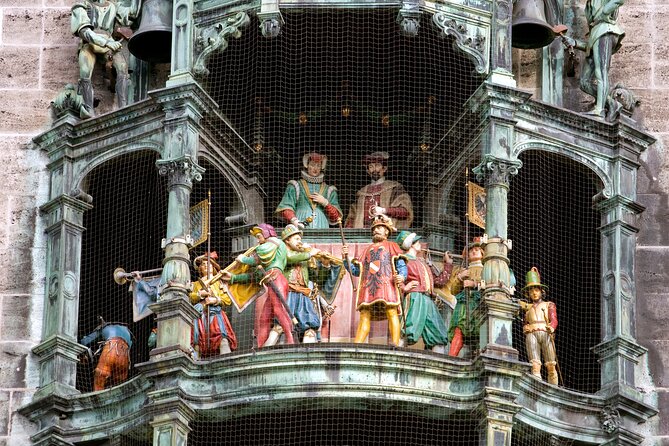
Marienplatz and the Rathaus-Glockenspiel
The Rathaus-Glockenspiel receives about 15 minutes, and this is likely to be one of the liveliest sections of the walk. It is one of the main attractions on Marienplatz, and the tour is timed to make sure you do not miss the action.
The Glockenspiel gives the square a clear focal point. Rather than seeing it as a clock with moving figures and leaving, you get an explanation of why it matters to Munich’s public image. The guide can also help you understand how Marienplatz functions as the center of the Old Town.
This is a place where staying with your group matters. A busy square can make it easy to drift toward a better photo position or lose sight of the guide. Keep the meeting details in mind, especially if you are traveling with children or using the walk as part of a full day of sightseeing.
The stop is also a good test of guiding style. A dry list of dates will not make the Glockenspiel memorable. Guides such as Dani have been praised for turning local history into a story, while Timmy has been noted for combining historical information with practical tips. Those strengths matter most at a public sight that you could otherwise view in a few minutes on your own.
Same city, a very different afternoon:
- From Munich: Neuschwanstein & Linderhof Castle Full-Day Trip
★ 4.5 · 12,494 reviews - Neuschwanstein & Linderhof Castle-Fairytale Day Tour from Munich
★ 4.5 · 7,275 reviews - Munich: Third Reich & WWII Walking Tour
★ 4.6 · 6,181 reviews - Dachau Concentration Camp Memorial Site Tour from Munich by Train
★ 4.5 · 5,637 reviews
Viktualienmarkt: a taste of everyday Munich
The walk continues to Viktualienmarkt for about 15 minutes. It is described as one of Germany’s largest markets, with fresh produce and food stalls providing a different mood from the grand civic buildings nearby.
I like this part of the route because it keeps the tour from becoming a parade of monuments. Markets show how a city feeds itself and socializes, and they give you a chance to see Munich through everyday food rather than royal history alone.
The wording of the stop suggests a stroll through the market and an opportunity to try fresh produce, but you should plan on paying for anything you eat or drink yourself. Food and personal purchases are not included in the tour price.
Fifteen minutes is enough for an introduction, not a full market visit. If you find something you want to sample or buy, make a note of it and return later. The tour’s schedule will not allow you to browse every stall at leisure.
The Old Town Hall and the Juliet statue
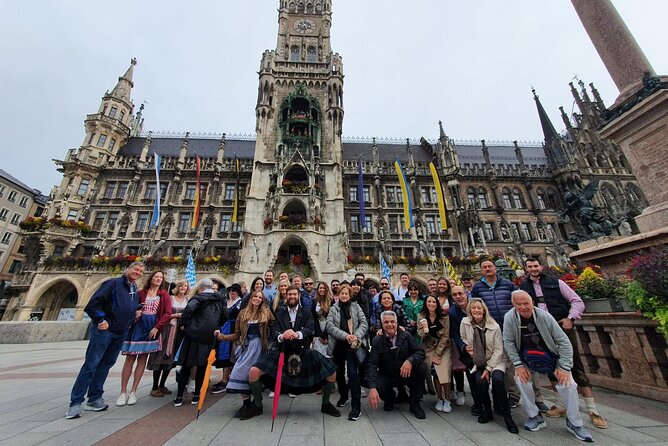
The Old Town Hall gets about 10 minutes. It was destroyed during World War II, making it a useful place to understand the damage Munich suffered and the work involved in restoring its central buildings.
This stop adds a layer that a simple sightseeing circuit often misses. You are not seeing an old façade in isolation. You are being reminded that much of Munich’s historic center has a complicated relationship with reconstruction and survival.
The tour also points out a statue of Juliet from Shakespeare’s famous play. It is an unexpected detail in the middle of Munich’s civic center, and it gives the guide an easy opening for a lighter story after the heavier wartime subject.
Ten minutes will not support a full architectural study or a detailed discussion of the statue’s background. Think of it as a quick, memorable stop that connects local history with an international cultural reference.
Inside the Hofbräuhaus
The Staatliches Hofbräuhaus receives about 15 minutes. This is the world-famous beer hall where you stop to see the interior and learn why the place has become so famous.
The value here is that you are not required to book a meal or spend the evening there as part of the tour. You get an introduction to the setting before deciding if you want to return later. That makes the stop practical for people with limited time or for anyone unsure about committing to a full beer-hall meal.
The visit is primarily a look inside, not a food-and-drink tasting. The listed price covers fees and taxes for the tour, but it does not include your own refreshments. If you want to sit down afterward, treat that as a separate plan.
Hofbräuhaus is also a good place to ask questions about Munich’s beer culture and the difference between a historic beer hall and a casual restaurant. The guide’s storytelling can make this short visit more useful than simply walking past the entrance for a photograph.
Max-Joseph-Platz and the Bavarian royal family
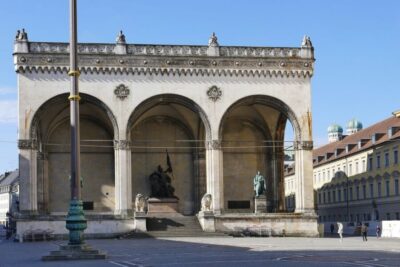
The final listed stop is Max-Joseph-Platz, with about 20 minutes devoted to the Bavarian royal family, which ruled for more than 700 years. This is the longest stop on the stated route, and it gives the tour a strong finish.
Here, the focus shifts from individual sights to the people and institutions that shaped Munich. You hear about the royal family and a funny story connected with the city Opera House. That mix of serious history and humor is important. A walking tour should help you remember the city, not bury you under dates.
The published end point is Max-Joseph-Platz 4, 80539 Munich, but the exact finish can vary with the guide and route. The walk ends in the Old Town, and the guide provides suggestions for other points of interest. This is useful because you can continue exploring without spending time crossing the city to get back to where you started.
The final location also makes the tour easy to fold into the rest of your day. You can use the guide’s suggestions to choose a museum, return to Viktualienmarkt, revisit Hofbräuhaus, or simply continue walking through central Munich.
What the guides add to the route
A route like this succeeds or fails on the person leading it. Dani has been praised for making history funny and easy to follow, even for a 14-year-old who was tired of walking tours. That is a meaningful point if you are visiting with teenagers or family members who lose interest when a guide talks only in dates.
Timmy has also been singled out for sharing many useful tips and adjusting the amount of detail when the group is smaller. That suggests the tour can feel more personal when fewer people book, though you should not assume a private experience.
The tours are not scripted, so the exact route and ending can vary. That gives the guide room to respond to the group and add local suggestions. It also means you should not expect every departure to unfold in precisely the same order or with identical stories.
Who will get the most from this walk
This tour suits first-time visitors to Munich who want a quick orientation before exploring alone. It is also a good fit if you have only one morning available and want to connect the main Old Town sights without arranging separate visits.
Families may appreciate the short stops and the use of humor. The comments about Dani’s storytelling suggest that the experience can work well for older children and teenagers, though everyone in your party should be ready to walk for more than two hours.
It is less suited to you if you want long interior visits, extended time at the market, or a detailed specialist tour of one building. The route covers a lot, so each stop receives a limited amount of time.
The 24-person maximum keeps the group from becoming enormous, but it is still a group walk. If you need a private pace, guaranteed photo time, or an entirely customized route, this is not the right format.
Timing, price, and the one real booking risk
The 10:15 am start gives you a useful morning activity, but remember that the tour does not include transport to Karlsplatz. The walk itself is approximately 2 hours 15 minutes, so you should be free through early afternoon once you allow for the stated duration and any small changes in pace.
At $3.61, the tour offers strong value if you want guidance rather than admissions. The price covers all fees and taxes, while tips, gratuities, food, drinks, and transport to the meeting point are separate.
The main concern is the minimum number of participants. If that minimum is not met, the operator may cancel and offer another date or experience, or provide a full refund. You can cancel for a full refund if you do so at least 24 hours before the start time. Cancellations or changes made within 24 hours are not refunded or accepted.
The high overall rating and 97 percent recommendation figure point to a consistently well-received experience, but the minimum-booking rule means you should avoid building an unchangeable schedule around this one activity until it is confirmed.
Should you book the Old Town Walking Tour?
I would book this tour if you want a low-cost English introduction to Munich’s core sights, especially on your first day. The route covers the essentials, the group size is capped at 24, and guides such as Dani and Timmy have shown the kind of humor and practical focus that can turn familiar monuments into memorable stories.
I would skip it if you want a slow, specialist visit inside each building or guaranteed departure regardless of group size. For most people, though, the price makes the decision easy: you get a sensible Old Town route, local explanations, and useful suggestions for the rest of your stay, with only the minimum-booking risk to watch.
FAQ
How long does the Munich Old Town Walking Tour last?
The tour lasts approximately 2 hours and 15 minutes.
What time and where does the tour start?
It starts at 10:15 am at Karlsplatz 10, 80331 Munich, Germany.
What sights are included?
The route includes Frauenkirche, the Rathaus-Glockenspiel, Viktualienmarkt, the Old Town Hall, Staatliches Hofbräuhaus, and Max-Joseph-Platz.
Is the tour offered in English?
Yes. The tour is offered in English.
How large can the group be?
The tour has a maximum of 24 participants.
Can I cancel for a full refund?
Yes. You can receive a full refund if you cancel at least 24 hours before the experience start time. If the operator cancels because the minimum number of participants is not met, you will be offered another date or experience, or a full refund.
Recently reviewed in Munich
- München: Vegetarische Viktualienmarkt-Probiertour Deutsch★ 4.8 · 6 reviews
- Wright Europe Vacations – Private Escorted Auto Tours★ 5.0 · 35 reviews
- Best of Munich Electric Bike Tour★ 5.0 · 38 reviews
- Munich Walking Quiz: Explore and Discover the City’s Highlights★ 5.0 · 7 reviews
- Walking Tour on Resistance to Nazism in Munich★ 5.0 · 8 reviews
- Private Transfer from Munich to Salzburg with 2 hours for sightseeing★ 4.5 · 13 reviews
- Private Transfer from Munich to Vienna with 2 hours for sightseeing★ 4.5 · 6 reviews
- 2 hour Sights Guided E-Scooter Tour in Munich★ 4.0 · 6 reviews
Munich Old Town Walking Tours, compared.
Mystic Munich – Sagas and Legends of the Old Town
Read our review →
Fall in Love with Munich in a Private Old Town Walking Tour
Read our review →
Browse the lists this tour appears in