
Reviewed · MUNICH CLASSICAL CONCERTS
Mozart and German Composers Private Tour in Munich
Munich’s Old Town becomes much more interesting when you follow its music instead of only its monuments. This private two-hour walk links Mozart, Wagner, and Richard Strauss with churches, royal rooms, opera stages, and the city squares where Munich’s cultural life took shape.
I like the personal format and the way the route joins famous sights with specific musical events, including Mozart’s Idomeneo at the Cuvilliés Theater. I also like the guide’s focus on stories and anecdotes, not just dates. The main drawback is that two hours goes quickly, and this is primarily a walking and storytelling tour rather than a concert or a full interior visit to every landmark.
Key points at a glance
- Mozart’s Munich connection: Hear about his concert at the Residenz and the 1781 premiere of Idomeneo at the Cuvilliés Theater.
- A compact Old Town route: See Marienplatz, St. Peter’s Church, Frauenkirche, the National Theater, and the Munich Residenz.
- More than famous names: The discussion includes court music, church choirs, bourgeois music culture, and medieval Munich.
- Private guide format: The guide can shape the conversation around your interest in opera, composers, churches, or Munich’s past.
- Useful for first-time visitors: The route covers several major sights while adding a clear theme to a standard Old Town walk.
- Practical timing: Plan on two hours, beginning and ending at Marienplatz, with guides available in six languages.
Why Munich’s Old Town sounds different on this walk
Most first walks through Munich’s center focus on architecture, royal power, and the famous beer halls. This tour gives you another way to read the city. A church is not just a church here. A palace is not only a palace. Each may connect to a choir, a court performance, a composer, or an opera premiere.
That makes the route useful for two kinds of people. If you already listen to Mozart, Wagner, or Strauss, you get places to attach to the music. If classical music is not your main interest, the stories give familiar sights a clearer purpose.
The tour is private, so you are not tied to a large group’s questions or pace. You can ask for more Mozart, more opera, more church music, or more general Munich history. The guide speaks English, French, German, Italian, Spanish, or Polish, depending on the option you choose.
The meeting point is in front of hotel BEYOND by Geisel at Marienplatz 22, opposite St. Peter’s Church. Do not go into the hotel. It is only a meeting point, and the hotel staff is not informed about the tour.
More concerts in Munich:
- Munich: Classical Concert at the Residenz Palace
★ 4.5 · 148 reviews - Munich: Concert in the Court Chapel of the Residenz
★ 4.4 · 108 reviews - Munich: Gala Concert in the Cuvilliés Theatre
★ 4.9 · 101 reviews
St. Peter’s Church and the beginnings of Munich’s music
The tour begins in the heart of the Old Town, close to St. Peter’s Church. This is a strong opening because the church connects the modern city center with Munich’s early musical tradition. Its choir dates back to the early 13th century, giving your guide a concrete way to explain how sacred music developed in the city.
Here, the focus is not only on famous composers. You also hear about the church music tradition that helped shape everyday musical life. Long before modern concert halls, churches were key places for trained singers, instrumentalists, and composers.
I like this part because it shows that Munich’s music did not begin with opera stars. It grew through religious services, choirs, court patronage, and training. The story feels more complete when you understand the institutions that supported music before the great names arrived.
The church is also a practical place to begin. You are already near Marienplatz, the main square, so the route gets underway without a long transfer. Since this is a walking tour, wear comfortable shoes and expect the usual city-center footing.
Marienplatz, Frauenkirche, and the musicians behind the monuments
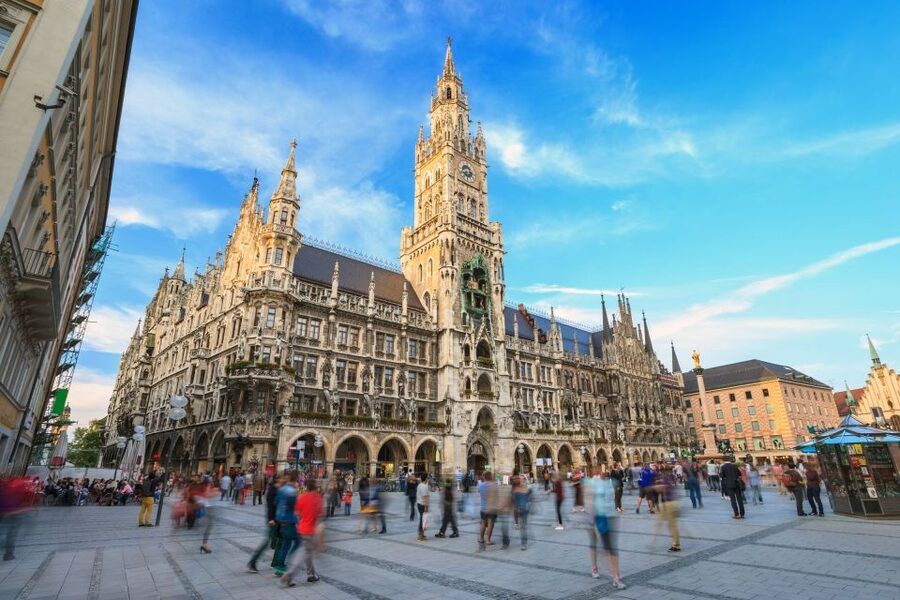
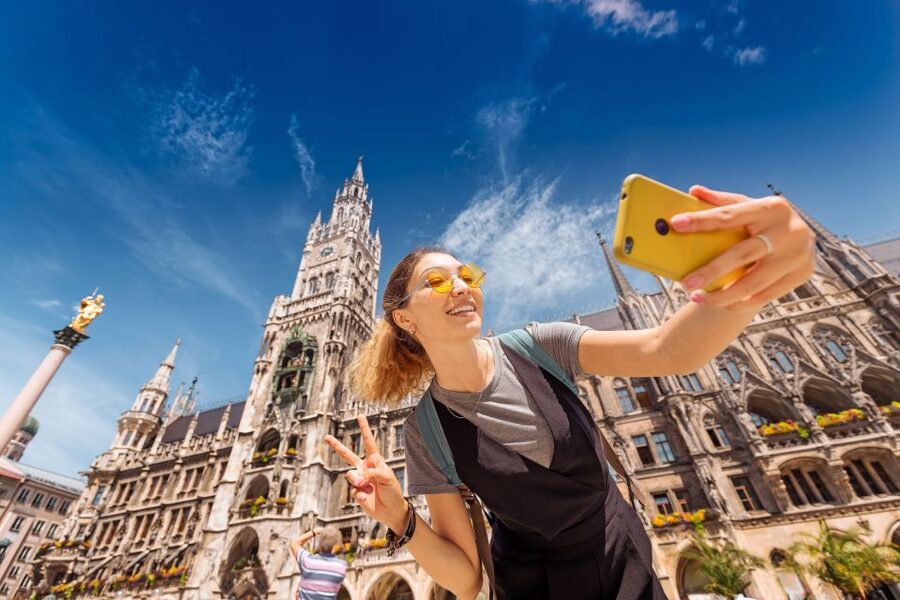
From St. Peter’s, the route leads through Marienplatz toward Frauenkirche. Marienplatz is one of Munich’s essential sights, but a music-themed guide changes what you notice. Instead of treating the square as a quick photo stop, you can use it as a setting for the city’s public and cultural life.
Frauenkirche adds another important layer. Young musical talents trained there under the direction of major figures such as Orlande de Lassus, one of the leading musicians of the 16th century. That detail helps explain how Munich built a serious musical reputation well before Mozart, Wagner, and Strauss.
The story of training matters. Great composers do not appear out of nowhere. They develop within schools, churches, courts, and professional networks. A guide can make those connections easier to follow than a short museum label or a quick internet search.
This portion should suit you if you enjoy seeing how music worked in daily life. You are not simply collecting composer birthplaces. You are learning how singers were trained, how church institutions shaped musical standards, and how the city became a place where musicians could build careers.
The route does not promise a concert inside Frauenkirche, and the tour description does not specify interior access at each stop. Think of this as a guided city walk with musical context, not a performance visit.
The National Theater and Munich’s opera tradition

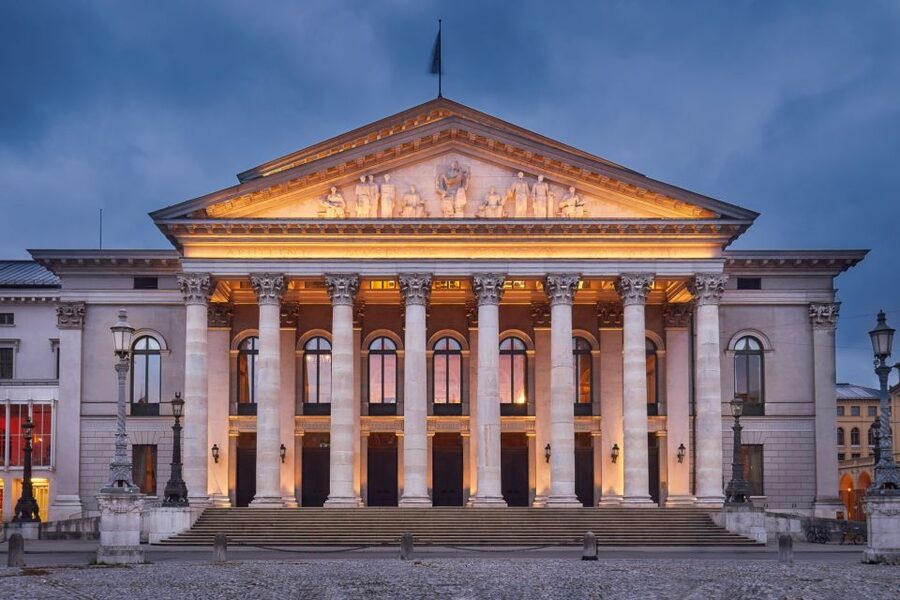
The National Theater is one of the route’s biggest musical landmarks. It is home to the Bavarian State Opera, and the building is tied to major moments in German opera.
Your guide explains that many of Richard Wagner’s works were first performed there. Richard Strauss also worked at the theater as a third conductor. Those details give the building a direct link to two very different composers and careers.
Wagner’s association with Munich is especially useful to explore because his work was closely tied to royal support, grand productions, and large opera houses. Strauss brings another chapter, connecting Munich to a later generation of German musical life.
This stop should appeal to you if you want the tour to move beyond Mozart. The route is not limited to one composer or one period. It covers medieval church music, Renaissance training, royal performances, opera, and the professional world of the theater.
The National Theater also helps you understand the difference between music made for worship, music performed at court, and opera created for a public stage. That range is one of the tour’s best features. In a short time, the guide can show how Munich supported music in several settings.
Keep your expectations practical. The experience is described as a walking tour that sees the National Theater and explains its role. It does not state that an opera ticket or backstage visit is included. If you want a performance, you would need to arrange that separately.
A few more Munich tours worth comparing
- Munich Private Tour with a Local – Highlights & Hidden Gems
★ 5.0 · 469 reviews - Mike’s Neuschwanstein & Linderhof Private Tour from Munich
★ 5.0 · 197 reviews - Dachau Concentration Camp Private Tour by Train from Munich
★ 5.0 · 185 reviews - Fall in Love with Munich in a Private Old Town Walking Tour
★ 5.0 · 182 reviews
The Residenz and Mozart’s royal audience
The Munich Residenz brings the tour into the world of Bavarian rulers and court music. This former royal complex is connected to Wolfgang Amadeus Mozart, who played a concert there for Elector Karl Theodor and Ferdinand IV, King of Naples.
That story gives Mozart a place in Munich’s political and social world. He was not simply composing in isolation. Court invitations, royal audiences, and elite cultural spaces helped shape how music circulated and who could hear it.
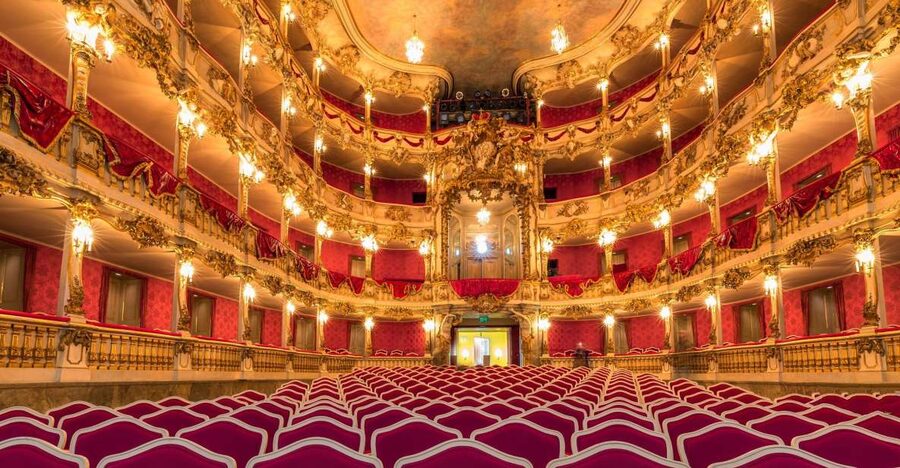
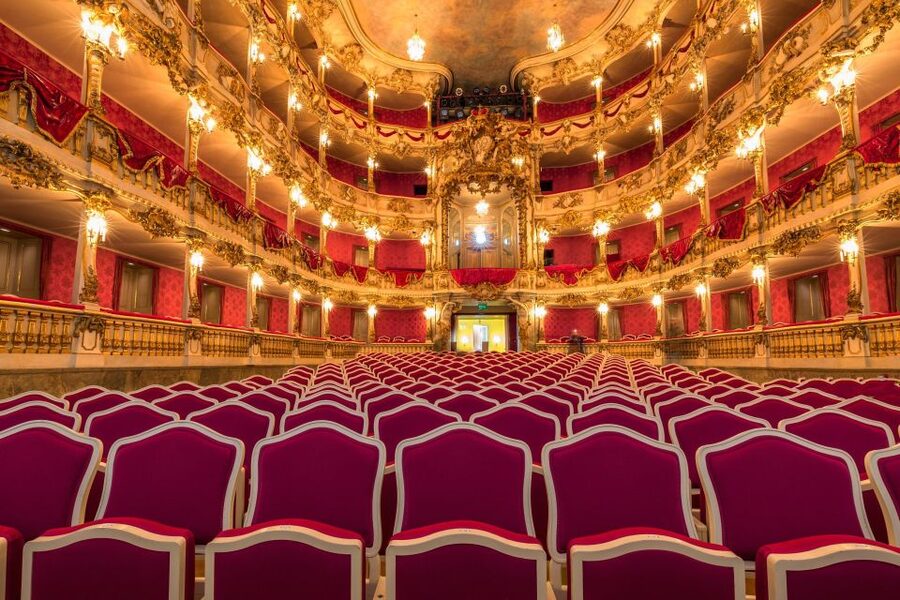
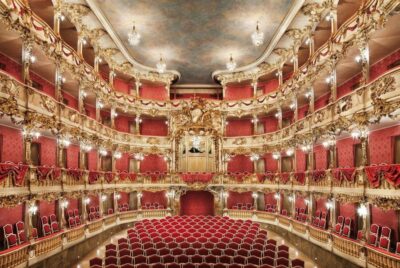
Inside the Residenz is the Cuvilliés Theater, one of the most important stops for Mozart fans. Mozart premiered his opera Idomeneo there in 1781. That specific event makes the theater more than a decorative room. It links the architecture to a work, a date, and a moment in Mozart’s career.
I consider this one of the tour’s strongest details because it gives you something precise to remember. After the walk, you can say that Mozart premiered Idomeneo in Munich’s Cuvilliés Theater, rather than simply remembering that he once visited the city.
The tour information does not specify admission to the Residenz or Cuvilliés Theater. You should confirm what is open and included when booking. Even if the route discusses the complex from outside, the guide can still explain its musical importance and point out the connection between the royal residence and the theater.
What the guide adds to a standard Munich walk
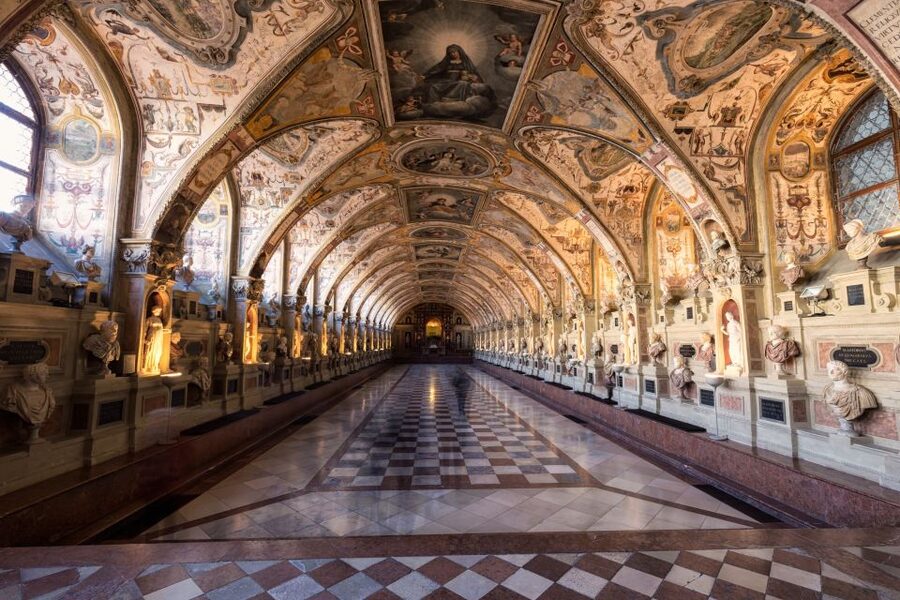
A private guide makes the biggest difference when the subject is specialized. Plaques and guidebooks can tell you that Mozart, Wagner, or Strauss had a Munich connection. A good guide can connect those facts into a story about the city.
The guide is described as licensed, five-star rated, and fluent in your chosen language. No individual guide name is provided, so you should not book this expecting a particular person. The available languages are English, French, German, Italian, Spanish, and Polish.
The guide can tailor the discussion to your interests. You might ask for more detail on:
- Mozart’s time in Munich and Idomeneo
- Wagner’s premieres at the National Theater
- Strauss’s work with the Bavarian State Opera
- Orlande de Lassus and musical training at Frauenkirche
- Church choirs and sacred music
- Court music at the Residenz
- The growth of public and bourgeois music culture
One strong point from the experience is the use of cultural anecdotes. Music history can become a dry chain of names and dates, but anecdotes help you remember how people performed, trained, worked, and moved through the city.
The private format also lets you pause for questions. That matters if someone in your group knows opera well and wants technical detail, or if you are new to classical music and need the basics explained without feeling rushed.
A two-hour pace, with real limits
Two hours is enough for a focused introduction to Munich’s musical past. It is long enough to cover several major Old Town sights, but short enough to fit into a busy sightseeing day.
The route begins and ends at the same meeting point near Marienplatz. That makes it easy to combine with other plans in central Munich. You can schedule it near the start of your stay to get your bearings, or later in the trip after seeing the main sights and wanting a fresh angle.
The pace will depend on the guide, the group, and the amount of discussion. One piece of practical feedback noted that the tour ran a little longer. That may be welcome if you are enjoying the stories, but it could matter if you have a timed reservation afterward.
I would leave a little breathing room after the scheduled end. Avoid booking a train, meal, or museum entry immediately afterward. The guide may have extra context to share, and Old Town walking tours rarely finish with the precision of a railway departure.
Because the walk includes churches, squares, theaters, and palace sites, you should also expect some standing outdoors. The tour description does not give a detailed accessibility statement, so ask the provider directly if you have mobility needs or require a specific route.
Is $215 per person a good value?
The listed price is $215 per person. That is a serious price for two hours, but this is a private experience rather than a standard group walk.
The value depends on how much you want personal attention. For a couple or a small private group with a strong interest in music, the guide’s ability to adjust the conversation may justify the cost. You are paying for a themed route, a private guide, language choice, and a focused explanation of several major places.
The value is weaker if you only want a fast introduction to Munich’s main sights. You can see Marienplatz, Frauenkirche, the National Theater, and the Residenz on your own. The reason to book this tour is not simply access to the streets. It is the musical connection between them.
The price also makes sense for a special-interest day. A classical music fan may get more from two hours here than from a general city tour that gives only a passing mention to composers. The same goes for someone visiting Munich for opera or a concert.
Before booking, check whether any interior admissions are included. The listed inclusions cover the guided walking tour and Old Town highlights, but they do not clearly promise entry to the Residenz, Cuvilliés Theater, National Theater, or churches.
Who should book this private music walk?
I would recommend this experience to:
- Classical music fans who want real places connected to Mozart, Wagner, Strauss, and other composers
- First-time Munich visitors who want a themed introduction to the Old Town
- Couples or families who prefer a private guide over a large group
- Visitors who want to ask questions in English, French, German, Italian, Spanish, or Polish
- People interested in the link between music, churches, royal courts, and opera
- Anyone who already plans to see Marienplatz and the Residenz but wants more meaning from those stops
I would be more cautious if you want a full concert experience, extensive museum time, or a tour that focuses on the interiors of every building. The experience is built around walking and interpretation. It is not advertised as a performance, backstage visit, or full palace admission.
The tour also suits a short Munich stay. You can cover several central landmarks in one compact outing, then use the guide’s recommendations to decide which places deserve a longer visit later.
Booking details worth knowing
The activity lasts two hours, with starting times shown when you check availability. It begins and ends in front of hotel BEYOND by Geisel at Marienplatz 22, 80331 Munich, opposite St. Peter’s Church.
It is a private group experience, and the guide speaks the language selected at booking. You can reserve now and pay later, which is useful when your Munich schedule is still changing. Cancellation is free up to 24 hours before the tour for a full refund.
Check your email the day before. Important tour information is sent there, and you should make sure you know the meeting instructions before heading to Marienplatz.
Should you book it?
Book this tour if you want Munich’s famous center explained through music rather than only architecture. The strongest reasons are the private format, the clear route through major Old Town sights, and the specific Mozart connection to the Cuvilliés Theater and Idomeneo.
Skip it if you mainly want entry tickets, a live performance, or a broad general tour at the lowest possible price. At $215 per person, it earns its value through specialist storytelling and personal attention.
For music lovers, the tour offers a memorable way to connect St. Peter’s Church, Frauenkirche, the National Theater, and the Residenz. For everyone else, it adds a useful question to a Munich visit: not just what happened in these buildings, but what was heard there.
FAQ
How long is the Mozart and German Composers Private Tour?
The tour lasts two hours.
Where does the tour begin?
It begins in front of hotel BEYOND by Geisel at Marienplatz 22, 80331 Munich, opposite St. Peter’s Church.
Where does the tour end?
The activity ends back at the meeting point near Marienplatz.
Is this a private group tour?
Yes. The experience is offered for a private group.
Which languages are available?
The live guide is available in English, French, German, Italian, Spanish, and Polish.
Which Munich sights are included on the route?
The route includes Old Town highlights such as St. Peter’s Church, Marienplatz, Frauenkirche, the National Theater, and the Munich Residenz.
Does the tour include a concert or opera performance?
The provided information describes a guided walking tour and does not list a concert or opera performance as an inclusion.
Can I cancel the tour for a refund?
Yes. You can cancel up to 24 hours in advance for a full refund.
Recently reviewed in Munich
- München: Vegetarische Viktualienmarkt-Probiertour Deutsch★ 4.8 · 6 reviews
- Wright Europe Vacations – Private Escorted Auto Tours★ 5.0 · 35 reviews
- Best of Munich Electric Bike Tour★ 5.0 · 38 reviews
- Munich Walking Quiz: Explore and Discover the City’s Highlights★ 5.0 · 7 reviews
- Walking Tour on Resistance to Nazism in Munich★ 5.0 · 8 reviews
- Private Transfer from Munich to Salzburg with 2 hours for sightseeing★ 4.5 · 13 reviews
- Private Transfer from Munich to Vienna with 2 hours for sightseeing★ 4.5 · 6 reviews
- 2 hour Sights Guided E-Scooter Tour in Munich★ 4.0 · 6 reviews
Munich Classical Concerts, compared.
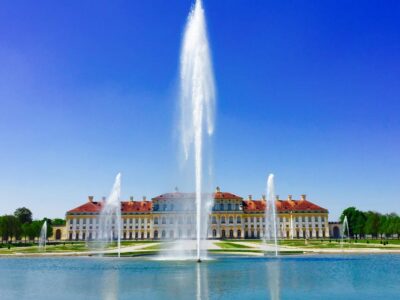
Festive Concert at Schleißheim with Residence-Soloists
Read our review →
Browse the lists this tour appears in