
Reviewed · NYMPHENBURG PALACE TOURS
Private Tour of Nymphenburg Palace and Gardens
Nymphenburg Palace is more than a pretty royal residence. It is a full half-day look at Bavarian court life, from grand rooms and aristocratic flirtation to servant routines, secluded garden retreats, and an old royal swimming pool. Tom Mills leads this private English-language tour, using stories and visual aids to make the Wittelsbach family easier to follow.
I especially like the freedom of a private group, since you can ask questions and set a comfortable pace. I also like that the tour reaches beyond the main palace into the four garden pavilions, including the shell grotto at Magdalenenklause. The main drawback is walking: getting from Munich’s central station to the palace involves public transport and the palace grounds are extensive.
Key points to know before booking
- A private tour with Tom Mills: Only your group takes part, with time for questions and a flexible pace.
- Public transport is part of the plan: You meet at Munich Hauptbahnhof and travel to Nymphenburg by tram or other local transport.
- The gardens are a major part of the visit: Four small palaces and retreats are included, not just the main building.
- Seasonal closures matter: Amalienburg, Badenburg, Pagodenburg, and Magdalenenklause are closed from October 16 to March 28.
- The winter alternative is the Marstallmuseum: From October 16 to March 28, the carriage museum replaces the garden pavilions.
- Plan for a long outing: The tour lasts about five hours and includes substantial walking outdoors.
Why Nymphenburg deserves half a day
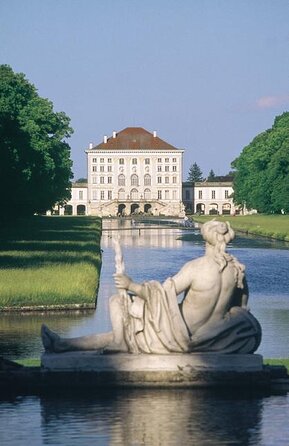
Munich’s central sights can make the city feel compact, but Nymphenburg changes the scale. The palace sits in a large royal park, with formal avenues, fountains, sculptures, wooded paths, and small pleasure buildings spread across the grounds.
The main palace is impressive, but the wider estate explains how Bavaria’s rulers actually lived. This was not simply a ceremonial building. It was a place for family life, parties, hunting, private study, religious retreat, and escape from the pressure of court.
That larger story is the best reason to book a private guide. You can visit the palace on your own, but it is easy to see only a sequence of decorated rooms. Tom’s approach connects the rooms to the people who used them and to the political struggles surrounding the Bavarian royal family.
The tour is described as a real-life Game of Thrones story, though without dragons or fantasy. The point is the family drama: succession, ambition, alliances, romance, and court politics. You also hear about less glamorous matters, including the daily work of servants and the social rules that shaped aristocratic life.
More Nymphenburg Palace visits:
- Munich: Nymphenburg Palace Entry Ticket
★ 3.9 · 327 reviews - Munich Nymphenburg Palace & Carriage Museum Fast-Track Tour
★ 4.5 · 32 reviews - Munich: Nymphenburg Palace OR Residenz Guided Tour
★ 4.4 · 31 reviews
Meeting Tom at Munich Hauptbahnhof
The normal meeting point is Munich’s main train station, or Hauptbahnhof. It is a practical choice because the station connects to S-Bahn, U-Bahn, buses, and trams, and it is close to the public transport route used for the palace.
Tom arranges the transport and palace entry logistics, so you do not have to work out the route or ticket process yourself. This is especially useful if you are unfamiliar with Munich’s system or want to spend your morning learning rather than navigating.
One important point: this is not a vehicle pickup tour. Public transport and walking are built into the experience. One booking had expected less walking after arranging a hotel meeting point, but the normal start at Hauptbahnhof is closer to the required tram stop. If you have limited mobility, ask about the route before booking.
The advertised start window is between 9:30 and 10:00 in the morning, and the activity ends back at the meeting point. Confirmation is sent within 48 hours, subject to availability.
Inside Nymphenburg Palace
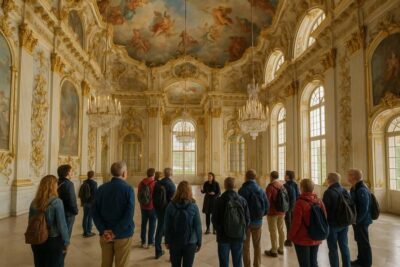
Inside the palace, Tom explains the building’s royal residents and the way court life worked. You move through the principal rooms while learning why certain spaces mattered, who used them, and how the Bavarian family fit into the larger story of Germany and Europe.
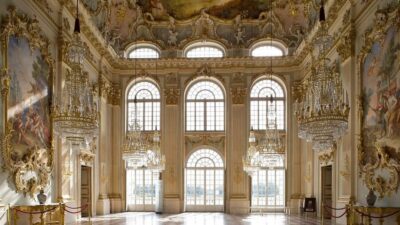
The grand hall is one of the visual highlights. Its scale and decoration make an immediate impression, but a guide helps you look past the surface. Instead of simply admiring stucco, paintings, and ornament, you can ask what the room was for and how it functioned during royal events.
Tom is particularly strong at adding human detail. He uses humor, personal stories about historical figures, and a binder of visual material to make complicated family relationships easier to understand. The visual aids are useful if names and dynasties usually blur together for you.
You also receive free time to explore some of the palace rooms independently. That is a small but important feature. A tightly scripted tour can leave you feeling as if you are being hurried from one object to the next. Here, you can pause, look again, or ask Tom about something that caught your attention.
The palace interior is opulent, but it may feel familiar if you have already visited Munich Residenz. Both present grand court rooms and elaborate decoration. The value of Nymphenburg is not just the interior. The palace grounds and the smaller buildings give the visit a different character.
The gardens: where the tour gets more interesting
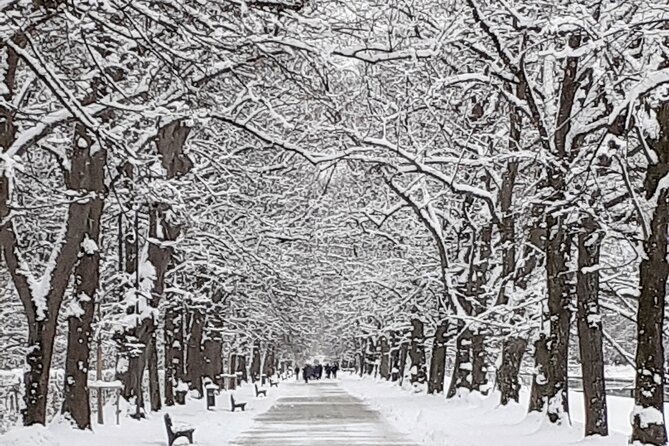
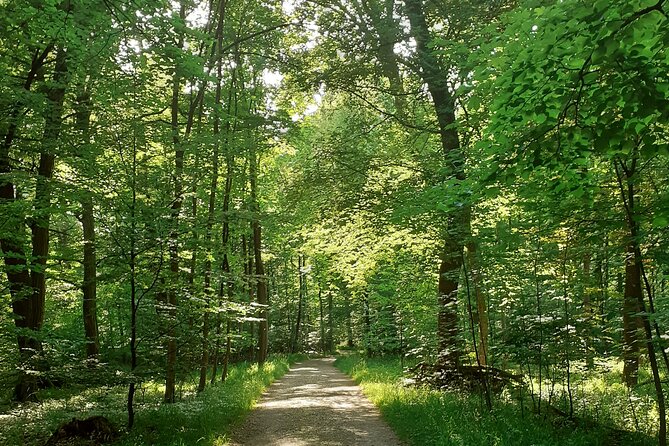
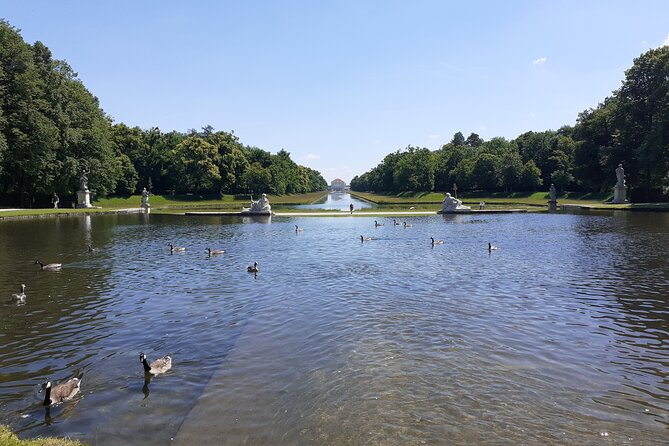
The gardens are the part I would protect in your schedule. They combine formal French design with more natural English-style areas, creating a changing walk rather than one long ornamental avenue.
You pass fountains, statues, and wooded sections as you move toward four separate pavilions. Each one offers a different view of royal life. Some are playful, some private, and some deliberately modest compared with the main palace.
The walk does require stamina. The estate is large, and the tour lasts around five hours. Wear comfortable shoes and be ready for outdoor conditions. A guide can adjust the pace for age and heat, but the distance cannot be removed from the experience.
The gardens also help you understand the royal family’s need for privacy. A palace could be crowded with officials, servants, and formal duties. These smaller buildings offered places to hunt, swim, pray, study, or entertain a select circle.
A few more Munich tours worth comparing
- Munich Private Tour with a Local – Highlights & Hidden Gems
★ 5.0 · 469 reviews - Mike’s Neuschwanstein & Linderhof Private Tour from Munich
★ 5.0 · 197 reviews - Dachau Concentration Camp Private Tour by Train from Munich
★ 5.0 · 185 reviews - Fall in Love with Munich in a Private Old Town Walking Tour
★ 5.0 · 182 reviews
Amalienburg and the rococo pleasure palace
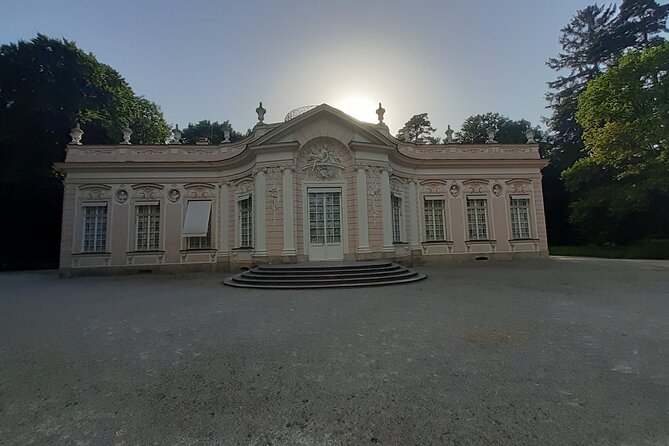
Amalienburg is a former hunting lodge and one of the most decorative small buildings in the park. It was created for an empress and is described as a rococo masterpiece.
That combination tells you something about court culture. Hunting was not only a practical activity. It was also a social performance, a reason to spend time outdoors, and a setting where members of the court could display status.
The building is small compared with Nymphenburg Palace, but its size is part of its appeal. You get a more intimate sense of royal leisure, rather than another vast ceremonial apartment.
Amalienburg is closed from October 16 to March 28. If your visit falls during that period, you will not see the interior, so check the seasonal schedule before you decide how much of the garden portion matters to you.
Badenburg and the royal swimming pool
Badenburg gives the tour one of its most unusual details: a baroque swimming pool associated with Elector Max Emanuel.
A royal pool sounds like a simple curiosity, but it shows how much effort went into private comfort and entertainment at court. It also breaks up the usual parade of reception rooms and chapels. You are not only looking at places where rulers received ambassadors. You are seeing where they relaxed.
The stop takes about ten minutes, which is enough to appreciate its purpose without turning the tour into a specialist architectural lecture. Like Amalienburg, Badenburg is closed from October 16 to March 28.
Pagodenburg and a Chinese-inspired retreat
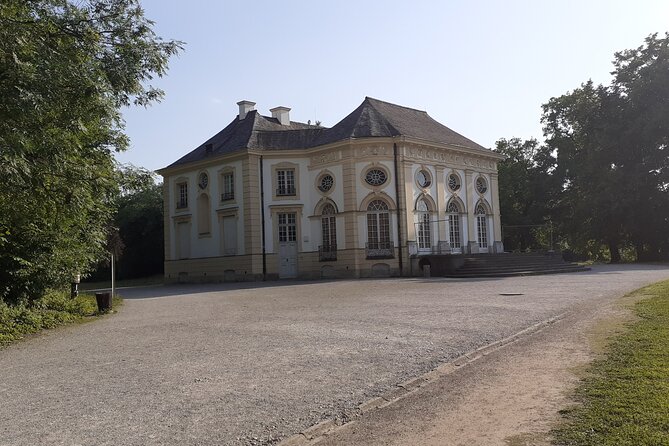
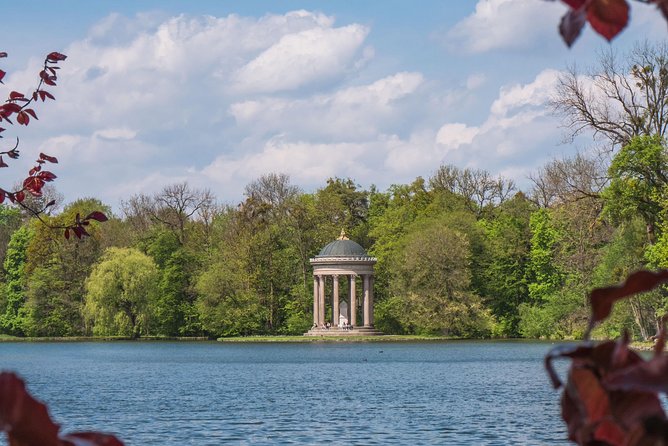
Pagodenburg was the first of the park pavilions built by Elector Max Emanuel. It is a small pleasure palace with Chinese-inspired decoration, reflecting the European fascination with Asian design that shaped many royal interiors of the period.
The building adds variety to the estate. After the scale of the main palace and the rococo elegance of Amalienburg, Pagodenburg feels more like a private retreat. You can see how the court used architecture to create different moods within one royal property.
This pavilion is also closed from October 16 to March 28. In warmer months, it forms part of the garden sequence and helps make the outdoor section feel like a set of distinct discoveries rather than one extended walk.
Magdalenenklause and the shell grotto
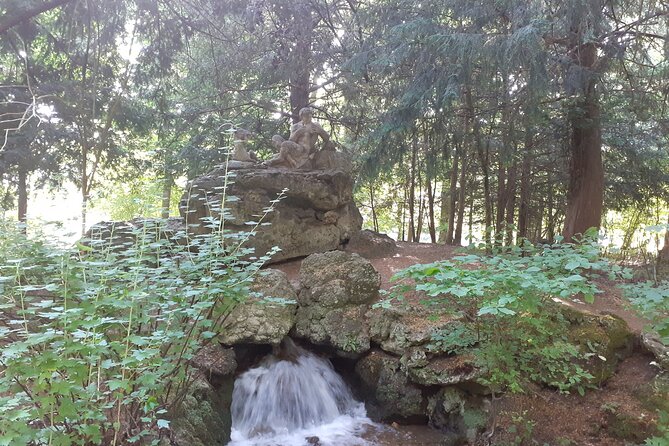
Magdalenenklause is the most reflective stop. It was built as a hermitage where Bavarian electors and kings could withdraw from court life, study the Bible, and spend time in contemplation.
Its shell grotto gives the building a strange, decorative quality, while the miracle-working spring adds a religious and folkloric dimension. This is a very different kind of royal building from a hunting lodge or swimming pavilion.
I like this stop because it reveals a quieter side of monarchy. Court life was built around display and ceremony, but the rulers also created spaces meant to suggest retreat and devotion. The contrast makes the overall visit more human.
Magdalenenklause is closed from October 16 to March 28. If you visit in winter, the park still has value, but this particular part of the story will be unavailable.
The winter option: Marstallmuseum
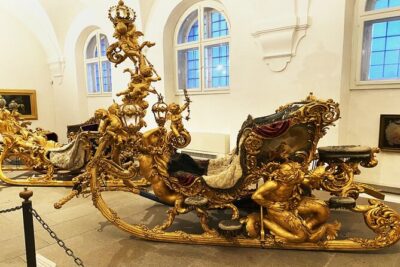
From October 16 to March 28, the tour includes the Schloss Nymphenburg Marstallmuseum instead of the four seasonal garden pavilions. This carriage museum presents the vehicles used by the Wittelsbach family.
The change is worth noting when comparing dates. The summer route emphasizes outdoor walking and small palace interiors. The winter route shifts toward royal transport and court ceremony indoors.
The Marstallmuseum visit is listed at about 20 minutes. That is shorter than the main palace and gardens, but it gives you another way to understand status at court. A carriage was not merely transport. It was a public display of rank, wealth, and ceremony.
Tom’s guiding style and personal touches
Tom Mills is the key reason to choose this experience instead of visiting alone. He has lived in Munich for more than a decade and is originally from the United Kingdom, so the tour is conducted in clear English.
His approach combines factual explanation with humor and stories about the palace’s inhabitants. He also brings a binder of visual aids, which can help when several generations of Bavarian rulers begin to blend together.
The pace is another strength. Tom can slow down for older members of a group or adjust the walk in hot weather. He has also been attentive to small practical needs, including carrying an umbrella for a guest caught in the rain. Those details matter on a five-hour outing.
The private format gives you room to shape the visit. You can ask for more background on the royal family, spend longer on the garden buildings, or seek suggestions for restaurants and other Munich sights. You are not sharing the guide’s attention with a large crowd.
That personal service is also the main reason the price is high.
Is $192.77 per person fair value?
At $192.77 per person, this is not a budget palace visit. You are paying for a private guide, entry tickets, transport assistance, and roughly five hours of focused attention.
For one person or a couple, the cost may feel steep. For a small group, the private format becomes easier to justify, especially if you value a flexible pace and do not want to sort out public transport, admission, and the sprawling garden layout yourself. Group discounts may also be available.
The strongest value comes from the interpretation. If you are content to read labels and use an audio guide, a private tour may not be necessary. If you want the palace’s family politics, court routines, and lesser buildings explained in a connected way, the price buys more than simple entry.
I would also compare this outing with your Munich Residenz plans. The interiors overlap in their grand royal style, but Nymphenburg gives you the gardens, pavilions, and royal retreat buildings. Seeing both can be worthwhile, though visitors focused only on palace rooms may find the experiences less distinct.
Who should book this Nymphenburg tour?
This tour suits you if you enjoy history told through personalities rather than dates alone. It is also a good match for anyone who wants to ask questions freely, needs a considerate pace, or prefers not to manage transport and tickets independently.
Families and small groups can benefit from the private format because the guide can adjust the explanation to different interests. The tour also works well for first-time Munich visitors who want some wider city advice along with Nymphenburg.
You should think twice if you dislike walking, want a short palace visit, or are visiting between October 16 and March 28 mainly to see the four garden pavilions. The winter Marstallmuseum is included instead, but it is a different experience.
Free cancellation is available up to 24 hours before the start time for a full refund. Changes or cancellations inside that period are not accepted, so keep the local cut-off in mind.
Should you book it?
I would book this tour if Nymphenburg is high on your Munich list and you want the full estate, not only the grand rooms. Tom’s visual aids, flexible pacing, and storytelling give the palace’s royal family a human shape, while the four garden buildings add the unusual details that make the visit memorable.
Book with care if you are traveling in the winter season or have mobility concerns. Confirm which buildings will be open, expect public transport and considerable walking, and decide if the private guide experience fits your budget.
For a relaxed, history-focused half day with a small group, this is a strong choice. The palace is beautiful, but the gardens, pavilions, and stories about court life are what make the outing worth the time and cost.
FAQ
Where does the tour begin?
The tour begins at Hauptbahnhof, Munich’s main train station, at 80335 Munich, Germany.
Where does the tour end?
The activity ends back at the meeting point at Munich Hauptbahnhof.
How long does the tour last?
The tour lasts approximately five hours.
What language is the tour offered in?
The tour is offered in English.
Is this a private tour?
Yes. Only your group participates in the activity.
How do you get from the station to Nymphenburg Palace?
Your guide takes you by public transport from Munich’s main train station to Nymphenburg Palace.
Are admission tickets included?
Yes. Admission tickets are included for the palace and the listed stops.
Are the four garden pavilions open all year?
No. Amalienburg, Badenburg, Pagodenburg, and Magdalenenklause are closed from October 16 to March 28.
What is included during the winter closure period?
From October 16 to March 28, the tour includes the Schloss Nymphenburg Marstallmuseum, which displays Wittelsbach carriages.
Can I cancel for a full refund?
Yes. You can cancel at least 24 hours before the experience start time for a full refund. Cancellations or changes made less than 24 hours before the start time are not accepted.
Recently reviewed in Munich
- München: Vegetarische Viktualienmarkt-Probiertour Deutsch★ 4.8 · 6 reviews
- Wright Europe Vacations – Private Escorted Auto Tours★ 5.0 · 35 reviews
- Best of Munich Electric Bike Tour★ 5.0 · 38 reviews
- Munich Walking Quiz: Explore and Discover the City’s Highlights★ 5.0 · 7 reviews
- Walking Tour on Resistance to Nazism in Munich★ 5.0 · 8 reviews
- Private Transfer from Munich to Salzburg with 2 hours for sightseeing★ 4.5 · 13 reviews
- Private Transfer from Munich to Vienna with 2 hours for sightseeing★ 4.5 · 6 reviews
- 2 hour Sights Guided E-Scooter Tour in Munich★ 4.0 · 6 reviews
Nymphenburg Palace Tours, compared.
Munich Nymphenburg Palace & Carriage Museum Fast-Track Tour
Read our review →
Munich Nymphenburg Palace Tickets and Tour, Carriage Museum
Read our review →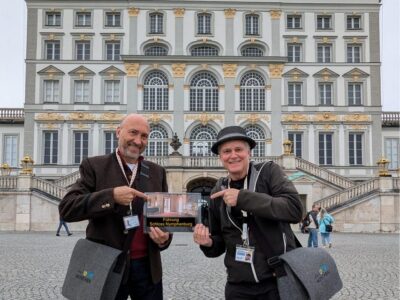
Nymphenburg Palace Skip-the-Line Private Guided Tour
Read our review →
Skip-the-line Nymphenburg Palace Guided Tour with Transfers
Read our review →
Browse the lists this tour appears in