
Reviewed · MUNICH NIGHT WATCHMAN TOURS
Medieval city tour with night watchman in Munich in German
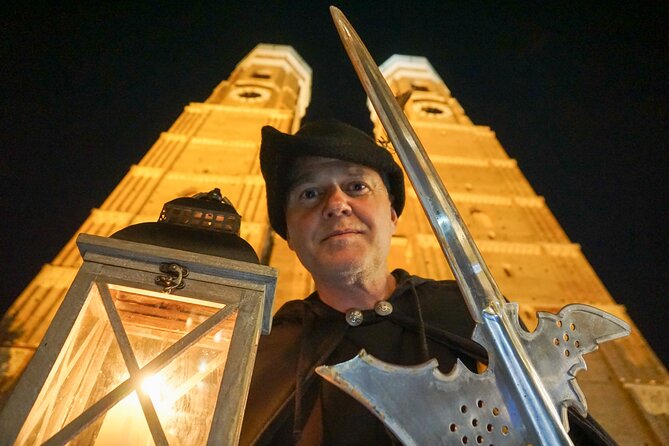
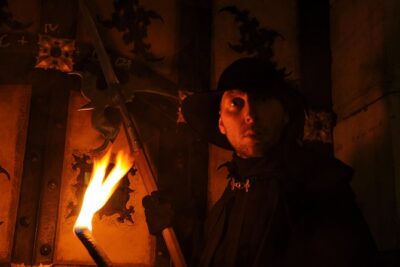
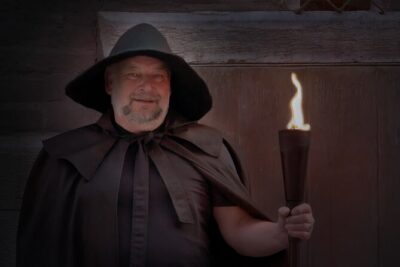
The most memorable part of this Munich walk is its guide: Wolfram the night watchman arrives with a lantern, halberd, and horn, then leads you into the city’s medieval past through stories of executions, prison cells, old gates, and silver coins. This is not a general overview of Munich. It is a tightly themed evening stroll through the old town.
I like the small group of no more than 10 people, which should make it easier to hear the guide on busy streets. I also like the route itself: it links real streets, churches, squares, and surviving traces of the first city wall instead of keeping the Middle Ages in a museum display.
The main consideration is language. The tour is conducted in German, so you need a solid command of German to follow Wolfram’s stories and humor. The walk also starts at 8:30 pm, runs outdoors in changing weather, and may last closer to two hours in practice.
Key points to know before booking
- Wolfram leads in full night-watchman character, carrying a lantern, halberd, and horn.
- Four medieval gates anchor the route, including the Talburg Gate and the two Schwabinger Gates.
- The stories can be grim, covering executions, torture, prisons, cemeteries, and medieval punishments.
- The route covers 14 stops between Marienplatz and Kaufingerstraße.
- The planned duration is about 90 minutes, though the walk can run close to two hours.
- The price is about $16.13 per person, a reasonable rate for a small, themed city tour.
Meeting Wolfram at Marienplatz at 8:30 pm
The tour begins outside Rathaus Apotheke at Marienplatz 8. This is a practical starting point because Marienplatz is easy to reach by public transportation and gives Wolfram a fitting stage for his opening story.
He begins by explaining what a night watchman actually did in the Middle Ages. This sets up the rest of the evening. You are not simply walking from one old building to another. You are following the duties, tools, fears, and routines of a man responsible for watching a medieval town after dark.
The lantern, horn, and halberd help turn the introduction into something physical. Wolfram is not just pointing out a street sign and naming a date. He uses objects connected to the role he is presenting, which gives the tour a bit of theater without making it a full costume show.
The square can be active, so stay close and listen carefully during the opening explanation. A group of 10 is a real advantage here. You will still be in the center of Munich, but the small size should make it easier to keep track of the guide.
More night watchman walks in Munich:
- Munich: Night Watchman Walking Tour
★ 4.7 · 2,092 reviews - Munich: Night Watchman Torch Tour in German
★ 4.8 · 1,280 reviews - Munich: Middle Ages Tour with Night Watchman
★ 4.9 · 652 reviews
St. Peter’s Church and the execution of Marco Bragadino
The second stop is St. Peter’s Church, where Wolfram shows the poor sinner bell. The name alone tells you something about the fearful side of medieval public life. Bells did more than mark worship or the time. They could also signal solemn events connected with punishment and death.
Wolfram demonstrates the execution of Marco Bragadino. This is one of the tour’s more theatrical moments, and it gives the evening a dark edge. If you prefer light sightseeing with only cheerful anecdotes, this section may be uncomfortable.
The story also helps you see St. Peter’s Church differently. You are not entering simply to admire an old church. You are hearing how religious buildings were tied to public punishment, death, and the community’s ideas about sin.
The tour information does not include admission to the church, and each stop is presented as part of the outdoor walk. Expect Wolfram to explain and demonstrate rather than provide a long interior visit.
A medieval cemetery beneath Petersplatz
At Petersplatz, Wolfram discusses the medieval cemetery and explains why people wanted to be buried as close to the altar as possible. This is a short stop, but it offers useful context about medieval religious belief.
For modern visitors, a city square can look like an ordinary open space. Wolfram’s explanation gives it another layer. You begin to picture how closely daily life, death, worship, and public space once overlapped.
This is one of the quieter parts of the route. It is less about a dramatic object and more about understanding how medieval people viewed salvation and proximity to sacred ground.
The subject is serious, but it is also one of the tour’s more thoughtful moments. The evening does not rely only on frightening stories. It also asks you to consider the beliefs that shaped the old city.
Finding Munich’s first city wall at Viktualienmarkt
The walk continues to Viktualienmarkt, where Wolfram identifies the location of Munich’s first city wall. This is a good example of what makes the tour useful: the wall is not presented as an isolated monument. You learn where it once ran through streets you can still walk today.
Much of medieval Munich has changed, so old fortifications are often understood through fragments, street patterns, and careful explanation. Wolfram’s route along the old wall helps you connect the present city to its earlier boundaries.
Viktualienmarkt is better known today for food stalls and city-center activity. That contrast makes the stop especially effective. You are looking at a familiar Munich location while thinking about a much smaller fortified town.
The walk is short, but the route keeps moving. If you are hoping to spend time browsing the market, this tour is not designed for that. The focus is on the medieval location and Wolfram’s explanation.
More first-day tours of Munich:
- Munich: Big Bus Hop-On Hop-Off Sightseeing Bus Tour
★ 4.0 · 842 reviews - Munich: Classic Guided City Tour by Bike (English Tour Only)
★ 4.7 · 534 reviews - Munich Private Tour with a Local – Highlights & Hidden Gems
★ 5.0 · 469 reviews - Munich: City Highlights Guided Segway Tour
★ 4.6 · 266 reviews
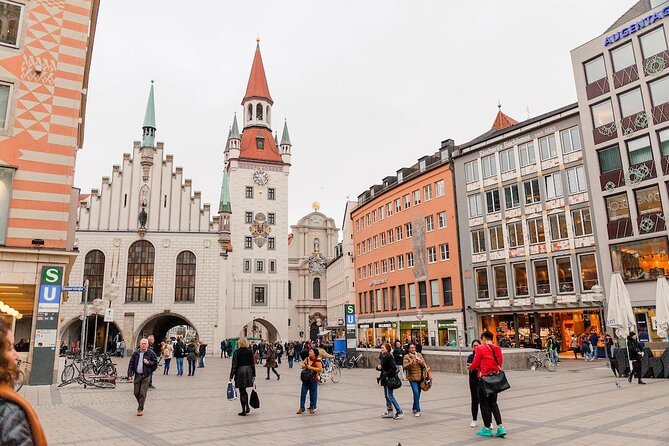
Closing the Talburg Gate at the Old Town Hall
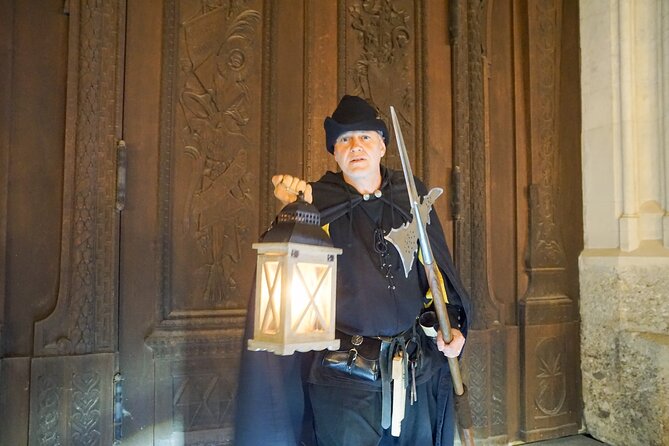
At the Old Town Hall, Wolfram closes the Talburg Gate and shows you the medieval halberd. This is another point where his presentation adds character to the route.
The gate matters because medieval cities were controlled through entrances and closing times. A watchman’s work was not only about walking streets with a lantern. It also involved watching gates, managing access, and helping protect the town at night.
Seeing the halberd makes the role easier to picture. You get a direct look at the kind of weapon associated with the office, rather than hearing only an abstract description.
This stop also gives you a chance to appreciate the Old Town Hall as part of the city’s defensive and civic story. The route repeatedly connects Munich’s government, religion, commerce, and protection.
Burgstraße’s prison, dungeon, and punishments
Burgstraße brings the darkest material of the evening. Here Wolfram discusses Munich’s medieval prison, including the dungeon, torture, and punishments used in the Middle Ages.
This section will appeal to anyone who enjoys the unsettling side of urban history. It is also the part parents may want to consider carefully before bringing young children, since the subject matter includes torture and execution.
The value of this stop is not just shock. Medieval justice worked very differently from modern legal systems, and the tour shows how punishment was made visible and physical. Wolfram’s style includes humor, but the stories can still leave you with a chill.
The stop is scheduled for about 10 minutes, one of the longer pauses on the route. That gives Wolfram room to explain several aspects of medieval punishment rather than rushing through a single anecdote.
Medieval silver pennies on Münzstraße
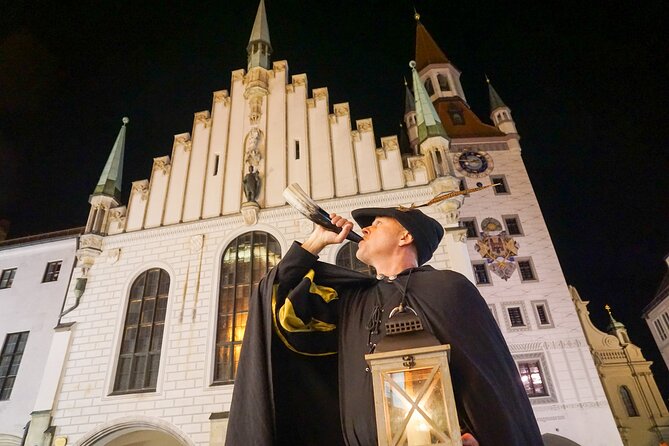
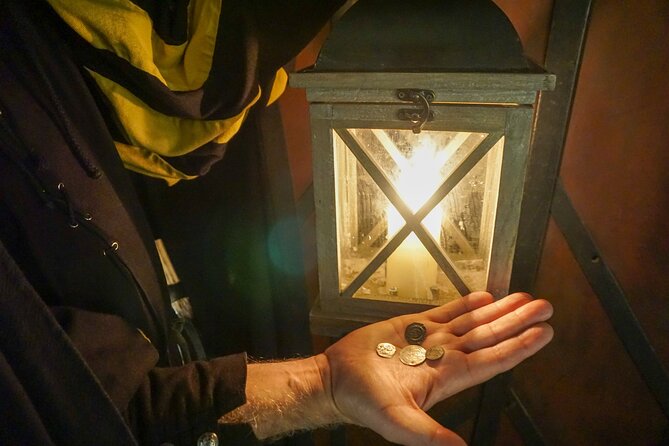
At Münzstraße, Wolfram opens his purse and shows original silver pennies from the Middle Ages. This is one of the tour’s most distinctive details because it gives you something tangible to examine.
Coins can reveal the scale of ordinary life better than grand buildings do. A fortress or church tells you about power and faith. A small silver penny raises more practical questions: how people paid, what money was worth, and what a night watchman might have carried.
The stop is also a welcome change in mood after the stories of prison and torture. The tour continues to cover serious subjects, but it keeps shifting between public buildings, personal objects, money, work, and belief.
You should not expect a formal museum handling session. Wolfram shows the coins during the walk and explains their place in the medieval world. Keep your attention on the guide, since the stop takes place in the city rather than in a quiet exhibition room.
The Alter Hof and Duke Ludwig the Strict
At the Alter Hof, Wolfram introduces Munich’s first castle built by the Wittelsbach family. He also explains why Duke Ludwig, the builder, was called the strict one.
This stop adds political context to the route. Until now, you have heard much about walls, gates, punishment, and daily duties. The Alter Hof shows how the ruling family shaped Munich and used the city as a seat of power.
The stop is not a long castle visit. It is a focused explanation of the first Wittelsbach residence in Munich and of the duke connected with it. That makes it best for listeners who enjoy concise stories tied to an exact place.
The old town has many grand buildings, and a guide can easily give you too much information. Wolfram’s themed route keeps the emphasis on what matters to a medieval night watchman: authority, order, fortification, and the people who controlled the city.
The two Schwabinger Gates and old addresses
The next part of the route visits two former entrances: the Vorderes Schwabinger Tor on Dienerstraße and the Rear Schwabing Gate on Weinstraße.
At the first gate, Wolfram explains what traces of the original city wall remain. This is a good reminder that historic evidence is not always a complete tower or a preserved arch. Sometimes it survives in fragments and street arrangements, which a guide helps you notice.
At the second gate, he explains how addresses used to work. That may sound like a small subject, but it gives you a glimpse of how a medieval town was organized before modern numbering systems.
These stops are brief, only a few minutes each, so listen closely. The tour does not linger at every location. Its strength is the chain of connections: one gate leads to another, and the route gradually reconstructs the old city’s edge.
The tally stick on Schäfflerstraße
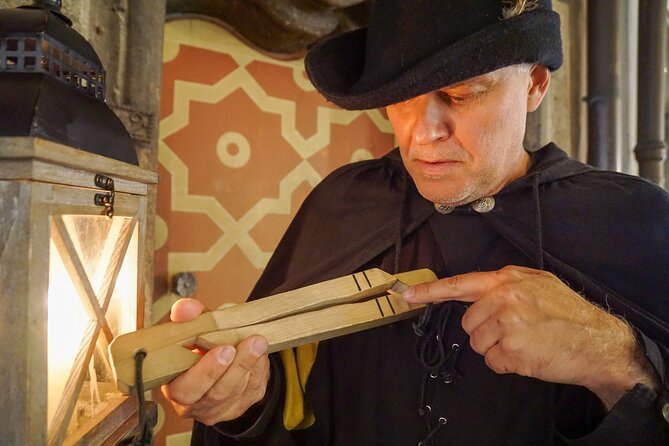
On Schäfflerstraße, Wolfram explains how people could get into debt using a tally stick. He carries his own and demonstrates how the system worked.
This is another especially good object-based stop. A tally stick turns a complicated subject, credit and debt, into something you can picture. You do not need an economics lecture to understand that a marked piece of wood could record an obligation between two people.
The story also brings the medieval world down to a personal scale. The tour has already covered dukes, churches, gates, and executions. Here you consider an ordinary financial problem that could affect everyday life.
The stop lasts about five minutes, so Wolfram’s demonstration is likely to be compact. If you enjoy small historical details more than famous monuments, this may be one of the evening’s highlights.
Frauenkirche and the speed of construction
At the Frauenkirche, Wolfram explains how such a large church could be built in only 20 years. The scale of the building gives the question real force. You can look up at the church and consider the labor, planning, materials, and organization required to create it.
This stop is less grim than the sections on execution and torture, and it gives the route a strong visual landmark. The Frauenkirche is easy to recognize, so it also helps you understand how the old town’s religious center relates to the surrounding streets.
The explanation is scheduled for about five minutes. Do not expect an extended architectural tour of every feature inside or outside the church. The point is the construction story and the achievement represented by the building.
Medieval traces at Frauenplatz
At Frauenplatz, Wolfram points out traces of the medieval town that remain in Munich’s old center. This continues the theme introduced at Viktualienmarkt and Dienerstraße: the past is often visible only if someone tells you where to look.
The stop helps pull the entire walk together. You have followed the old walls, visited the sites of gates, heard about cemeteries, and seen buildings linked to faith and power. Here you are encouraged to connect those separate pieces.
Because the explanation is brief, the experience depends on Wolfram’s ability to make the modern street readable as an older place. The route is strongest when you stay alert to those links instead of treating each stop as an isolated fact.
Completing the Beautiful Tower on Kaufingerstraße
The final stop is on Kaufingerstraße, where Wolfram completes the Beautiful Tower and says goodbye. The route ends near Hirmer at Kaufingerstraße 28, a short distance from the start at Marienplatz.
Ending on a central shopping street creates a sharp contrast with the medieval material. You finish among modern shops and city traffic, but the closing gate story gives the walk a clear structure.
The route’s symbolic ending at the city gates is one of its best organizing ideas. The tour does not simply stop after a list of unrelated sights. It begins with the work of the night watchman and ends by closing the gates of the old city.
Is $16.13 good value for a 90-minute walk?
At about $16.13 per person, this is fairly priced for a small, character-led tour in central Munich. The group limit of 10 matters here. You are paying not only for a route through places you could visit on your own, but also for Wolfram’s presentation, demonstrations, objects, and connected story.
The value is strongest if you speak German well and enjoy local detail. You will hear about a poor sinner bell, Marco Bragadino’s execution, medieval silver pennies, the tally stick, the first city wall, and four old gates. Those details give the tour more substance than a quick walk past famous buildings.
The value is weaker if you want a broad introduction to Munich, a museum visit, or a tour in English. This is a specialized medieval walk, not a general orientation tour.
The experience takes about one hour and 30 minutes by schedule, though a previous group found the walk lasted close to two hours. Plan your evening with some flexibility, especially if you have a dinner reservation afterward.
Practical details that matter
You receive confirmation when booking, and the tour uses a mobile ticket. The start time is 8:30 pm, so you should arrive with enough time to find Rathaus Apotheke at Marienplatz 8.
The route ends at Hirmer on Kaufingerstraße 28. Since both points are in central Munich, the walk is convenient for an evening in the old town and near public transportation.
Service animals are allowed, and most people can participate. The activity requires good weather, so poor conditions can lead to a different date or a full refund. It also requires a minimum number of participants. If that minimum is not reached, you are offered another date or experience, or a full refund.
Free cancellation is available up to 24 hours before the start time. Cancellations or changes made less than 24 hours before the tour do not qualify for a refund.
Wear comfortable shoes and dress for an outdoor evening. One person specifically enjoyed the tour despite very cold conditions, but that is a useful warning, not a reason to ignore the forecast. The walk is short enough for most people, yet cold, rain, or wind can make a 90-minute city tour feel much longer.
Who should book the night watchman tour?
I would choose this tour if you want Munich presented through medieval streets, working objects, punishment, old walls, and local legends rather than through a standard list of major sights.
It suits adults and older children who can follow German and who are comfortable with stories about executions, torture, cemeteries, and debt. The small group should appeal to you if you prefer a more personal format, while Wolfram’s humor keeps the subject from becoming a dry lecture.
I would skip it if you need an English-language tour, dislike theatrical guiding, or want substantial time inside churches and buildings. The route is mainly an outdoor walk, and the strongest moments come from the guide’s storytelling and demonstrations.
Should you book this Munich night walk?
Book it if you understand German and want a focused, atmospheric look at medieval Munich for a modest price. Wolfram’s lantern, halberd, horn, silver pennies, and tally stick give the walk a clear personality, while the route links the old city walls, gates, churches, prison sites, and the Alter Hof.
The best reason to book is the combination of strong storytelling and real locations. The main reason to hesitate is the late start, outdoor setting, German-only presentation, and sometimes grim subject matter. For the right audience, this is a memorable way to see the old town after dark without paying for a long or elaborate production.
FAQ
What language is the tour conducted in?
The tour is conducted in German. You should be able to understand German well enough to follow historical explanations, demonstrations, and humor.
How long does the tour last?
The scheduled duration is approximately 1 hour and 30 minutes. It may run closer to two hours, so allow extra time after the planned finish.
Where does the tour begin?
The tour begins at Rathaus Apotheke, Marienplatz 8, 80331 Munich, Germany.
Where does the tour end?
The tour ends at Hirmer, Kaufingerstraße 28, 80331 Munich, Germany.
What time does the tour start?
The start time is 8:30 pm.
How many people can join the tour?
The tour has a maximum group size of 10 people.
More Evening Experiences in Munich
- Munich Ghosts and Spirits Evening Walking Tour
★ 5.0 · 1,900 reviews - Bavarian Beer and Food Evening Tour in Munich
★ 4.5 · 1,575 reviews - On the road with the night watchman
★ 5.0 · 142 reviews - Munich: Night Watchman Tour for Kids (6 – 12 years) – 75 min
★ 4.9 · 140 reviews
Recently reviewed in Munich
- München: Vegetarische Viktualienmarkt-Probiertour Deutsch★ 4.8 · 6 reviews
- Wright Europe Vacations – Private Escorted Auto Tours★ 5.0 · 35 reviews
- Best of Munich Electric Bike Tour★ 5.0 · 38 reviews
- Munich Walking Quiz: Explore and Discover the City’s Highlights★ 5.0 · 7 reviews
- Walking Tour on Resistance to Nazism in Munich★ 5.0 · 8 reviews
- Private Transfer from Munich to Salzburg with 2 hours for sightseeing★ 4.5 · 13 reviews
- Private Transfer from Munich to Vienna with 2 hours for sightseeing★ 4.5 · 6 reviews
- 2 hour Sights Guided E-Scooter Tour in Munich★ 4.0 · 6 reviews
Munich Night Watchman Tours, compared.
Night Watchman Tour for Kids (6 – 12 years) – 75 min
Read our review →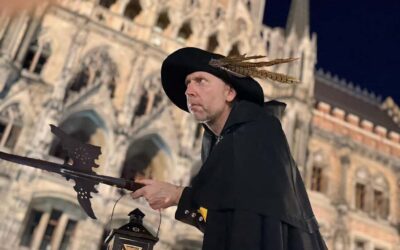
Browse the lists this tour appears in