Reviewed · 3-HOUR EXPERIENCES
3H Best of München Sightseeings Tour
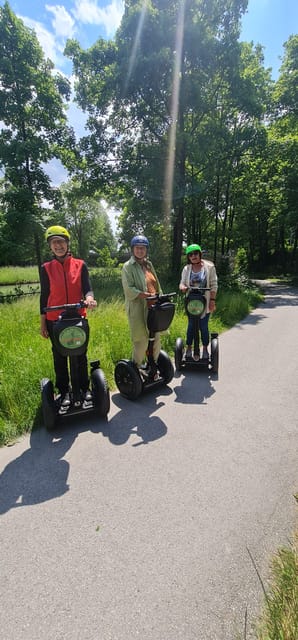
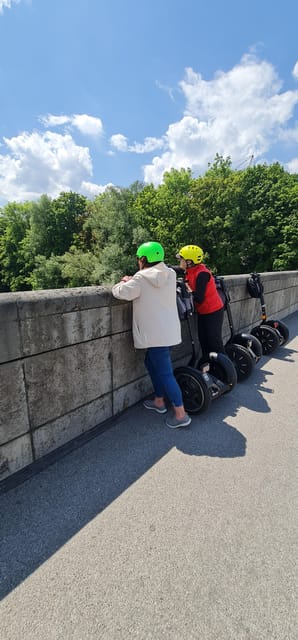
Munich comes into focus quickly from a Segway. In three hours, you can roll from old Schwabing to Marienplatz, Isartor, Viktualienmarkt, Königsplatz, and several major historic buildings without wearing out your shoes. The initial lesson is short, and most people get moving within minutes.
I like the small groups of up to 10, which make it easier to hear the guide and stop for explanations. I also like the coverage: you see more than you could on foot, including the surfers’ spot mentioned by one guide, while still pausing at key sights. The main catch is weather. This tour runs rain or shine, and a Segway can feel very cold in winter, so bring gloves and a scarf.
Key points at a glance
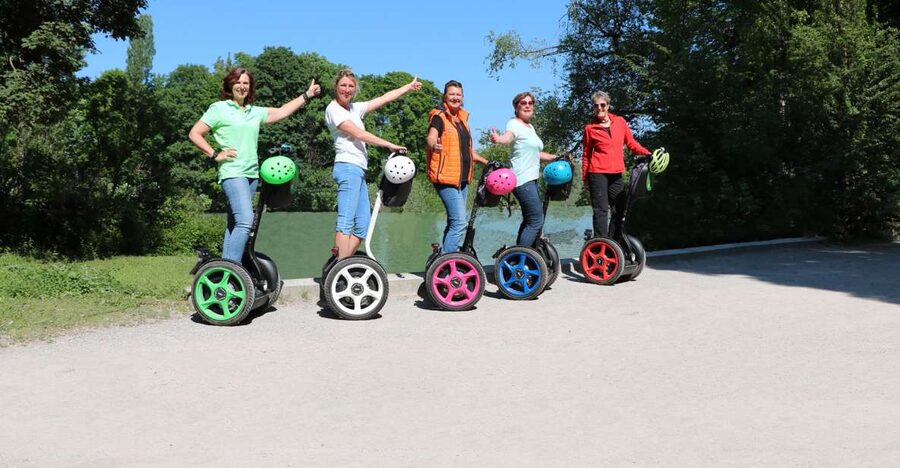
- Three hours on a Segway: Training is included, and the total time includes the introduction.
- A broad Munich route: Ride through Schwabing, past Isartor and Viktualienmarkt, across Marienplatz, and on to Königsplatz.
- Small-group format: A maximum of 10 participants keeps the ride more personal.
- English or German guidance: A headset is included so you can follow explanations while riding.
- No driver’s license needed: You must be at least 14 and weigh between 45 and 118 kilograms.
- Weather matters: Dress warmly and appropriately, since the tour operates in ordinary rain but stops during extreme weather.
Why a Segway works well in Munich
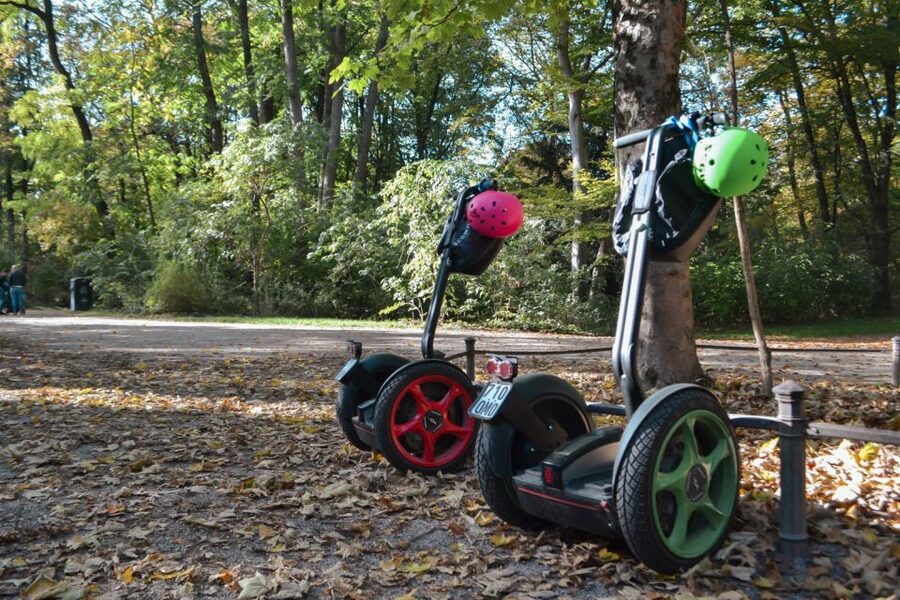
Munich’s center is compact enough to explore on foot, yet its sights are spread across several distinct areas. A walking tour can cover the old town well, but reaching Königsplatz and returning to Schwabing takes more time. On a Segway, you cover that ground without turning the day into a march.
The riding position also changes what you notice. You are not sealed inside a vehicle, and you are not looking down at a map every few minutes. You move at a gentle pace, with the guide pointing out buildings and stopping to explain their background. The included headset matters here. City streets can be noisy, and you can keep listening without crowding around the guide.
This is not a private tour. A group of up to 10 means the pace has to suit different riding abilities. Still, that limit is modest enough for the guide to keep an eye on the group and answer questions. The route is also not only a string of postcard stops. It connects Schwabing, the old town, and Königsplatz, giving you a wider sense of Munich’s layout.
A few more Munich tours worth comparing
- Munich 3-Hour Guided Bike Tour
★ 4.5 · 1,731 reviews - Munich’s Beer Halls and Breweries: 3-Hour Guided Tour
★ 4.6 · 928 reviews - Munich 3-Hour Segway Tour: Nazi Munich & Royal Architecture
★ 4.9 · 194 reviews
Starting in Schwabing at Artur-Kutscher-Platz
The meeting point is the supplier’s office at Artur-Kutscher-Platz 2a in Schwabing. This is north of the old town, so plan extra time to reach it if you are staying near Marienplatz. The nearest major transit stop is Münchner Freiheit.
You can get there by tram 23, buses 53, 54, or 144, or the U3 and U6 metro lines. At Münchner Freiheit, follow the exit for Feilitzstraße and Leopoldstraße, walk along Feilitzstraße, then turn left onto Occamstraße. The walk to Artur-Kutscher-Platz takes about five minutes.
If you drive, parking at Artur-Kutscher-Platz is available by meter. There is also a parking lot on Occamstraße if the nearby spaces are full. Public transportation is likely the simpler choice, but the parking details are useful if you are carrying luggage or staying outside central Munich.
The tour begins with instruction, helmet fitting, and a practice session. The operator’s guidance is reassuring for first-time riders: most people learn the basic controls within minutes. You do not need a driver’s license. Still, do not treat the lesson as a formality. The better you understand stopping, turning, and balancing before departure, the more attention you can give to Munich.
From Schwabing toward Isartor
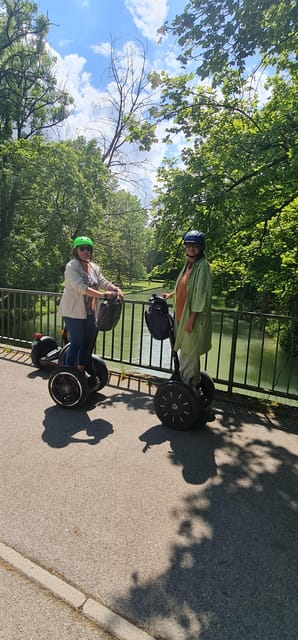
The first part of the ride takes you out of Schwabing toward Isartor. Schwabing is one of Munich’s best-known districts, and beginning there gives the tour a less monumental opening than starting directly in the old town. You get a sense of the city beyond its grand central squares before reaching the historic core.
Isartor is one of Munich’s surviving medieval city gates. It once formed part of the fortifications around the old town, and its towers offer a clear reminder that Munich was once a walled city. The stop also helps you understand the route. From here, the tour heads toward Tal and the central market area.
A Segway is useful on this stretch because you can pass through the city without spending the first hour walking between districts. The tradeoff is that you will not have unlimited time at every location. This is a sightseeing circuit, not a slow architectural study. If you want long interior visits, you will need to return independently.
Tal, Viktualienmarkt, and the heart of the old town
From Isartor, you ride through Tal toward Viktualienmarkt. This central food market is one of Munich’s most enjoyable places to explore on foot, with stalls and local products arranged across an open market area. The tour gives you a look at this part of town, but food and drinks are not included.
That exclusion is easy to understand. A moving sightseeing tour cannot pause for a full market lunch, and stopping to eat would break the route. Still, you should make a note to come back if the market interests you. The tour helps you locate it and understand how close it is to Marienplatz.
The ride then continues to Marienplatz, Munich’s main central square. This is where the city’s historic core feels most concentrated, with major civic buildings and churches close together. The guide’s explanations add value here because a quick glance can blur together Gothic, Renaissance, Baroque, and newer building work.
The small group and headset are especially helpful at Marienplatz. It can be crowded, and a guide speaking to 10 people is easier to follow than someone trying to gather a large group around a single explanation. Expect a stop for orientation and history rather than a long period of free time.
Same city, a very different afternoon:
- From Munich: Neuschwanstein & Linderhof Castle Full-Day Trip
★ 4.5 · 12,494 reviews - Neuschwanstein & Linderhof Castle-Fairytale Day Tour from Munich
★ 4.5 · 7,275 reviews - Munich: Third Reich & WWII Walking Tour
★ 4.6 · 6,181 reviews - Dachau Concentration Camp Memorial Site Tour from Munich by Train
★ 4.5 · 5,637 reviews
The New Town Hall and St. Peter’s Church
The New Town Hall is one of Munich’s most striking buildings. Its Neo-Gothic design gives Marienplatz much of its visual character, with a busy facade that rewards a closer look. The word new can mislead you: this is not a modern office block, but a grand nineteenth-century civic building designed in a medieval style.
The tour allows you to appreciate it from the square without committing to an interior visit. That is a sensible arrangement for a three-hour route. You get the building’s scale and setting, while the guide supplies the context that a photograph cannot.
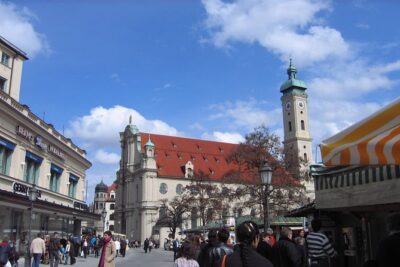
St. Peter’s Church, known locally as Alter Peter, is another important old-town landmark on the route. The church sits close to Viktualienmarkt and Marienplatz, so seeing all three together gives you a good picture of Munich’s historic center. The tour does not include food, drink, or a separate church visit, so treat this portion as an introduction and return later if you want more time inside.
I like this section because it combines ordinary city life with major architecture. You see a market, a public square, a church, and a town hall within a short distance. That mix tells you more about Munich than a route made only of grand facades.
Feldherrnhalle and the Theatine Church
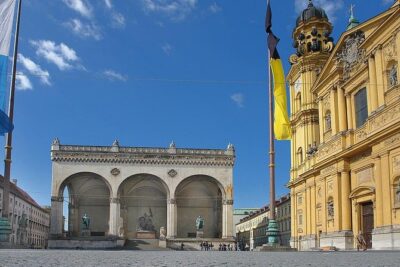
The ride continues past Feldherrnhalle and the Theatine Church. Feldherrnhalle is a large loggia on the Odeonsplatz area, built as a monument to Bavarian military tradition. Its open arcade and prominent position make it easy to recognize, but its political past gives the site more weight than its elegant appearance suggests.
The Theatine Church offers a sharp visual contrast. Its pale Baroque exterior and domed form differ greatly from the Neo-Gothic New Town Hall and the medieval character of the older center. Seeing these buildings on one route helps you read Munich’s changing styles rather than seeing each monument as an isolated stop.
This is also where a guide can make a real difference. A list of names is easy to forget. A short explanation of why a building was commissioned, or how it fits into the city’s history, gives the stop a clearer place in your memory. One highly praised guide, Wolfgang, was specifically noted for explaining many sights while keeping the ride moving.
The route is not designed for extended photography at every monument. You will stop, look, and listen, then continue. If you prefer to spend 20 minutes composing pictures of one church, this may feel brisk. If you want a well-paced introduction, the rhythm is useful.
Königsplatz and Munich’s neoclassical side
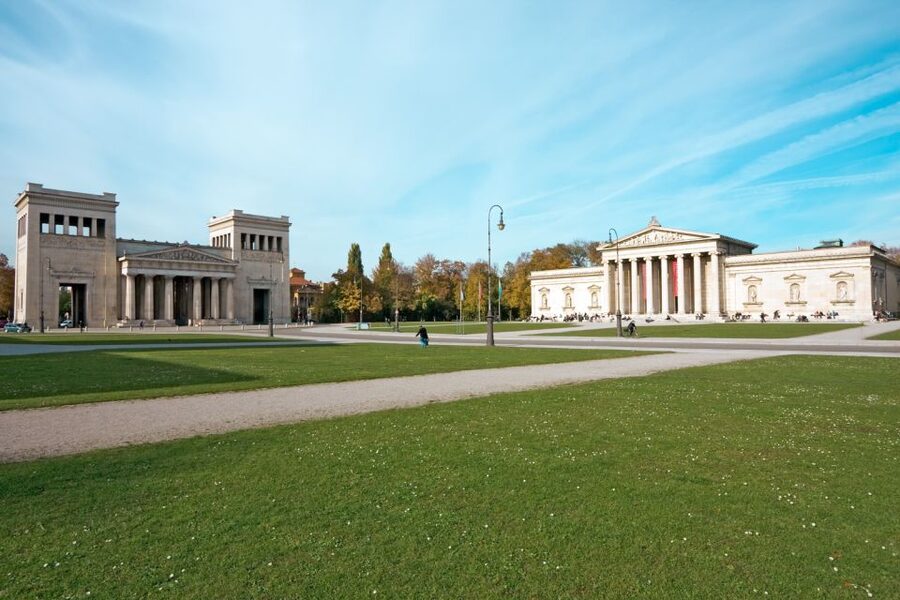
Königsplatz brings a different mood to the tour. Its impressive Neo-Classical buildings and broad formal setting feel removed from the tighter streets around Marienplatz. This change is one of the strongest reasons to choose the full three-hour route instead of staying only in the old town.
The square reflects Munich’s interest in classical forms and monumental planning. You do not need to be an architecture expert to notice the difference between Königsplatz and the Gothic or Baroque buildings seen earlier. The changing styles create a simple visual story: Munich is not one single historic town, but a city shaped by several periods.
Getting to Königsplatz by Segway saves time and energy. On foot, you can reach it from the center, but fitting it into a short sightseeing session takes planning. Here, the guide handles the route, and you can concentrate on the buildings and the explanation.
The tour later returns to Artur-Kutscher-Platz. Because the start and finish are the same, you do not need to arrange a taxi or find your way back from a distant final stop. That is handy if you have another reservation afterward, though I would still leave a little space in your schedule. The exact duration depends on group size and individual riding ability.
What the riding feels like for first-timers
A Segway responds to your body position, which can seem strange for the first few moments. The training session is built into the three-hour duration, and the operator says most people become comfortable within minutes. You should expect practice before the city route begins, not an instant departure into traffic.
The helmet is included, as is the headset. These are basic items, but they remove two small worries from the planning list. You only need to arrive dressed for the weather and ready to ride.
Your clothing matters more than you might expect. Even on a dry day, moving through Munich on an open vehicle can feel colder than walking. One useful tip is to bring gloves and a scarf if the forecast is cool. Wear shoes and clothing that allow you to stand comfortably for the length of the tour.
The operator sets a minimum weight of 45 kilograms and a maximum of 118 kilograms. The experience is not suitable for anyone outside those limits. The minimum age is 14, and no driver’s license is required. Alcohol and drugs are not allowed.
The $95 price and what you receive
At $95 per person, this is not the cheapest way to see Munich. You are paying for the Segway, instruction, helmet, headset, guide, and a three-hour route that links several parts of the city. Food and drinks cost extra, and the tour does not replace museum tickets or longer visits inside the sights.
I think the price makes the most sense if you value time and coverage. You can see Schwabing, the old town, and Königsplatz in one outing, with someone else handling the route. It is also a good option early in a Munich visit because you get a useful map of the center before choosing where to return on foot.
The value is weaker if you already know Munich well or dislike riding in a group. You may prefer a walking tour that spends more time at fewer places. Likewise, anyone hoping for a relaxed market meal or extended church visits should plan those separately.
Free cancellation up to 24 hours before the start and the reserve-now, pay-later option make the booking less rigid. These policies are useful when weather or other plans may change, but they do not remove the need to check the available starting times before booking.
Who should book this Munich Segway tour?
I would choose this tour if you have three hours, want a broad first look at Munich, and are comfortable learning a new vehicle. It suits couples, friends, and families with teenagers aged 14 or older who want more ground covered than a walking tour allows.
It is also a strong choice for people who like short explanations at real locations rather than a long lecture in one room. The English and German options make it practical for international visitors, and the headset helps keep the commentary clear.
I would hesitate if you have balance concerns, fall outside the weight limits, or dislike standing and riding for an extended period. I would also think twice in very cold or wet weather. The tour runs in ordinary rain, but extreme weather can suspend it, and chilly conditions will be more noticeable on a Segway than during an indoor activity.
Should you book the 3H Best of München Sightseeings Tour?
Book it if you want an energetic city overview with strong coverage. The best parts are the small group, the easy beginner training, and the route linking Isartor, Viktualienmarkt, Marienplatz, Feldherrnhalle, the Theatine Church, and Königsplatz.
Skip it if your main goal is slow museum time, a long market lunch, or detailed visits inside churches and civic buildings. For the right person, $95 buys a convenient introduction to Munich and a good sense of how the central districts fit together. Bring warm layers, arrive ready to practice, and leave the deep sightseeing for a second pass on foot.
FAQ
How long is the Munich Segway tour?
The tour lasts three hours, including the introduction and riding instruction. The exact duration can vary with group size and individual riding ability.
Where does the tour start?
Meet at the tour supplier’s office at Artur-Kutscher-Platz 2a, 80802 Schwabing, Munich.
Where does the tour finish?
The tour ends back at the same meeting point at Artur-Kutscher-Platz.
How do I reach Artur-Kutscher-Platz by public transportation?
Take tram 23, bus 53, 54, or 144, or metro U3 or U6 to Münchner Freiheit. Walk from the Feilitzstraße and Leopoldstraße exit via Feilitzstraße and Occamstraße. The walk takes about five minutes.
Is a driver’s license required?
No. You do not need a driver’s license, but you must be at least 14 years old.
Are there weight requirements?
Yes. The minimum weight is 45 kilograms and the maximum is 118 kilograms.
What is included in the price?
The price includes Segway rental, instruction, a helmet, and a headset. Food and drinks are not included.
What languages are available?
The tour is offered in English and German.
Does the tour operate in bad weather?
The tour operates rain or shine but can be suspended during extreme weather. You should dress appropriately for the forecast.
Can I cancel the tour for a refund?
Yes. You can cancel up to 24 hours in advance for a full refund. A reserve-now, pay-later option is also available.
Recently reviewed in Munich
- München: Vegetarische Viktualienmarkt-Probiertour Deutsch★ 4.8 · 6 reviews
- Wright Europe Vacations – Private Escorted Auto Tours★ 5.0 · 35 reviews
- Best of Munich Electric Bike Tour★ 5.0 · 38 reviews
- Munich Walking Quiz: Explore and Discover the City’s Highlights★ 5.0 · 7 reviews
- Walking Tour on Resistance to Nazism in Munich★ 5.0 · 8 reviews
- Private Transfer from Munich to Salzburg with 2 hours for sightseeing★ 4.5 · 13 reviews
- Private Transfer from Munich to Vienna with 2 hours for sightseeing★ 4.5 · 6 reviews
- 2 hour Sights Guided E-Scooter Tour in Munich★ 4.0 · 6 reviews
3-Hour Experiences, compared.
Munich’s Beer Halls and Breweries: 3-Hour Guided Tour
Read our review →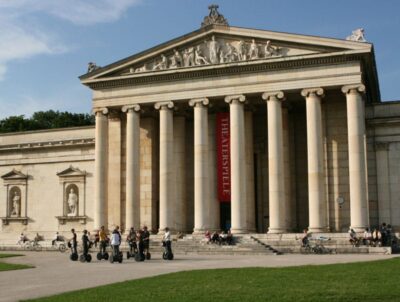
Munich 3-Hour Segway Tour: Nazi Munich & Royal Architecture
Read our review →